Skip to content
CodexMythologia
Back to the Codex
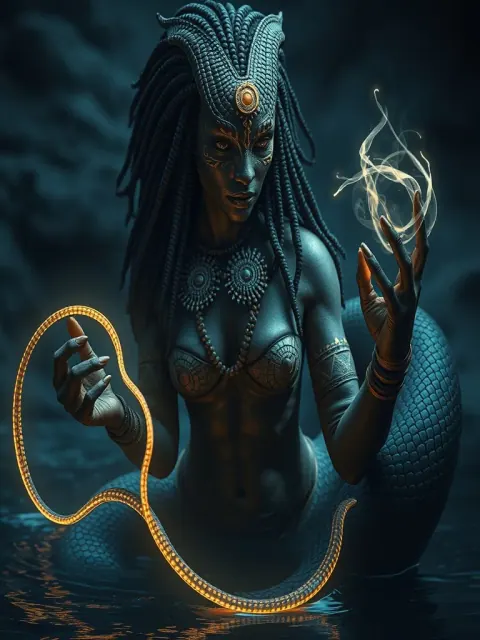
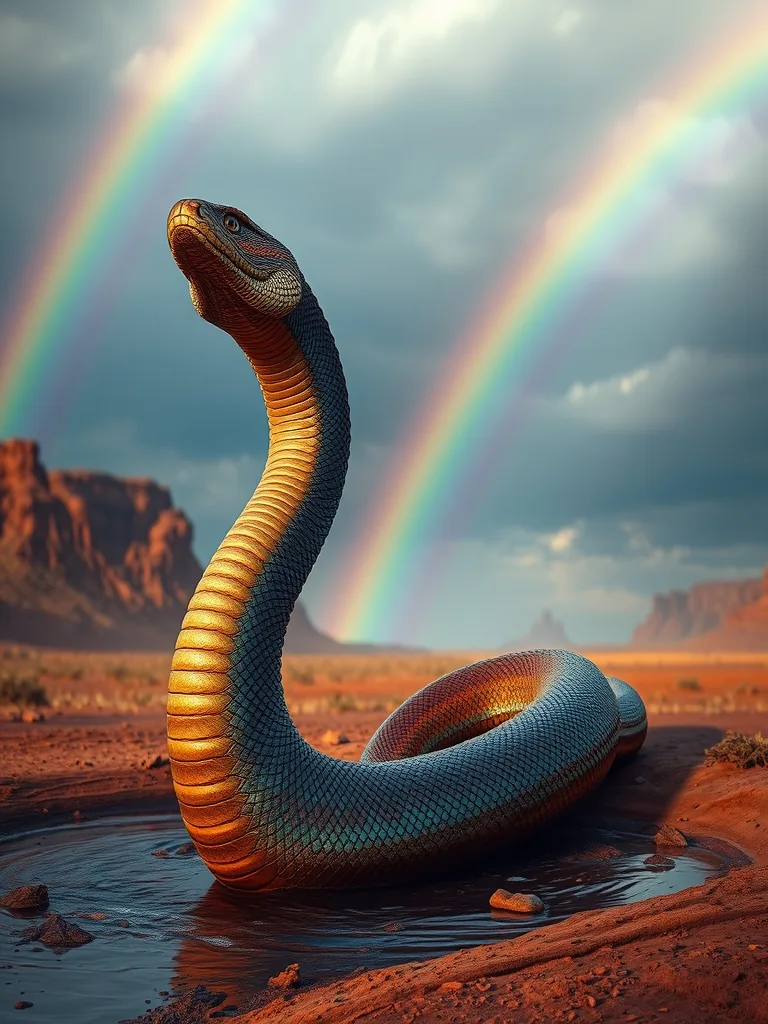
Portrait of Rainbow Serpent, Aboriginal deity
Aboriginal
Tap or drag
Aboriginal

Rainbow Serpent

The Creator of the Waters

Domain
Water, Creation & Fertility
Alignment
True Neutral
Element
Water
Relics of Power
Rainbow Arc of the Rain
Speak with Rainbow Serpent

The full Codex

5 sections of this entry are open to everyone: the summary, the people, the symbols, the lineage and the sources. The other 9 (Name and epithets, In the ancient sources, The myths, Worship and archaeology, How the god was depicted, What scholars debate, After antiquity, Did you know?, Codex relic) are part of the full Codex: PRO opens the whole study of all 500 deities, and without a subscription you can read one full entry a day, just like in the app.

The People

People
Aboriginal Australians
Region
Australia
Period
65,000 years ago – present

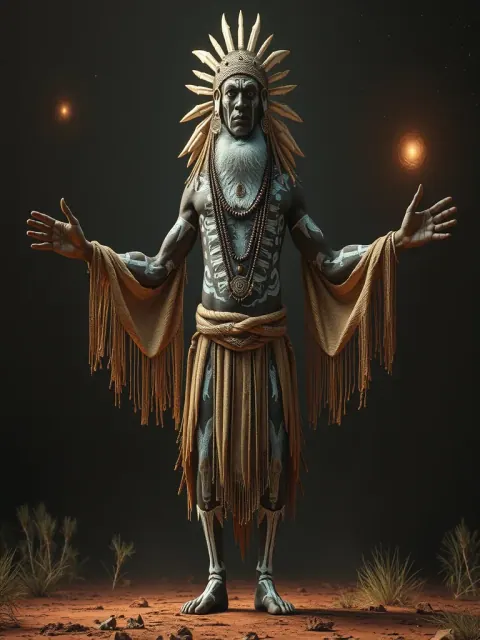
The ancestral beings of the Dreamtime are revered by Aboriginal Australians, possibly the oldest continuous culture on Earth. These beings are believed to have created the landscape, the laws, and life during the Dreaming. Their stories are kept in rock paintings, songs, and rituals passed down over tens of millennia.

At corroborees, songs and body-painted dances re-enact the journeys of the Dreaming ancestors. The songlines, singing tracks, map the sacred land from memory, and places like Uluru remain living sanctuaries under the care of their traditional custodians.
At a glance

The Rainbow Serpent is one of the most universal, ancient, and revered ancestral creator beings across Indigenous Australia, embedded within the cosmological fabric of the Dreaming (Dreamtime / Jukurrpa / Wangarr) in nearly every geographic region of the continent. Known by distinct regional names — such as Ngalyod and Yingarna in Western Arnhem Land, Almudj and Bolung in the Kakadu and Katherine areas, Yurlunggur among the Yolŋu peoples of northeast Arnhem Land, Wollunqua among the Warumungu, Wagyl among the southwest Noongar, and Wanambi across the Central Desert —, the entity personifies the dynamic power of fresh water, seasonal monsoonal cycles, and earth-sculpting topography. According to oral histories, the Serpent slithered across the barren primeval land, carving out rivers, sheer gorges, and permanent billabongs through the sheer weight and convolutions of its massive body. Dwelling in subterranean watercourses and deep pools, the being governs life-giving wet-season rains and waterhole replenishment, while wielding retributive power through destructive floods against violators of sacred sanctuaries or totemic taboos.

8 min read · Reviewed on September 28, 2026 · How we research

Sacred symbols

The rainbow, the rivers, the waterholes and the colossal serpent

Family

Rainbow Serpent
Children
Ngalyod (in Western Arnhem Land Kunwinjku traditions, the powerful serpentine son born to the primordial mother Yingarna, associated with wet-season monsoons)
Genealogy according to Baldwin Spencer & F. J. Gillen, The Northern Tribes of Central Australia (1904, cap. 7, 'The Wollunqua'); W. Lloyd Warner, A Black Civilization (1937, cap. 9); Ronald M. Berndt, Kunapipi (1951); A. R. Radcliffe-Brown, 'The Rainbow-Serpent Myth of Australia' (1926); Parks Australia, Kakadu National Park Cultural Heritage Records (2024)

Sources and further reading

Primary sources

  • Spencer, Baldwin; Gillen, Francis James, The Northern Tribes of Central Australia. translation: London: Macmillan and Co., 1904. read
  • Warner, William Lloyd, A Black Civilization: A Social Study of an Australian Tribe. translation: New York: Harper & Brothers, 1937. read
  • Berndt, Ronald Murray, Kunapipi: A Story of an Australian Aboriginal Religious Cult. translation: Melbourne: F. W. Cheshire / New York: International Universities Press, 1951. read

Studies

  • Parks Australia / Australian Government, Stories | Kakadu National Park. Department of Climate Change, Energy, the Environment and Water, 2024. open
  • Department of Biodiversity, Conservation and Attractions (DBCA), The Wagyl. Government of Western Australia, 2024. open

Name and epithets

The umbrella term 'Rainbow Serpent' was established in modern anthropology by A. R. Radcliffe-Brown in his seminal 1926 and 1930 studies, highlighting the pan-continental synthesis between the colorful rainbow arcing af…

In the ancient sources

The Northern Tribes of Central Australia, 1904. Baldwin Spencer and Francis James Gillen provide firsthand ethnographic documentation of the ceremonies, songs, and sand mounds dedicated to the Wollunqua serpent among th…

The myths

The Carving of Rivers and Landforms. As preserved in oral traditions among the Bininj Gunwok and Noongar peoples, the primordial earth was flat, dry, and featureless before the Dreaming ancestors arose.

Worship and archaeology

Veneration of the Rainbow Serpent is expressed through customary water-use taboos, seasonal renewal ceremonies, and formal environmental stewardship.

How the god was depicted

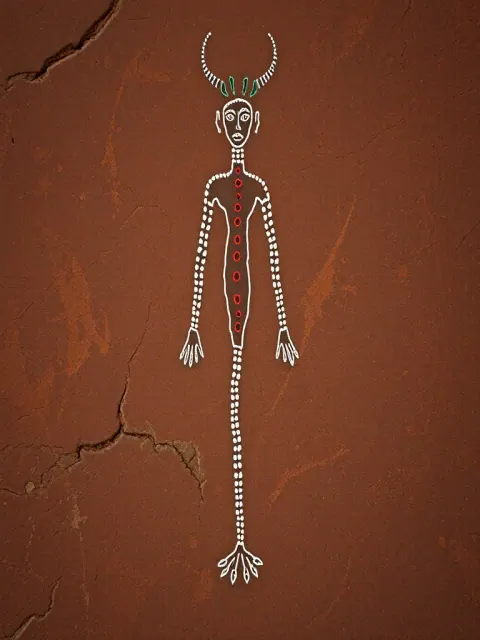
Depictions of the Rainbow Serpent represent one of the longest continuous artistic traditions in Australian history, with gallery panels dating back thousands of years across sandstone shelters at Ubirr, Burrungkuy (Nou…

What scholars debate

Radcliffe-Brown's Comparative Ecological Hypothesis. In his landmark 1926 and 1930 articles, A. R. Radcliffe-Brown proposed that the Rainbow Serpent was the single most widespread and uniform religious concept in Austra…

After antiquity

In modern Australia, the Rainbow Serpent has become one of the most recognizable cultural and visual symbols of Indigenous artistic expression, prominently celebrated on bark paintings and canvas by master painters from…

Did you know?

Kakadu National Park, inscribed on the UNESCO World Heritage list for its outstanding cultural and natural values, officially chose the Rainbow Serpent as its central institutional emblem.

Codex relic

Rainbow Arc of the Rain. The rainbow that arches in the sky when she moves between one waterhole and another after the rain.

The rest of this scroll is sealed

The legends, the myth, the cult and relics are part of the full Codex. You can open 1 full entry for free every day; to open all 500 deities with no limits and no ads, subscribe to Codex PRO.

See Codex PROGet it on Google Play

From the same pantheon

View pantheon