5 sections of this entry are open to everyone: the summary, the people, the symbols, the lineage and the sources. The other 9 (Name and epithets, In the ancient sources, The myths, Worship and archaeology, How the god was depicted, What scholars debate, After antiquity, Did you know?, Codex relic) are part of the full Codex: PRO opens the whole study of all 500 deities, and without a subscription you can read one full entry a day, just like in the app.
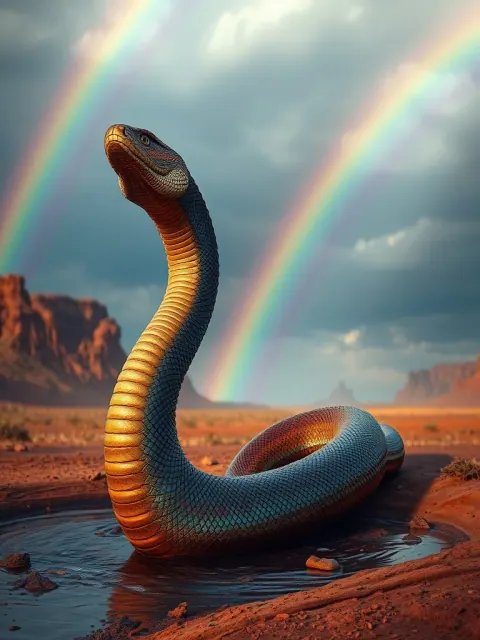
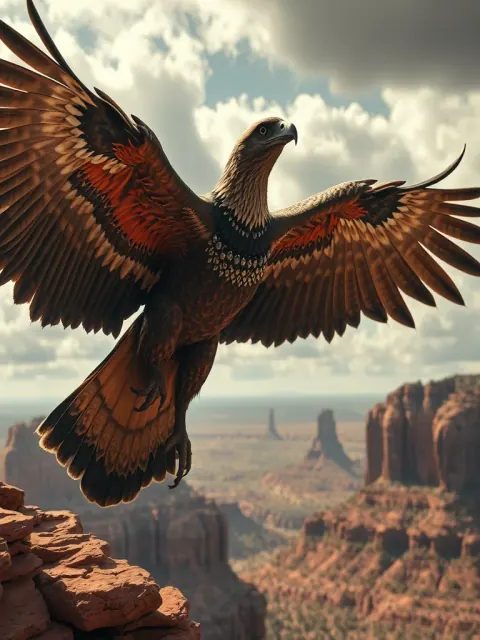
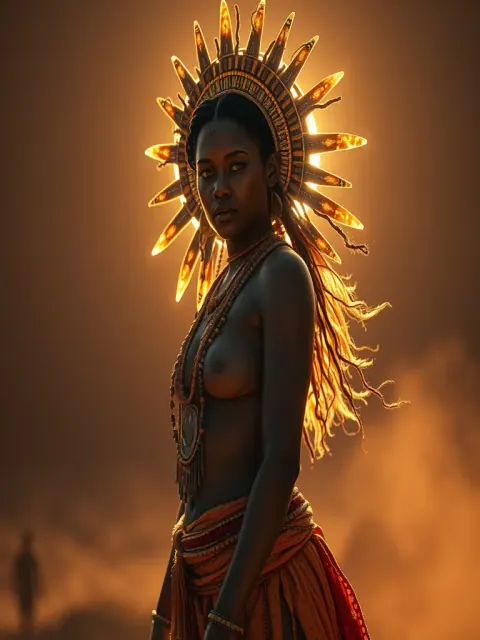
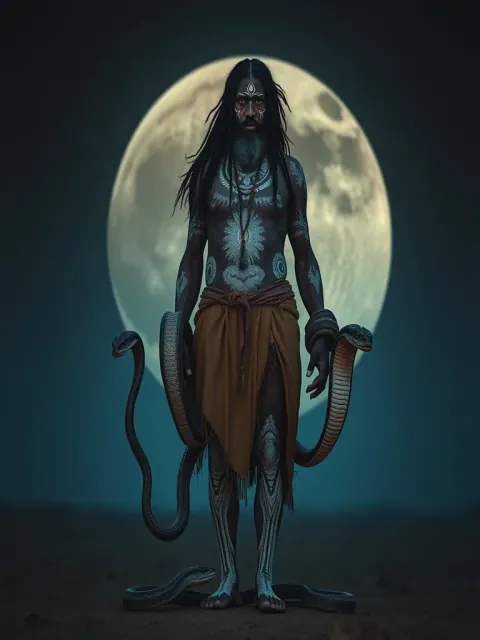
The ancestral beings of the Dreamtime are revered by Aboriginal Australians, possibly the oldest continuous culture on Earth. These beings are believed to have created the landscape, the laws, and life during the Dreaming. Their stories are kept in rock paintings, songs, and rituals passed down over tens of millennia.
At corroborees, songs and body-painted dances re-enact the journeys of the Dreaming ancestors. The songlines, singing tracks, map the sacred land from memory, and places like Uluru remain living sanctuaries under the care of their traditional custodians.
01
At a glance
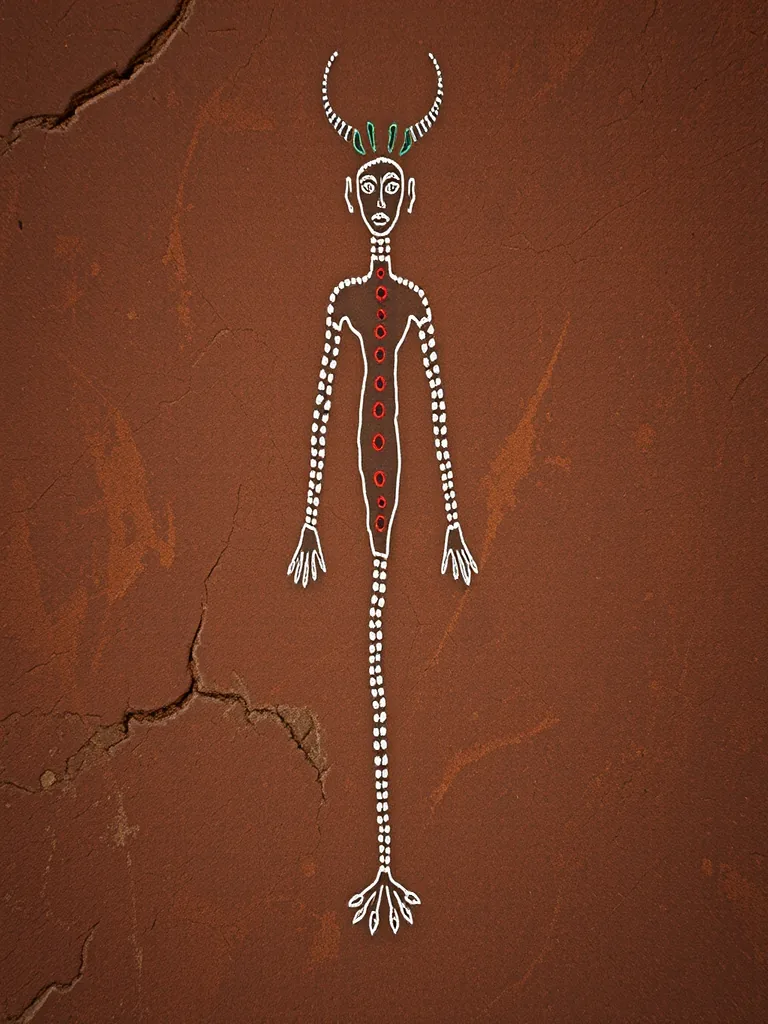
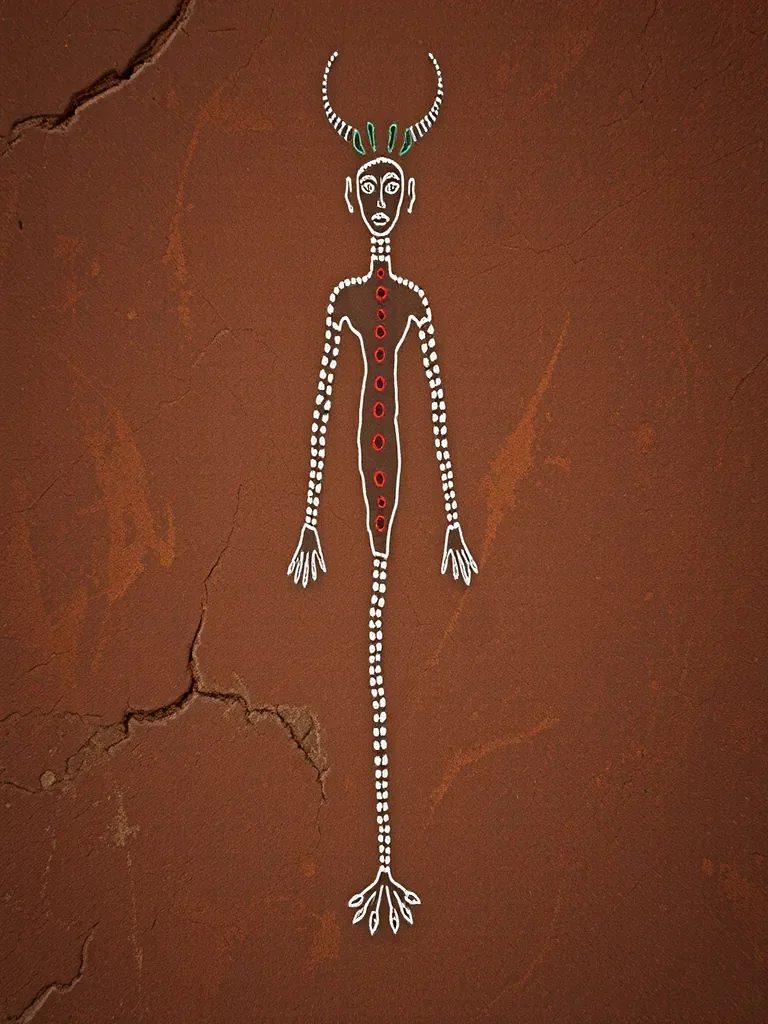
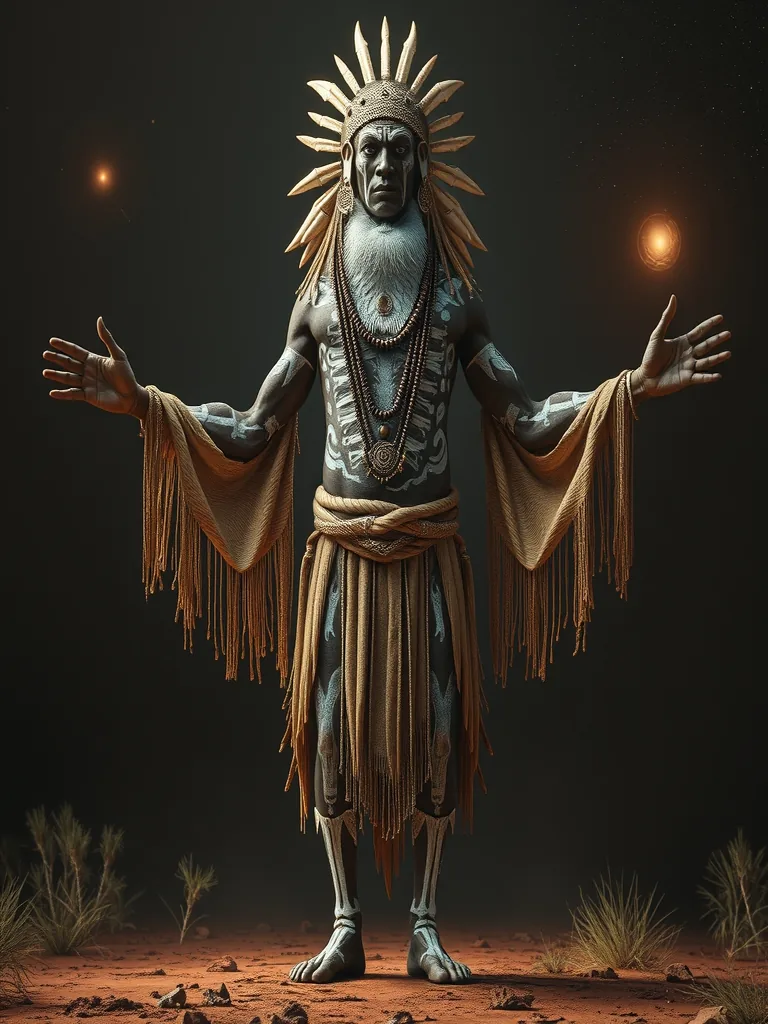
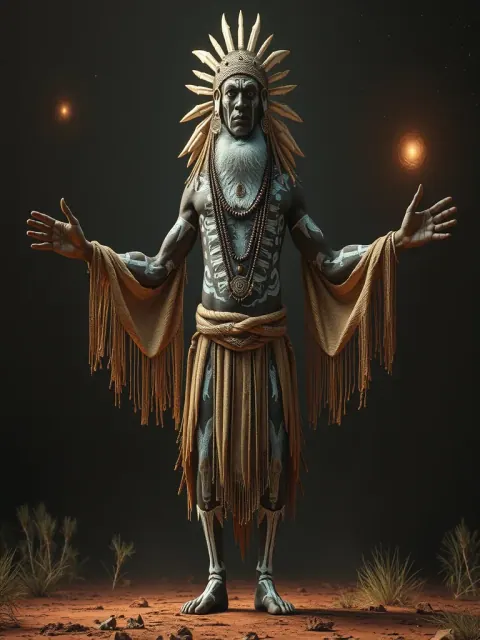
Daramulum (also recorded in nineteenth-century ethnographic literature as Daramulun, Dharramulan, Tharamulun, or Turramulan) is a prominent ancestral spirit, cosmic lawgiver, and master of male initiatory rites among the Aboriginal peoples of New South Wales, holding a paramount position among the Yuin (South Coast), Wiradjuri, and Kamilaroi (Gamilaraay) nations. In the Yuin tradition documented by Alfred William Howitt from senior cultural custodians such as Umbarra (King Merriman), Daramulun is the supreme ancestral Being (designated by the honorifics Biamban or Papang, meaning 'All-Father') who originally lived upon the earth with his mother Ngalalbal. During that primordial epoch prior to human existence, the earth was bare and as rigid as stone, extending out over areas now submerged by the sea. Daramulun placed trees upon the ground, created animal and plant forms, taught the fashioning of hunting weapons (spears, boomerangs, and shields), and instituted the moral codes of community life. After Kaboka the thrush caused a catastrophic flood that overwhelmed the coastlands and trapped survivors atop the sacred peak of Gulaga (Mount Dromedary), Daramulun ascended into the sky vault, where he perpetually watches over human affairs. In inland traditions (Wiradjuri and Kamilaroi) documented by Robert Hamilton Mathews and William Ridley, Dharramulan operates in close conjunction with Baiame — portrayed either as his son and moral enforcer or as a formidable one-legged being whose voice resonates through thunder and the roar of the sacred bullroarer (mudthi or dhurumbulum), an instrument strictly restricted to initiated men that enforces boundaries during Bora and Burbung ceremonies.
6 min read · Reviewed on September 29, 2026 · How we research
02
Sacred symbols
The bullroarer, the moon, the single leg and the stone axe
03
Family
Parents
Ngalalbal (primordial mother in Yuin cosmology, with whom Daramulun originally inhabited the earth)BBaiame
Daramulum
Genealogy according to A. W. Howitt, The Native Tribes of South-East Australia (1904, pp. 494–508, 528–555); R. H. Mathews, The Bora of the Kamilaroi Tribe (1895, pp. 411–427); The Burbung of the Wiradthuri (1896, 1897); John Fraser (1883, 1892)
04
Sources and further reading
Primary sources
Howitt, Alfred William, The Native Tribes of South-East Australia. translation: London: Macmillan and Co., Ltd., 1904. read
Mathews, Robert Hamilton, The Bora, or Initiation Ceremonies of the Kamilaroi Tribe. translation: The Journal of the Anthropological Institute of Great Britain and Ireland, Vol. 24, pp. 411–427, 1895. read
Ridley, William, Kámilarói, and Other Australian Languages. translation: Sydney: Thomas Richards, Government Printer, 1875. read
Fraser, John, The Aborigines of New South Wales. translation: Journal and Proceedings of the Royal Society of New South Wales, Vol. 16, pp. 193–233, 1883.
Howitt, Alfred William, On some Australian Ceremonies of Initiation. translation: The Journal of the Anthropological Institute of Great Britain and Ireland, Vol. 13, pp. 432–459, 1884. read
Studies
Leaman, Trevor & Hamacher, Duane W., Baiami and the Emu Chase: An Astronomical Interpretation of a Wiradjuri Dreaming Associated with the Burbung. Journal of Astronomical History and Heritage, 22(2), pp. 225–237, 2019. open
Norris, Ray P., Dawes Review 5: Australian Aboriginal Astronomy and Navigation. Publications of the Astronomical Society of Australia, 33, e039, 2016. open
Fuller, Robert S., Hamacher, Duane W. & Norris, Ray P., The Astronomy of the Kamilaroi and Euahlayi Peoples and their Neighbours. Australian Aboriginal Studies / arXiv:1311.0076, 2014. open
Eliade, Mircea, Australian Religions: An Introduction. Ithaca: Cornell University Press, 1973. open
Name and epithets
The theonym derives from indigenous vocabulary documented within the Yuin-Kuri and Pama-Nyungan linguistic families of southeastern Australia.
In the ancient sources
The Native Tribes of South-East Australia, 1904. A. W. Howitt's comprehensive eyewitness monograph describing the Yuin Kuringal, earth relief figures of Daramulun, the Kaboka deluge, and sky-ascension.
The myths
Earthly Genesis with Ngalalbal and the Deluge of Kaboka. According to oral accounts recorded by A. W. Howitt from Yuin cultural leaders at Wallaga Lake, Daramulun originally inhabited the earth alongside his mother Ngal…
Worship and archaeology
Veneration of Daramulum did not center on fixed congregational temples, but operated through the profound ritual structures of the Kuringal, Bora, and Burbung.
How the god was depicted
Visual representations of Daramulum represent some of the most distinctive sacred art forms of southeastern Australia.
What scholars debate
. During the late nineteenth and early twentieth centuries, ethnographic reports by Howitt and Mathews spurred intense scholarly debate in European anthropology.
After antiquity
Ethnographic accounts of Daramulun provided crucial comparative material for foundational social science works, directly informing Arnold van Gennep's The Rites of Passage (1909) and James Frazer's The Golden Bough.
Did you know?
Kamilaroi and Wiradjuri ethnoastronomy studied by Ray Norris and Trevor Leaman connects Daramulun and Baiame to dark dust lanes of the Milky Way, particularly the Celestial Emu and seasonal avian breeding cycles that go…
Codex relic
Sacred Bullroarer. The bullroarer whose drone sounds in the secret rites, held to be the very voice of the sky spirit.
The rest of this scroll is sealed
The legends, the myth, the cult and relics are part of the full Codex. You can open 1 full entry for free every day; to open all 500 deities with no limits and no ads, subscribe to Codex PRO.