Skip to content
CodexMythologia
Back to the Codex
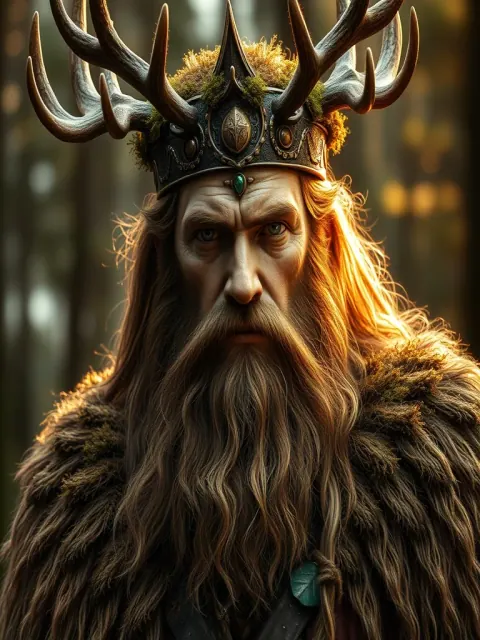
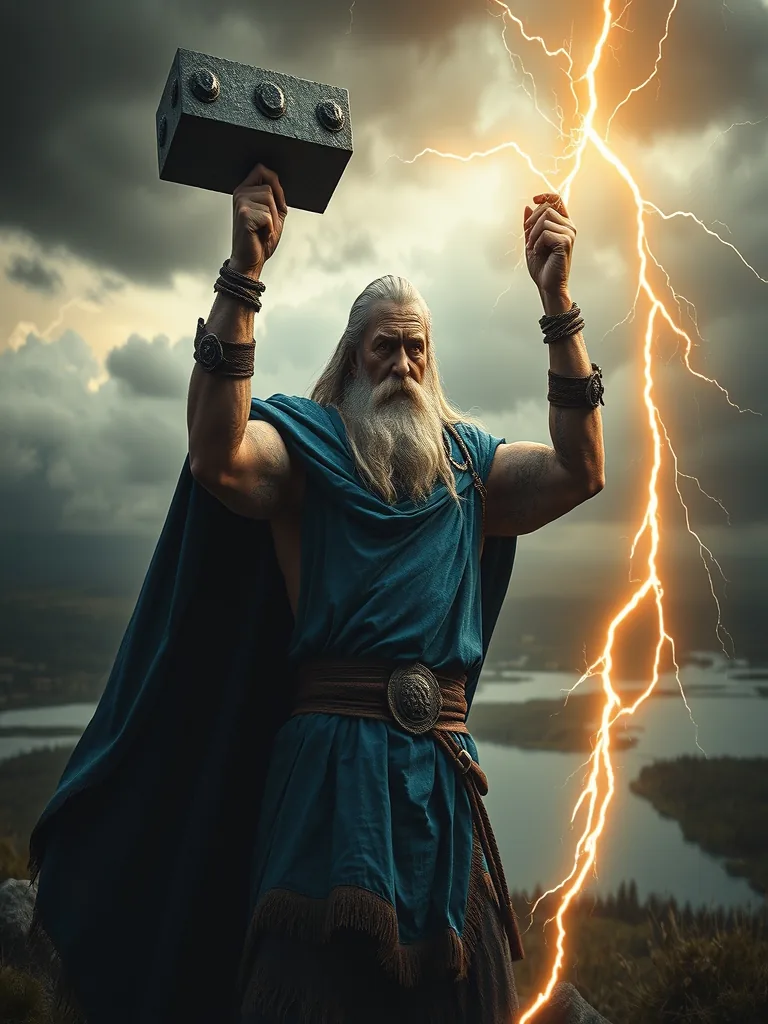
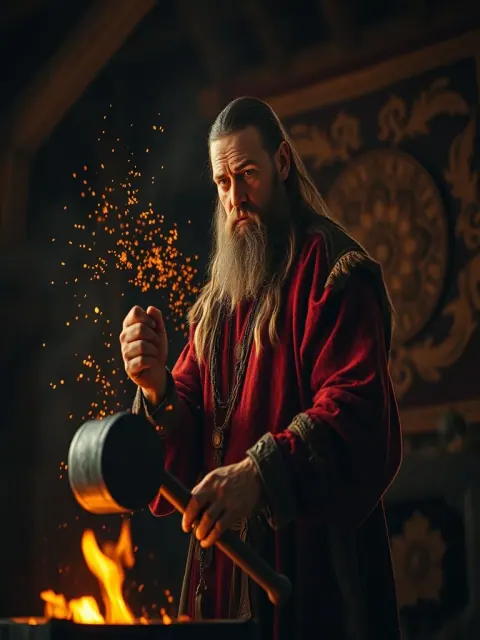
Portrait of Ukko, Finnish deity
Finnish
Tap or drag
Finnish

Ukko

The Lord of Thunder

Domain
Sky, Thunder & Harvest
Alignment
Lawful Good
Element
Thunder
Relics of Power
Thunderstone Axe
Speak with Ukko

The full Codex

5 sections of this entry are open to everyone: the summary, the people, the symbols, the lineage and the sources. The other 9 (Name and epithets, In the ancient sources, The myths, Worship and archaeology, How the god was depicted, What scholars debate, After antiquity, Did you know?, Codex relic) are part of the full Codex: PRO opens the whole study of all 500 deities, and without a subscription you can read one full entry a day, just like in the app.

The People

People
Finnic peoples
Region
Finland & the Baltic
Period
antiquity – 19th c.

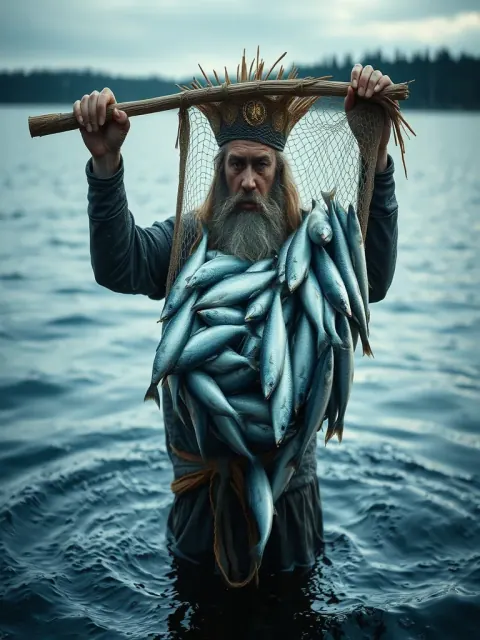
The Finnish deities were worshipped by the Finnic peoples of the forests and lakes of northern Europe. Tied to nature, the hunt, and the magic of words, they were passed down orally for generations. In the 19th century, Elias Lönnrot gathered these songs into the Kalevala, Finland's national epic.

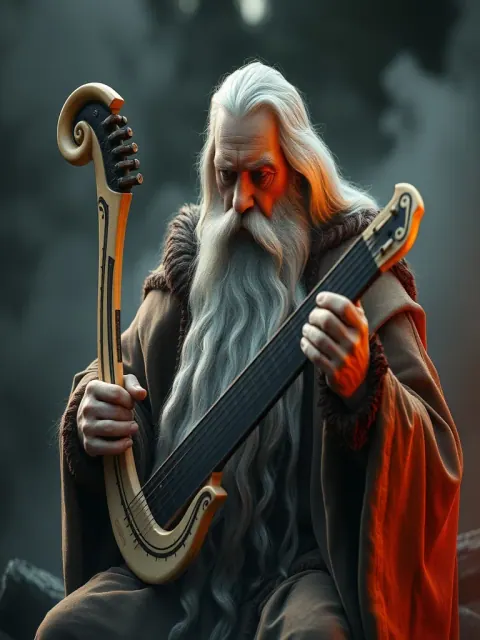
Rune singers passed the myths down in verses sung to the kantele, Väinämöinen's sacred zither. At the feast of Ukon vakat, drink offerings were made to Ukko for thunder and a good harvest, and hunters performed rites of apology to the spirit of the slain bear.
At a glance

Ukko (reverently addressed in archaic rune songs as Ukko Ylijumala, 'Ukko the Supreme God' or 'The Ancient Father of Heaven') is the paramount deity of thunder, lightning, atmospheric weather, and agrarian fertility in the pre-Christian traditions of the Finnish and Karelian peoples. Far from being a purely militaristic war god, Ukko was woven into the seasonal survival of northern forest farmers and swidden agriculturalists across Fennoscandia. According to the earliest surviving historical document of his veneration — composed in 1551 by Lutheran reformer and bishop Mikael Agricola in the preface to his Finnish translation of the Book of Psalms (Dauidin Psaltari) —, rural communities gathered in springtime to observe the communal feast of Ukonvakat ('Ukko's baskets'). During this sacred gathering, consecrated barley beer was consumed from the Ukon malja ('Ukko's toast cup') to invoke fertile rain upon freshly sowed seedbeds. In the oral epic rune songs (runolaulut) collected and edited by Elias Lönnrot into the national epic Kalevala, Ukko resides at the apex of heaven, seated on the rim of storm clouds or at the center of the celestial vault (taivaan napa), cloaked in a blue mantle and wearing boots that flash sparks of fire. He is invoked by epic heroes Väinämöinen, Ilmarinen, and Lemminkäinen as the physician of last resort, the originator of cosmic fire in Runo 47, and the supreme protector whose lightning repels drought and overthrows malevolent magic.

8 min read · Reviewed on September 30, 2026 · How we research

Sacred symbols

The axe, the hammer, the thunderstone and the rainbow

Family

Ukko
Unions
Rauni / Akka (female personification of the fertile earth and the sacred rowan tree, recorded in Mikael Agricola's 1551 list)
Genealogy according to Mikael Agricola, Dauidin Psaltari (1551, Esipuhe); Elias Lönnrot, Kalevala (1849, Runos 2, 9, 32, 43, 47); Uno Harva, Suomalaisten muinaisusko (1948); Unto Salo, Agricola's Ukko in the light of archaeology (1990); Juha Pentikäinen, Kalevala Mythology (1999)

Sources and further reading

Primary sources

  • Agricola, Mikael, Dauidin Psaltari (Alcupuhe Psaltarin päle). translation: Stockholm: Amund Laurentsson, 1551 (Virtuaalinen vanha kirjasuomi, Helsingin yliopisto). read
  • Lönnrot, Elias (Compiler) & Crawford, John Martin (Translator), The Kalevala: The Epic Poem of Finland (Runos II, IX, XLIII, XLVII). translation: New York: John B. Alden, 1888 (Project Gutenberg eBook #5186). read
  • Lönnrot, Elias (Compiler) & Kirby, W. F. (Translator), Kalevala: The Land of Heroes. translation: London: J. M. Dent & Co., 1907 (Internet Sacred Text Archive). read

Studies

  • Holmberg (Harva), Uno, Finno-Ugric, Siberian [Mythology] (The Mythology of All Races, Vol. IV). Archaeological Institute of America / Marshall Jones Company, Boston, 1927. open
  • Harva, Uno, Suomalaisten muinaisusko. WSOY, Porvoo & Helsinki, 1948. open
  • Salo, Unto, Agricola's Ukko in the light of archaeology: a chronological and interpretative study of ancient Finnish religion. Scripta Instituti Donneriani Aboensis, Vol. 13, pp. 92–181, 1990. open
  • Pentikäinen, Juha, Kalevala Mythology (Expanded Edition). Indiana University Press, Bloomington, 1999. open

Name and epithets

The Finnish noun 'Ukko' literally signifies 'old man', 'venerable elder', or 'grandfather'. In the religious history of the Finnic peoples, addressing the supreme sky ruler by this familial title functioned as an apotro…

In the ancient sources

Dauidin Psaltari (Preface and Catalogue of Ancient Gods), 1551 CE. Mikael Agricola produces the earliest literary inventory of Finnish pagan deities, describing the drinking of Ukko's toast (Ukon malja) at spring sowing…

The myths

Väinämöinen's Supplication and the Blessing of Spring Rain. In Runo II of the Kalevala, the ancient sage-singer Väinämöinen clears the primeval wilderness and sows barley seeds into the receptive soil beside clear lakes…

Worship and archaeology

The religious observance surrounding Ukko centered on seasonal agrarian anxiety regarding timely rain and fertile warmth during the brief subarctic summer.

How the god was depicted

In Finnish folklore and material tradition, Ukko is imagined as a robust, white-bearded patriarch clothed in a dark blue cloak (siniviitta) reminiscent of storm clouds, brandishing lightning-charged weapons.

What scholars debate

. Within comparative mythology and Finno-Ugric studies, Ukko has stood at the center of longstanding scholarly debate.

After antiquity

Following the nineteenth-century publication of the Kalevala and the rise of the Finnish national romantic movement prior to independence in 1917, Ukko became an enduring cultural icon of Finnish heritage.

Did you know?

In contemporary Finnish, the common everyday words for a thunderstorm (ukkonen) and thunderous weather (ukonilma) derive straight from the god's name, cementing his memory within modern speech.

Codex relic

Thunderstone Axe. The celestial axe whose blow strikes the lightning and makes the sky roll with thunder over the earth.

The rest of this scroll is sealed

The legends, the myth, the cult and relics are part of the full Codex. You can open 1 full entry for free every day; to open all 500 deities with no limits and no ads, subscribe to Codex PRO.

See Codex PROGet it on Google Play

From the same pantheon

View pantheon