Skip to content
CodexMythologia
Back to the Codex
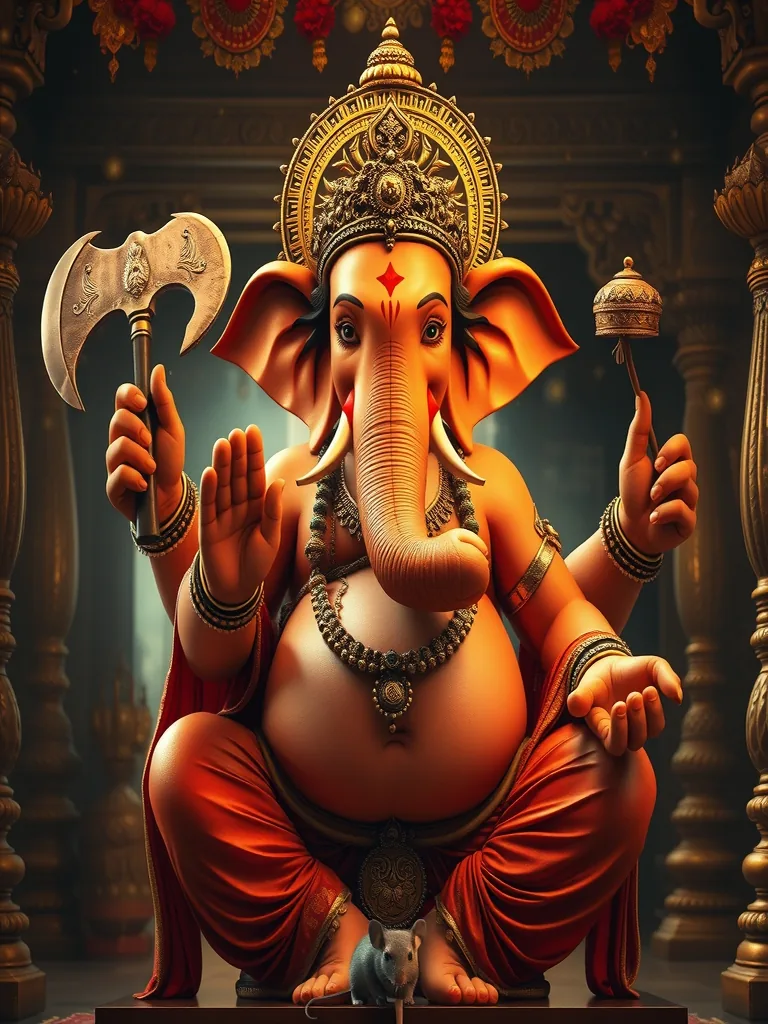
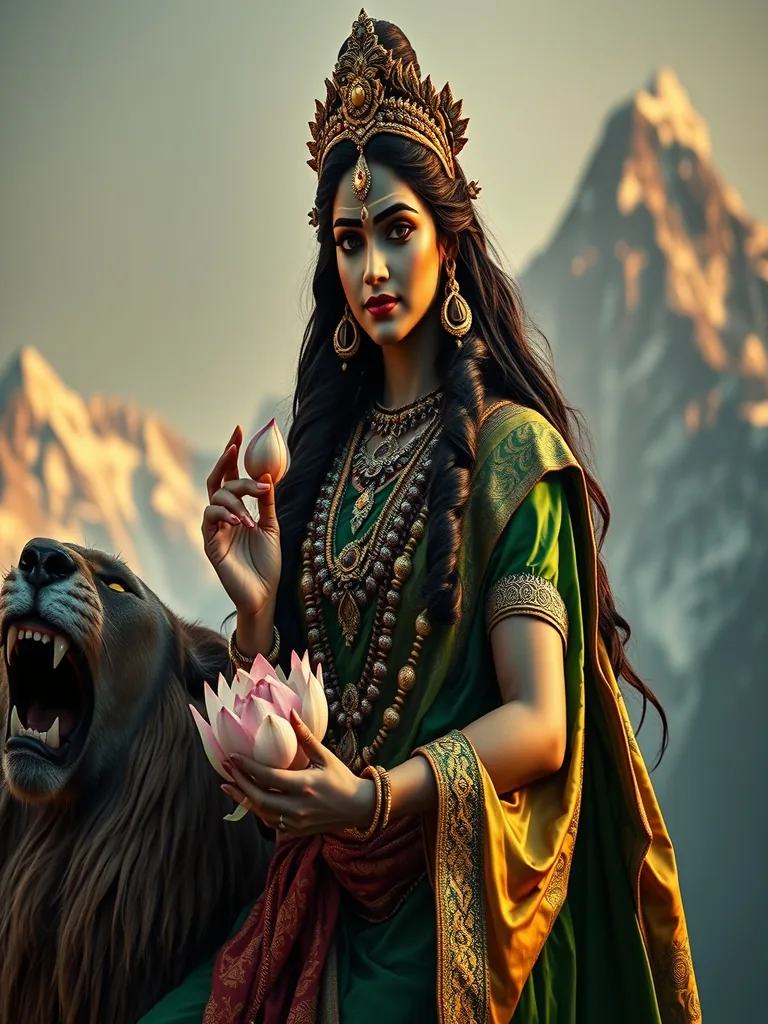
Portrait of Ganesha, Hindu deity
Hindu
Tap or drag
Hindu

Ganesha

The Remover of Obstacles

Domain
Wisdom & Success
Alignment
Lawful Good
Element
Earth
Relics of Power
Ganesha's Silk Lasso
Speak with Ganesha

The full Codex

5 sections of this entry are open to everyone: the summary, the people, the symbols, the lineage and the sources. The other 9 (Name and epithets, In the ancient sources, The myths, Worship and archaeology, How the god was depicted, What scholars debate, After antiquity, Did you know?, Codex relic) are part of the full Codex: PRO opens the whole study of all 500 deities, and without a subscription you can read one full entry a day, just like in the app.

The People

People
Hindu peoples
Region
Indian subcontinent
Period
c. 1500 BC – present

The Hindu deities have been worshipped for over three thousand years across the Indian subcontinent, from the Vedic hymns to the living Hinduism of today. Billions of devotees dedicate to them temples, festivals such as Diwali and Holi, and daily rituals in the home. It is one of the largest religious traditions still practiced in the world.

Diwali lights up India with oil lamps in honor of Lakshmi, and Holi celebrates spring with clouds of colored powder. At the Kumbh Mela, the largest pilgrimage on Earth, tens of millions bathe in the sacred rivers, and daily puja brings flowers, incense, and food to the altars.
At a glance

Ganesha is the elephant-headed deity whom the Shiva Purana presents as Parvati's son, restored to life through Shiva's intervention and installed at the head of the ganas, the groups attending the god. The same text links his ritual precedence to the removal of obstacles. His story, however, does not fit into a single biography: the Purana itself announces different accounts of his birth, and the Brihaddharma Purana offers another explanation for the elephant head. In the episode of his contest with Kartikeya, a ritual circuit around his parents outweighs a journey around the earth. The opening of a translation of the Mahabharata also assigns him the role of Vyasa's scribe, without saying that he used a tusk as a pen.

10 min read · Reviewed on October 13, 2026 · How we research

Sacred symbols

Elephant head, the mouse (his mount), the modak sweet, the axe and the noose

Family

Siblings
Ganesha
Unions
Siddhi (in this version of the Shiva Purana)Buddhi (in this version of the Shiva Purana)
Children
Kshema (Siddhi's son, in this version)Labha (Buddhi's son, in this version)
Genealogy according to Shiva Purana, Rudra-samhita, Kumara-khanda, caps. 13 e 19–20; Brihaddharma Purana, cap. 54 (versão divergente)

Sources and further reading

Primary sources

  • Tradição purânica; trad. J. L. Shastri, Shiva Purana, Rudra-samhita, Kumara-khanda, caps. 13–20. read
  • Tradição purânica; trad. Manmatha Nath Dutt, Brihaddharma Purana, cap. 54. read
  • Tradição épica; trad. K. M. Ganguli, Mahabharata, Adi Parva, seção 1. read
  • Tradição purânica; trad. N. Gangadharan, Agni Purana, cap. 50. read

Studies

  • The Purana Bulletin, The Problem of Ganesa in the Puranas. Purana, vol. 4, parte 1, 1962. open

Name and epithets

Gaṇeśa joins gaṇa, group or troop, to īśa, lord: the name corresponds to the position of chief of the ganas granted in the Shiva Purana narrative.

In the ancient sources

Shiva Purana, Rudra-samhita, Kumara-khanda, Puranic compilation with complex dating. Brings together the creation of the guardian, battle, new head, ritual precedence, and marriage.

The myths

The guardian created by Parvati. In chapter 13 of the Kumara-khanda, Jaya and Vijaya observe that Nandin and the other ganas obey Shiva before Parvati.

Worship and archaeology

Chapter 18 of the Kumara-khanda connects Ganesha's precedence with reconciliation after his death. The gods say that he must be worshipped first and that rites addressed to the others will bear no fruit if his homage is…

How the god was depicted

Narratives explain the elephant head in different ways, while image manuals record how it should appear. In chapter 50 of the Agni Purana, Vinayaka has a human body, an elephant's head and trunk, and a large belly; the…

What scholars debate

One origin, several narratives. The Shiva Purana explicitly acknowledges different versions of the birth. Comparing it with the Brihaddharma Purana prevents one variant from becoming a universal chronology.

After antiquity

The sources presented already show distinct receptions within Hindu literature: a domestic narrative and divine conflict in the Shiva Purana, another genealogy in the Brihaddharma Purana, an image prescription in the Ag…

Did you know?

Chapter 17 of the Shiva Purana specifies a one-tusked elephant for the boy's restoration; it does not name him Airavata. In the Brihaddharma Purana, the earth offers the restored Ganesha a mouse as a mount.

Codex relic

Ganesha's Silk Lasso. A spiritual lasso that captures and pacifies wandering minds and fears.

The rest of this scroll is sealed

The legends, the myth, the cult and relics are part of the full Codex. You can open 1 full entry for free every day; to open all 500 deities with no limits and no ads, subscribe to Codex PRO.

See Codex PROGet it on Google Play

From the same pantheon

View pantheon