Skip to content
CodexMythologia
Back to the Codex
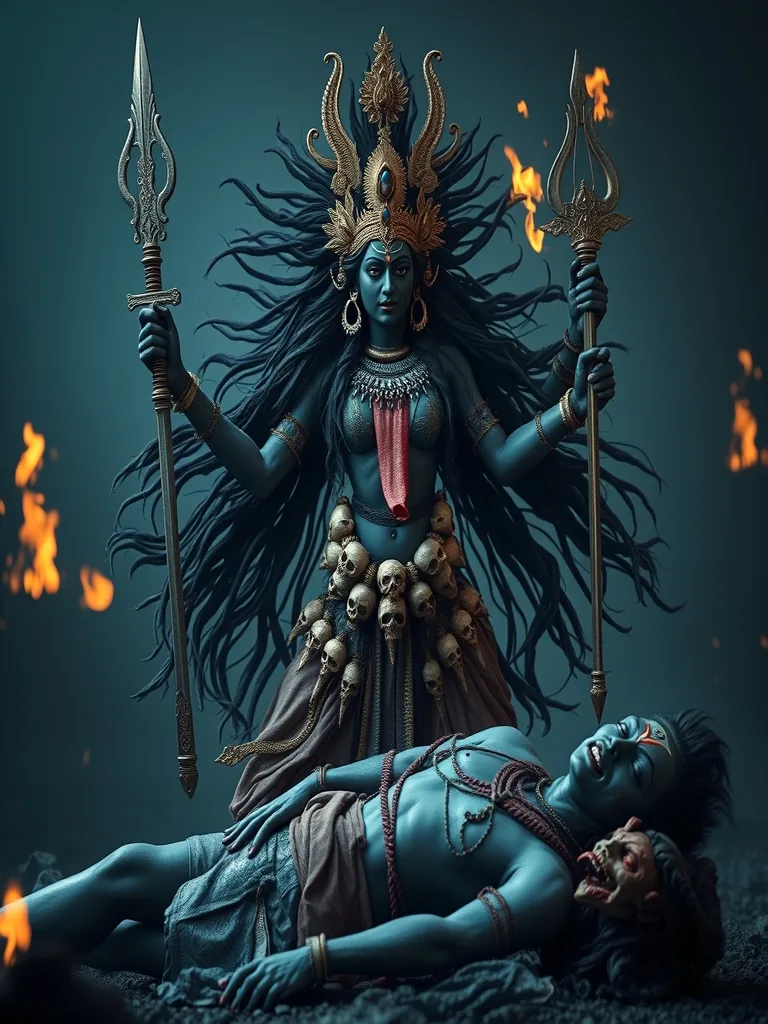
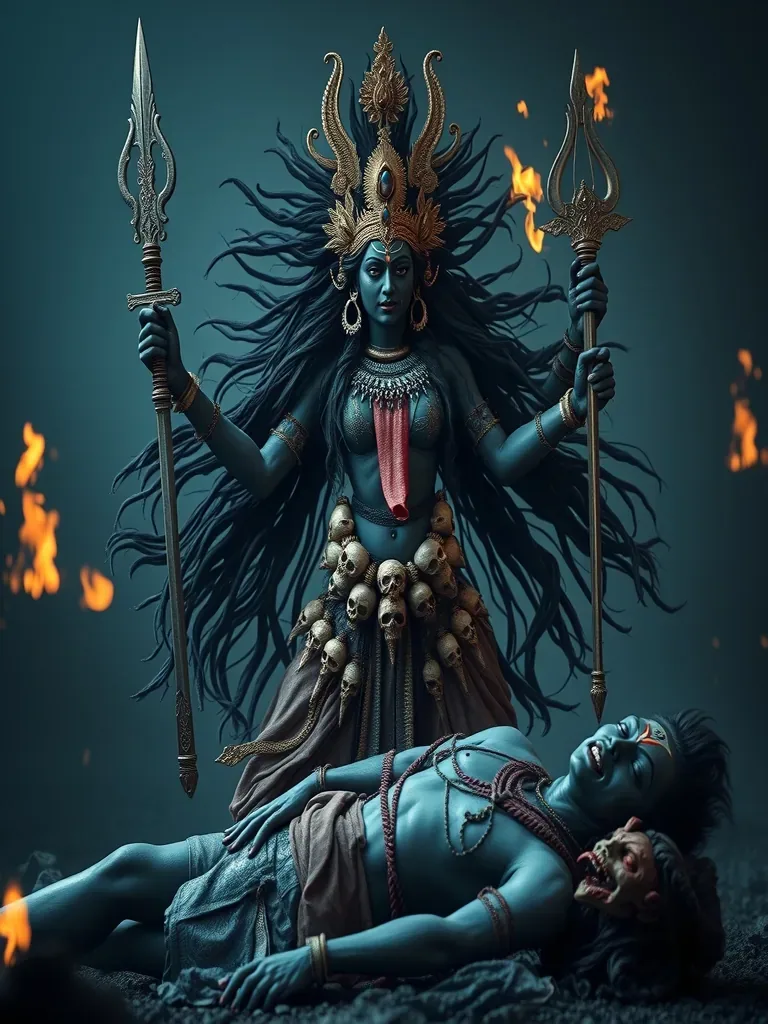
Portrait of Kali, Hindu deity
Hindu
Tap or drag
Hindu

Kali

The Fury of Time

Domain
Time, Death & Change
Alignment
Chaotic Good
Element
Fire
Relics of Power
Glaive of Punishment
Speak with Kali

The full Codex

5 sections of this entry are open to everyone: the summary, the people, the symbols, the lineage and the sources. The other 9 (Name and epithets, In the ancient sources, The myths, Worship and archaeology, How the god was depicted, What scholars debate, After antiquity, Did you know?, Codex relic) are part of the full Codex: PRO opens the whole study of all 500 deities, and without a subscription you can read one full entry a day, just like in the app.

The People

People
Hindu peoples
Region
Indian subcontinent
Period
c. 1500 BC – present

The Hindu deities have been worshipped for over three thousand years across the Indian subcontinent, from the Vedic hymns to the living Hinduism of today. Billions of devotees dedicate to them temples, festivals such as Diwali and Holi, and daily rituals in the home. It is one of the largest religious traditions still practiced in the world.

Diwali lights up India with oil lamps in honor of Lakshmi, and Holi celebrates spring with clouds of colored powder. At the Kumbh Mela, the largest pilgrimage on Earth, tens of millions bathe in the sacred rivers, and daily puja brings flowers, incense, and food to the altars.
At a glance

Kali (Kālī) is a Hindu goddess whose history brings together combat, divine power, and devotion to the Mother. In the Devī Māhātmya she emerges from the angry brow of Ambika, kills Canda and Munda, and receives the name Chamunda. She then prevents Raktabija's blood from producing new fighters. These actions belong to the Goddess's campaign against the asuras; Kali does not fight the entire war alone. The poem describes a warrior with an open mouth, extended tongue, sword, and noose. The now widespread image of four arms and feet upon Shiva appears in later visual traditions, especially Bengali ones. Separating these layers avoids attributing everything said and depicted about the goddess to one text.

9 min read · Reviewed on October 13, 2026 · How we research

Sacred symbols

Protruding tongue, garland of skulls, sword, severed hand and dark skin

Family

Kali
Unions
Genealogy according to Devī Māhātmya 5.84–88; 7.5–6; Mikel Burley, The nature and significance of the Hindu Divine Mother; The Metropolitan Museum of Art, Seeing Kali Clearly

Sources and further reading

Primary sources

  • Anonymous, Devī Māhātmya, edition with transliterated Sanskrit and English translation. read
  • Anonymous, Devī Māhātmya, edition with transliterated Sanskrit and English translation. read
  • Anonymous, Devī Māhātmya, edition with transliterated Sanskrit and English translation. read
  • Anonymous, Devī Māhātmya, edition with transliterated Sanskrit and English translation. read
  • Vyasa (traditional attribution), Mahābhārata, Sauptika Parva, translation by Kisari Mohan Ganguli. read

Studies

  • Mikel Burley, The nature and significance of the Hindu Divine Mother in embodied thealogical perspective. Religious Studies, Cambridge University Press, 2022. open
  • The Metropolitan Museum of Art, Seeing Kali Clearly. open
  • The British Museum, Figure of Kali striding over recumbent Shiva (museum no. 1894,0216.10). open
  • Alex Wolfers, Kali rises in the East. The British Museum, 2020. open
  • Incredible India, Ministry of Tourism, Kalighat Temple Kolkata. open
  • Dakshineswar Kali Temple and Debottar Estate, Official website: temple foundation. open
  • Swami Sivananda, The Devi Mahatmya: general rules for recitation. The Divine Life Society. open

Name and epithets

The Sanskrit name Kālī is related to kāla, a word associated with darkness, time, and death. The context determines which meaning prevails.

In the ancient sources

Mahābhārata, Sauptika Parva, layered composition of uncertain date. Presents Death-Night, a black and bloody figure seen by the warriors; her direct identification with Kali is debatable.

The myths

Parvati, Kaushiki, and the name Kalika. The gods had lost their position to Shumbha and Nishumbha when they asked the Goddess for help.

Worship and archaeology

Kali's presence in battle stories does not exhaust her devotional life. The Devī Māhātmya itself is read ritually: the Divine Life Society edition offers instructions for its recitation, a sign of the work's devotional…

How the god was depicted

Devī Māhātmya 7.6–8 combines sword, noose, skull-topped staff, garland of heads, tiger skin, lean body, and extended tongue. This is a figure made for the poem's battlefield.

What scholars debate

Chronology and identity of the forms. The academic study published in Religious Studies records proposed dates for the Devī Māhātmya ranging from the fifth–sixth to the eighth–ninth centuries CE.

After antiquity

In eighteenth- and nineteenth-century Bengal, Kali's image circulated through devotion, objects, and prints. The British Museum links Ramprasad Sen's poetry to a portrayal of the goddess as a fierce and compassionate Mo…

Did you know?

Chapter 7 explains the name Chamunda through the delivery of Canda's and Munda's heads. In the next chapter Candika already addresses Kali by that name when ordering her to collect Raktabija's blood.

Codex relic

Glaive of Punishment. A sharp blade cutting through ego illusions and protecting the innocent.

The rest of this scroll is sealed

The legends, the myth, the cult and relics are part of the full Codex. You can open 1 full entry for free every day; to open all 500 deities with no limits and no ads, subscribe to Codex PRO.

See Codex PROGet it on Google Play

From the same pantheon

View pantheon