Skip to content
CodexMythologia
Back to the Codex
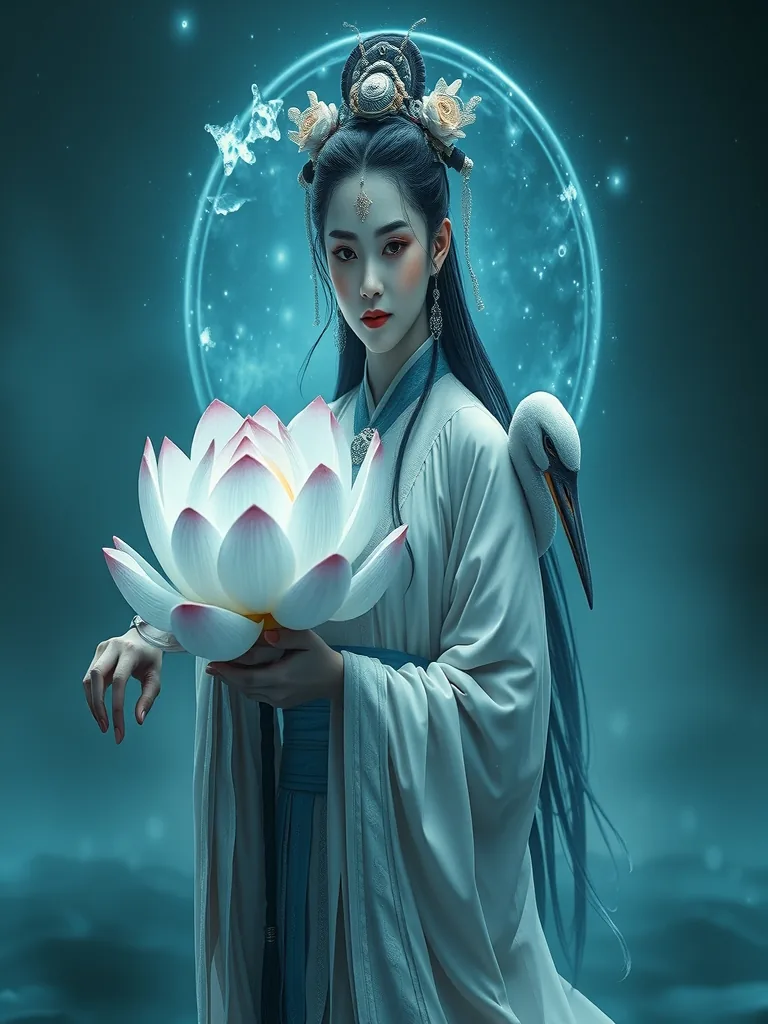
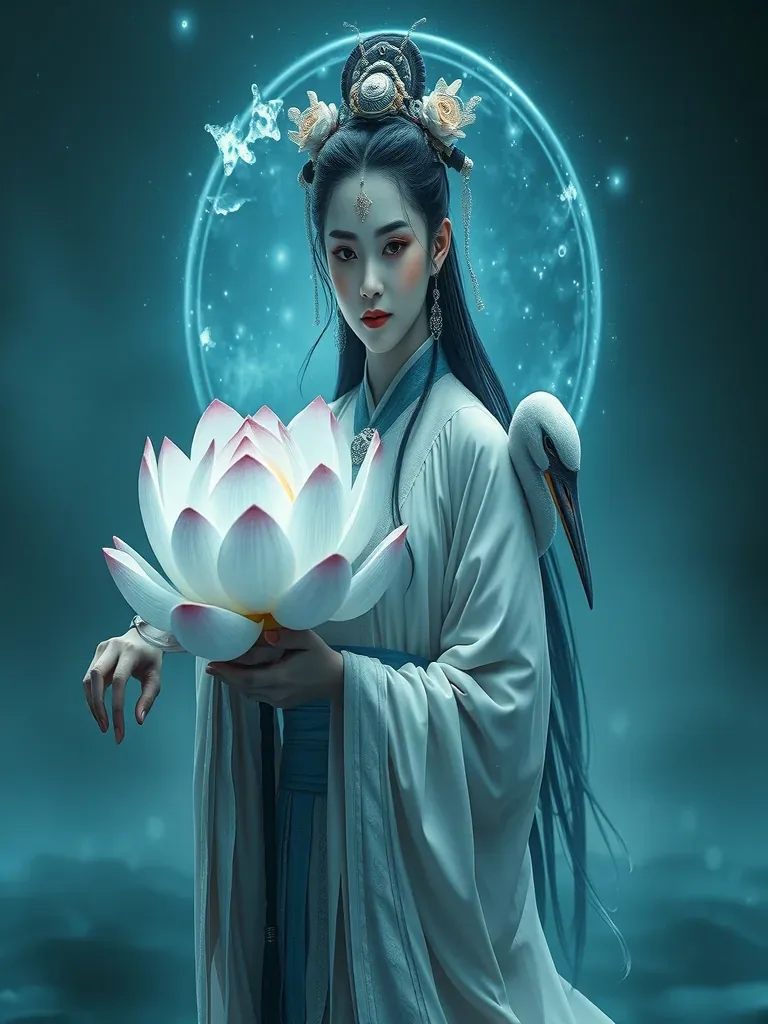
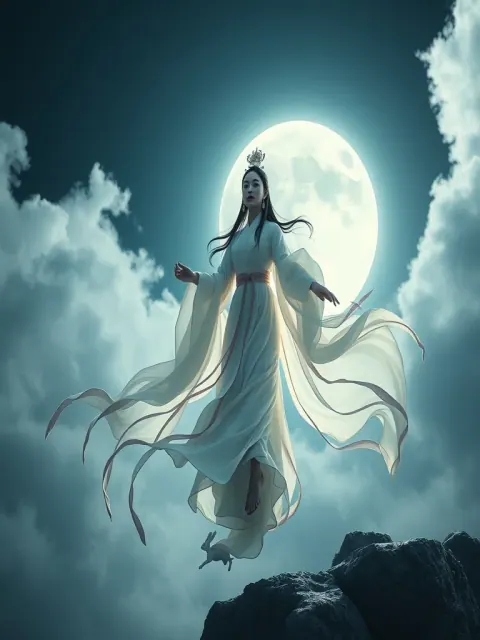
Portrait of He Xiangu, Chinese deity
Chinese
Tap or drag
Chinese

He Xiangu

The Immortal of the Lotus

Domain
Purity & Enlightenment
Alignment
Lawful Good
Element
Water
Relics of Power
Sacred Lotus Flower
Speak with He Xiangu

The full Codex

5 sections of this entry are open to everyone: the summary, the people, the symbols, the lineage and the sources. The other 9 (Name and epithets, In the ancient sources, The myths, Worship and archaeology, How the god was depicted, What scholars debate, After antiquity, Did you know?, Codex relic) are part of the full Codex: PRO opens the whole study of all 500 deities, and without a subscription you can read one full entry a day, just like in the app.

The People

People
Chinese
Region
China
Period
c. 1600 BC – present

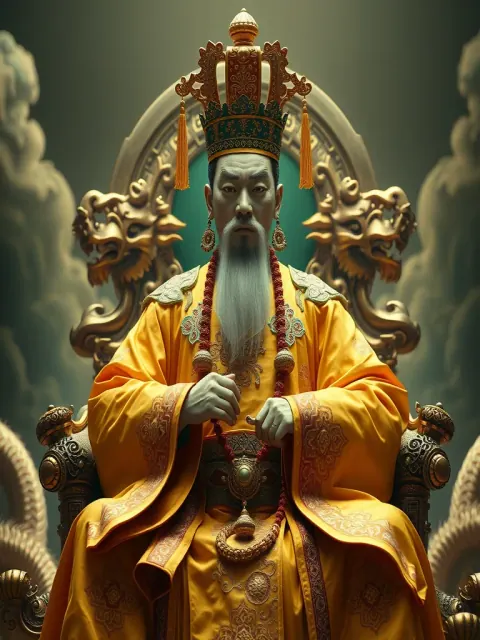
The Chinese deities bring together traditions of Taoism, Buddhism, and folk religion, worshipped for millennia across China. Presided over by the Jade Emperor, they form a vast celestial bureaucracy mirroring the earthly empire. They are honored in temples, at Chinese New Year, and at the altars of homes and ancestors.

Chinese New Year greets the gods with fireworks, dancing lions, and offerings to the Kitchen God, who ascends to heaven to report on the family's conduct. The Dragon Boat Festival honors the poet Qu Yuan, and at Qingming families sweep the tombs and venerate the ancestors.
At a glance

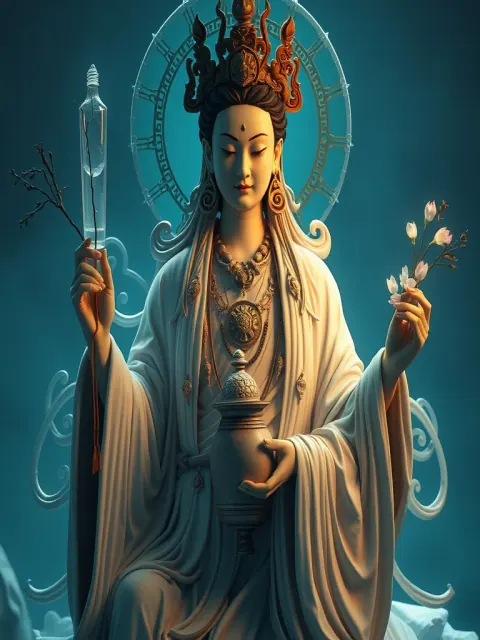
He Xiangu is the sublime immortal maiden of spiritual purity, loving filial piety, and the only female figure enshrined in the venerated College of the Eight Immortals (Baxian) of Daoism in China. Born during the flourishing of the Tang dynasty in the southern province of Guangdong, she attained bodily incorruptibility and mystical lightness after consuming pure crystalline mica powder (yunmu) and sacred fruits gathered on the cliffs of Mount Luofu under the guidance of celestial beings. Wielding a magnificent long staff topped with a blooming lotus flower (Lianhua) whose immaculate petals purify worldly passions and harmonize households, she refused the palace seductions of Empress Wu Zetian’s court in order to care tenderly for her elderly mother and devote her existence to community charity, embodying the perfect union of hermitic transcendence and filial compassion. Her gentle, compassionate presence is the immaculate flower that illuminates homes with filial virtue, domestic harmony and lasting spiritual peace for all families. She guides upright hearts toward perennial serenity and love for one’s fellow beings with infinite sweetness.

14 min read · Reviewed on September 28, 2026 · How we research

Sacred symbols

The lotus flower, the bamboo ladle, the pearl and purity

Family

Parents
He Tai
He Xiangu
Genealogy according to Dongyou Ji; Zengding Soushen Ji; Gujin Tushu Jicheng; Taiping Guangji

Sources and further reading

Primary sources

  • Wu Yuantai, Dongyou Ji. translation: Gu Zhizhong, 1992.
  • Anônimo, Zengding Soushen Ji. translation: Anne Birrell, 1993.
  • Chen Menglei, Gujin Tushu Jicheng. translation: Lionel Giles, 1911.
  • Li Fang, Taiping Guangji. translation: Y. W. Ma e Joseph S. M. Lau, 1978.

Studies

  • Suzanne E. Cahill, Transcendence and Divine Passion: The Queen Mother of the West in Medieval China. Stanford University Press, 1993.
  • Livia Kohn, Daoism and Chinese Culture. Three Pines Press, 2001.
  • Paul R. Katz, Images of the Immortal: The Cult of Lu Dongbin at the Palace of Eternal Joy. University of Hawaii Press, 1999.
  • Henri Maspero, Taoism and Chinese Religion. University of Massachusetts Press, 1981.

Name and epithets

The honorific theonym He Xiangu (何仙姑) is composed of the family surname He (何), the word xian (仙), meaning immortal, transcendent or Daoist saint, and the affectionate, respectful suffix gu (姑), traditionally bestowed o…

In the ancient sources

Dongyou Ji., 16th century CE.. A classic novel recounting her celestial ascent and her magical journeys with the Eight Immortals. Zengding Soushen Ji., 16th century CE..

The myths

The Ingestion of Crystalline Mica and the Light Flight over the Peaks of Mount Luofu.. In the ancient regional chronicles of the Zengding Soushen Ji and the imperial encyclopedia Gujin Tushu Jicheng, it is told that the…

Worship and archaeology

The worship and popular veneration of He Xiangu constitute one of the most warm, moving and universal expressions of Daoist and communal religiosity in southern China, Hong Kong, Macau and Taiwan.

How the god was depicted

The plastic and iconographic representation of He Xiangu in fine-paste porcelain sculpture from Jingdezhen, in green jade carvings and in classical paintings on silk scrolls is the most graceful, serene and pure feminin…

What scholars debate

Mineral Dietetics Alchemy and Female Practices of Inedia.. Historians of Chinese religions, anthropologists and gender scholars such as Suzanne Cahill and Livia Kohn highlight the revolutionary and singular role of He X…

After antiquity

In contemporary modernity and global artistic culture, He Xiangu enjoys a luminous, affectionate and undying presence throughout Chinese civilization and the international diaspora.

Did you know?

The well at the Temple of He Xiangu in Zengcheng has a legend. It is said that drinking from its clear waters preserves the physical youth of human skin.

Codex relic

Sacred Lotus Flower. A lotus flower that purifies body and spirit and reveals the inner purity of each soul.

The rest of this scroll is sealed

The legends, the myth, the cult and relics are part of the full Codex. You can open 1 full entry for free every day; to open all 500 deities with no limits and no ads, subscribe to Codex PRO.

See Codex PROGet it on Google Play

From the same pantheon

View pantheon