CMCodex
Back to the Codex
Lada
Slavic

Lada

The Goddess of Love and Spring

Domain
Love, Beauty & Spring
Alignment
Neutral Good
Element
Air
Relics of Power
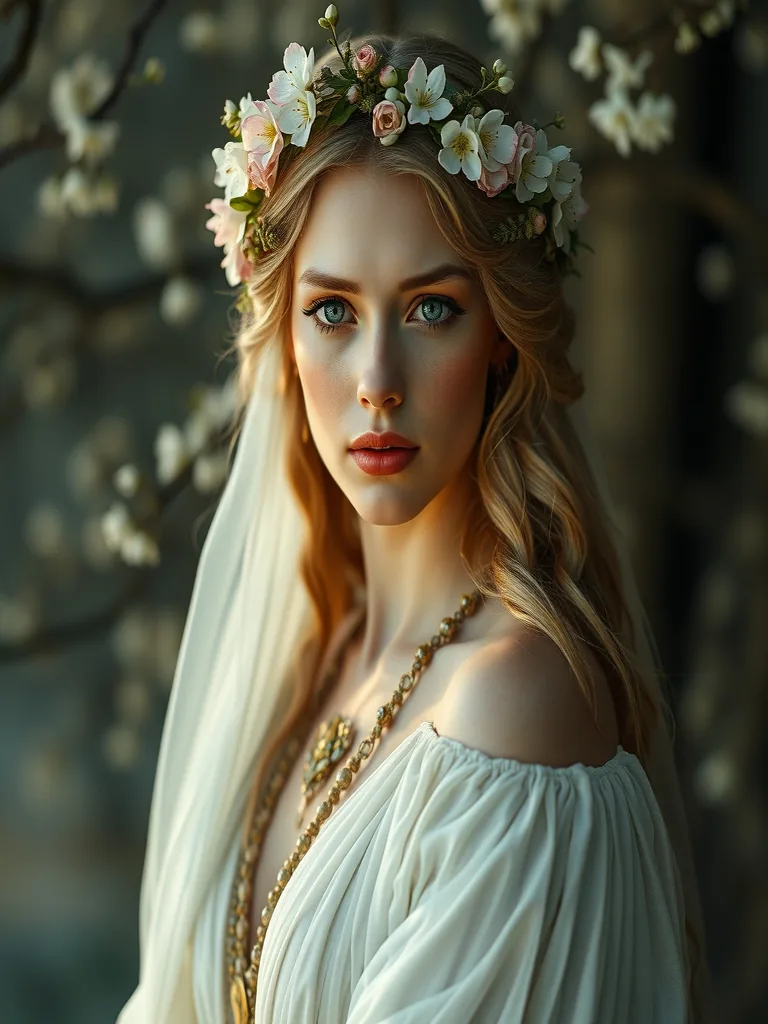
Crown of Flowers
Speak with Lada

The People

People
Slavic peoples
Region
Eastern Europe
Period
c. 500 – 1000 AD

The Slavic deities were worshipped by the peoples of Eastern Europe, from Russia to the Balkans, before their Christianization. They venerated them in wooden idols and open-air sanctuaries, tied to the forces of nature and the seasons. With few written records, their beliefs survive mainly in folklore and popular traditions.

On Kupala night, the summer solstice, young people leapt over bonfires and floated flower crowns on the rivers. Maslenitsa saw off winter with pancakes in honor of the sun, and in Kiev prince Vladimir raised — and later toppled — a great idol of Perun.


The Sacred Scrolls

Goddess of love, beauty, harmony, and spring, Lada brings with her the blossoming and joy after winter. Protector of marriages and concord, she is invoked at the festivals of renewal of the warm season. She embodies the sweetness and fertility that oppose the harshness of Morana. As The Goddess of Love and Spring, this deity occupies a position of supreme prestige in the eslavos pantheon. Their domains over Love, Beauty & Spring reflect ancestral cosmic order maintained across millennia. In classical iconography, they are depicted with an aura of unshakeable majesty and sacred attributes that inspired reverence in emperors and peasants alike. Their influence extended beyond earthly boundaries, governing fates and harmony between the visible and invisible worlds. For ancient devotees, contemplating their essence was to understand the very fundamental forces of nature and human existence.

Sacred Symbols

The crown of flowers, the swan, the spring and the heart

Divine Lineage

Goddess of love; sometimes associated with a twin counterpart, the god Lado.

The Legendary Myth

Lada was celebrated at the spring and summer festivals, when the young danced and sang asking for good marriages and fertile harvests. Her name appears in countless Slavic folk songs as a refrain of love and harmony.

Legends & Deeds

A celebrated secondary legend preserved in the oral traditions of the eslavos recounts the journey when Lada intervened directly in the lives of mortals.

Cult & Worship

Historically, the cult of Lada occupied a central place in the religious and architectural calendar of antiquity.

Relics of Power

A spring garland that blooms as she passes, a symbol of love and harmony.

Did You Know?

Lada's name echoes to this day in traditional Slavic songs, where 'lada' appears as a term of endearment for the beloved.

The rest of this scroll is sealed

The myth, the legends, the cult, the relic and the curiosity are part of the full Codex. Without a subscription you open 3 scrolls a day.

See Codex PRO

From the same pantheon

View pantheon