5 sections of this entry are open to everyone: the summary, the people, the symbols, the lineage and the sources. The other 9 (Name and epithets, In the ancient sources, The myths, Worship and archaeology, How the god was depicted, What scholars debate, After antiquity, Did you know?, Codex relic) are part of the full Codex: PRO opens the whole study of all 500 deities, and without a subscription you can read one full entry a day, just like in the app.
The Celtic gods were worshipped by the peoples of Ireland, Britain, and Gaul, with the aid of the druids, their priestly caste. They venerated them in sacred groves, springs, and wells, without great stone temples. Many of their myths survived in the Irish and Welsh sagas, recorded by medieval monks.
The Celtic wheel of the year turned on four great fire festivals: Samhain, the origin of Halloween, opened winter and contact with the dead; Imbolc, Beltane, and Lughnasadh marked spring, summer, and the harvest. The druids led the rites in sacred groves called nemeton.
01
At a glance
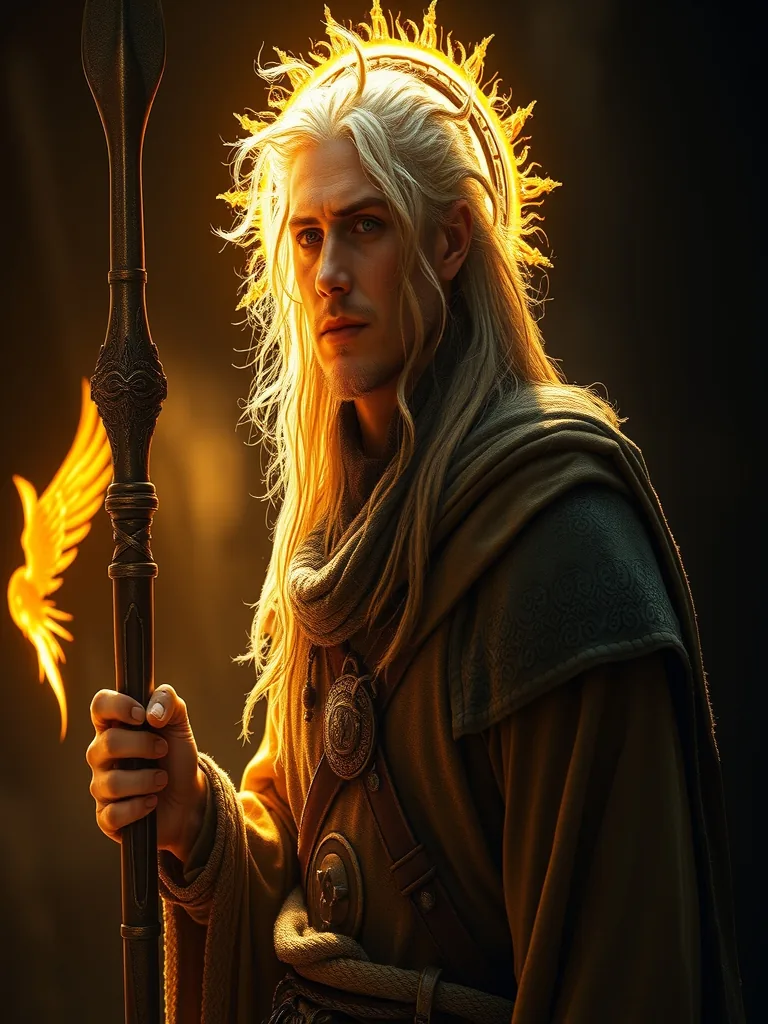
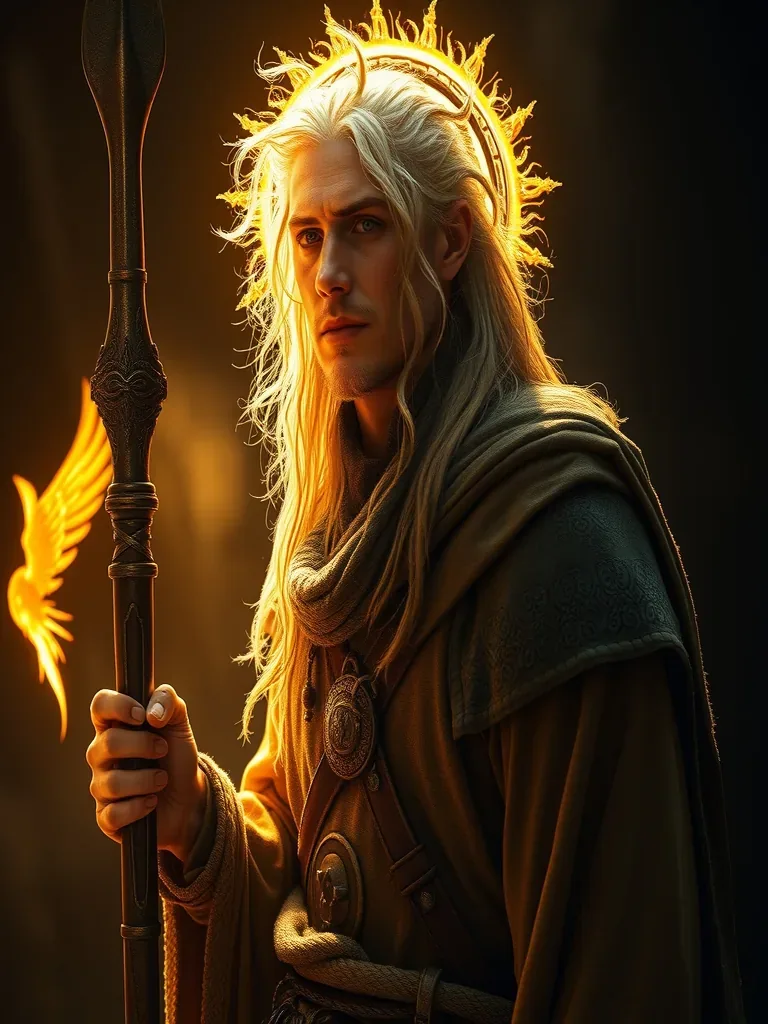
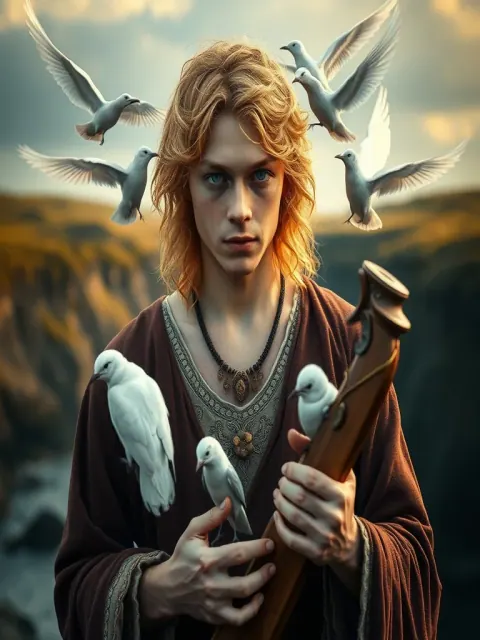
Lugh Lámhfhada (Lugh of the Long Arm), also glorified as Samildánach (“Master of All Arts” or “The Polytechnic”), is the radiant, invincible, wise and supreme Celtic god of spiritual sunlight, craft innovation, martial arts, rhetoric, metalworking, music, the strategic board game fidchell and rightful kingship in Irish and continental Celtic mythology (the Gallo-Roman god Lugus). Born of the prophetic union between the prince Cian of the divine Tuatha Dé Danann and the princess Ethniu, daughter of the fearsome king Balor of the Evil Eye of the Fomorians, Lugh united in his veins the blood of two rival peoples, embodying the overcoming of chaos through the perfect synthesis of creative intelligence. Presenting himself at the royal gates of Tara before King Nuada, Lugh won supreme command of the armies by showing that he possessed not one isolated skill but mastered all the professions and sciences of the universe at once (being smith, champion, harpist, poet, sorcerer, physician and goldsmith). Leading the gods at the Second Battle of Mag Tuired, Lugh fulfilled the ancestral prophecy by defeating his own grandfather Balor with a precise and devastating shot from his magical sling (Tatlum), piercing the tyrant's poisonous eye. Founder of the legendary annual festival of Lughnasadh (held on August 1 in honor of his foster mother Tailtiu), Lugh embodies the solar triumph of civilization, multidisciplinary excellence and the sovereignty that illuminates human society through knowledge, justice and technical skill. The solar master of all arts embodies the multidisciplinary excellence and practical intelligence that defeat oppression with honor, justice and unshakable cosmic wisdom. The solar king of Tara embodies the sublime union between the skill of craftsmen and the lucidity of sages, crowning Celtic history with invincible dignity and creative light. The lord of the long arm and of the spear of fire is the sublime embodiment of human competence raised to divine dignity, guiding men along the path of light and justice. His invincible spear and his luminous wisdom remain as the sacred promise of liberation for the whole Celtic people. He is the solar hero who illuminates the hearts of the just and frees peoples from oppression with nobility and truth.
15 min read · Reviewed on September 28, 2026 · How we research
02
Sacred symbols
The flaming spear, the sun, the raven and the sling
03
Family
Parents
CianEthniu
Lugh
Unions
DeichtineBuass / Nás
Children
Cú Chulainn
Genealogy according to Cath Maige Tuired; Oidheadh Chloinne Tuireann (O Destino dos Filhos de Tuireann); Baile in Scáil (O Êxtase do Espectro); Lebor Gabála Érenn; De Bello Gallico de Júlio César
04
Sources and further reading
Primary sources
Anonymous, Cath Maige Tuired: The Second Battle of Mag Tuired. translation: Elizabeth A. Gray, Irish Texts Society, 1982.
Julius Caesar, The Gallic War (De Bello Gallico). translation: H. J. Edwards, Loeb Classical Library, Harvard University Press, 1917.
Studies
Máire MacNeill, The Festival of Lughnasa. Oxford University Press, 1962.
Kim McCone, Pagan Past and Christian Present in Early Irish Literature. Maynooth, 1990.
Name and epithets
The Celtic theonym Lugh (cognate of the Gaulish god Lugus, of the Gaulish Lugu- and of the Brittonic Lleu Llaw Gyffes) derives either from the Proto-Indo-European root *lewk- (“bright light”, “to shine”, cognate of Lati…
In the ancient sources
Cath Maige Tuired (The Second Battle of Mag Tuired)., 9th to 12th centuries CE.. Describes Lugh's arrival at Tara, the skills test at the royal gate and the death of Balor of the Evil Eye by the sling.
The myths
The Triumphant Entry into Tara and the Recognition of the Samildánach.. In the most celebrated pages of the Cath Maige Tuired, it is told how the young Lugh arrived at the gates of the sacred hill of Tara, where King Nu…
Worship and archaeology
The cult of Lugh (and his continental form Lugus) was unquestionably the most widespread, popular, dynamic and uniform of the whole Celtic world of Europe, extending from Ireland and Britain to Gaul, the Iberian Peninsu…
How the god was depicted
The iconographic and visual representation of Lugh in Celtic tradition and in Gallo-Roman art, preserved in stone reliefs from Gaul, bronze statues from urban sanctuaries and poetic descriptions in the sagas, is the sub…
What scholars debate
The Etymology of Lugh: Solar Light (*lewk-) versus Oath and Bond (*lug-).. Indo-European linguists and Celticists of the twentieth and twenty-first centuries debate intensely the original semantic root of the theonym Lu…
After antiquity
In contemporary times, in the cultural history of Western Europe and in Irish folklore, Lugh is widely celebrated as the supreme symbol of multidisciplinary versatility, practical intelligence and the brilliant victory…
Did you know?
The French city of Lyon was founded by the Romans in 43 BCE under the Latin name Lugdunum (“The Fortress of Lugh”), keeping the Celtic god as its legendary protector in mosaics and public inscriptions to this day.
Codex relic
Flaming Spear of Lugh. An invincible spear that never misses its mark and burns with the fury of lightning.
The rest of this scroll is sealed
The legends, the myth, the cult and relics are part of the full Codex. You can open 1 full entry for free every day; to open all 500 deities with no limits and no ads, subscribe to Codex PRO.