Skip to content
CodexMythologia
Back to the Codex
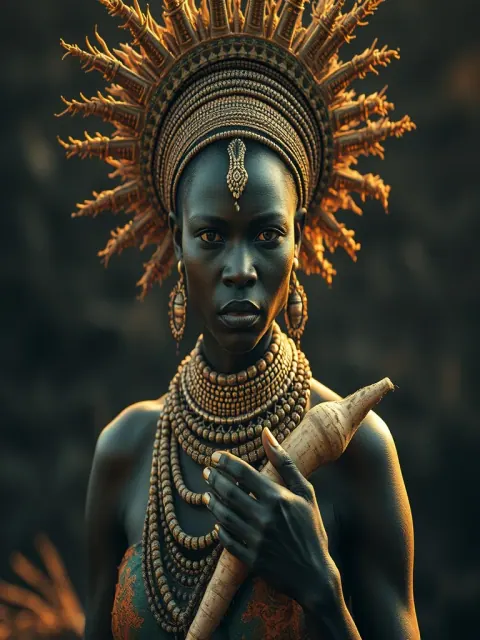
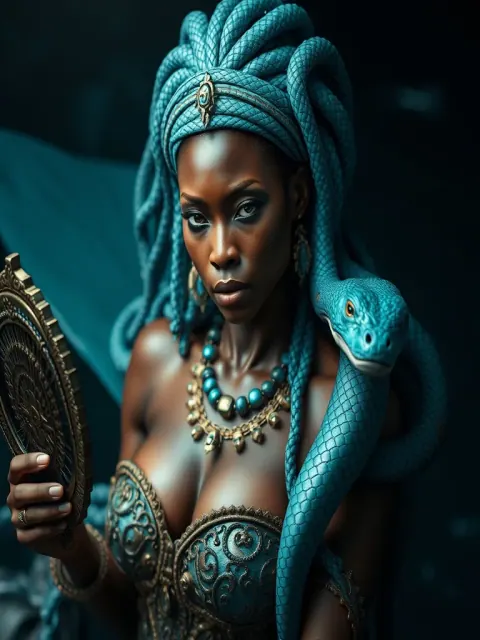
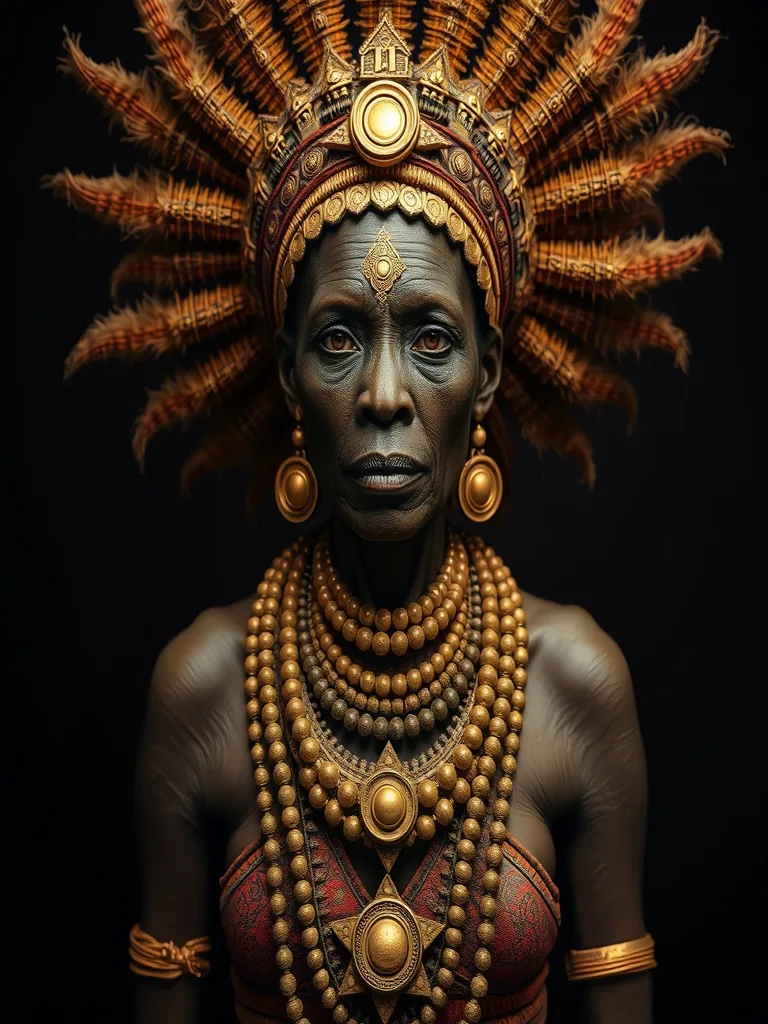
Portrait of Nana Buluku, African deity
African
Tap or drag
African

Nana Buluku

The Primordial Grandmother

Domain
Creation, Origin & Mystery
Alignment
Neutral Good
Element
Light
Relics of Power
Womb of the World
Speak with Nana Buluku

The full Codex

5 sections of this entry are open to everyone: the summary, the people, the symbols, the lineage and the sources. The other 9 (Name and epithets, In the ancient sources, The myths, Worship and archaeology, How the god was depicted, What scholars debate, After antiquity, Did you know?, Codex relic) are part of the full Codex: PRO opens the whole study of all 500 deities, and without a subscription you can read one full entry a day, just like in the app.

The People

People
African peoples
Region
Sub-Saharan Africa
Period
antiquity – present

These deities gather traditions of various Sub-Saharan African peoples, from the Bantu to the Akan and Dogon. Worshipped through ancestral rites, masks, and drums, they bind communities to the spirits of nature and the ancestors. Many of these beliefs remain alive both in Africa and in the religions of the diaspora.

Mask societies, such as those of the Dogon and Bambara, give body to the spirits in ceremonial dances. Initiation rites mark the passage to adulthood, and offerings of water, grain, and animals keep the bond with the ancestors and the spirits of nature.

At a glance

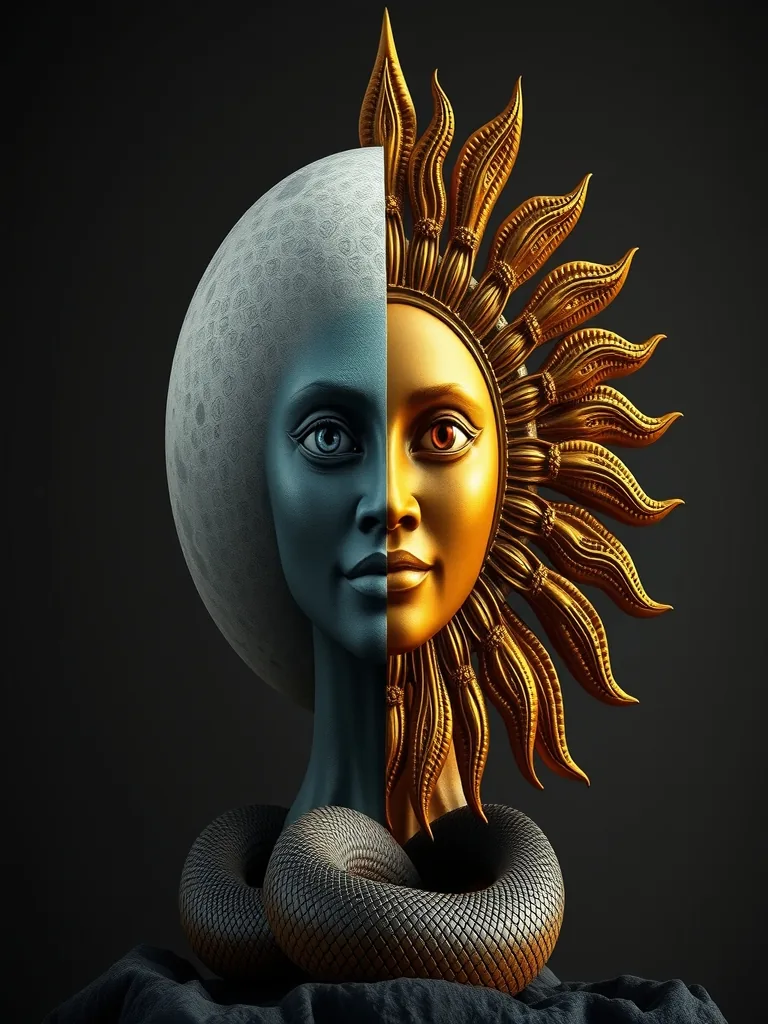
Nana Buluku (also documented as Na Buluku, Nana Bukuu and Nanã Buruku) is the primordial creator deity and the great ancestral mother in the cosmology of the Fon and Ewe peoples of the former kingdom of Dahomey (present-day Benin), and is likewise venerated as a respected ancestress among the Yoruba and in the religions of African origin across the Atlantic diaspora. In the accounts collected by Melville and Frances Herskovits, Nana Buluku is the supreme generative principle who gave birth to the celestial twins Mawu and Lisa, to whom she entrusted the task of structuring the domains of the universe. Associated with the primordial muddy waters, the original clay and the ancestral wisdom of death and rebirth, her archaic cult at Doumé is marked by the strict prohibition of iron blades and tools in ritual sacrifices.

5 min read · Reviewed on September 28, 2026 · How we research

Sacred symbols

The primordial womb, the void before, the serpent and the origin

Family

Nana Buluku
Children
Genealogy according to Melville J. Herskovits e Frances S. Herskovits, Dahomean Narrative (1958); Pierre Verger, Notes sur le culte des orisa et vodun (1957); Bernard Maupoil, La Géomancie à l'ancienne Côte des Esclaves (1943)

Sources and further reading

Primary sources

  • Melville J. Herskovits e Frances S. Herskovits, Dahomean Narrative: A Cross-Cultural Analysis. translation: Evanston: Northwestern University Press, 1958.
  • Pierre Fatumbi Verger, Notes sur le culte des orisa et vodun à Bahia, la Baie de Tous les Saints, au Brésil et à l'ancienne Côte des Esclaves en Afrique. translation: Dakar: Institut Français d'Afrique Noire (IFAN), Mémoires n. 51, 1957.

Studies

  • Pierre Verger, Orixás: Deuses iorubás na África e no Novo Mundo. Editora Corrupio, 1981.
  • Bernard Maupoil, La Géomancie à l'ancienne Côte des Esclaves. Institut d'Ethnologie, Paris, 1943.
  • Geoffrey Parrinder, West African Religion: A Study of the Beliefs and Practices of Akan, Ewe, Yoruba, Ibo, and Kindred Peoples. Epworth Press, London, 1961.

Name and epithets

The theonym Na Buluku or Nana Buruku combines the West African honorific prefix Na or Nana, denoting an elderly lady, respected grandmother or ancestral matriarch, with the regional term Buluku or Bukuu, which designate…

In the ancient sources

Dahomean Narrative: A Cross-Cultural Analysis, 1958 (oral tradition of Abomey collected in 1931). Ethnographic record by Melville and Frances Herskovits reporting that Nana Buluku bore the twins Mawu and Lisa in a primo…

The myths

The Primordial Generation of Mawu-Lisa and the Divine Withdrawal. According to the Fon oral traditions recorded in Abomey by the Herskovits team, before any ordered form existed there was only Nana Buluku.

Worship and archaeology

The traditional cult of Nana Buluku has its most sacred centre in the locality of Doumé, near Dassa-Zoumé, in Benin, along with shrines spread through the Fon, Mahi and Yoruba regions.

How the god was depicted

Nanã's primordial insignia is the ibiri, a curved sceptre made of bundles of coastal palm straw (the midrib of the oil palm frond), braided and bent over at the upper tip, adorned with white cowrie shells and blue or li…

What scholars debate

Regional Ethnic Origin versus Abomean Diffusion. Researchers such as Pierre Verger and Jacques Bertho showed that the cult of Nana Bukuu / Nanã Buruku originated in the territory of the Mahi and Idaatcha peoples in the…

After antiquity

In anthropological literature and the philosophy of African religions, Nana Buluku is studied as an exceptional testimony to the pre-colonial metaphysics of West Africa, bringing together the sacredness of the primordia…

Did you know?

In the traditional terreiros of Bahia and Pernambuco, the prohibition of metal blades in the sacrifice to Nanã led to the continuous use of traditional sharpened bamboo knives called 'obé de taquara'.

Codex relic

Womb of the World. The original source from which all sprang, prior to the sun, the moon and all the deities.

The rest of this scroll is sealed

The legends, the myth, the cult and relics are part of the full Codex. You can open 1 full entry for free every day; to open all 500 deities with no limits and no ads, subscribe to Codex PRO.

See Codex PROGet it on Google Play

From the same pantheon

View pantheon