Skip to content
CodexMythologia
Back to the Codex
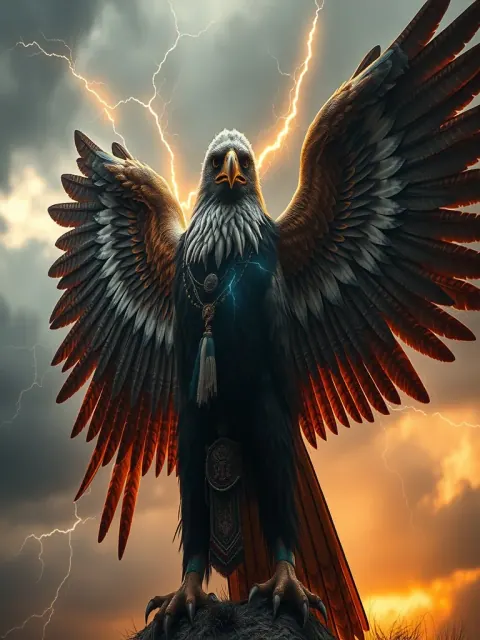
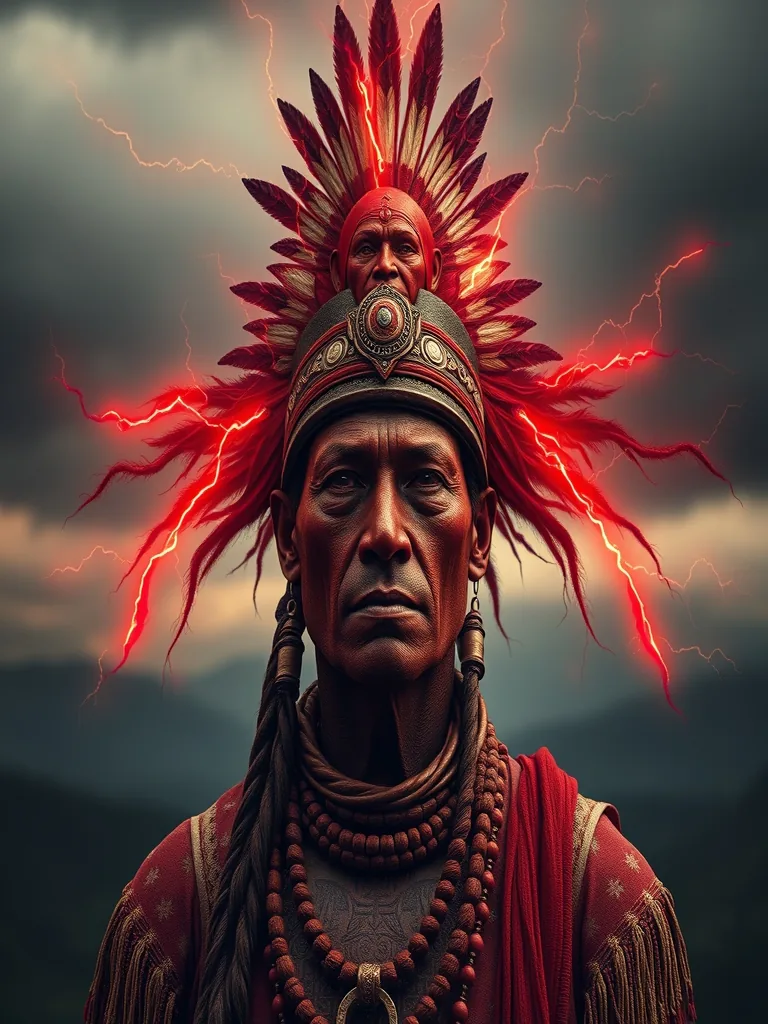
Portrait of Asgaya Gigagei, Native American deity
Native American
Tap or drag
Native American

Asgaya Gigagei

The Red Man of the Thunder

Domain
Thunder, Healing & Storm
Alignment
True Neutral
Element
Thunder
Relics of Power
Spear of the Bolt
Speak with Asgaya Gigagei

The full Codex

5 sections of this entry are open to everyone: the summary, the people, the symbols, the lineage and the sources. The other 9 (Name and epithets, In the ancient sources, The myths, Worship and archaeology, How the god was depicted, What scholars debate, After antiquity, Did you know?, Codex relic) are part of the full Codex: PRO opens the whole study of all 500 deities, and without a subscription you can read one full entry a day, just like in the app.

The People

People
Native American peoples
Region
North America
Period
pre-colonial – present

These spirits and deities were worshipped by the many Native peoples of North America, from the Lakota to the Navajo and Iroquois. Their beliefs bind humans to the Great Spirit, to totem animals, and to balance with the land. Passed down orally, they survive in the Indigenous nations that endured colonization.

The Sun Dance gathered the Plains nations in fasting and sacrifice around the sacred tree. The Hopi dance with the kachinas, masked spirits of the rains, and the sacred pipe seals prayers and treaties — ceremonies still alive in today's nations.

At a glance

Asgaya Gigagei (written in the Cherokee syllabary as ᎠᏍᎦᏯ ᎩᎦᎨᎢ, literally meaning 'Red Man', and in paired formulas as Agehya Gigagei, 'Red Woman') is a prominent anthropomorphic celestial spirit of lightning, shamanic medicine, and somatic balance in the traditional cosmology of the Cherokee Nation (Tsalagi). Domiciled symbolically in the cardinal East—the realm of the rising sun and daylight—Asgaya Gigagei embodies the revitalizing power of the color red (giga-gei), which in Southeastern ceremonial semiotics signifies health, triumph, vitality, and successful resistance against entropic affliction. Documented in the personal syllabic notebooks of Cherokee doctor Swimmer and edited for the Smithsonian Institution by James Mooney, Asgaya Gigagei is ritually invoked in esoteric healing formulas to cure diseases inflicted by cold northern spirits or subterranean ghosts. In mythological narrative, Asgaya Gigagei stands as a sworn celestial protector of humanity against the dread horned serpent Uktena, rewarding a helpful hunter who pierced the reptile with an arrow by bestowing the powerful medicine of charred scales forged over lightning-blasted timber.

4 min read · Reviewed on September 29, 2026 · How we research

Sacred symbols

The red lightning, the storm cloud and the scarlet color

Family

Siblings
Ani-Hyuntikwalaski (The Thunderers, celestial tempest beings allied in cosmic warfare)
Asgaya Gigagei
Genealogy according to James Mooney, The Sacred Formulas of the Cherokees (1891, pp. 340–349, 384); James Mooney, Myths of the Cherokee (1900, pp. 257, 300–301); Charles M. Hudson, The Southeastern Indians (1976, pp. 126–132)

Sources and further reading

Primary sources

  • Mooney, James, The Sacred Formulas of the Cherokees (Seventh BAE Report, pp. 340–349). translation: Government Printing Office, Washington, DC, 1891. read
  • Mooney, James, Myths of the Cherokee (Myth 52: The Red Man and the Uktena). translation: Smithsonian Institution / GPO, Washington, 1900, pp. 300–301. read

Studies

  • Hudson, Charles M., The Southeastern Indians. University of Tennessee Press, Knoxville, 1976. open
  • Native History Association, The Red Man And The Uktena. Native History Association Online Archive, 2024. open

Name and epithets

The Cherokee theonym ᎠᏍᎦᏯ ᎩᎦᎨᎢ is transparently constructed from the common noun asgaya ('man') and the descriptor gigagei ('red', derived from the root signifying blood and sacred vitality).

In the ancient sources

The Sacred Formulas of the Cherokees, 1891 CE. Field compilation of genuine Cherokee syllabary manuscripts used by traditional medicine practitioners. Myths of the Cherokee, 1900 CE.

The myths

The Cosmic Contest with the Uktena Serpent. According to Myth 52 documented by James Mooney from Eastern Cherokee informants, two brothers traveled into the high ranges on a hunting expedition.

Worship and archaeology

Reverence for Asgaya Gigagei did not involve communal temple sacrifices, but was enacted within the private sphere of sacred healing rituals and warrior purification.

How the god was depicted

Cherokee religious tradition preserved an aniconic attitude toward storm spirits, eschewing sculpted idols. Instead, Asgaya Gigagei's presence was invoked through chromatic symbolism: the red ochre mineral paint (wâ'dĭ)…

What scholars debate

. Scholars of Southeastern ethnology such as Charles Hudson and Raymond Fogelson emphasize that the flexible gender identity of Asgaya Gigagei / Agehya Gigagei illustrates how gender among early Cherokees operated as a…

After antiquity

Within modern Cherokee storytelling programs, educational materials from the Museum of the Cherokee People in North Carolina, and tribal language revitalization programs, the legend of Asgaya Gigagei and the Uktena rema…

Did you know?

Unlike Western associations of red with danger or anger, red in traditional Cherokee symbolic classification stood for warmth, vitality, life, and unbroken triumph.

Codex relic

Spear of the Bolt. The red spear that splits the clouds and heals or strikes down according to the spirit's will.

The rest of this scroll is sealed

The legends, the myth, the cult and relics are part of the full Codex. You can open 1 full entry for free every day; to open all 500 deities with no limits and no ads, subscribe to Codex PRO.

See Codex PROGet it on Google Play

From the same pantheon

View pantheon