Skip to content
CodexMythologia
Back to the Codex
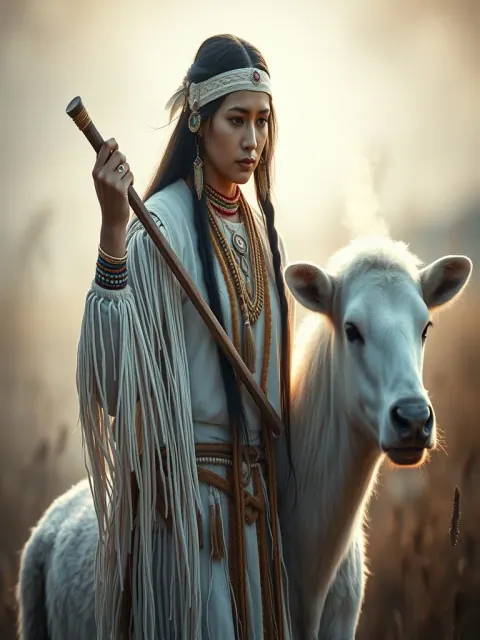
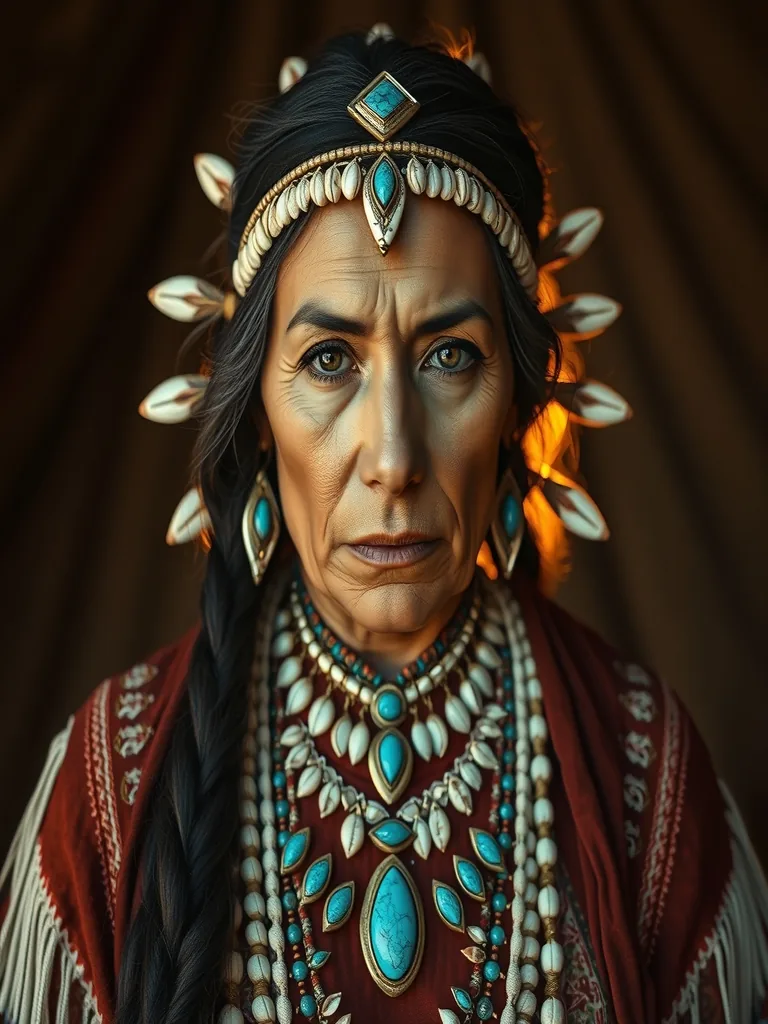
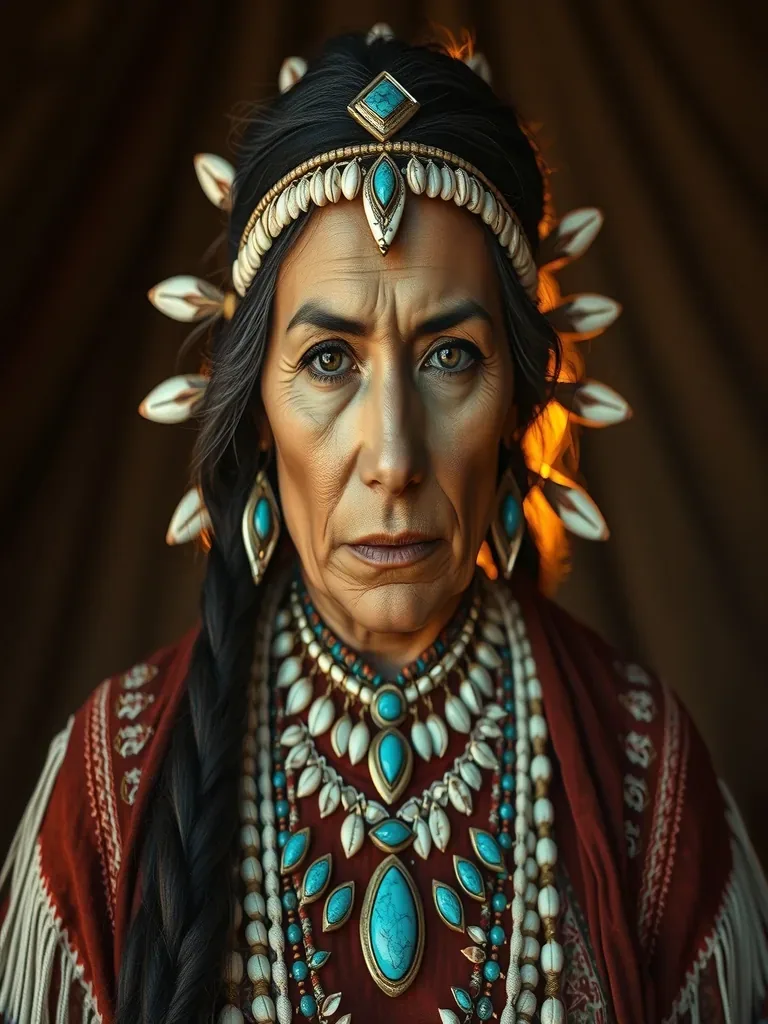
Portrait of Changing Woman, Native American deity
Native American
Tap or drag
Native American

Changing Woman

The Lady of the Seasons

Domain
Life, Fertility & Renewal
Alignment
Neutral Good
Element
Earth
Relics of Power
Robe of the Four Ages
Speak with Changing Woman

The full Codex

5 sections of this entry are open to everyone: the summary, the people, the symbols, the lineage and the sources. The other 9 (Name and epithets, In the ancient sources, The myths, Worship and archaeology, How the god was depicted, What scholars debate, After antiquity, Did you know?, Codex relic) are part of the full Codex: PRO opens the whole study of all 500 deities, and without a subscription you can read one full entry a day, just like in the app.

The People

People
Native American peoples
Region
North America
Period
pre-colonial – present

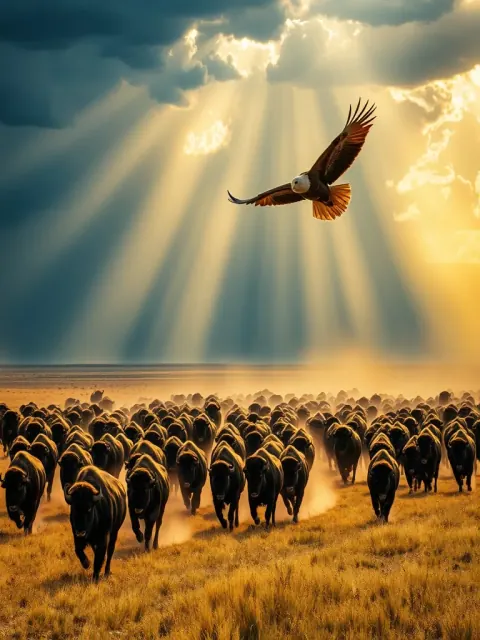
These spirits and deities were worshipped by the many Native peoples of North America, from the Lakota to the Navajo and Iroquois. Their beliefs bind humans to the Great Spirit, to totem animals, and to balance with the land. Passed down orally, they survive in the Indigenous nations that endured colonization.

The Sun Dance gathered the Plains nations in fasting and sacrifice around the sacred tree. The Hopi dance with the kachinas, masked spirits of the rains, and the sacred pipe seals prayers and treaties — ceremonies still alive in today's nations.

At a glance

Asdzą́ą́ Nádleehé (regularly transcribed in nineteenth-century ethnological literature as Estsánatlehi or Estsanatlehi, literally signifying 'Changing Woman' or 'Self-Renewing Woman') is the most universally beloved, benevolent, and foundational holy figure among the Holy People (Diyin Dine'é) in Navajo (Diné) religion. Standing as the celestial embodiment of earth's fecundity, cyclical renewal, and seasonal recurrence, Asdzą́ą́ Nádleehé possesses the unique capability to restore her own youth: whenever advanced age overtakes her in the chill of winter, she moves westward and steps forth as a young woman with the renewal of spring, remaining completely untouched by mortality. Discovered as an infant atop the sacred peak of Chʼóolʼį́ʼí (Gobernador Knob) by Áłtsé Hastiin (First Man) amidst mist and lightning, she matured with supernatural swiftness and underwent the primordial puberty rite termed Kinaaldá, which inaugurated the cornerstone songs of the Blessingway (Hózhǫ́ǫ́jí). Mother of the Hero Twins who rid the world of man-eating predators (Naayééʼ), she later rubbed flakes of skin from her chest, back, and arms to shape the four core Navajo clans, establishing matrilineal descent and anchoring the eternal ethos of cosmic balance known as Hózhǫ́.

5 min read · Reviewed on September 29, 2026 · How we research

Sacred symbols

The four seasons, the sacred pollen, the turquoise and the dawn

Family

Parents
Áłtsé Hastiin and Áłtsé Asdzą́ą́ (First Man and First Woman, foster parents who discovered her atop sacred Chʼóolʼį́ʼí)
Siblings
Yoołgai Asdzą́ą́ (White Shell Woman, regarded either as younger sister and companion, or as a complementary aspect and youthful persona)
Changing Woman
Unions
Jóhonaaʼéí (The Sun Bearer, with whom she conceived the hero Naayééʼ Neezghání)Tó Neinilii / Water Falls (fecundating water potency associated with the birth of Tóbájíshchíní)
Children
Naayééʼ Neezghání (Monster Slayer, elder of the heroic warrior Twins)Tóbájíshchíní (Born for Water, younger companion of the heroic warrior Twins)
Genealogy according to Washington Matthews, Navaho Legends (1897, pp. 104–148, 230–238); Washington Matthews, The Night Chant (1902, pp. 19–27); Gladys A. Reichard, Navaho Religion (1950, pp. 406–414); Clyde Kluckhohn e Dorothea Leighton, The Navaho (1946, pp. 122–126)

Sources and further reading

Primary sources

  • Matthews, Washington, Navaho Legends (Memoirs of the American Folk-Lore Society, Vol. 5). translation: Houghton, Mifflin and Company, Boston and New York, 1897. read
  • Matthews, Washington, The Night Chant, a Navaho Ceremony (Memoirs of the AMNH, Vol. 6). translation: Knickerbocker Press / American Museum of Natural History, New York, 1902. read

Studies

  • Reichard, Gladys A., Navaho Religion: A Study of Symbolism. Princeton University Press / Bollingen Series XVIII, Princeton, 1950. open
  • Kluckhohn, Clyde; Leighton, Dorothea, The Navaho. Harvard University Press, Cambridge, 1946. open
  • Todacheene, Heidi J., The Navajo Creation Story and Modern Tribal Justice. Tribal Law Journal, Vol. 15, Iss. 1, 2015. open
  • Mythos Atlas, The Finding of Changing Woman - Diné (Navajo) Mythology. Mythos Atlas Online Archive, 2024. open

Name and epithets

The Navajo theonym Asdzą́ą́ Nádleehé is formed from asdzą́ą́ ('woman', denoting maturity and deep respect) and the verbal form nádleehé (signifying ongoing cyclical transformation, restoration to an earlier state, or re…

In the ancient sources

Navaho Legends, 1897 CE. Pioneering ethnographic compilation by army physician Washington Matthews containing the Diné origin myth, the infant's discovery on Gobernador Knob, and the first Kinaaldá.

The myths

The Discovery on Chʼóolʼį́ʼí and the First Kinaaldá Rite. According to the oral accounts recorded by Washington Matthews, Áłtsé Hastiin (First Man) noticed a luminous, dense cloud clinging to the pinnacle of sacred Chʼó…

Worship and archaeology

Unlike wrathful deities requiring apotropaic rites of appeasement, Asdzą́ą́ Nádleehé is the patroness of the Blessingway (Hózhǫ́ǫ́jí), the benign and protective branch of the Diné liturgical corpus designed to invoke ha…

How the god was depicted

In sandpaintings ('iikááh), Asdzą́ą́ Nádleehé is depicted with elongated stylized anatomy, clad in robes embellished with white shell motifs, turquoise ornaments, and stalks of corn springing from her extremities.

What scholars debate

. Anthropologists and linguists such as Gladys Reichard and Gary Witherspoon argue that viewing Changing Woman merely as an agrarian 'Earth Mother' oversimplifies her theological import.

After antiquity

In contemporary tribal jurisprudence, decisions handed down by the Navajo Nation Supreme Court regularly invoke Asdzą́ą́ Nádleehé as the ultimate founder of the matrilineal clanship system (k'é) and as the cultural foun…

Did you know?

Within Diné philosophy, Asdzą́ą́ Nádleehé is never perceived as an aloof or distant deity; her vital breath is felt in the warmth of spring winds and her presence is recognized in desert vegetation and flowing springs,…

Codex relic

Robe of the Four Ages. The robe with which she ages and grows young without end, mirroring the turning of the seasons.

The rest of this scroll is sealed

The legends, the myth, the cult and relics are part of the full Codex. You can open 1 full entry for free every day; to open all 500 deities with no limits and no ads, subscribe to Codex PRO.

See Codex PROGet it on Google Play

From the same pantheon

View pantheon