5 sections of this entry are open to everyone: the summary, the people, the symbols, the lineage and the sources. The other 9 (Name and epithets, In the ancient sources, The myths, Worship and archaeology, How the god was depicted, What scholars debate, After antiquity, Did you know?, Codex relic) are part of the full Codex: PRO opens the whole study of all 500 deities, and without a subscription you can read one full entry a day, just like in the app.
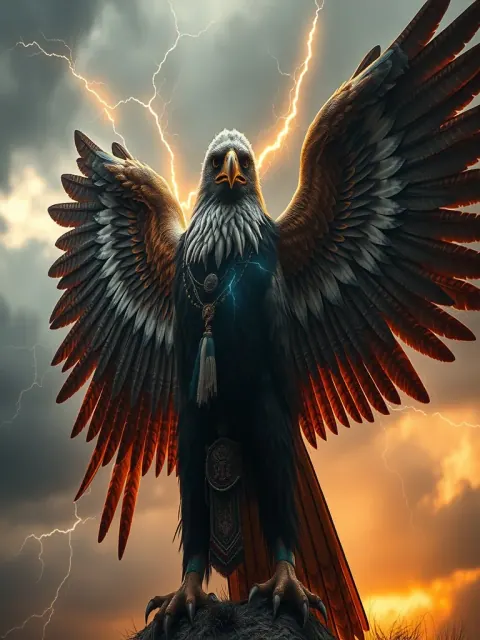
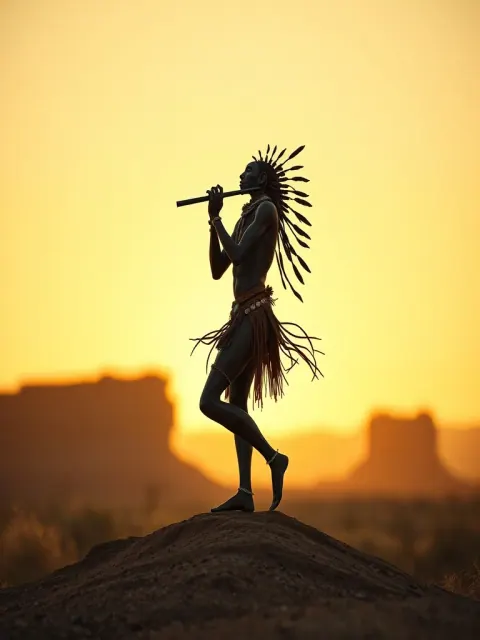
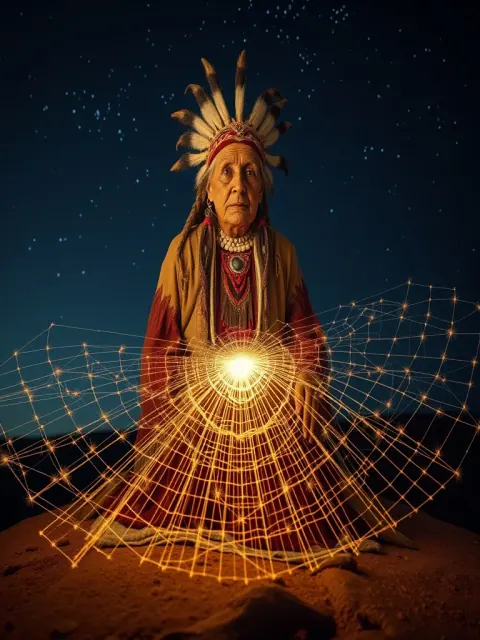
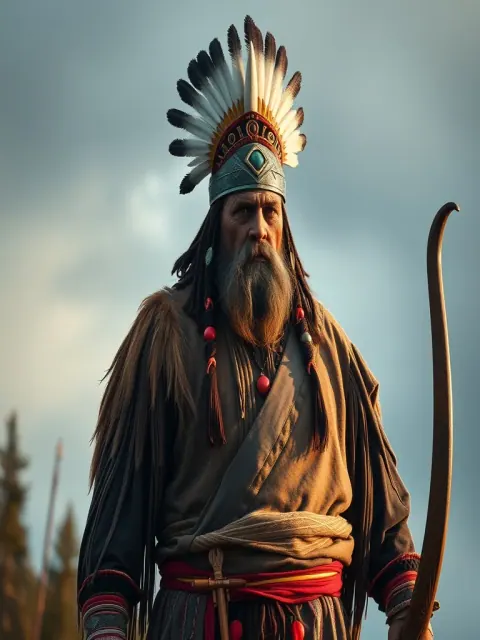
These spirits and deities were worshipped by the many Native peoples of North America, from the Lakota to the Navajo and Iroquois. Their beliefs bind humans to the Great Spirit, to totem animals, and to balance with the land. Passed down orally, they survive in the Indigenous nations that endured colonization.
The Sun Dance gathered the Plains nations in fasting and sacrifice around the sacred tree. The Hopi dance with the kachinas, masked spirits of the rains, and the sacred pipe seals prayers and treaties — ceremonies still alive in today's nations.
01
At a glance
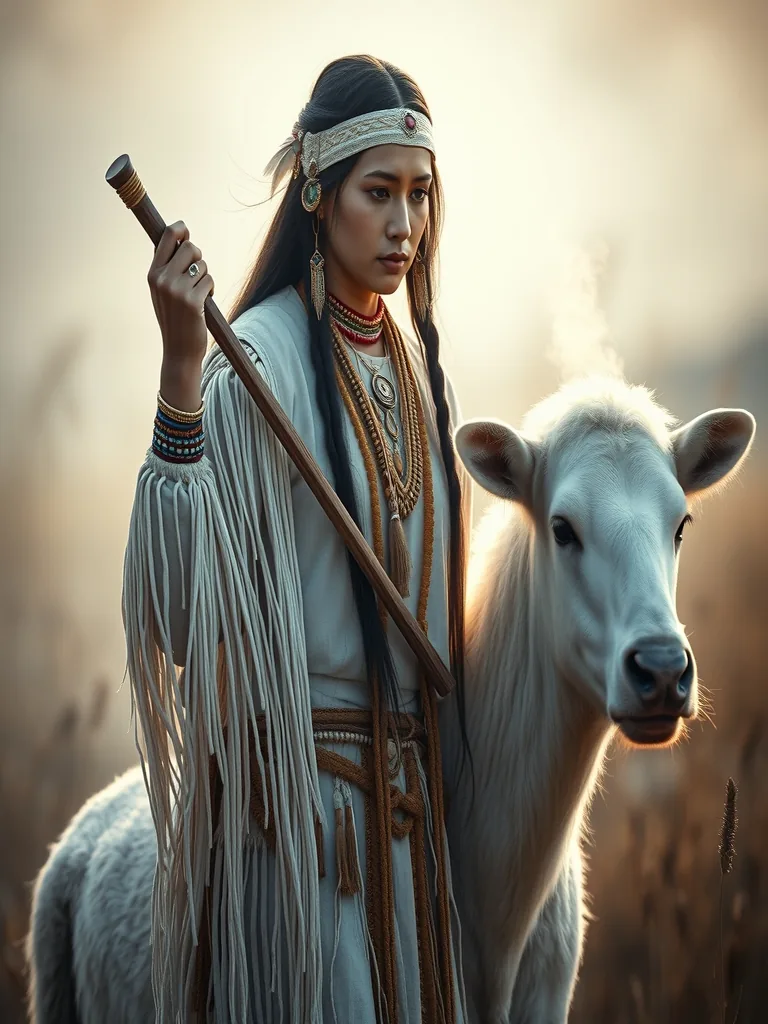
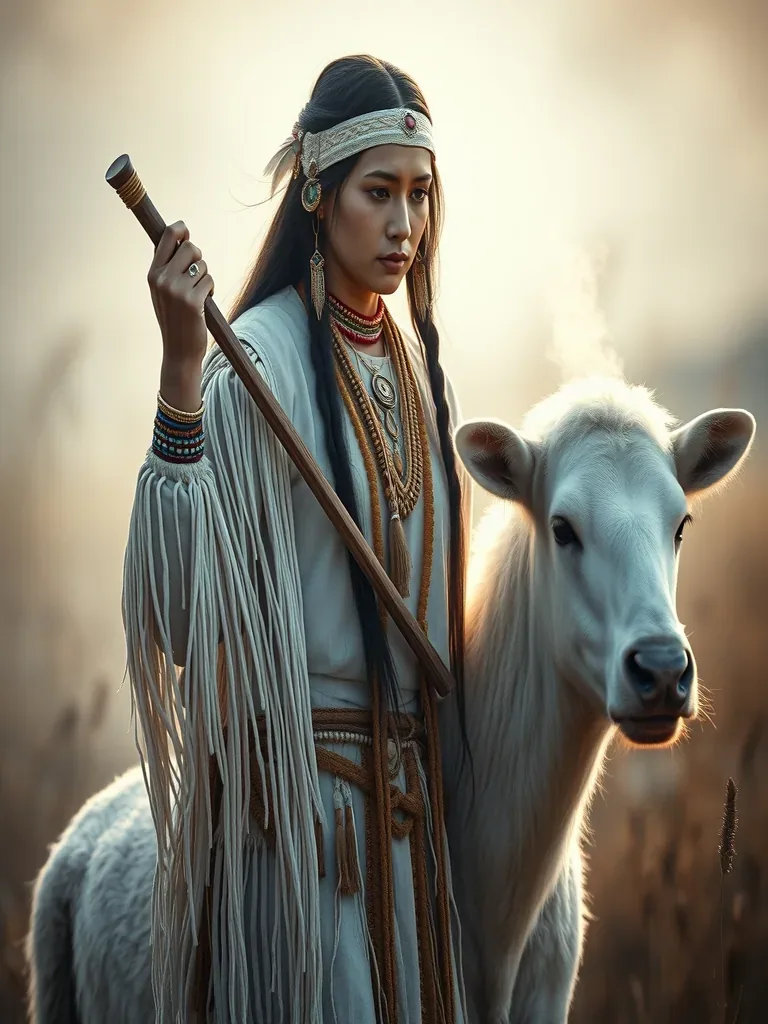
White Buffalo Calf Woman (standardized Lakota orthography Ptesáŋwiŋ, historically recorded also as Ptehíŋčala Čhaŋŋúŋpa Wíŋ) is the supreme sacred prophet, cosmological mediator, and spiritual revelator of the Lakota, Dakota, and Nakota nations comprising the Seven Council Fires (Oceti Sakowin). Far from representing a simplistic folkloric fable, Ptesáŋwiŋ is revered by tribal historians and spiritual leaders as the foundational turning point of Plains Indian spiritual history: she gifted humanity the Sacred White Buffalo Calf Pipe (Ptehíŋčala Čhaŋŋúŋpa), the indispensable liturgical instrument connecting mortal prayers to the supreme reality of Wakan Tanka. According to canonical testimonies delivered by holy man Heȟáka Sápa (Black Elk) and documented in early anthropological surveys by Frances Densmore and James R. Walker, her visitation occurred during an era of extreme deprivation, tribal conflict, and starving camps. Appearing upon a ridge near the Black Hills to two scouting warriors, she instantly reduced to bare bone the young hunter who approached her with lustful intent, while commanding his respectful companion to instruct tribal leader Standing Hollow Horn to erect a great circular medicine lodge. Upon entering the council tipi, she presented the sacred pipe bundle, enunciated the moral tenets of tribal peace and social kinship (wolakota), affirmed the inviolable dignity of women as keepers of the hearth, taught the initial funerary ceremony of the Keeping of the Soul (Naǧí Gluhápi), and foretold the performance of the Seven Sacred Rites. Departing toward the setting sun, she rolled upon the earth four times, transforming successively into four buffalos of distinct symbolic hues before vanishing over the horizon, leaving the sacred pipe in the perpetual custody of the Sans Arc (Itázipčho) clan at Green Grass.
9 min read · Reviewed on September 29, 2026 · How we research
02
Sacred symbols
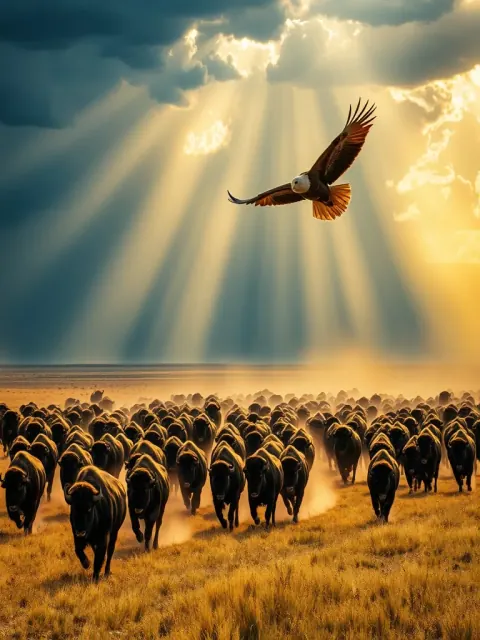
The white buffalo, the sacred pipe, the dawn and the white robe
03
Family
Parents
Sacred emanation of Wakan Tanka; in the cosmological system recorded by J. R. Walker, she is correlated with or identified as the celestial maiden Wóȟpe (daughter of Wi and Haŋwí)
White Buffalo Calf Woman
Genealogy according to Heȟáka Sápa & J. E. Brown, The Sacred Pipe (1953, cap. 1); Frances Densmore, Teton Sioux Music (1918, pp. 63–66); J. R. Walker, Lakota Belief and Ritual (1980); R. J. DeMallie, The Sixth Grandfather (1984); Simon J. Joseph, The Secret Pipe (2019)
04
Sources and further reading
Primary sources
Heȟáka Sápa & Brown, Joseph Epes, The Sacred Pipe: Seven Rites of the Oglala. translation: Norman: University of Oklahoma Press, 1953. read
Densmore, Frances, Teton Sioux Music (Bureau of American Ethnology Bulletin 61). translation: Washington: Government Printing Office, 1918. read
Walker, James R. (ed. Raymond J. DeMallie & Elaine A. Jahner), Lakota Belief and Ritual. translation: Lincoln: University of Nebraska Press, 1980. read
Studies
DeMallie, Raymond J., The Sixth Grandfather: Teachings of Black Elk. Lincoln: University of Nebraska Press, 1984. open
McGaa, Ed (Eagle Man), Mother Earth Spirituality: Native American Paths to Healing Ourselves and Our World. San Francisco: HarperSanFrancisco, 1990. open
Name and epithets
The indigenous theonym Ptesáŋwiŋ is an etymological compound of three distinct Dakota-Lakota grammatical roots: the noun 'pté', signifying the mature female bison (buffalo cow); the descriptive adjective 'sáŋ', designat…
In the ancient sources
The Sacred Pipe: Seven Rites of the Oglala, 1953 CE. Authoritative theological account dictated by Oglala holy man Black Elk to Joseph Epes Brown, preserving the narrative of the two scouts, the council speech, and the…
The myths
The Judgment of the Two Scouts upon the High Ridge. In the classical narrative recounted by Black Elk to Joseph Epes Brown, during a harsh season when buffalo herds had completely vanished and famine threatened the camp…
Worship and archaeology
Religious devotion to White Buffalo Calf Woman defines the liturgical heart of traditional Lakota communal life.
How the god was depicted
In Plains traditional material culture, ledger drawings, and painted buffalo robes, Ptesáŋwiŋ is visually depicted in two complementary symbolic modes: as a majestic young woman with long dark braids wearing a bleached,…
What scholars debate
. Within Plains ethnohistory and anthropological scholarship, the origin and chronology of the Calf Pipe tradition have generated significant debate. Scholars such as Raymond J. DeMallie and Simon J.
After antiquity
The spiritual legacy of White Buffalo Calf Woman has evolved into a global symbol of Indigenous sovereignty, biocentric philosophy, and non-violent environmental protection.
Did you know?
Oral history preserved by the Itázipčho band records that the first mortal custodian of the pipe bundle was a leader named Standing Hollow Horn (Heȟáka Gleska).
Codex relic
Pipe of the Covenant. The sacred chanunpa she gave to the Lakota, the seal of the covenant between the people and the Great Mystery.
The rest of this scroll is sealed
The legends, the myth, the cult and relics are part of the full Codex. You can open 1 full entry for free every day; to open all 500 deities with no limits and no ads, subscribe to Codex PRO.