5 sections of this entry are open to everyone: the summary, the people, the symbols, the lineage and the sources. The other 9 (Name and epithets, In the ancient sources, The myths, Worship and archaeology, How the god was depicted, What scholars debate, After antiquity, Did you know?, Codex relic) are part of the full Codex: PRO opens the whole study of all 500 deities, and without a subscription you can read one full entry a day, just like in the app.
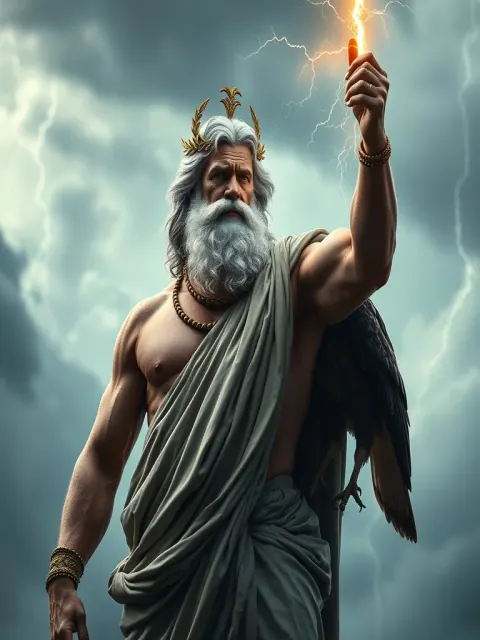
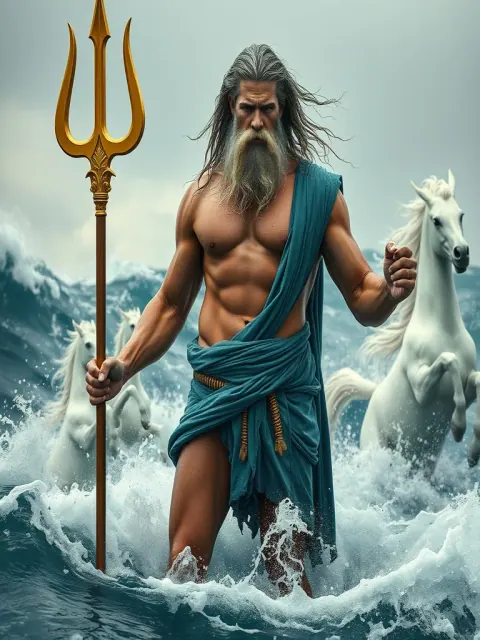
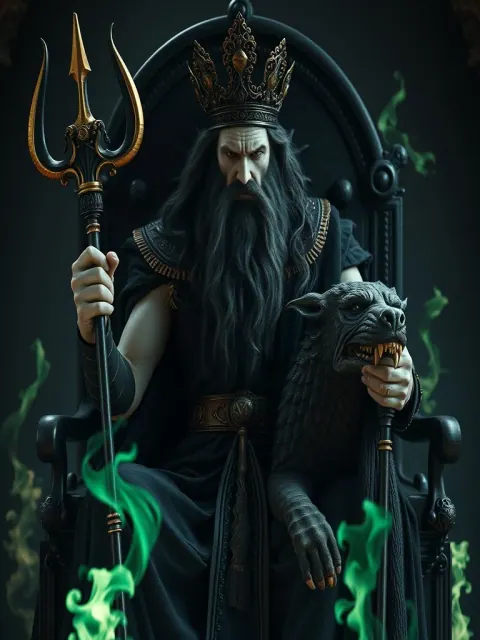
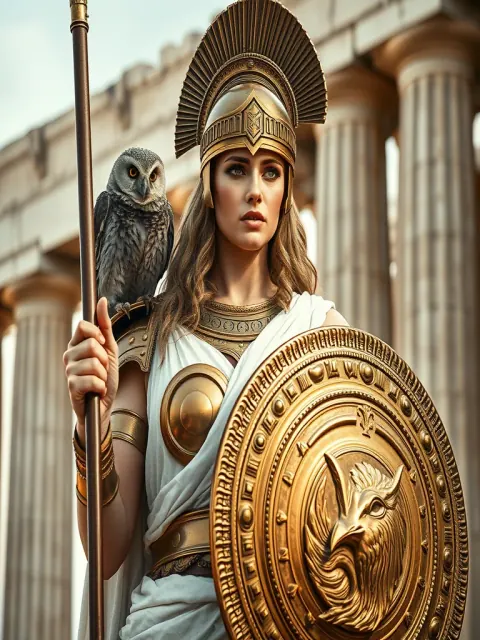
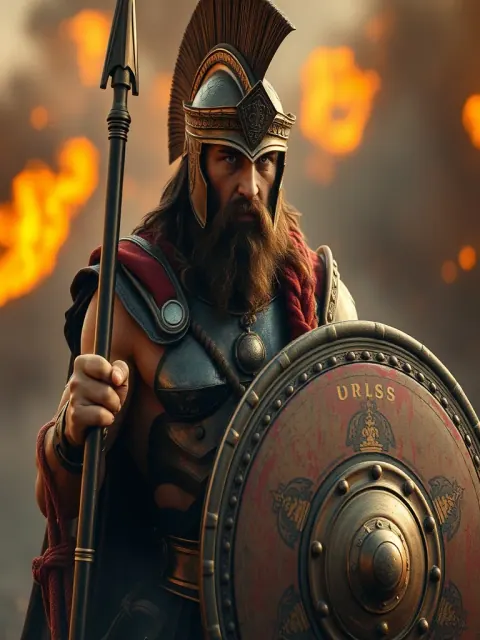
The Olympian gods were worshipped by the city-states of ancient Greece, from Athens to Sparta, which raised them temples such as the Parthenon. Reigning atop Mount Olympus, they presided over every aspect of life and were celebrated in festivals like the Olympic Games. Homer and Hesiod fixed their myths, which shaped all of Western culture.
The Olympic Games were held every four years in honor of Zeus, and the Panathenaea celebrated Athena in Athens. The Eleusinian Mysteries initiated the faithful into the secrets of Demeter and Persephone, while crowds consulted Apollo's oracle at Delphi.
01
At a glance
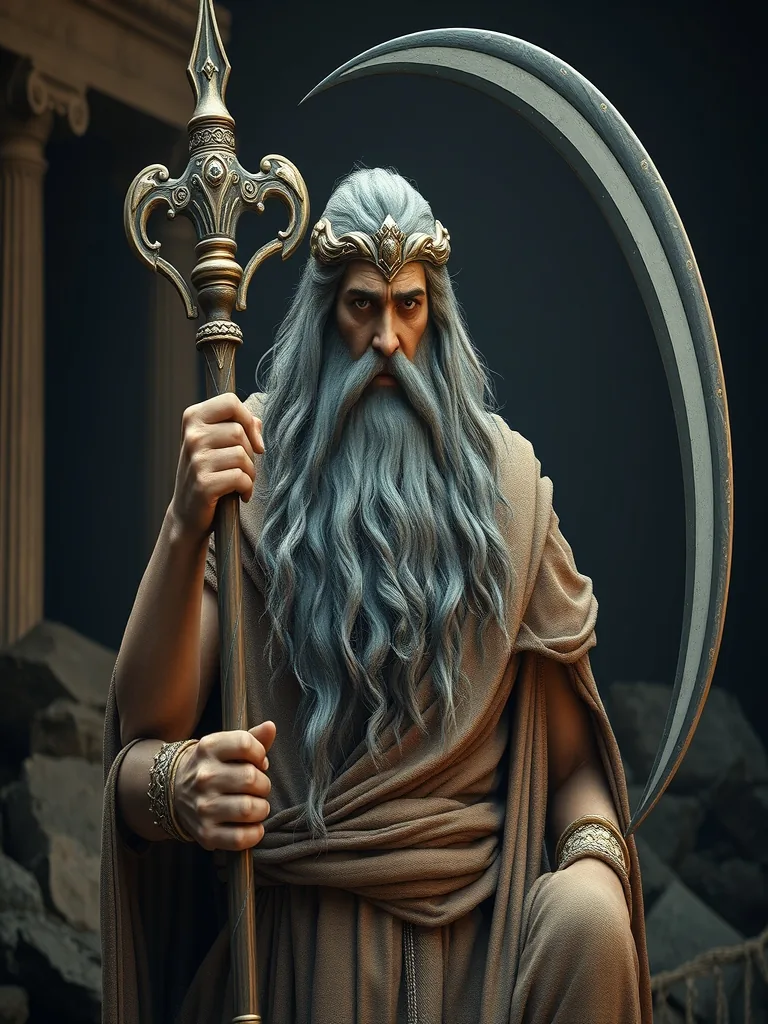
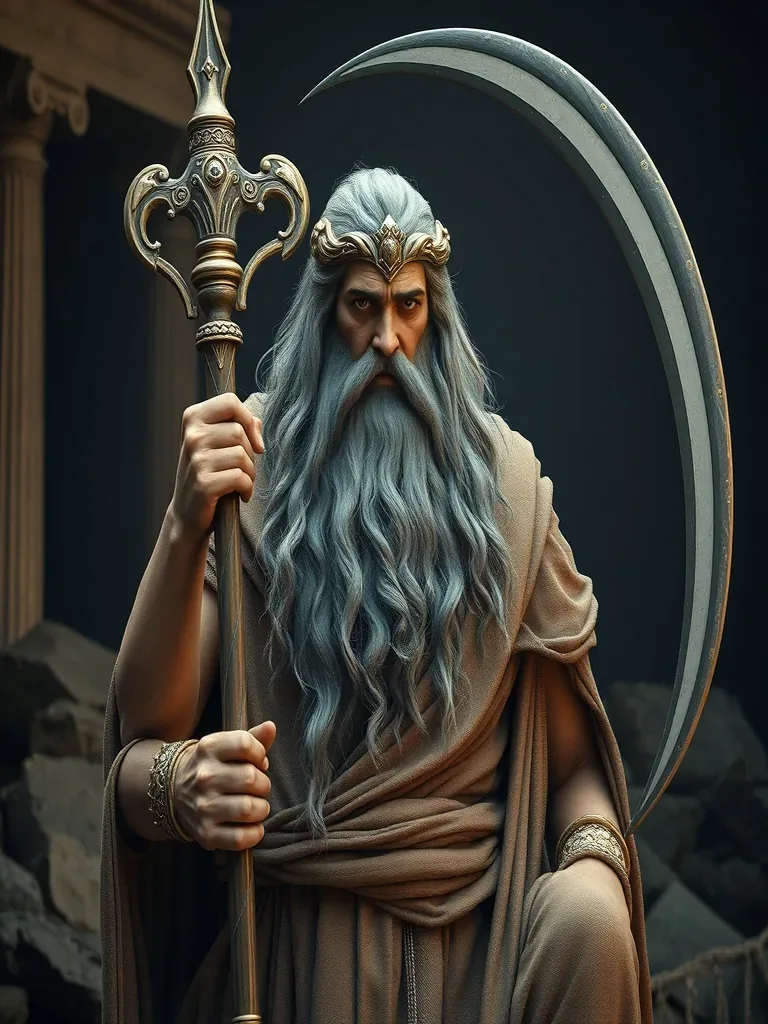
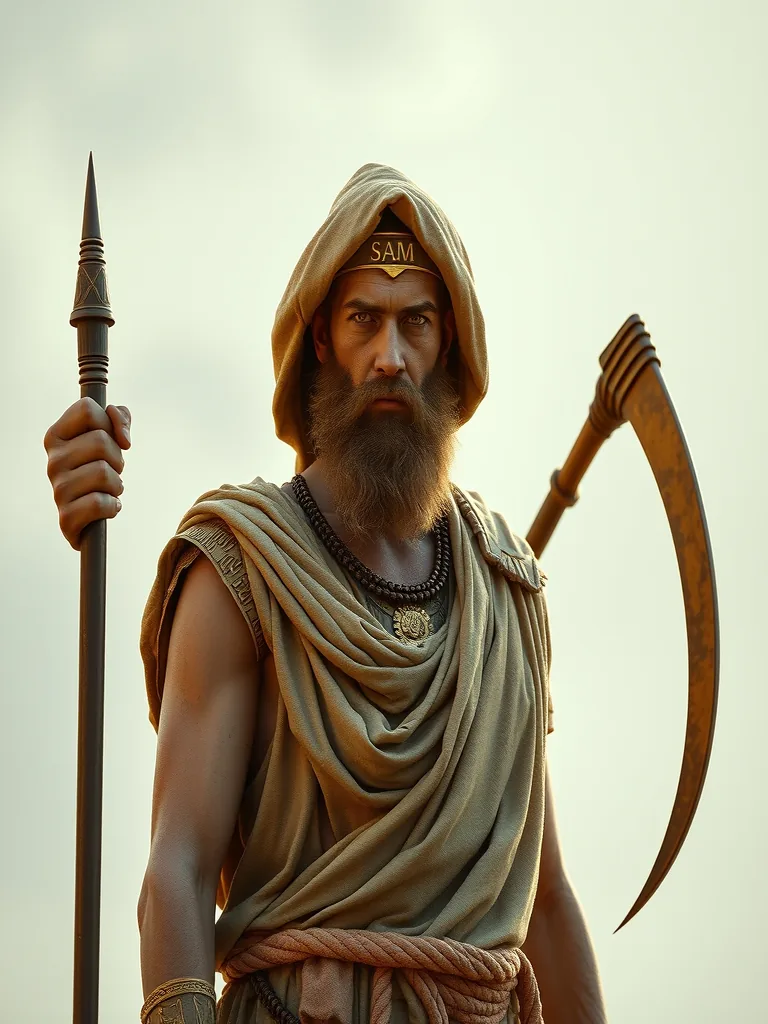
Cronus (Ancient Greek Κρόνος) stands as one of the most prominent, formidable, and dual-natured figures in ancient Greek religion and myth, holding sovereign command over the cosmos during the primeval era of the Titans and presiding over humanity's idyllic Golden Age. The youngest son of Uranus (Sky) and Gaia (Earth), Cronus alone possessed the daring resolve to answer his mother's anguished plea, wielding an adamantine flint sickle (harpe or drepanon) to castrate his tyrannical father, thereby severing their suffocating celestial embrace and establishing the cosmic separation of earth and sky. Ascending to universal kingship alongside his sister-consort Rhea, Cronus governed an uncorrupted realm of spontaneous abundance. However, forewarned by Gaia and dying Uranus that he was fated to be overthrown by his own offspring, Cronus systematically swallowed each newborn child borne by Rhea — Hestia, Demeter, Hera, Hades, and Poseidon — as soon as they emerged from the womb. When Rhea grew pregnant with Zeus, her sixth child, she sought refuge on the island of Crete, presenting Cronus with a heavy boulder wrapped in infant swaddling clothes, which the Titan king swallowed without suspecting the deception. Upon reaching maturity, Zeus forced his father to disgorge his siblings and the stone (the Eleusinian/Delphic Omphalos), sparking the ten-year cosmic war known as the Titanomachy that ended with Cronus and the Titans cast down into the subterranean abyss of Tartarus. In alternative traditions preserved by Hesiod's Works and Days and Pindar's odes, Cronus was released from chains and translated to the Isle of the Blessed, reigning eternally over the souls of righteous heroes and honored in classical Athens through the Kronia festival, a harvest celebration that suspended social class distinctions in memory of golden-age equality.
8 min read · Reviewed on September 30, 2026 · How we research
02
Sacred symbols
Sickle, hourglass, grain and the serpent biting its own tail
03
Family
Parents
Uranus (the starry primordial Sky) and Gaia (broad-bosomed Earth)
Siblings
The other eleven primordial Titans (Oceanus, Coeus, Crius, Hyperion, Iapetus, Theia, Rhea, Themis, Mnemosyne, Phoebe, Tethys), the Cyclopes, and the Hecatoncheires
Cronus
Unions
Rhea (his sister Titaness and queen consort) and Philyra (Oceanid mother of the centaur Chiron)
Children
Hestia, Demeter, Hera, Hades, Poseidon, Zeus (the first Olympian generation), and Chiron (the wise centaur)
Genealogy according to Hesíodo, Teogonia (vv. 132–210, 453–506); Hesíodo, Os Trabalhos e os Dias (vv. 109–120); Homero, Ilíada (Livro VIII, vv. 478–481 e Livro XIV, vv. 200–205); Píndaro, Olímpica II (vv. 70–83); Pausânias, Descrição da Grécia (Livro VI, cap. 20.1 e Livro IX, cap. 41.6); Diodoro Sículo, Biblioteca Histórica (Livro V, caps. 65–66); Walter Burkert, Greek Religion (1985); Timothy Gantz, Early Greek Myth (1993); Martin L. West, The East Face of Helicon (1997)
04
Sources and further reading
Primary sources
Hesiod of Ascra, Theogony and Works and Days. translation: Poetic translation of the Greek hexameters by Christian Werner, São Paulo: Editora Hedra.
Homer, Iliad (Book Eight, lines 478–481: Tartarus and Cronus). translation: Verse translation in decasyllables by Frederico Lourenço, Companhia das Letras.
Pausanias the Periegete, Description of Greece (Books VI and IX: Olympia and Chaeronea). translation: Annotated edition with archaeological apparatus by Maria Helena da Rocha Pereira, Calouste Gulbenkian.
Pindar of Thebes, Olympian Odes (Olympian II for Theron of Acragas). translation: Poetic version with critical notes by Trajano Vieira, Editora 34.
Studies
Jan N. Bremmer, Greek Religion and Culture, the Bible and the Ancient Near East. Leiden: Brill Academic Publishers, 2008.
Robert Beekes, Etymological Dictionary of Greek. Brill Academic Publishers, 2010.
Timothy Gantz, Early Greek Myth (Volume I: The Lineage of the Titans). Johns Hopkins University Press, 1993.
Jean-Pierre Vernant, Mito e Pensamento entre os Gregos. Rio de Janeiro: Editora Paz e Terra, 1990.
Name and epithets
From a historical linguistic perspective, the theonym Cronus (Κρόνος) possesses no transparent Proto-Indo-European derivation. Leading comparative linguists including Robert Beekes and Martin L.
In the ancient sources
Theogony (Hesiod), C. 700 BCE. The primary archaic literary authority detailing the Titanomachy, divine succession, and Cronus's rise and fall. Works and Days (Hesiod), C. 700 BCE.
The myths
The Adamantine Sickle in the Shadows and the Severing of Uranus. As recorded in Hesiod's Theogony, during the primordial era of cosmic origins, sky-god Uranus imprisoned his children born of Earth — the Titans, Cyclopes…
Worship and archaeology
The historical worship of Cronus was marked by unique festival practices preserving the memory of primordial golden-age equality.
How the god was depicted
In classical sculpture, civic coinage, and red-figure vase painting, Cronus is depicted as an august, patriarchal king advanced in years, sporting a heavy flowing beard and a grave, brooding expression beneath a royal t…
What scholars debate
Philological Differentiation: Cronus (Titan King) versus Chronos (Father Time). Classical philologists such as Walter Burkert and Martin L.
After antiquity
Cronus became one of the most resonant archetypes in Western art and culture, assimilated in Rome as Saturn (patron of agriculture and the December Saturnalia), inspiring profound visual masterpieces such as Francisco d…
Did you know?
During the Athenian Kronia festival, masters and slaves sat together at civic banquets, with masters serving food to their enslaved servants in commemoration of golden-age equality.
Codex relic
Adamantine Sickle. A sickle of indestructible metal with which he dethroned his own father and reaps the flow of ages.
The rest of this scroll is sealed
The legends, the myth, the cult and relics are part of the full Codex. You can open 1 full entry for free every day; to open all 500 deities with no limits and no ads, subscribe to Codex PRO.