Skip to content
CodexMythologia
Back to the Codex
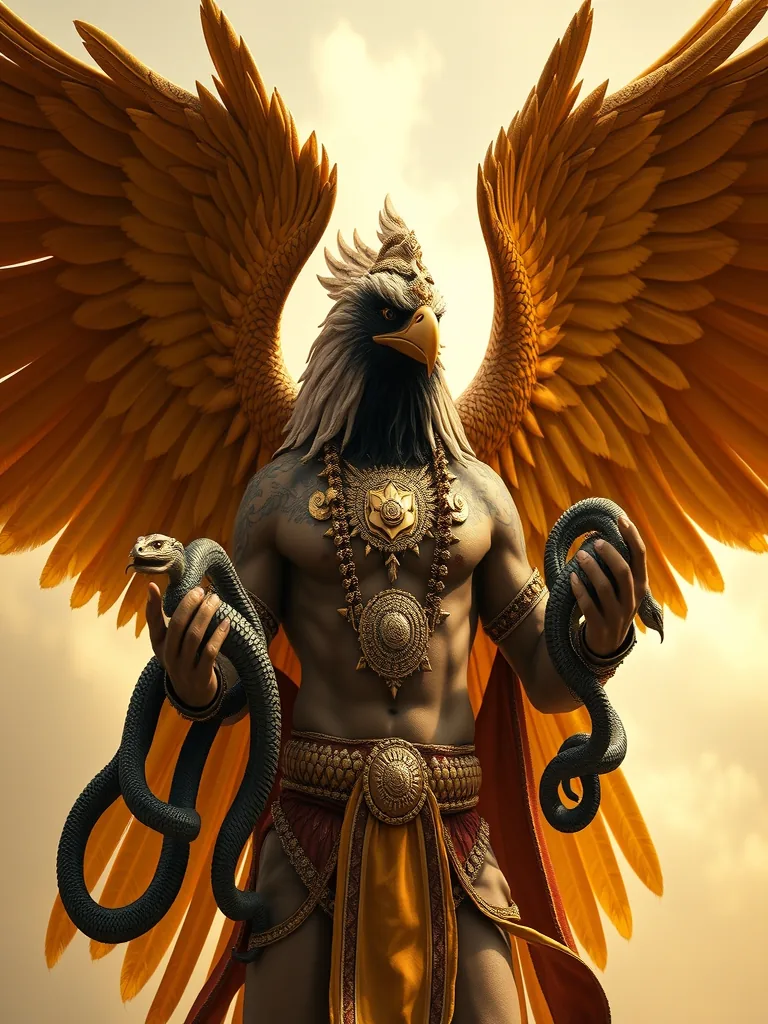
Portrait of Garuda, Hindu deity
Hindu
Tap or drag
Hindu

Garuda

The King of Birds

Domain
Sky, Strength & Loyalty
Alignment
Lawful Good
Element
Air
Relics of Power
Wings of the Sun
Speak with Garuda

The full Codex

5 sections of this entry are open to everyone: the summary, the people, the symbols, the lineage and the sources. The other 9 (Name and epithets, In the ancient sources, The myths, Worship and archaeology, How the god was depicted, What scholars debate, After antiquity, Did you know?, Codex relic) are part of the full Codex: PRO opens the whole study of all 500 deities, and without a subscription you can read one full entry a day, just like in the app.

The People

People
Hindu peoples
Region
Indian subcontinent
Period
c. 1500 BC – present

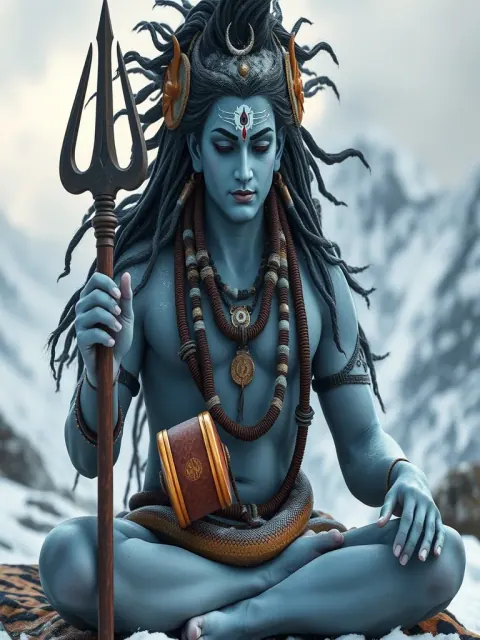
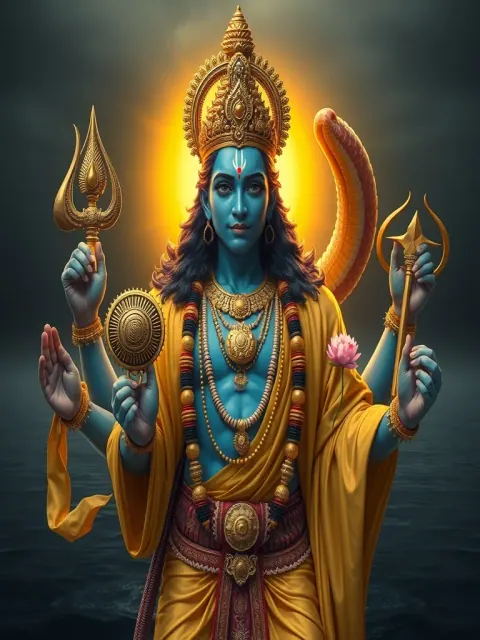
The Hindu deities have been worshipped for over three thousand years across the Indian subcontinent, from the Vedic hymns to the living Hinduism of today. Billions of devotees dedicate to them temples, festivals such as Diwali and Holi, and daily rituals in the home. It is one of the largest religious traditions still practiced in the world.

Diwali lights up India with oil lamps in honor of Lakshmi, and Holi celebrates spring with clouds of colored powder. At the Kumbh Mela, the largest pilgrimage on Earth, tens of millions bathe in the sacred rivers, and daily puja brings flowers, incense, and food to the altars.
At a glance

Garuda is the divine king of birds and the sacred mount (vahana) of Lord Vishnu across Hindu and Buddhist traditions. Born to the sage Kashyapa and Vinata, he features prominently in the Mahabharata for procuring the nectar of immortality (amrita) from celestial gods to liberate his mother from servitude to Kadru and the serpent brood. Known as Suparna in Vedic hymns, he personifies solar velocity and perpetual enmity toward toxic serpent powers.

4 min read · Reviewed on Invalid Date · How we research

Sacred symbols

The golden wings, the eagle beak, the serpent and the pot of amrita

Family

Parents
Kashyapa (cosmic progenitor and venerable rishi)Vinata (primordial mother of celestial birds)
Siblings
Aruna (personified dawn and charioteer of Surya)
Garuda
Unions
Unnati (celestial consort associated with ascending glory)
Children
Sampati (heroic son and legendary divine vulture)Jatayu (faithful winged defender in the epic Ramayana)
Genealogy according to Mahabharata, Adi Parva 1.14-34; Rigveda 1.164; Suparnadhyaya

Sources and further reading

Primary sources

  • Krishna Dvaipayana Vyasa (व्यास), Mahabharata: Adi Parva (महाभारत). translation: Kisari Mohan Ganguli, 1896. read
  • Anónimo (sabios védicos), Rigveda (ऋग्वेद / The Hymns of the Rigveda). translation: Ralph T. H. Griffith, 1896. read
  • Anónimo (tradición védica tardía), Suparnadhyaya (सुपर्णाध्याय / Die Suparnasage). translation: Jarl Charpentier, Uppsala, 1920. read
  • Krishna Dvaipayana Vyasa (व्यास), Vishnu Purana (विष्णुपुराण). translation: Horace Hayman Wilson, Londres: John Murray, 1840. read

Studies

  • Heinrich Zimmer, Myths and Symbols in Indian Art and Civilization. Princeton University Press, 1946. open
  • Arthur Anthony Macdonell, Vedic Mythology. Karl J. Trübner, Strassburg, 1897. open
  • Jan Gonda, Aspects of Early Viṣṇuism. A. Oosthoek, Utrecht, 1954. open
  • Wendy Doniger O'Flaherty, Hindu Myths: A Sourcebook. Penguin Books, Harmondsworth, 1975. open

Name and epithets

The Sanskrit theonym Garuḍa (गरुड) is linked by historical philologists to Vedic roots conveying the devouring of poison or the motion of heavy, swift wings.

In the ancient sources

Mahabharata, c. 4th century BCE – 4th century CE. Primary classical narrative detailing the dispute between Kadru and Vinata, the retrieval of amrita, and Garuda's eternal covenant with Vishnu. Rigveda, c.

The myths

The Enslavement of Vinata and the Quest for Amrita. In the Adi Parva of the Mahabharata, Vinata was forced into servitude to her sister Kadru after losing a fraudulent wager regarding the tail color of the divine horse…

Worship and archaeology

The worship and ritual presence of Garuda are central to everyday Vaishnava temple practice across India, Sri Lanka, and Southeast Asia.

How the god was depicted

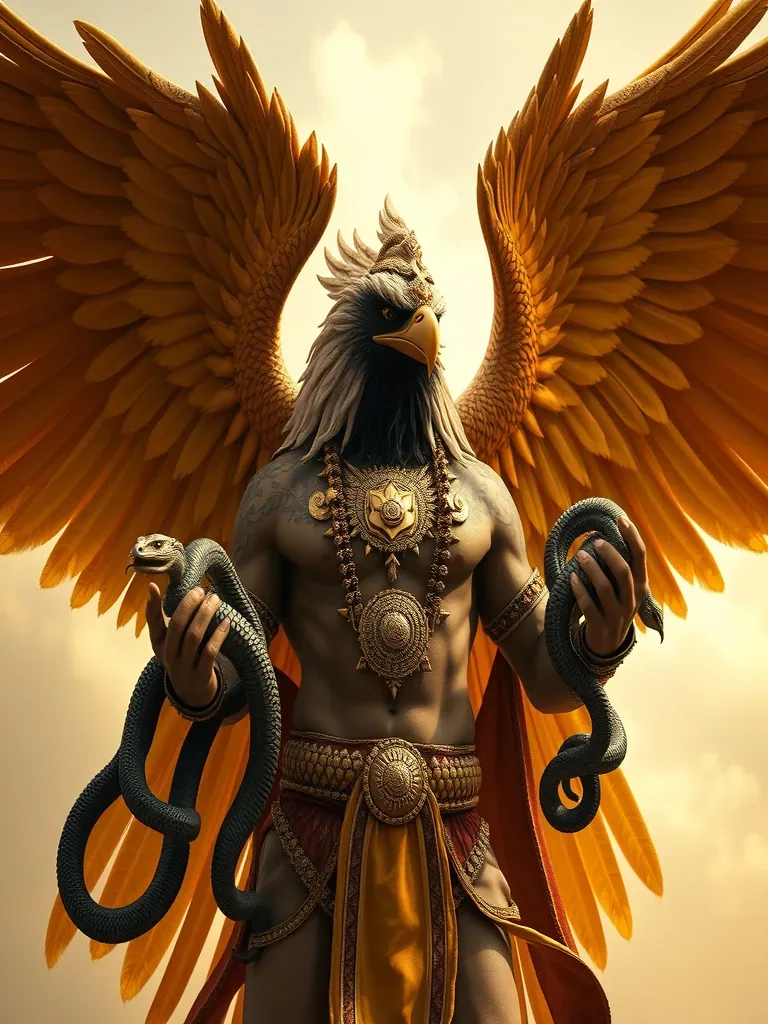
Classical Hindu iconography depicts Garuda as a composite anthropomorphic and avian figure, featuring the muscular physique and limbs of a human warrior combined with raptorial wings, a curved beak, and talons.

What scholars debate

Evolution from Vedic Solar Metaphor to Epic Deity. Philologists and historians of Indian religion, including Arthur Anthony Macdonell and Jan Gonda, trace the transformation of the abstract Vedic solar bird (Garutman/Su…

After antiquity

Beyond traditional Hindu and Vajrayana Buddhist liturgies, Garuda maintains a profound secular presence in Asian visual art, government heraldry, and public monuments.

Did you know?

Garuda serves as the official national emblem of two sovereign Asian countries: Thailand (as Krut Pha) and Indonesia (as Garuda Pancasila).

Codex relic

Wings of the Sun. The golden wings so vast they darken the sky, with which he bears Vishnu across the worlds.

The rest of this scroll is sealed

The legends, the myth, the cult and relics are part of the full Codex. You can open 1 full entry for free every day; to open all 500 deities with no limits and no ads, subscribe to Codex PRO.

See Codex PROGet it on Google Play

From the same pantheon

View pantheon