Skip to content
CodexMythologia
Back to the Codex
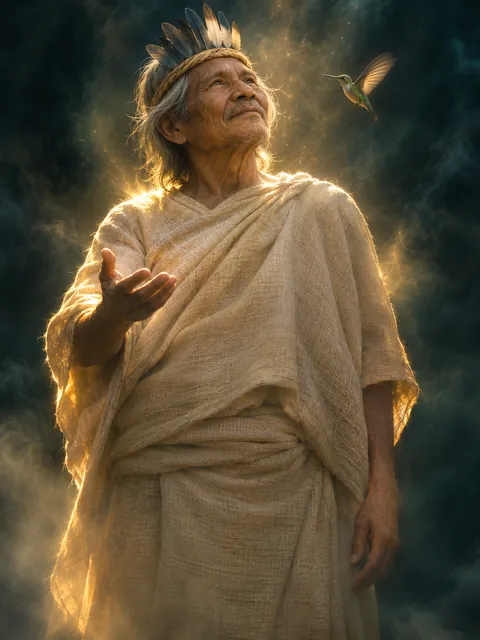
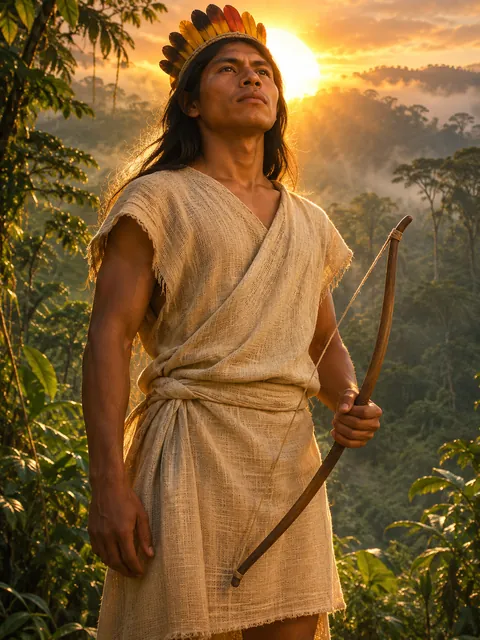
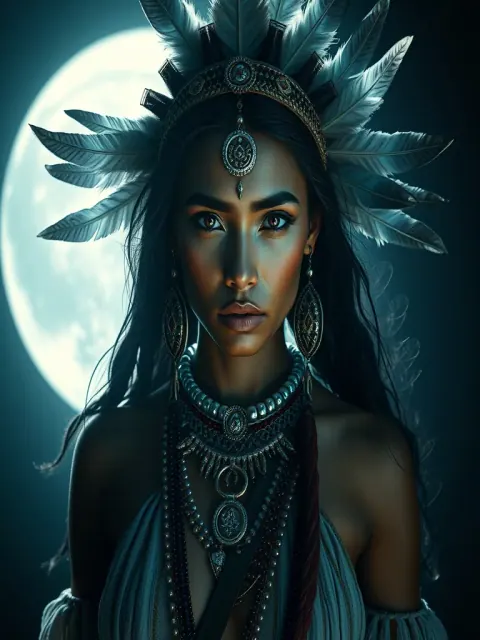
Portrait of Guaraci, Indigenous deity
Indigenous
Tap or drag
Indigenous

Guaraci

The Guardian of the Sun

Domain
Sun, Day & Life
Alignment
Lawful Good
Element
Light
Relics of Power
Day Brazier
Speak with Guaraci

The full Codex

4 sections of this entry are open to everyone: the summary, the people, the symbols, the lineage and the sources. The other 9 (Name and epithets, In the ancient sources, The myths, Worship and archaeology, How the god was depicted, What scholars debate, After antiquity, Did you know?, Codex relic) are part of the full Codex: PRO opens the whole study of all 500 deities, and without a subscription you can read one full entry a day, just like in the app.

The People

People
Indigenous peoples of Brazil
Region
Brazil & South America
Period
pre-colonial – present

The Indigenous spirits and culture heroes are revered by the native peoples of Brazil, such as the Tupi, Guarani, and Yanomami. Their beliefs, passed down orally by shamans and elders, bind humans to the forest, the rivers, and the ancestors. They remain alive in the Indigenous communities that endure to this day.

Shamans lead rituals with songs, rattles, and sacred plants, mediating contact with the spirits of the forest. In the Upper Xingu, the Quarup honors illustrious dead with dances and wrestling, and cauim feasts gather entire villages in ceremonial celebrations.
At a glance

Guaraci is the Tupi word for the sun, in the spelling Couto de Magalhães fixed in O Selvagem (1876) as guaracy. That book is the source that presents the sun as ‘creator of living things’ within a three-figure theogony: the sun, the moon (jacy) and Rudá. The cited passage of O Selvagem (1876) presents a creator role for the sun within a proposed theogony, but does not narrate deeds by Guaraci. The sixteenth and seventeenth-century chroniclers (Léry, d'Abbeville, Évreux) record the words for the sun and the moon and describe how the Tupinambá watched the heavenly bodies, but they do not attribute to them a solar god with a biography. This entry therefore separates what is testimony from what is later interpretation.

The ancient sources on this deity are scarce. This study gathers only what is on record.

10 min read · Reviewed on October 14, 2026 · How we research

Sacred symbols

Sun, fire, gold and the day

Sources and further reading

Primary sources

  • José Vieira Couto de Magalhães, O Selvagem, part II, chs. VIII and XII. read
  • Jean de Léry, Histoire d'un voyage faict en la terre du Bresil. read
  • Claude d'Abbeville, Histoire de la mission des pères capucins en l'isle de Maragnan et terres circonvoisines. read
  • Yves d'Évreux, Voyage dans le nord du Brésil fait durant les années 1613 et 1614. read

Studies

  • Alexandro Silva de Jesus, Curupira: ensaio sobre tradução e dívida colonial. 2016. open

Name and epithets

Couto de Magalhães writes the name of the sun as guaracy and breaks it into guara, ‘living being’, and cy, ‘mother’, from which he draws the translation ‘mother of the living’.

In the ancient sources

O Selvagem, 1876; nineteenth-century ethnographic work by a non-indigenous author. The only open source that gives the sun, named Guaracy, the role of creator of living things.

The myths

The sun as creator of living things in Couto de Magalhães's theogony. Couto de Magalhães says that the theogony of the Indians ‘rests on this capital idea: all created things have a mother’.

Worship and archaeology

Léry, who lived with the Tupinambá of Guanabara Bay in 1557–1558, writes in chapter XVI that they neither know nor worship celestial or terrestrial gods, have no formula or meeting place and do not pray in public or in…

How the god was depicted

The passage on Guaracy in O Selvagem (1876) names him as the sun but gives no visual description. The symbols ‘gold’ and ‘fire’ are not in the 1876 passage, nor in Léry, d'Abbeville or Évreux.

What scholars debate

Indigenous theogony or nineteenth-century scheme?. Couto opens the description with ‘the general system of Tupi theogony seems to be this’ and bases it on a premise he himself declares: all created things would have a ‘…

After antiquity

The figure of Guaraci as it circulates today in school books, websites and games, a sun husband of Jaci, creator of the daytime animals, helper of Tupã, is not documented in the open sources read.

Did you know?

Couto records the Guarani variant cuaracy and says that Montoya explained it as ‘heavy hole’, which the author considers impossible for a language that gives each object the characters it really has.

Codex relic

Day Brazier. A runic torch illuminating the entire jungle, keeping night terrors away.

The rest of this scroll is sealed

The legends, the myth, the cult and relics are part of the full Codex. You can open 1 full entry for free every day; to open all 500 deities with no limits and no ads, subscribe to Codex PRO.

See Codex PROGet it on Google Play

From the same pantheon

View pantheon