Skip to content
CodexMythologia
Back to the Codex
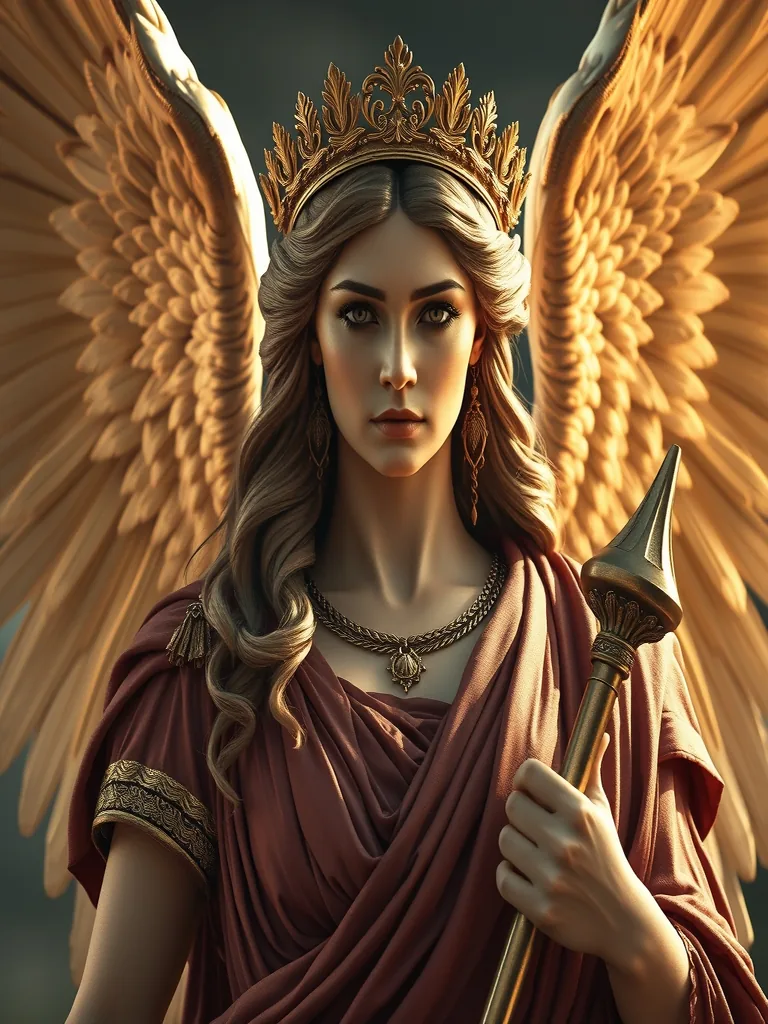
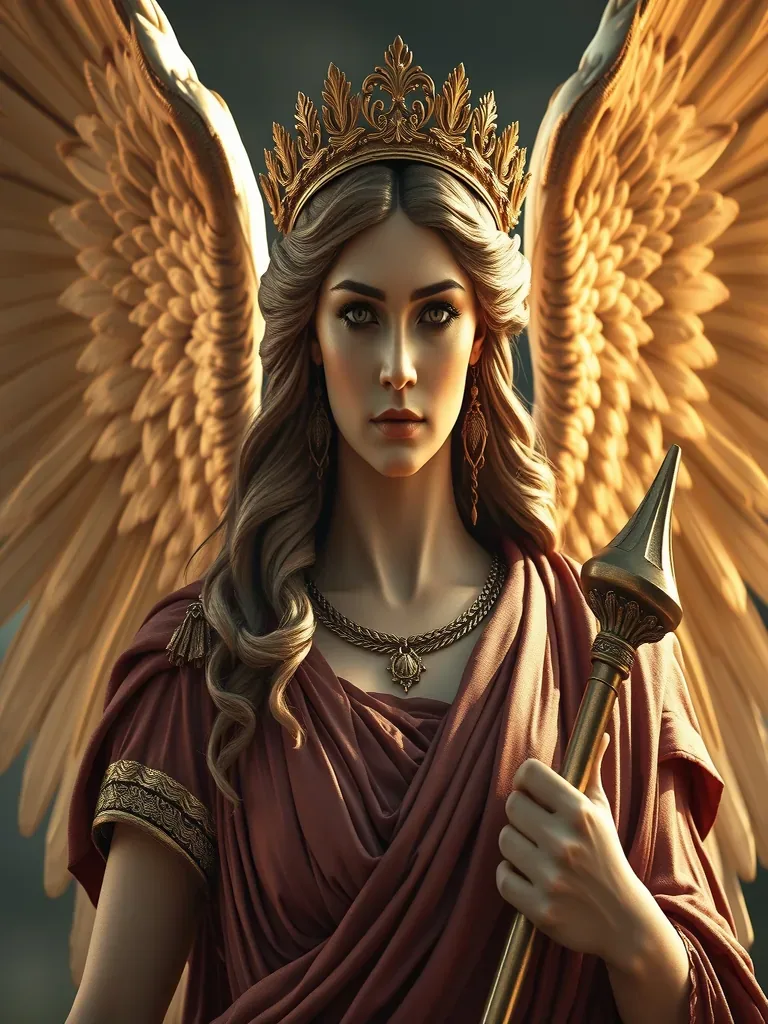
Portrait of Victoria, Roman deity
Roman
Tap or drag
Roman

Victoria

The Winged Goddess of Victory

Domain
Victory, Triumph & Glory
Alignment
Lawful Neutral
Element
Light
Relics of Power
Laurel Crown
Speak with Victoria

The full Codex

4 sections of this entry are open to everyone: the summary, the people, the symbols, the lineage and the sources. The other 9 (Name and epithets, In the ancient sources, The myths, Worship and archaeology, How the god was depicted, What scholars debate, After antiquity, Did you know?, Codex relic) are part of the full Codex: PRO opens the whole study of all 500 deities, and without a subscription you can read one full entry a day, just like in the app.

The People

People
Romans
Region
Rome & the Roman Empire
Period
8th c. BC – 4th c. AD

The Romans worshipped their gods as guardians of the state, the home, and war, identifying many of them with Greek deities. The official cult was led by colleges of priests and by the emperor himself, with temples in the heart of Rome. Their religion followed the Empire's expansion across Europe, North Africa, and the Middle East.

The December Saturnalia reversed social roles in days of feasting and gifts, and the Lupercalia purified the city in February. The Vestal Virgins guarded Vesta's sacred fire, and victorious generals paraded in triumph to the temple of Jupiter Capitolinus.
At a glance

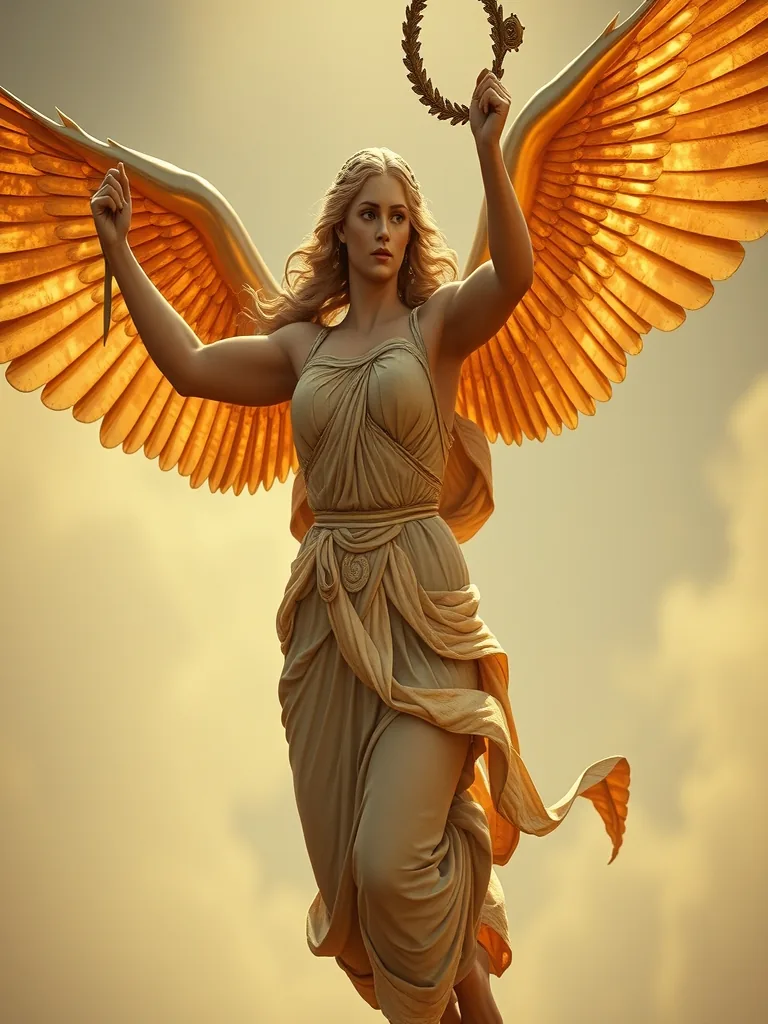
Victoria is the divine personification and sovereign goddess of martial victory, military supremacy, and imperial triumph in Roman state religion. Revered in her monumental sanctuary upon the Palatine Hill and honored before the renowned golden altar in the Curia Julia, where senators burned incense before convening, she guaranteed divine favor for Roman legions and eternal dominion across the ancient world.

4 min read · Reviewed on September 25, 2026 · How we research

Sacred symbols

The wings, the laurel crown, the palm of triumph and the globe

Sources and further reading

Primary sources

  • Tito Lívio, Ab Urbe Condita. read
  • Augusto, Res Gestae Divi Augusti. read

Studies

  • Georges Dumezil, Archaic Roman Religion. 1970.
  • Mary Beard, Religions of Rome. 1998.
  • T. P. Wiseman, The Myths of Rome. 2004.

Name and epithets

The Latin theonym Victōria derives from the verb vincere ('to conquer', 'to prevail', 'to overcome in combat'), originating from the Proto-Indo-European root **weik-*, denoting martial strength and decisive victory.

In the ancient sources

Ab Urbe Condita, 27 BCE–14 CE. Livy's historical narrative recording the dedication of the grand Temple of Victoria upon the Palatine Hill during the Third Samnite War in 294 BCE. Roman Antiquities, 1st century BCE.

The myths

The Palatine Sanctuary and the Reception of the Great Mother. Amidst the grueling military crises of the Third Samnite War in 294 BCE, consul Lucius Postumius Megellus vowed to construct a monumental temple dedicated to…

Worship and archaeology

The veneration of Victoria formed the ideological keystone of Roman imperial authority. Every victorious imperator celebrating a triumph paraded past her temples on his ascent to the Capitoline, dedicating laurel sprigs…

How the god was depicted

In Roman coinage, triumphal arch reliefs, and imperial monuments such as the Arch of Titus and Trajan's Column, Victoria is portrayed with broad feathered wings outstretched in flight or alighting gracefully atop a cosm…

What scholars debate

Abstract Personification versus Sovereign Imperial Numen. Scholars of Roman religion including Stefan Weinstock and Mary Beard examine how Victoria transitioned from an abstract moral concept into the charismatic heart…

After antiquity

The visual authority of Victoria exerted an unmatched influence upon European neoclassical art and civic architecture.

Did you know?

The most widely circulated silver coin of the mid-Republic was named the 'victoriatus' because its reverse design prominently featured the goddess Victoria placing a laurel wreath upon a military armor trophy.

Codex relic

Laurel Crown. The laurel crown that descends from the heavens to wreathe the brow of those victorious in battle and in life.

The rest of this scroll is sealed

The legends, the myth, the cult and relics are part of the full Codex. You can open 1 full entry for free every day; to open all 500 deities with no limits and no ads, subscribe to Codex PRO.

See Codex PROGet it on Google Play

Divine Equivalents

From the same pantheon

View pantheon