Skip to content
CodexMythologia
Back to the Codex
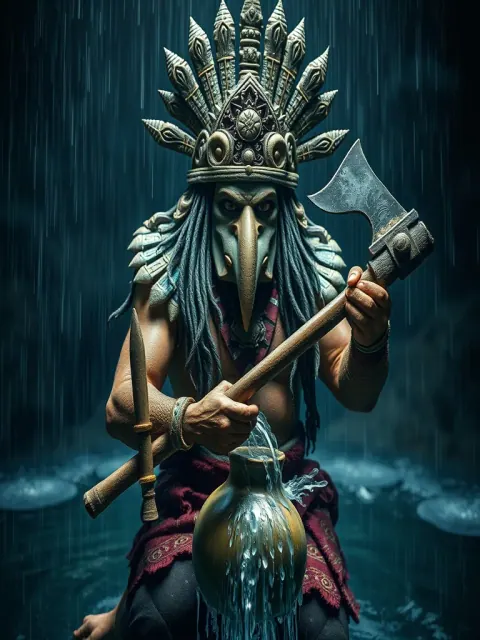
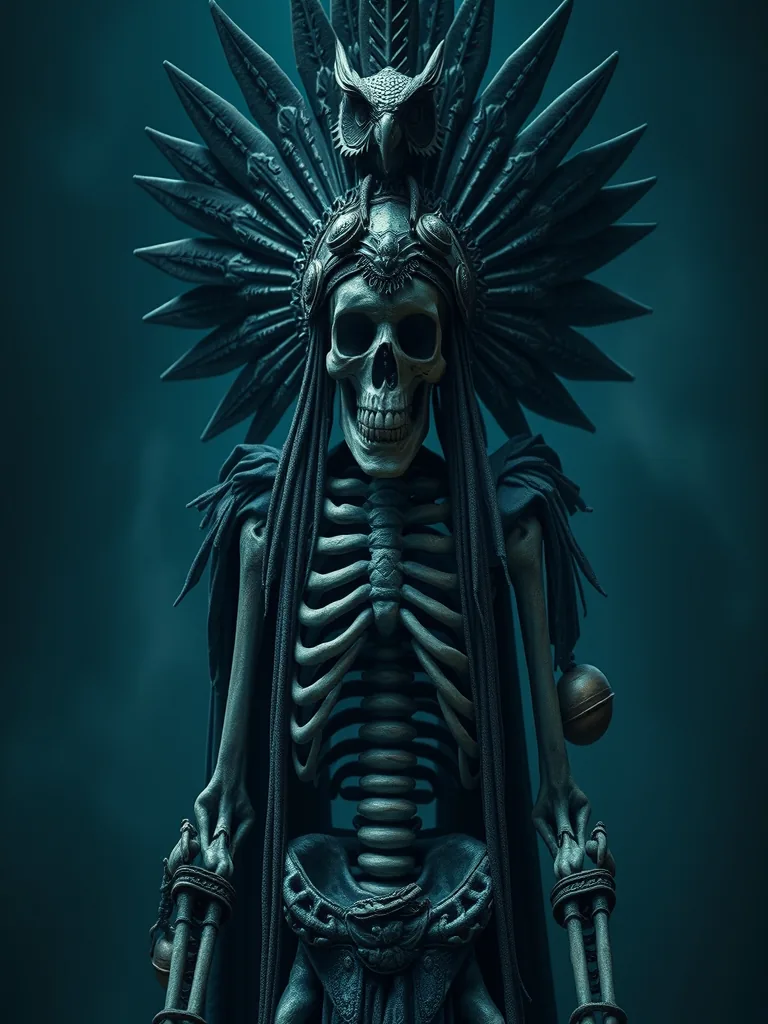
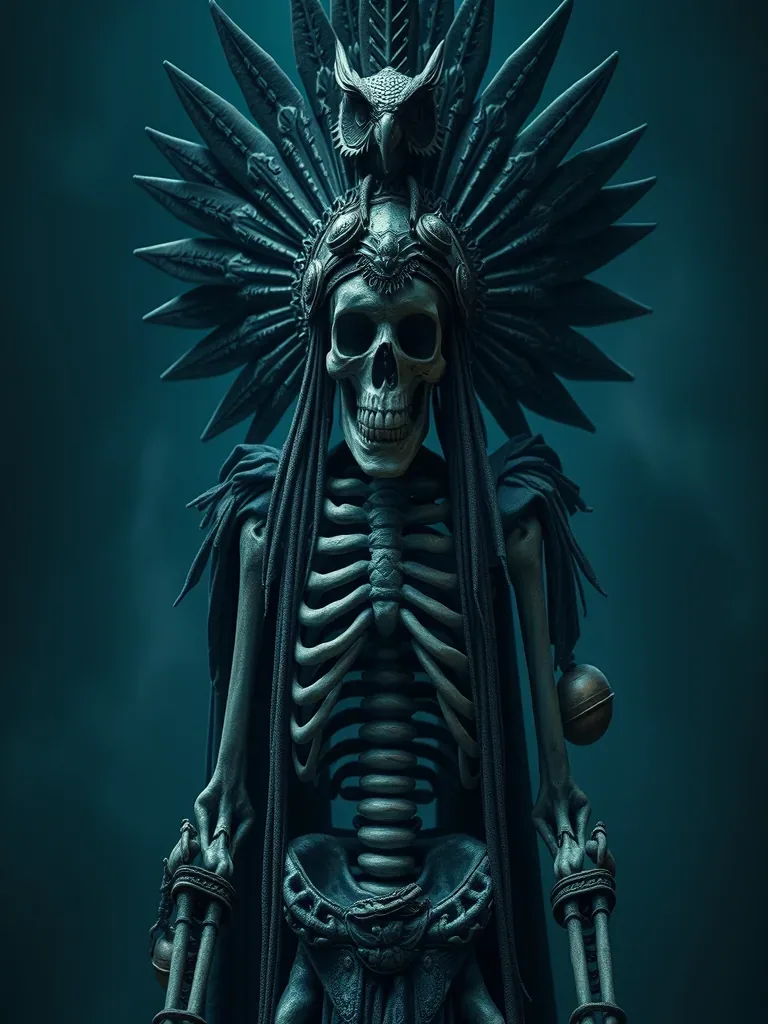
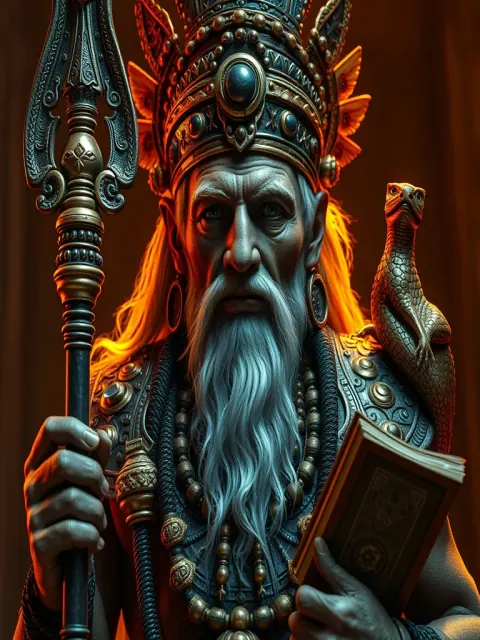
Portrait of Ah Puch, Maya deity
Maya
Tap or drag
Maya

Ah Puch

The Lord of Death of Xibalba

Domain
Death & Underworld
Alignment
Chaotic Evil
Element
Darkness
Relics of Power
Bells of Death
Speak with Ah Puch

The full Codex

4 sections of this entry are open to everyone: the summary, the people, the symbols, the lineage and the sources. The other 9 (Name and epithets, In the ancient sources, The myths, Worship and archaeology, How the god was depicted, What scholars debate, After antiquity, Did you know?, Codex relic) are part of the full Codex: PRO opens the whole study of all 500 deities, and without a subscription you can read one full entry a day, just like in the app.

The People

People
Maya
Region
Mesoamerica (Yucatán & Guatemala)
Period
c. 2000 BC – 1500 AD

The Maya gods were worshipped in the city-states of Mesoamerica, such as Tikal, Palenque, and Chichén Itzá. Astronomer-priests read the skies and the calendar to honor them at the right time, in pyramid-temples now swallowed by the jungle. Many of their myths survive in the Popol Vuh, the sacred book of the Quiché Maya.

Maya kings and queens offered their own blood in bloodletting rituals to feed the gods, and the ritual ballgame re-enacted the duel against the lords of the underworld. Cenotes such as the one at Chichén Itzá received precious offerings, guided by the 260-day sacred calendar.
At a glance

Ah Puch (designated in pre-Columbian codices and Classic Maya epigraphy as Kimi, 'Death', and Kisin, 'The Foul-Smelling One', and conventionally classified by Paul Schellhas as 'God A') is the principal Maya deity of skeletal death, cadaver decomposition, and the subterranean realm of Xibalba. In the Guatemalan highlands, the Popol Vuh records the sovereign powers of death under the names Jun Kame ('One Death') and Wuqub' Kame ('Seven Death'), who govern the judges and scourges of the underworld. Iconographically, Kimi is consistently depicted as a fleshless corpse or one in an advanced state of putrefaction: exposed skull, visible ribs and vertebrae, a swollen belly marked by dark circular patches of cadaveric necrosis, and lipless jaws. His characteristic adornments include rattles and spherical bells of copper or shell tied to the ankles, wrists, and hair, as well as necklaces made of eyeballs torn out and hung over the chest. In the Dresden and Madrid codices, God A rules the day Kimi (the sixth day of the 260-day Tzolk'in ritual calendar) and often appears brandishing funerary torches or decapitation axes, or presiding over the ritual sacrifice of prisoners in direct opposition to the deities of rain (Chaac) and maize (Ixim).

6 min read · Reviewed on September 28, 2026 · How we research

Sacred symbols

The skeleton, the bells, the owl and the signs of decay

Sources and further reading

Primary sources

  • Anonymous (K'iche' Maya), Popol Vuh: The Sacred Book of the Maya. translation: Translation by Allen J. Christenson, University of Oklahoma Press, 2007.
  • Diego de Landa, Relación de las cosas de Yucatán. translation: Annotated edition by Ángel María Garibay, Editorial Porrúa, 1959.
  • Anonymous (Post-Classic Maya), Dresden Codex. translation: Analytical study by Helmut Deckert, Akademische Druck, Graz, 1975.

Studies

  • Karl Taube, The Major Gods of Ancient Yucatan. Dumbarton Oaks Research Library and Collection, 1992.
  • Michael D. Coe, The Maya Scribe and His World. The Grolier Club, 1973.
  • J. Eric S. Thompson, Maya History and Religion. University of Oklahoma Press, 1970.

Name and epithets

The popular name Ah Puch comes from late colonial ethnographic records of Yucatan, but in pre-Hispanic hieroglyphic sources the deity is designated by the sign of the fleshless skull, read as Kimi or Cimi (derived from…

In the ancient sources

Dresden Codex, 13th and 14th centuries CE.. Presents God A in full skeletal representations, with bells on the ankles and necklaces of eyes. Madrid Codex, c. 1400 CE..

The myths

The Challenge of the Lords of Xibalba in the Popol Vuh. In the K'iche' epic Popol Vuh, Jun Kame and Wuqub' Kame preside over the council of judges of Xibalba, assisted by demons responsible for specific illnesses (such…

Worship and archaeology

The cult of the gods of death among the Maya was characterized by apotropaic rites intended to ward off physical destruction and to contain the spread of epidemic diseases.

How the god was depicted

The iconography of Kimi (God A) in the codices and in Classic polychrome ceramics is immediately identifiable by its precise thanatological anatomy: a head reduced to a skeletal cranial vault with empty nasal cavities;…

What scholars debate

The Differentiation between God A and God A' (Mok Chih). Pioneering studies grouped all the skeletal figures of Maya art under the generic label of gods of death.

After antiquity

Ah Puch and the Lords of Xibalba hold a prominent place in the universal history of literature and fantastic art thanks to the renown of the Popol Vuh.

Did you know?

The spherical copper bells shown on the ankles and hair of Kimi in the codices have been widely found by archaeologists in post-Classic burials at Mayapan and Chichen Itza, confirming their actual use in funerary garmen…

Codex relic

Bells of Death. Sinister bells that announce the coming of death and the path to the underworld of Xibalba.

The rest of this scroll is sealed

The legends, the myth, the cult and relics are part of the full Codex. You can open 1 full entry for free every day; to open all 500 deities with no limits and no ads, subscribe to Codex PRO.

See Codex PROGet it on Google Play

From the same pantheon

View pantheon