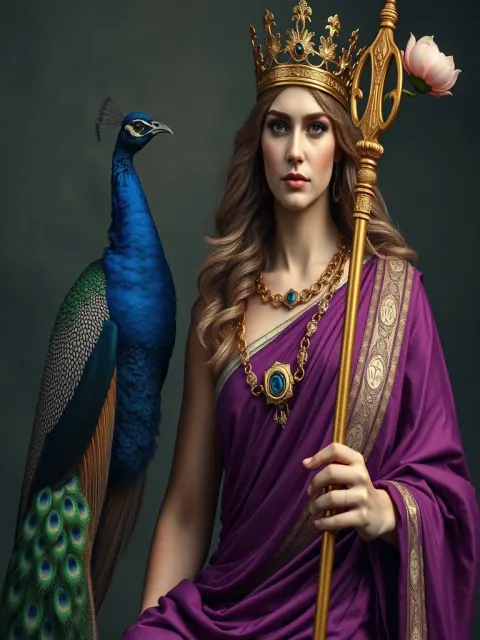
5 sections of this entry are open to everyone: the summary, the people, the symbols, the lineage and the sources. The other 9 (Name and epithets, In the ancient sources, The myths, Worship and archaeology, How the god was depicted, What scholars debate, After antiquity, Did you know?, Codex relic) are part of the full Codex: PRO opens the whole study of all 500 deities, and without a subscription you can read one full entry a day, just like in the app.
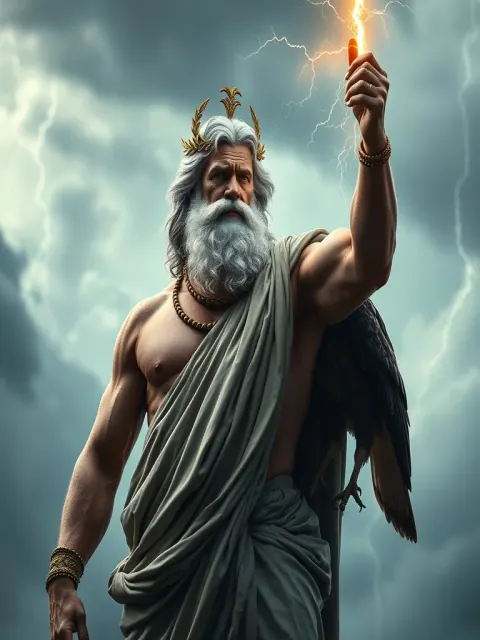
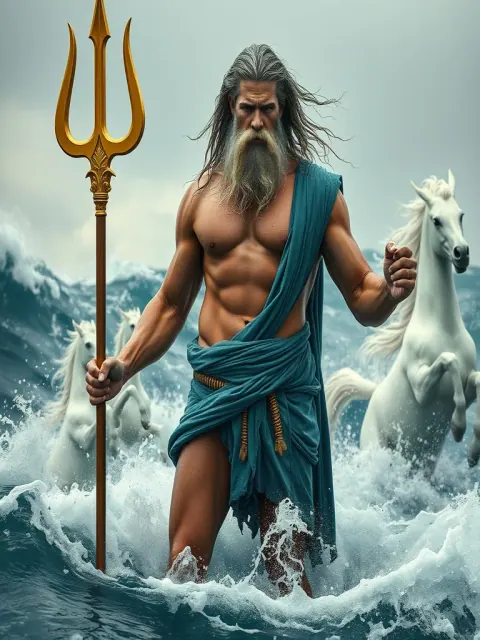
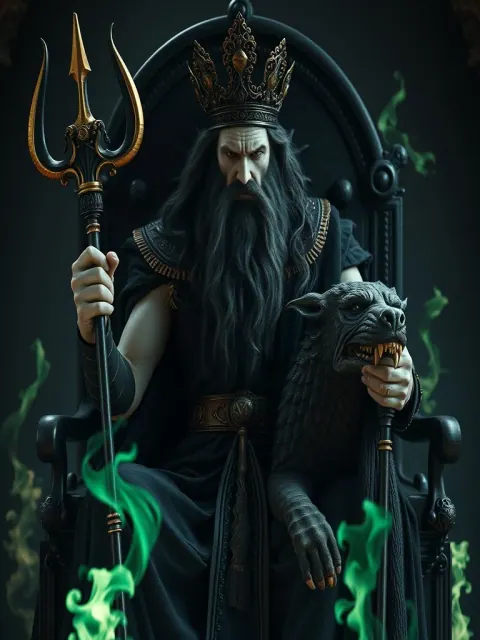
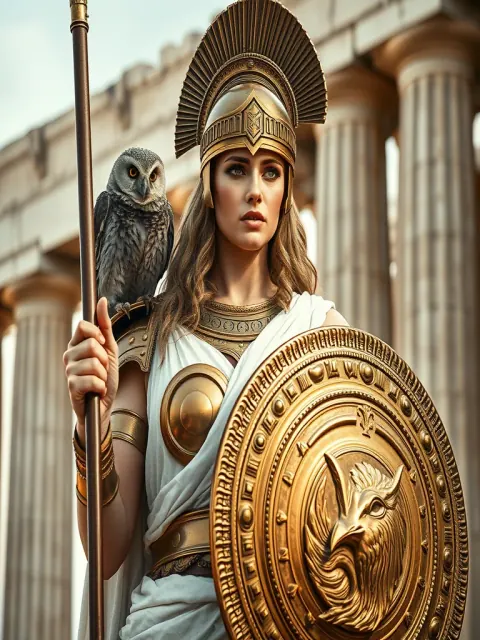
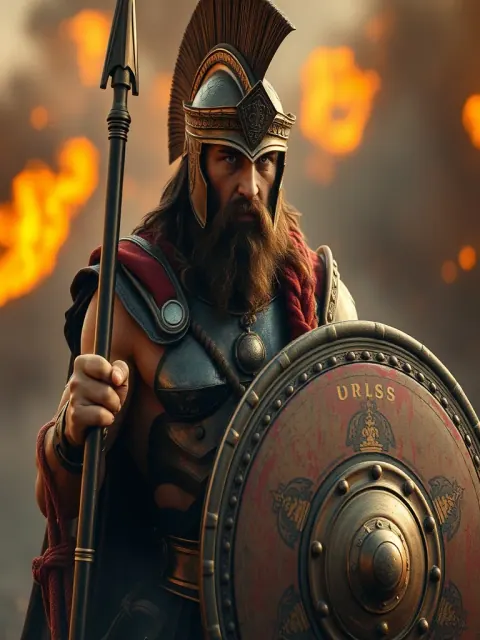
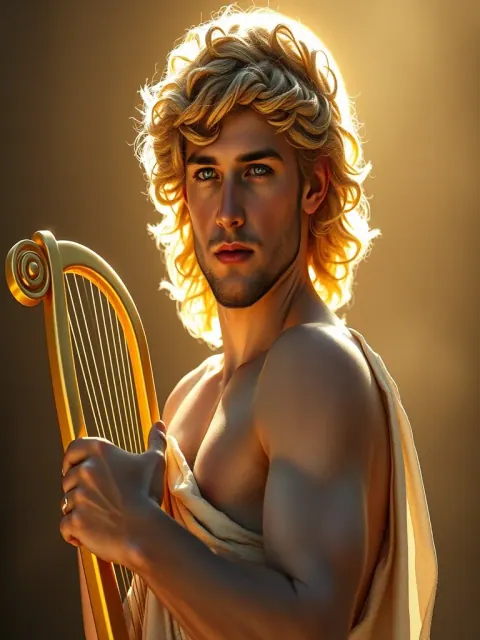
The Olympian gods were worshipped by the city-states of ancient Greece, from Athens to Sparta, which raised them temples such as the Parthenon. Reigning atop Mount Olympus, they presided over every aspect of life and were celebrated in festivals like the Olympic Games. Homer and Hesiod fixed their myths, which shaped all of Western culture.
The Olympic Games were held every four years in honor of Zeus, and the Panathenaea celebrated Athena in Athens. The Eleusinian Mysteries initiated the faithful into the secrets of Demeter and Persephone, while crowds consulted Apollo's oracle at Delphi.
01
At a glance
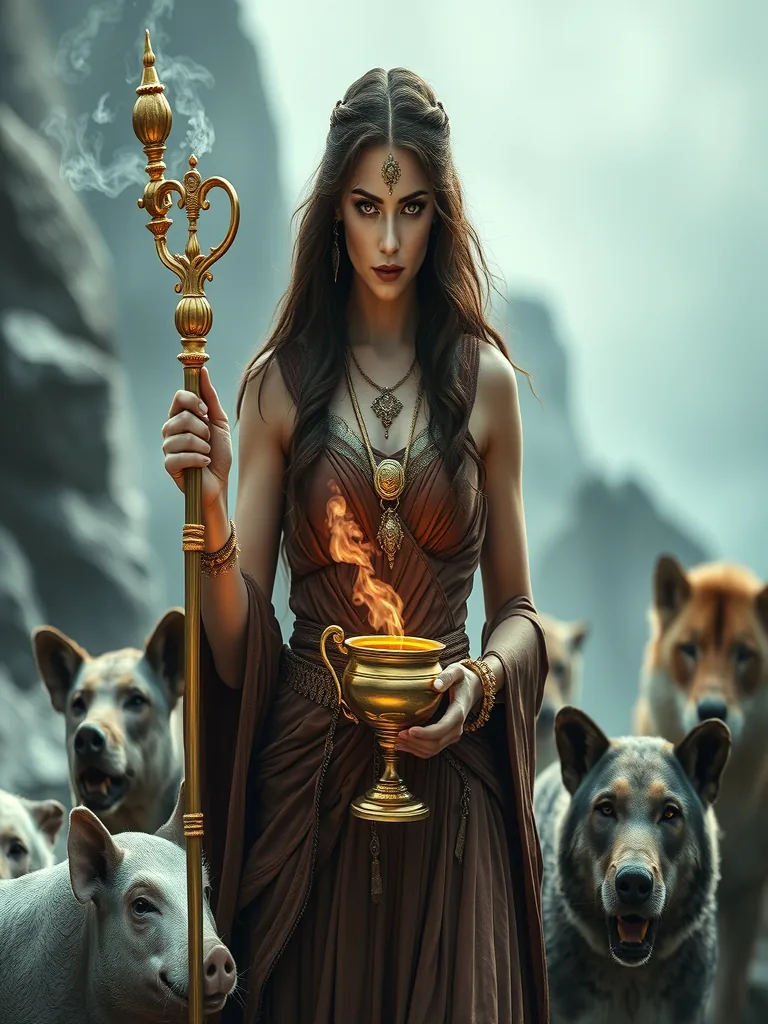
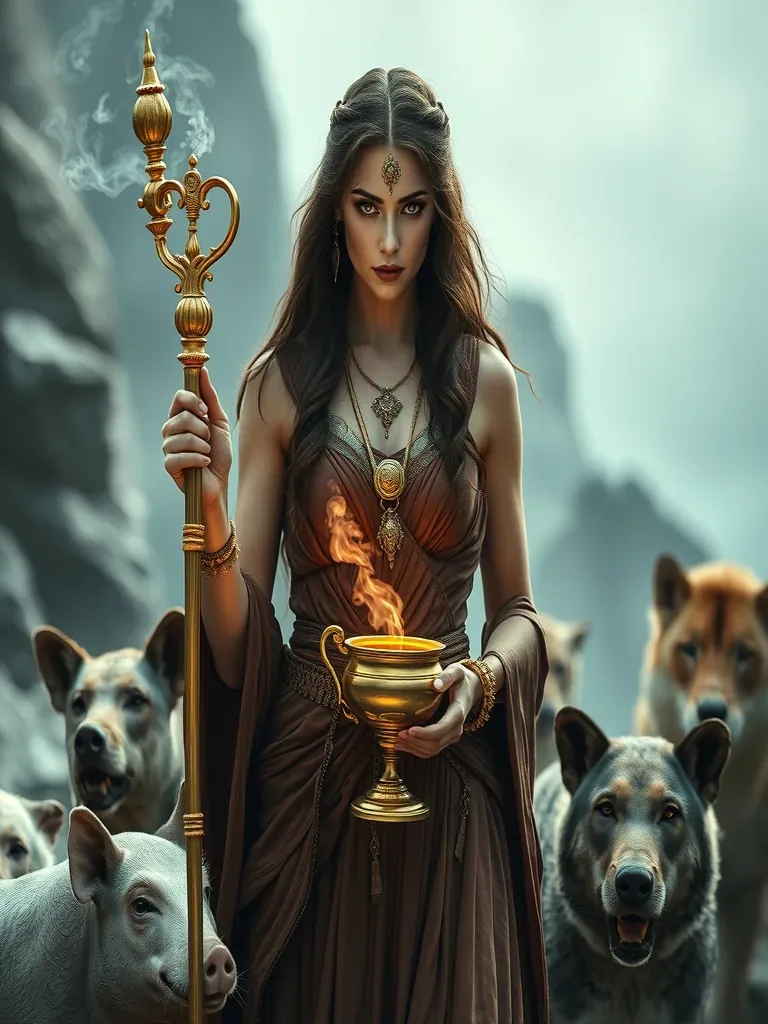
Circe (Ancient Greek Κίρκη) is the celebrated Greek sorceress-goddess and supreme mistress of herbal pharmacopeia, immortalized in Book X of Homer's Odyssey as the sovereign ruler of the secluded and mythical island of Aeaea (Aiaíē). Born of the untiring solar Titan Helios and the Oceanid nymph Perse (or Perseis), Circe belongs to a formidable lineage of cosmic weavers and masters of occult forces, being the sister of Aeetes (king of Colchis and keeper of the Golden Fleece) and Pasiphae (queen of Crete and mother of the Minotaur). In Homeric epic, she dwells in an imposing palace of polished stone built in a forest glade, singing in a sweet, otherworldly voice as she works an enormous divine loom. The estate is surrounded by mountain lions and wolves that roam peacefully about the grounds, subdued and rendered docile by her magical drugs (phármaka). When twenty-two of Odysseus's reconnaissance scouts led by Eurylochus approached her dwelling, Circe received them with deceptive hospitality, serving Pramnian wine blended with goat cheese, barley meal, golden honey, and malignant herbs designed to erase all memory of their homeland; tapping each man with her magical wand (rhabdos), she transformed them into squealing swine, confining them in sty enclosures while their human minds remained fully aware of their degradation. Odysseus marched to rescue his comrades and was intercepted by Hermes, who gifted him the legendary protective herb moly (bearing a black root and milk-white flower). Drinking Circe's enchanted draft without suffering alteration, Odysseus drew his bronze sword against her; terrified, Circe fell to her knees, recognized the hero foretold by ancient oracles, and swore the solemn oath of the immortals never to plot harm against him. Upon undoing the spell and restoring the men to younger and handsomer human forms, Circe hosted the crew for an entire year, subsequently instructing Odysseus in the sacred rites required to descend to the Underworld (the Nekyia) to consult the shade of Tiresias, as well as providing the crucial navigational guidance that enabled his ship to survive the Sirens, Scylla, and Charybdis. In the Argonautica of Apollonius of Rhodes, she also functions as a solemn priestess who ritually purifies Jason and Medea of the blood of Apsyrtus with the sacrifice of a suckling pig and libations to Zeus Katharsios, displaying the archaic sacral nature of her magical purifications.
9 min read · Reviewed on September 30, 2026 · How we research
02
Sacred symbols
The wand, the cup of potion, the pig and the herbs
03
Family
Parents
Helios (the untiring solar Titan who sees and hears all things) and Perse (or Perseis, Oceanid nymph daughter of Oceanus and Tethys in Homer's Odyssey X.135–139 and Hesiod's Theogony vv. 956–957)
Siblings
Aeetes (king of Colchis, keeper of the Golden Fleece, and father of Medea), Pasiphae (queen of Crete, wife of Minos, and mother of the Minotaur), and Perses (usurper of the Colchian throne)
Circe
Unions
Odysseus (the heroic king of Ithaca who shared her bed for a year on the mythical isle of Aeaea); in later Epic Cycle lore, Jason (as ritual suppliant) or Telemachus
Children
Telegonus (legendary founder of Tusculum and Praeneste in central Italy according to the Telegony and Theogony vv. 1011–1014); Agrius and Latinus (mythic rulers of the Tyrrhenian and Latin peoples in Theogony vv. 1011–1016)
Genealogy according to Homero, Odisseia (Canto X, vv. 133–574; Canto XI; Canto XII, vv. 1–150); Hesíodo, Teogonia (vv. 956–962, 1011–1016); Apolônio de Rodes, Argonáutica (Livro IV, vv. 557–752); Ovídio, Metamorfoses (XIV, vv. 1–440); Pseudo-Apolodoro, Biblioteca (I.9.24, Epítome VII.14–19); Telegonia (Ciclo Épico atribuído a Eugamão de Cirene); Daniel Ogden, Magic, Witchcraft, and Ghosts (2002); Matthew W. Dickie, Magic and Magicians (2001); Timothy Gantz, Early Greek Myth (1993)
04
Sources and further reading
Primary sources
Homer, Odyssey (Book X, 133–574: arrival at Aeaea and the transformation; Book XI; Book XII, 1–150: navigation advice). translation: Homer: Odyssey, poetic verse translation by Carlos Alberto Nunes (Editora Nova Fronteira).
Hesiod of Ascra, Theogony (lines 956–962: lineage of Helios; lines 1011–1016: union with Odysseus and begetting of Italic rulers). translation: Hesiod: Theogony, analytical study and translation by Christian Werner (São Paulo: Editora Hedra).
Apollonius of Rhodes, Argonautica (Book IV, lines 557–752: the purification rite of Jason and Medea at Aeaea). translation: Apollonius Rhodius: Argonautica, translation with introduction and notes by Manuel de Oliveira Pulquério (Coimbra: Centro de Estudos Clássicos).
Ovid (Publius Ovidius Naso), Metamorphoses (Book XIV, lines 1–74 and 308–440: the metamorphoses of Scylla and King Picus). translation: Ovid: Metamorphoses, Latin edition with prose translation by Frank Justus Miller (Loeb Classical Library).
Studies
Timothy Gantz, Early Greek Myth: A Guide to Literary and Artistic Sources. Johns Hopkins University Press, 1993.
Pierre Chantraine, Dictionnaire étymologique de la langue grecque: Histoire des mots. Paris: Éditions Klincksieck, 1968.
Daniel Ogden, Magic, Witchcraft, and Ghosts in the Greek and Roman Worlds: A Sourcebook. Oxford University Press, 2002.
Matthew W. Dickie, Magic and Magicians in the Greco-Roman World. London: Routledge, 2001.
Name and epithets
The Greek theonym Kírkē (Κίρκη) has been scrutinized by classical philologists and comparative mythologists. Most scholars, including Pierre Chantraine and Karl Kerényi, link the name to the Greek noun kírkos (κίρκος),…
In the ancient sources
Odyssey (Homer), 8th century BCE. Foundational canonical text presenting Circe's palace, her magical pharmacopeia, and her essential guidance to Odysseus. Theogony (Hesiod), C. 700 BCE.
The myths
The Metamorphosis of the Achaeans and the Protection of the Herb Moly. As recounted in Book X of Homer's Odyssey, upon beaching their vessel on the desolate shores of the island of Aeaea, Odysseus divided his surviving…
Worship and archaeology
Throughout antiquity, historical cultic veneration of Circe was anchored along the Tyrrhenian coast of western Italy, centering upon Mount Circeo (modern San Felice Circeo in Latium).
How the god was depicted
Circe's iconography in Classical Greek art is prominently exhibited across sixth- and fifth-century BCE Athenian painted ceramics (such as the famed Boston skyphos by the Pistoxenos Painter).
What scholars debate
Archaic Solar Goddess versus Classical Misogynistic Sorceress. Scholars of Greek religion, including Walter Burkert and Karl Kerényi, trace how Circe's status evolved from an archaic sovereign goddess (Potnia Theá) and…
After antiquity
Circe has enjoyed enduring literary reception across Western culture, symbolizing the seductive and transformative power of illusion.
Did you know?
Homer notes in the Odyssey (Book X, lines 304–306) that the herb moly was so sacred and entrenched that 'it is hard for mortal men to dig from the ground, but the gods have power over all things,' emphasizing that divin…
Codex relic
Wand of Transformations. The wand with which she turns men into beasts, combined with the potions of her vast magical lore.
The rest of this scroll is sealed
The legends, the myth, the cult and relics are part of the full Codex. You can open 1 full entry for free every day; to open all 500 deities with no limits and no ads, subscribe to Codex PRO.