Skip to content
CodexMythologia
Back to the Codex
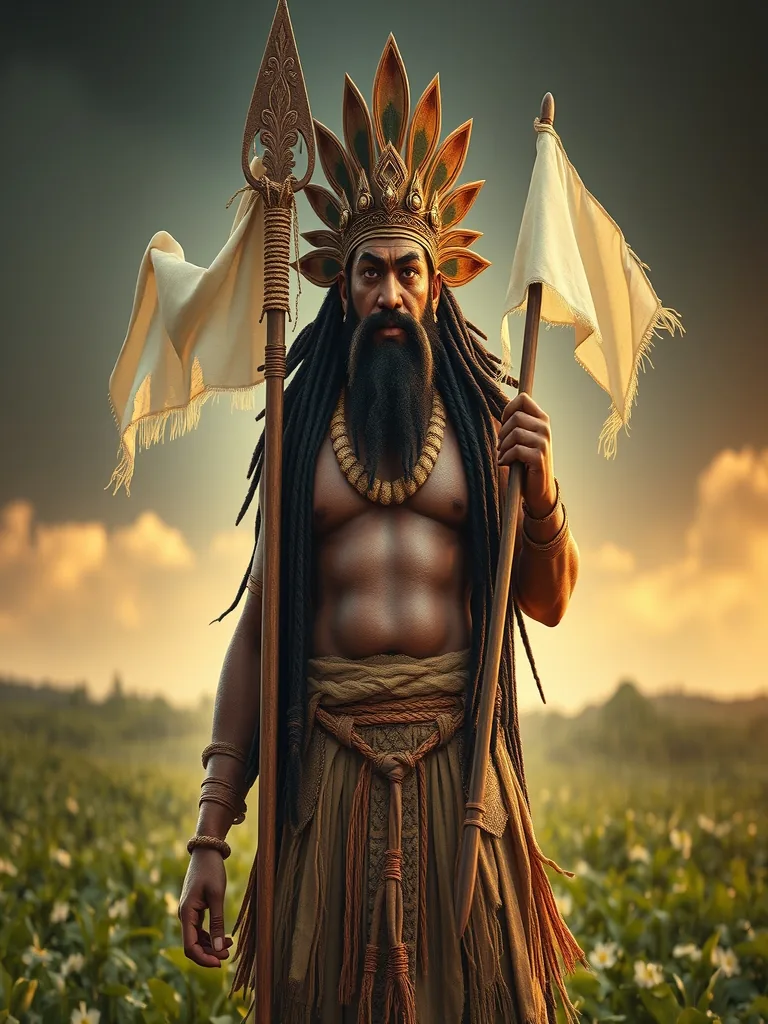
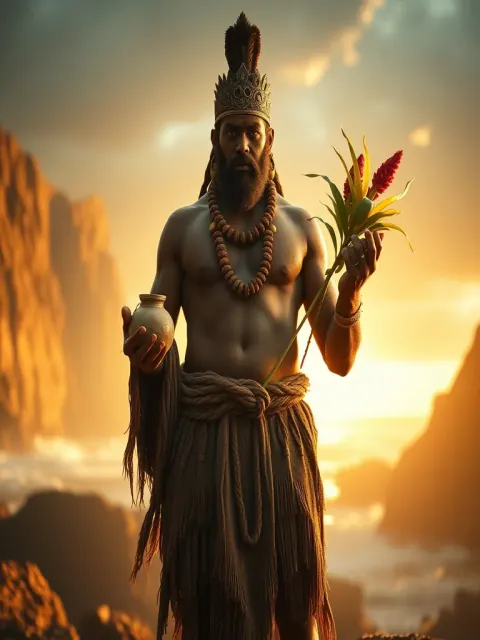
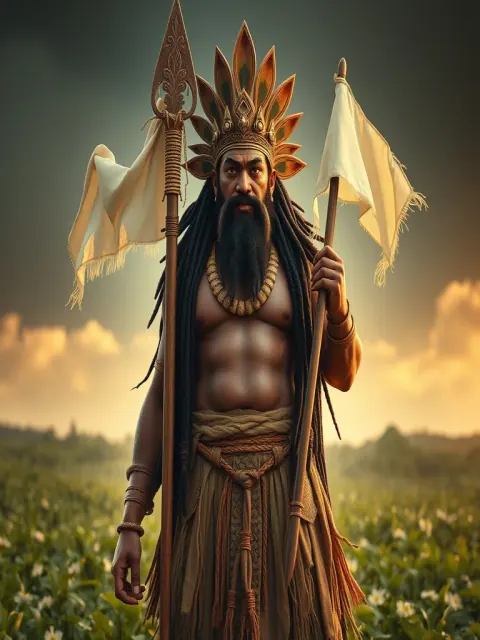
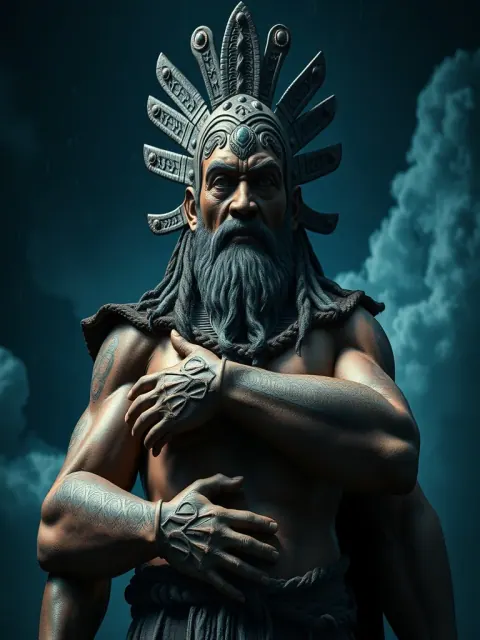
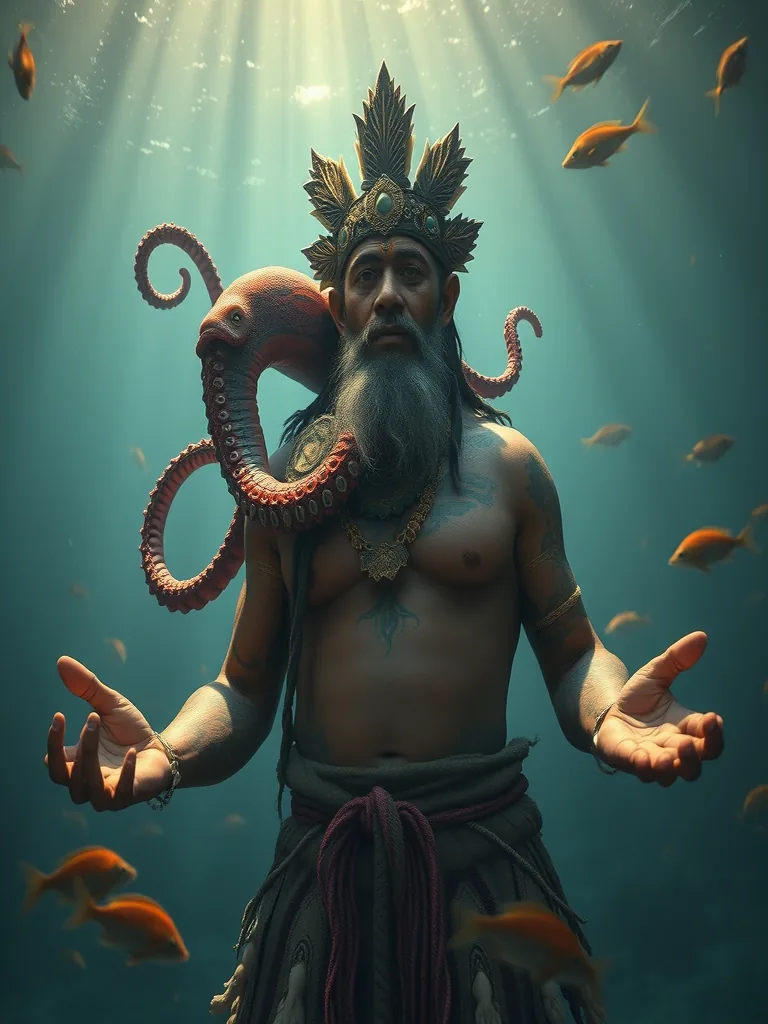
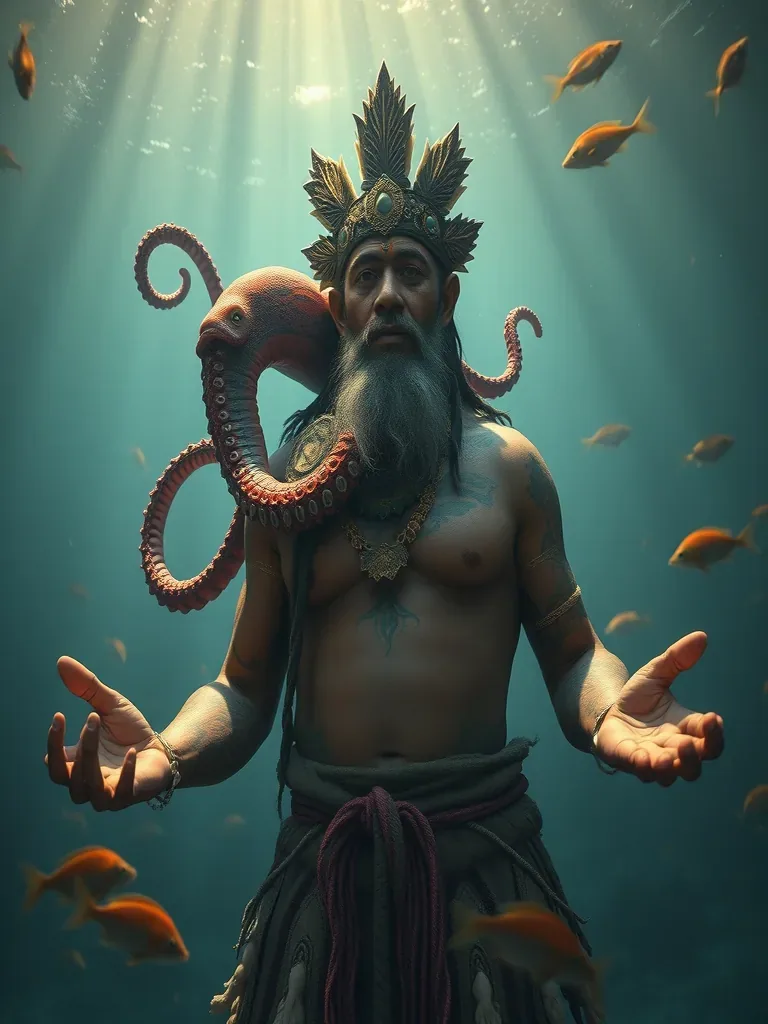
Portrait of Kanaloa, Polynesian deity
Polynesian
Tap or drag
Polynesian

Kanaloa

The God of the Ocean

Domain
Ocean, Navigation & Healing
Alignment
True Neutral
Element
Water
Relics of Power
Sacred Octopus
Speak with Kanaloa

The full Codex

5 sections of this entry are open to everyone: the summary, the people, the symbols, the lineage and the sources. The other 9 (Name and epithets, In the ancient sources, The myths, Worship and archaeology, How the god was depicted, What scholars debate, After antiquity, Did you know?, Codex relic) are part of the full Codex: PRO opens the whole study of all 500 deities, and without a subscription you can read one full entry a day, just like in the app.

The People

People
Polynesian peoples
Region
Pacific islands
Period
c. 1000 BC – present

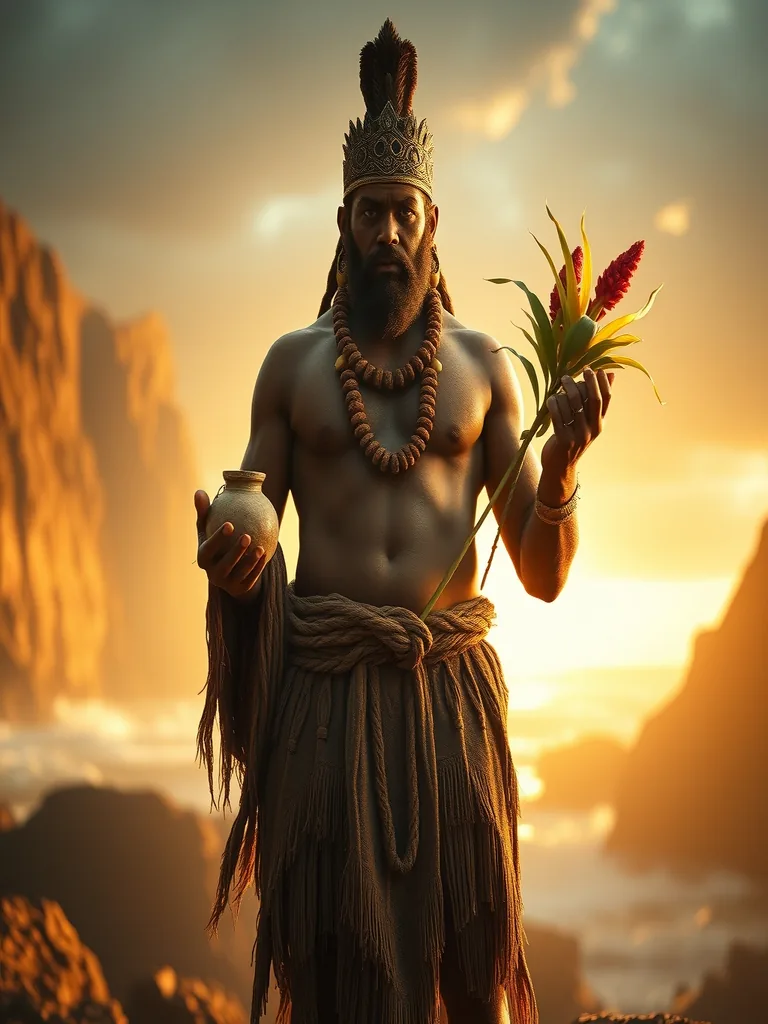
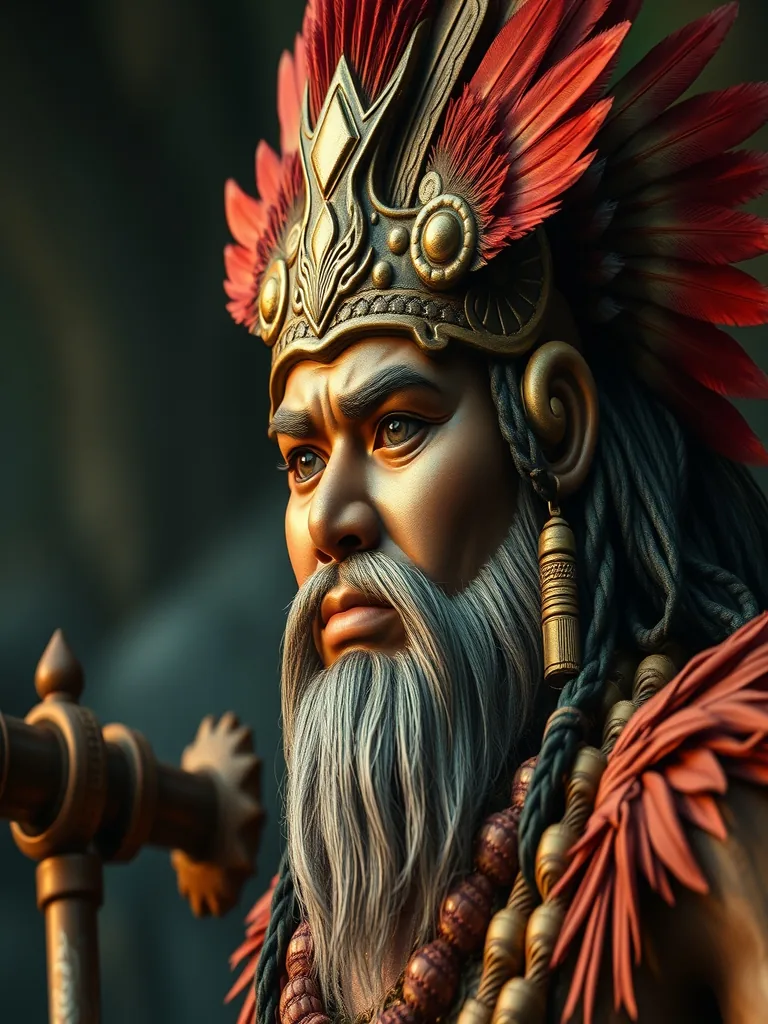
The Polynesian gods were worshipped by the navigators who colonized the Pacific islands, from Hawaii to New Zealand and Easter Island. They honored them on sacred platforms (marae) and through the concept of mana, spiritual power. Their myths, such as those of the hero Maui, are still told among the Maori and Hawaiians.

On the marae, sacred stone platforms, priests offered first fruits and invoked the gods before fishing and war. The kapu (taboo) system ruled what was sacred and forbidden, and in Hawaii the hula was born as a devotional dance to goddesses like Pele and Laka.
At a glance

Kanaloa is one of the four great sovereign deities (nā akua nui) of the traditional Hawaiian pantheon, forming the cosmic tetrad alongside Kāne, Kū and Lono. In the archaic religion of the archipelago, Kanaloa presides over the abyssal depths of the ocean (moana), the ocean currents, the long-distance navigation routes, and the healing of illnesses attributed to sorcery. In the oral narratives he usually appears in close partnership with Kāne: the two gods arrive together from Kahiki, travel along the coasts and mountain ridges of the archipelago inspecting villages, planting food, and opening perennial freshwater springs in steep rocks for the preparation of their ritual ʻawa drink. His most celebrated visible body or animal form (kinolau) is the octopus or squid (heʻe), invoked especially in medical liturgies to draw out evils clinging to the body of the sick. In astronomical and geographic terms, the southern tropic of the sun and the western horizon were marked as the sacred paths of Kanaloa, while the island of Kahoʻolawe, formerly called Kohemālamalama o Kanaloa, was the principal ceremonial centre for teaching Polynesian navigators.

6 min read · Reviewed on September 28, 2026 · How we research

Sacred symbols

The octopus, the squid, the deep ocean and the canoe

Family

Kanaloa
Genealogy according to Kumulipo (Wā 8); David Malo, Moolelo Hawaii (1898/1903); Samuel M. Kamakau, Ka Po'e Kahiko (1964); Martha Beckwith, Hawaiian Mythology (1940); Abraham Fornander, An Account of the Polynesian Race (1878-1880)

Sources and further reading

Primary sources

  • Malo, David, Hawaiian Antiquities (Moolelo Hawaii). translation: Translated from Hawaiian by Nathaniel Bright Emerson. Honolulu: Hawaiian Gazette Co., 1903. read
  • Kamakau, Samuel Manaiakalani, Ka Po'e Kahiko: The People of Old. translation: Translated from Hawaiian by Mary Kawena Pukui; edited by Dorothy B. Barrère. Honolulu: Bishop Museum Press, 1964. read
  • Emerson, Nathaniel Bright, Unwritten Literature of Hawaii: The Sacred Songs of the Hula. translation: Washington, D.C.: Government Printing Office / Smithsonian Institution Bureau of American Ethnology Bulletin 38, 1909. read
  • Fornander, Abraham, An Account of the Polynesian Race: Its Origins and Migrations. translation: London: Trübner & Co., 1878-1880 (Vols. I-II). read

Studies

  • Beckwith, Martha Warren, Hawaiian Mythology. New Haven: Yale University Press, 1940. open
  • Valeri, Valerio, Kingship and Sacrifice: Ritual and Society in Ancient Hawaii. Chicago: University of Chicago Press, 1985. open
  • Handy, E. S. Craighill; Pukui, Mary Kawena, The Polynesian Family System in Ka-'u, Hawai'i. Wellington: The Polynesian Society, 1958. open
  • Kirch, Patrick Vinton, How Chiefs Became Kings: Divine Kingship and the Rise of Archaic States in Ancient Hawaii. Berkeley: University of California Press, 2010.

Name and epithets

The Hawaiian divine name Kanaloa is a direct cognate of the Māori Tangaroa, the Tahitian Taʻaroa, the Marquesan Tanaʻoa (or Takaʻoa), and the Samoan and Tongan Tagaloa, all derived from Proto-Polynesian *taŋaloa, which…

In the ancient sources

Kumulipo: An Hawaiian Creation Chant, c. 1700 / trans. 1897 Liliuokalani, 1951 Beckwith. Cosmogonic chant that introduces Kanaloa at the dawn of the human era under the zoological epithet of great primordial octopus.

The myths

The Emergence in the Cosmogonic Chant of the Kumulipo. In the eighth division (wā) of the genealogical hymn Kumulipo, the solemn transition takes place between the primordial night (pō) and the period of light and of hu…

Worship and archaeology

Traditional worship of Kanaloa was not structured around warlike temples with human sacrifice, but around healing shrines, coastal altars, and enclosures shared with Kāne.

How the god was depicted

Unlike figures carved with aggressive war features, Hawaiian cultic art rarely depicted Kanaloa in isolated anthropomorphic forms.

What scholars debate

Missionary Demonization and the False Equivalence with Lucifer. Researchers such as Martha Beckwith and Valerio Valeri have shown that the characterization of Kanaloa as an evil entity, or as the equivalent of the Chris…

After antiquity

In the contemporary Hawaiian Cultural Renaissance movement, Kanaloa became a primordial emblem of indigenous sovereignty and ecological protection.

Did you know?

The ancient Hawaiian celestial chart named the southern limit of the sun's apparent orbit ‘Ke alanui polohiwa a Kanaloa’ (the dark and shining path of Kanaloa), corresponding astronomically to the winter solstice in the…

Codex relic

Sacred Octopus. The octopus, his sacred form, symbol of dominion over the depths and navigation.

The rest of this scroll is sealed

The legends, the myth, the cult and relics are part of the full Codex. You can open 1 full entry for free every day; to open all 500 deities with no limits and no ads, subscribe to Codex PRO.

See Codex PROGet it on Google Play

From the same pantheon

View pantheon