5 sections of this entry are open to everyone: the summary, the people, the symbols, the lineage and the sources. The other 9 (Name and epithets, In the ancient sources, The myths, Worship and archaeology, How the god was depicted, What scholars debate, After antiquity, Did you know?, Codex relic) are part of the full Codex: PRO opens the whole study of all 500 deities, and without a subscription you can read one full entry a day, just like in the app.
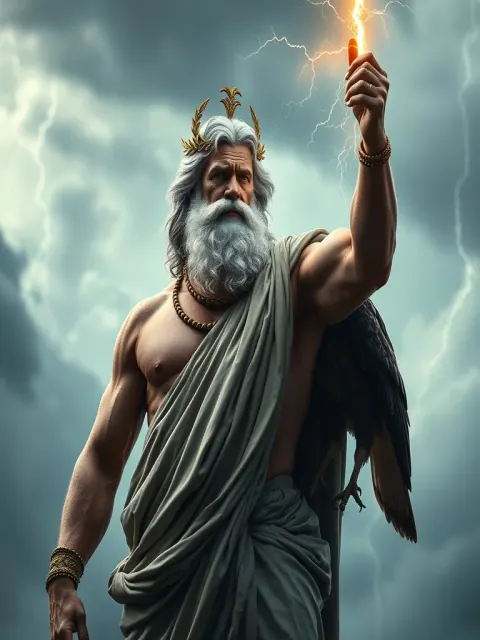
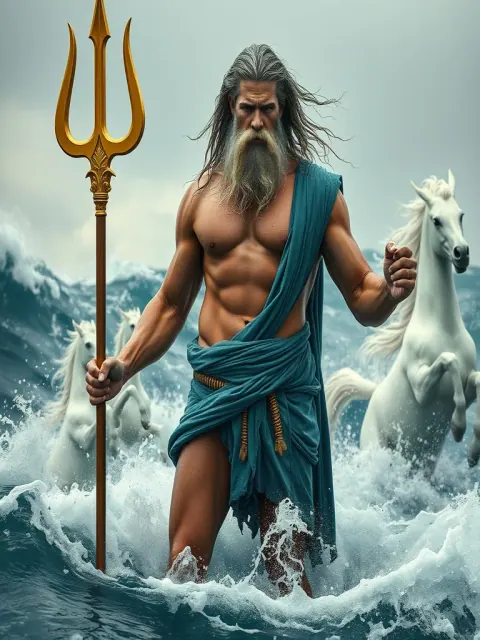
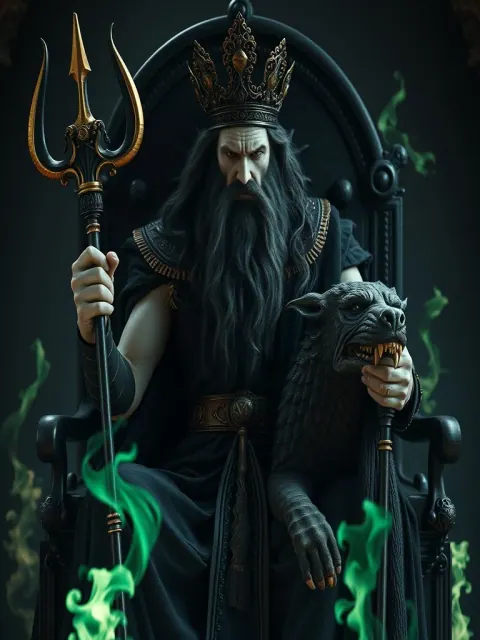
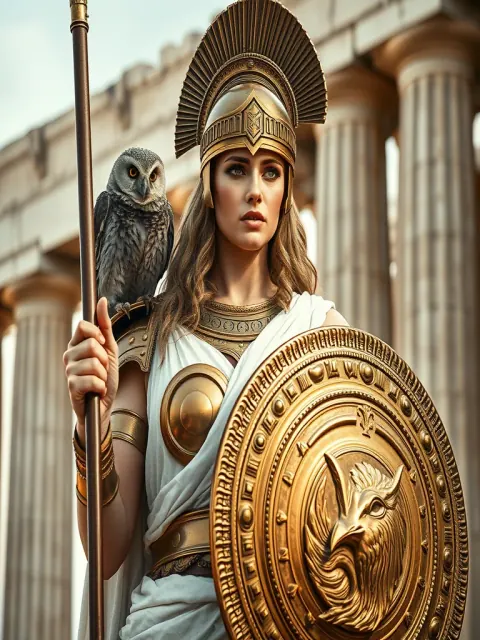
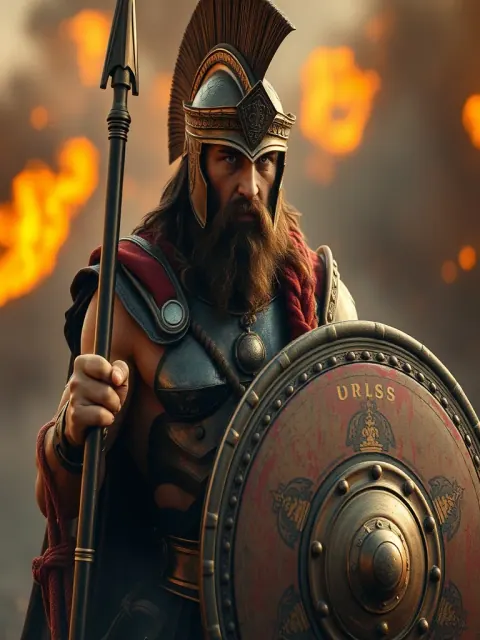
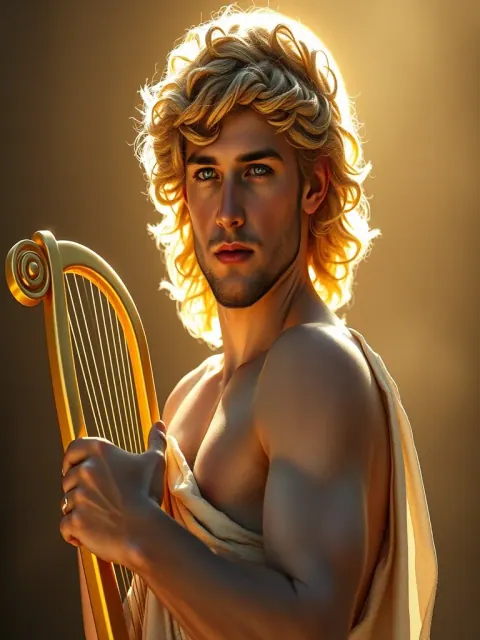
The Olympian gods were worshipped by the city-states of ancient Greece, from Athens to Sparta, which raised them temples such as the Parthenon. Reigning atop Mount Olympus, they presided over every aspect of life and were celebrated in festivals like the Olympic Games. Homer and Hesiod fixed their myths, which shaped all of Western culture.
The Olympic Games were held every four years in honor of Zeus, and the Panathenaea celebrated Athena in Athens. The Eleusinian Mysteries initiated the faithful into the secrets of Demeter and Persephone, while crowds consulted Apollo's oracle at Delphi.
01
At a glance
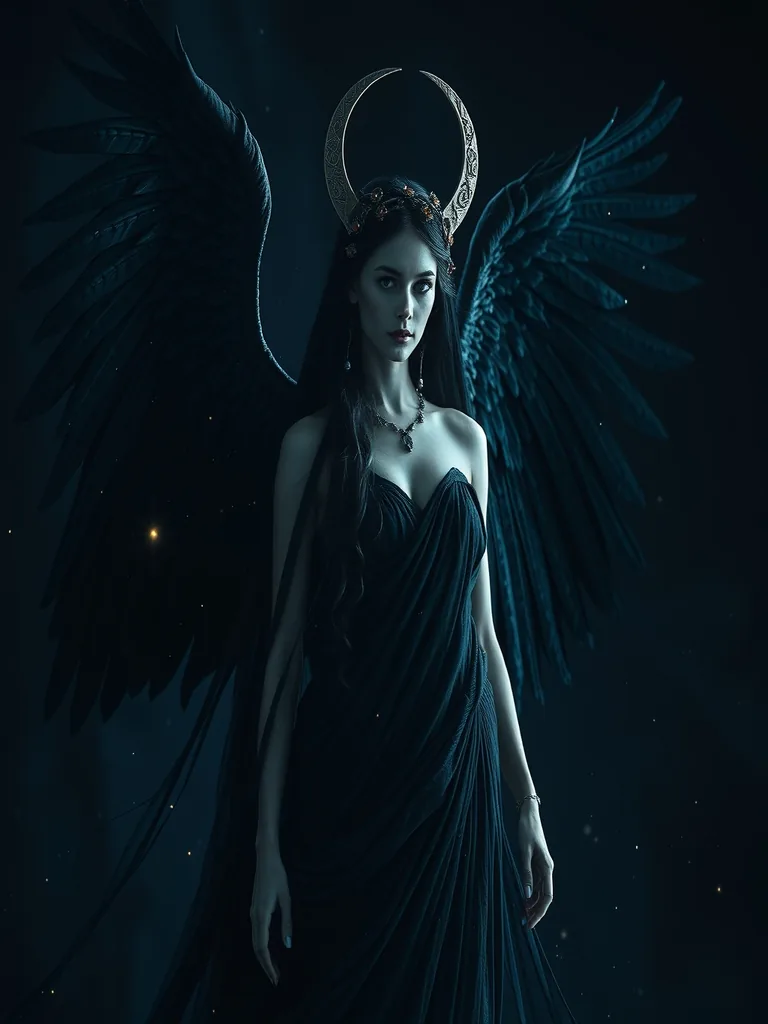
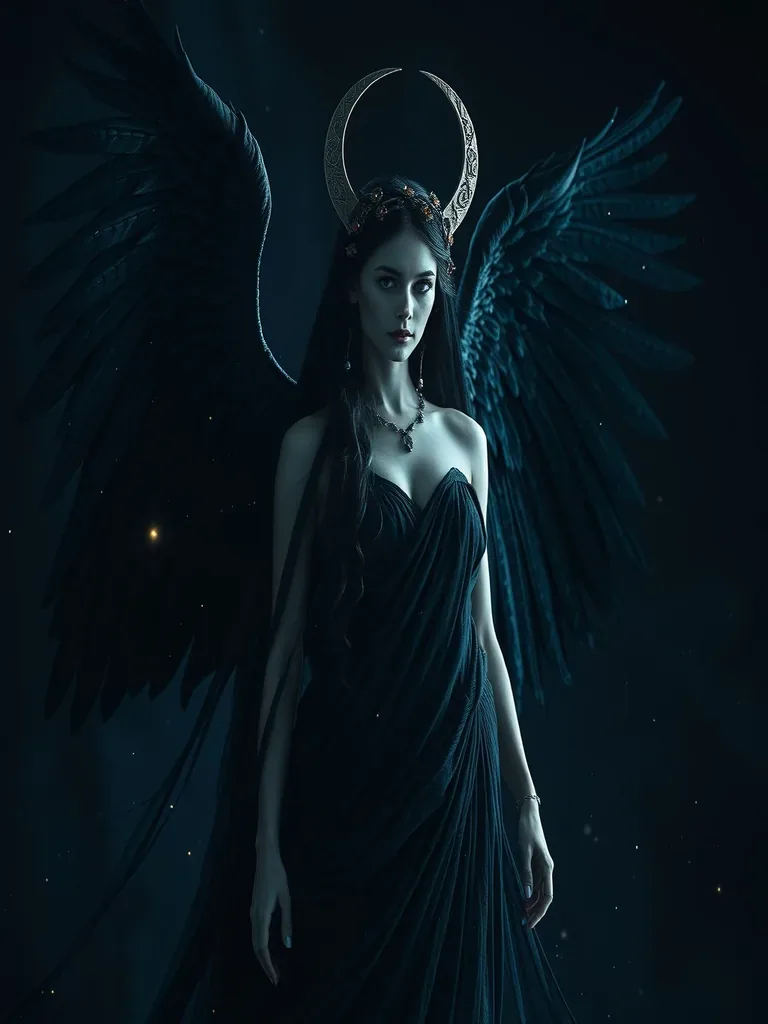
Nyx (Ancient Greek Νύξ) is the primordial divine personification of Night in the mythology, civic religion, and mystical theogonies of ancient Greece. In Hesiod's Theogony, Nyx arose directly from primordial Chaos (Khaos) shortly after the emergence of Gaia and Tartarus, standing among the founding cosmological powers that predated the Titan dynasty and the Olympian deities. Uniting with her brother Erebus (the dark subterranean shadow), she brought forth two divine offspring of radiant purity: Aether (the gleaming upper atmospheric light) and Hemera (resplendent Day). Concurrently, without the intervention of any male fertilizing principle, Nyx conceived by parthenogenesis a monumental lineage of personified forces that delineate the limits of mortal existence: tranquil slumber (Hypnos), inexorable death (Thanatos), the nocturnal phalanx of prophetic dreams (the Oneiroi), the fate-weaving Moirai, decrepit old age (Geras), righteous retribution against mortal hubris (Nemesis), and intractable discord (Eris). So towering was Nyx's majestic authority that even Zeus, sovereign ruler of Mount Olympus, hesitated to transgress her will: as Homer recounts in Book XIV of the Iliad, when Hypnos fled divine vengeance and took refuge beneath the dark mantle of his mother, Zeus restrained his lightning bolts, fearful of offending swift Night. In archaic Orphic cosmogonies, preserved in liturgical hymns and the archaeological Derveni Papyrus, Nyx occupies an even higher cosmological rank, revered as the sacred prophetess of the innermost shrine and the primeval mother of gods and men who counsels successive divine sovereigns on maintaining cosmic order.
7 min read · Reviewed on September 30, 2026 · How we research
02
Sacred symbols
The night mantle, the stars, the owl and the black chariot
03
Family
Parents
Emerged spontaneously from primordial Chaos (Khaos) without male procreative seed
Siblings
Erebus (the darkness of subterranean chasms, brought forth alongside her from Chaos)
Nyx
Unions
Erebus (her brother and first counterpart of primordial shadows)
Children
Aether (upper radiant celestial light) and Hemera (luminous Day), begotten in union with ErebusBorn of Nyx via parthenogenesis: Thanatos (peaceful death), Hypnos (sleep), the Oneiroi (dreams), Momus, Oizys, the Hesperides, the avenging Moirai, Nemesis (righteous retribution), Apate, Philotes, Geras (old age), and Eris (stubborn discord)
Genealogy according to Hesíodo, Teogonia (vv. 123–125, 211–225, 744–757); Homero, Ilíada (Livro XIV, vv. 256–261); Hinos Órficos (Hino III a Nix); Pausânias, Descrição da Grécia (Livro I, cap. 40.1; Livro II, cap. 11.9); Aristófanes, As Aves (vv. 693–702); Martin L. West, The Orphic Poems (1983); G. S. Kirk, J. E. Raven & M. Schofield, The Presocratic Philosophers (1983)
04
Sources and further reading
Primary sources
Hesiod of Ascra, Theogony (lines 123 to 125, 211 to 225 and 744 to 757: genesis of Nyx, catalogue of children and dwelling in Tartarus). translation: Direct translation and introductory essay by Jaa Torrano, São Paulo: Editora Iluminuras.
Homero, Iliad (Book XIV, lines 256–261: Hypnos's account of the maternal refuge before Zeus). translation: Verse translation in decasyllables by Frederico Lourenço, Companhia das Letras.
Orphic Hymns, Hymn III to Nyx (liturgical invocation in the initiation mysteries). translation: Annotated translation and critical introduction by Apostolos Athanassakis, Johns Hopkins University Press.
Pausânias Periegeta, Description of Greece (Book I, 40.1: the oracle of Nyx in Megara; Book II, 11.9: the altars of Titane). translation: Archaeological commentary and annotated version by Maria Helena da Rocha Pereira, Calouste Gulbenkian Foundation.
Studies
Martin Litchfield West, The Orphic Poems. Oxford: Clarendon Press, 1983.
Gábor Betegh, The Derveni Papyrus: Cosmology, Theology and Interpretation. Cambridge University Press, 2004.
W. K. C. Guthrie, Orpheus and Greek Religion: A Study of the Orphic Movement. Princeton University Press, 1993.
G. S. Kirk & J. E. Raven, The Presocratic Philosophers. Cambridge University Press, 1957.
Name and epithets
The Greek theonym Nyx (Νύξ in the nominative, with the stem Nykt- / Νυκτ- manifest in genitive Nyktos / Νυκτός) preserves an unbroken Proto-Indo-European linguistic heritage.
In the ancient sources
Theogony (Hesiod), C. 700 BCE. The primary structural archaic text detailing Nyx's moral offspring and her subterranean dwelling. Iliad (Homer), C. 8th century BCE.
The myths
The Bronze Portal in Tartarus and the Cosmic Vigil with Radiant Day. As recounted in solemn hexameters by Hesiod in the Theogony, deep within the subterranean chasms of Tartarus stands the somber palace of Nyx, veiled i…
Worship and archaeology
While ancient Greek civic religion prioritized marble temples and civic festivals for Olympian deities, the worship of Nyx occupied sacred enclaves and solemn liturgical occasions.
How the god was depicted
In archaic black-figure and classical red-figure vase painting, Etruscan bronze mirrors, and Roman funerary reliefs, Nyx is depicted as an august matron with solemn countenance, draped in a dark cloak (peplos) drawn ove…
What scholars debate
Orphic Cosmogonies versus Hesiodic Tradition: Nyx as Primeval Source. Scholars of Greek religion and Orphism, including Martin L.
After antiquity
Nyx exerted an enduring influence across Western art and literature, inspiring Romantic poets such as Novalis in his 'Hymns to the Night' (Hymnen an die Nacht, 1800) and Lord Byron, establishing the classical aesthetic…
Did you know?
The Derveni Papyrus, a 4th-century BCE carbonized scroll discovered in Macedonia and recognized as Europe's oldest surviving legible literary manuscript, preserves an Orphic philosophical treatise depicting Nyx prophesy…
Codex relic
Mantle of Darkness. A veil of primordial darkness that envelops the world and before which even Zeus retreats.
The rest of this scroll is sealed
The legends, the myth, the cult and relics are part of the full Codex. You can open 1 full entry for free every day; to open all 500 deities with no limits and no ads, subscribe to Codex PRO.