Skip to content
CodexMythologia
Back to the Codex
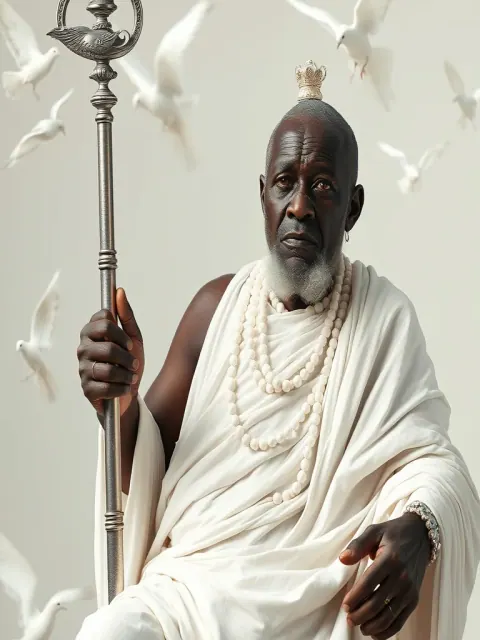
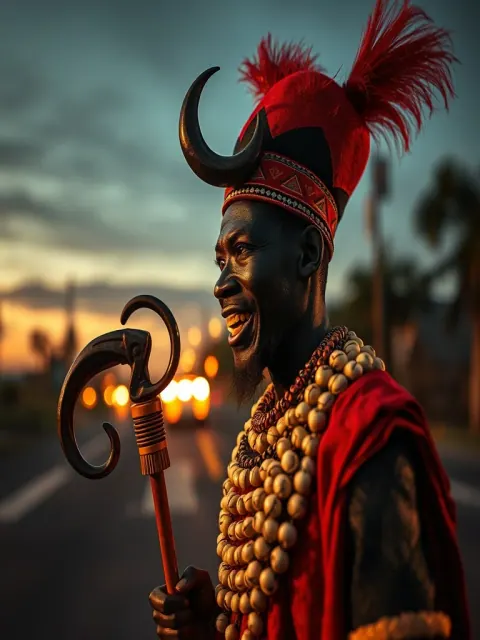
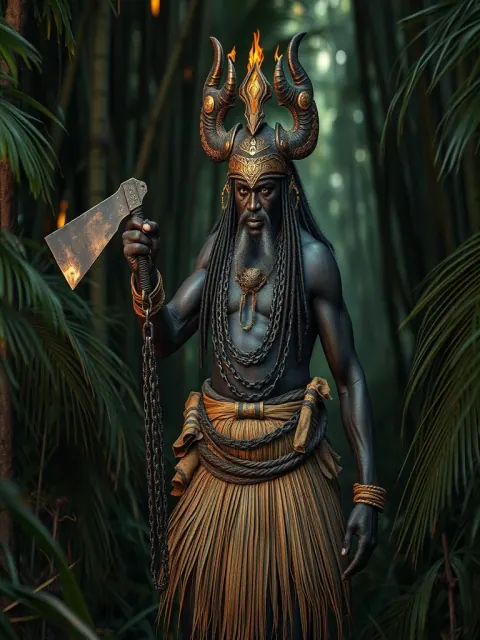
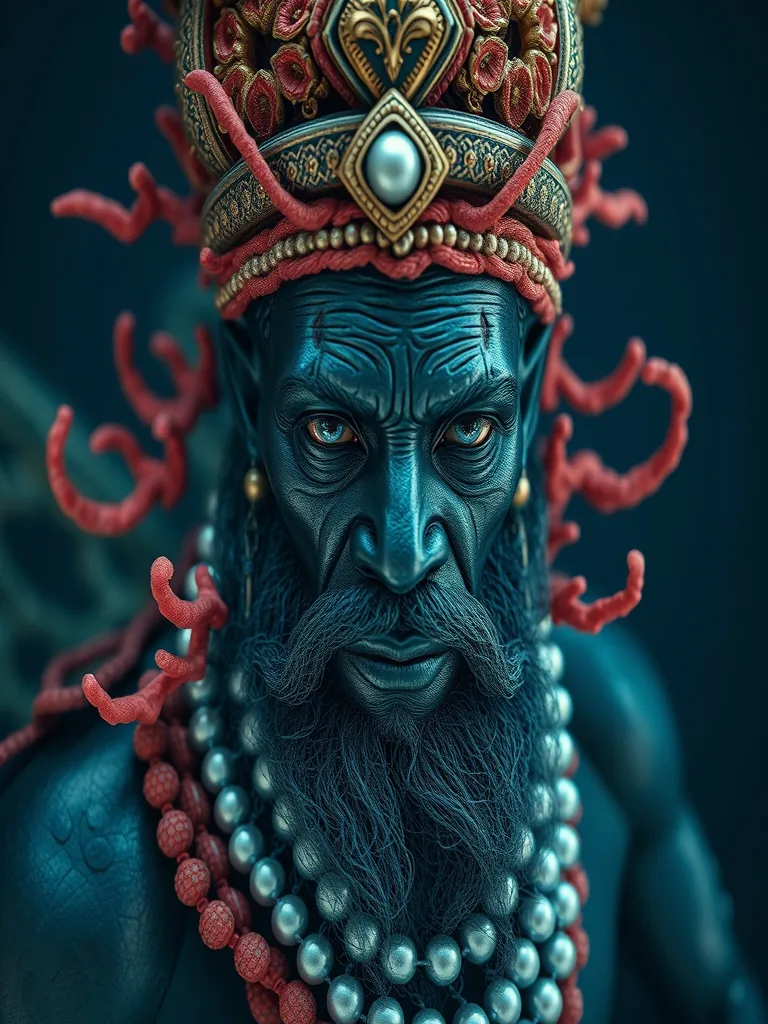
Portrait of Olokun, Yoruba deity
Yoruba
Tap or drag
Yoruba

Olokun

The Lord of the Ocean Depths

Domain
Deep Sea, Wealth & Mystery
Alignment
True Neutral
Element
Water
Relics of Power
Chains of the Abyss
Speak with Olokun

The full Codex

5 sections of this entry are open to everyone: the summary, the people, the symbols, the lineage and the sources. The other 9 (Name and epithets, In the ancient sources, The myths, Worship and archaeology, How the god was depicted, What scholars debate, After antiquity, Did you know?, Codex relic) are part of the full Codex: PRO opens the whole study of all 500 deities, and without a subscription you can read one full entry a day, just like in the app.

The People

People
Yoruba people
Region
West Africa & the diaspora
Period
c. 1000 AD – present

The orixás are worshipped by the Yoruba people of present-day Nigeria and Benin, with Ile-Ife as their spiritual center. Through the slave trade, their faith crossed the Atlantic and flourished in the Americas as Candomblé, Santería, and Vodou. It is today one of the most living and widespread African religious traditions in the world.

The Osun festival in Osogbo, Nigeria, draws thousands to the sacred grove of the Osun river, a UNESCO heritage site. The Ifá oracle guides decisions through the odus, and in Brazil the Candomblé terreiros honor each orixá with their own drums, dances, colors, and foods.
At a glance

Olokun (in the scholarly Yoruba orthography Olókun, and revered with equal eminence by the Edo peoples of the Kingdom of Benin) is the formidable deity of the abyssal depths of the ocean, of the ocean tides, of material prosperity, and of the impenetrable secrets kept on the seabed. In the classical theology of Ilê-Ifé and the Yoruba coastal regions, Olokun is conceived either as a female sovereign associated with the craft production of glass beads and palace kingship, or as a titanic force of fluid gender that predates the very fixing of firm ground. In the Kingdom of Benin, Olokun occupies the apex of the pantheon under the celestial god Osanobua, personifying the king of the infinite waters who mirrors on earth the imperial figure of the Oba of Benin and grants wealth, fertility and health to his devotees. In the Afro-Atlantic diaspora (with emphasis on the Cuban Regla de Ocha and Candomblé), the deity rules the recesses of the sea floor where sunlight never reaches, guarding the mysteries of life and death in ritual shrines closed under strict priestly secrecy.

6 min read · Reviewed on September 29, 2026 · How we research

Sacred symbols

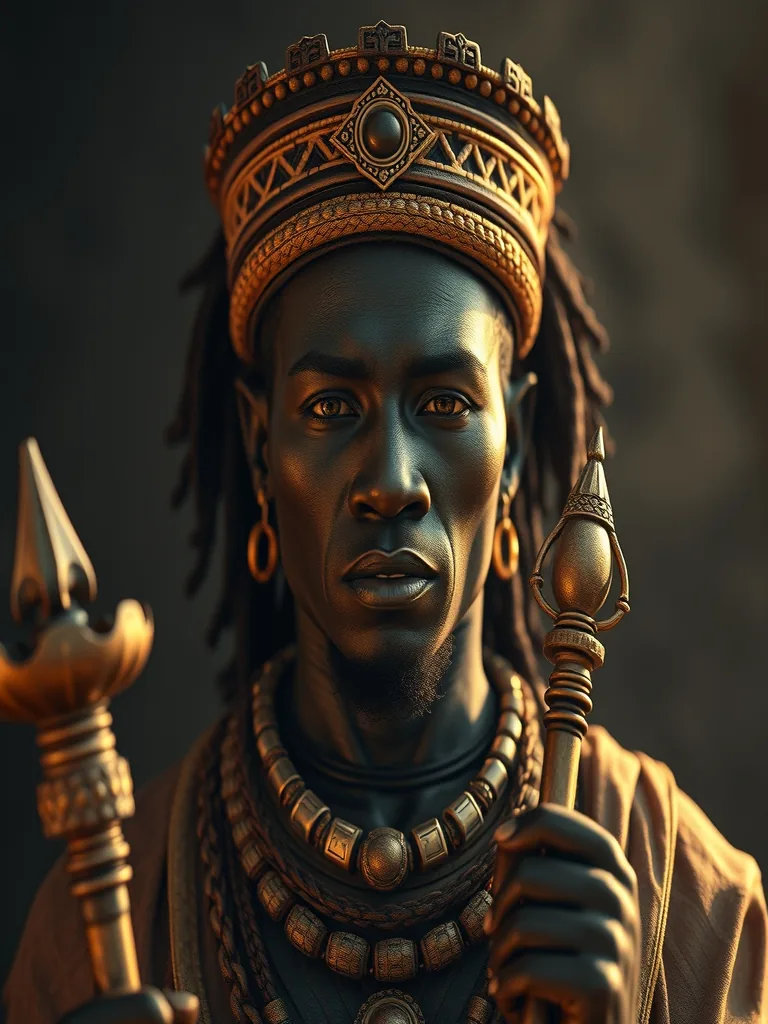
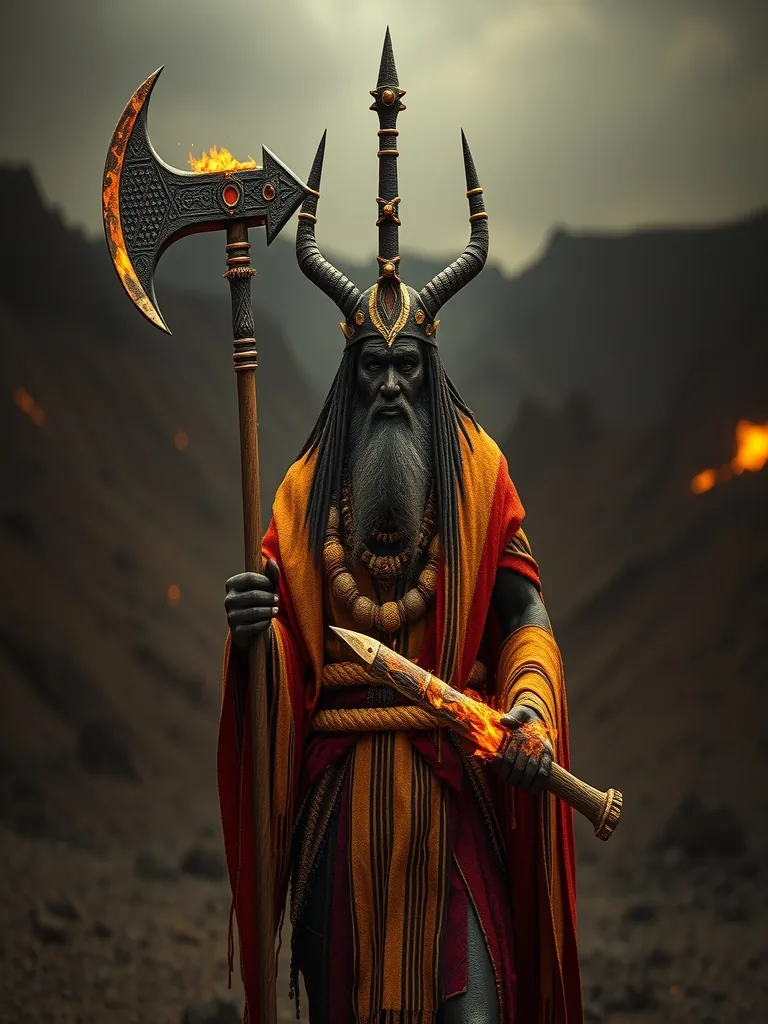
The sea abyss, the chains, the corals and the bronze mask

Family

Parents
Olodumare (Olorun / Osanobua in Benin, supreme creator of heaven and primeval waters)
Olokun
Unions
OduduwaOlosa (guardian divinity of coastal lagoons and serene estuarine waters)
Children
Yemoja (maternal goddess of rivers and coastal ocean waves)Aganju
Genealogy according to Tradições sagradas de Ifé e do Reino do Benim; Corpus de Ifá (Odu Òdí Méjì); Leo Frobenius (1913); Samuel Johnson (1921); E. Bolaji Idowu (1962); Pierre Verger (1957); R. E. Bradbury (1957); Paula Ben-Amos (1980, 1995)

Sources and further reading

Primary sources

  • Leo Frobenius, The Voice of Africa. translation: London: Hutchinson (1913), accounts of the excavations at Ilê-Ifé and the Head of Olokun.
  • Pierre Fatumbi Verger, Dieux d'Afrique: Culte des Orishas et Vodouns. translation: Paris: Paul Hartmann (1954), iconographic documentation and maritime rites of Olókun.
  • Samuel Johnson, The History of the Yorubas. translation: Lagos: CMS Bookshops (1921), records of the oral chronicles and the mythic flood.

Studies

  • Paula Girshick Ben-Amos, The Art of Benin. Smithsonian Institution Press (1995), study of the cult of Olokun and its art, 1995.
  • R. E. Bradbury, The Benin Kingdom and the Edo-Speaking Peoples of South-Western Nigeria. Londres: International African Institute (1957), 1957.
  • E. Bolaji Idowu, Olodumare: God in Yoruba Belief. London: Longmans (1962), theological analysis of Olokun, 1962.
  • Frank Willett, Ife in the History of West African Sculpture. London: Thames & Hudson (1967), archaeology of the Bronze Head, 1967.

Name and epithets

The theonym Olókun is structured by the grammatical contraction of the Yoruba terms Olí (a prefix denoting 'lord', 'owner' or 'guardian') and Okun ('sea', 'ocean' or 'great mass of salt water'), faithfully rendered as '…

In the ancient sources

Canonical Corpus of Ifá (Odu Òdí Méjì and Òkànràn Méjì), Oral tradition of the Ifá priests in Oyó and Ifé.. Documents the contest between Olokun and the Creator and the laws that defined the coastal boundaries.

The myths

The Dispute over Precious Garments with the Creator and the Reflection of Agẹmọ. As preserved in the sacred verses of Odu Òdí Méjì and documented by the folklorist William Bascom, in primordial ages the lord of the ocea…

Worship and archaeology

The worship of Olokun radiates from two great traditional epicenters in Nigeria: Ilê-Ifé (with its sacred groves and historic shrines) and the Kingdom of Benin (where Olokun receives the greatest popular devotion, celeb…

How the god was depicted

The visual culture of Olokun reflects royal opulence and the gravity of the abysses. The most celebrated archaeological testimony of his representation is the famous 'Head of Olokun' (Ori Olokun), a magnificent bronze s…

What scholars debate

The Head of Olokun and the Recognition of Classical African Archaeology. Archaeologists and art historians such as Frank Willett and Babatunde Agbaje-Williams analyze the trajectory of the 'Head of Olokun' recovered at…

After antiquity

Olokun has inspired poets and playwrights of international renown such as Wole Soyinka and Derek Walcott, and has motivated contemporary art installations and academic research on the crossings of the Calunga Grande and…

Did you know?

The carved image of the Head of Olokun became the supreme official emblem of FESTAC 77 (the Second World Black and African Festival of Arts and Culture), held in Lagos in 1977, and became a planetary icon of African dig…

Codex relic

Chains of the Abyss. The chains that bind the forces of the deep sea, guarding its treasures and unfathomable secrets.

The rest of this scroll is sealed

The legends, the myth, the cult and relics are part of the full Codex. You can open 1 full entry for free every day; to open all 500 deities with no limits and no ads, subscribe to Codex PRO.

See Codex PROGet it on Google Play

From the same pantheon

View pantheon