Skip to content
CodexMythologia
Back to the Codex
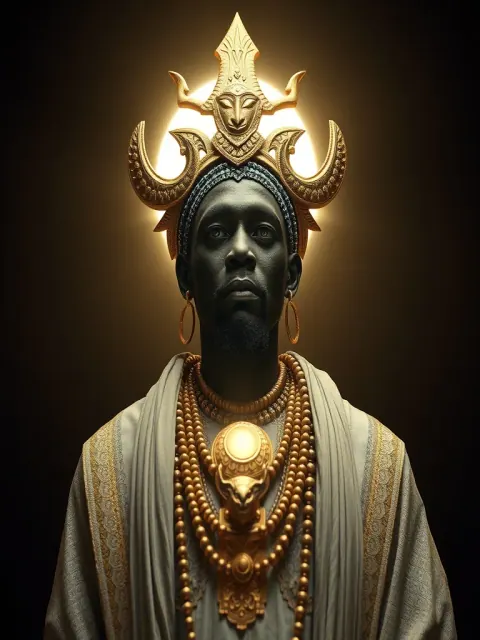
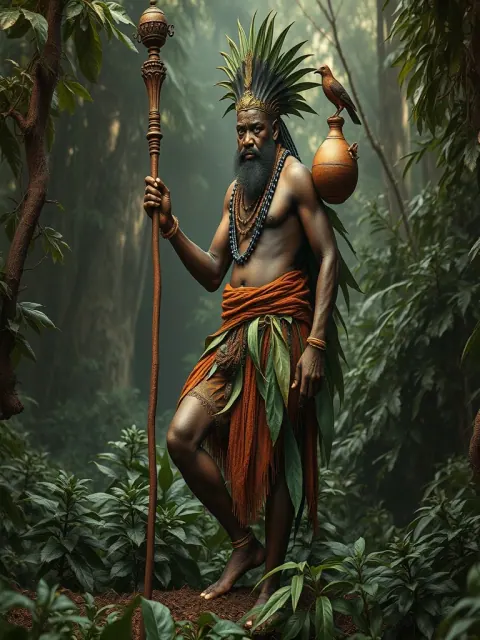
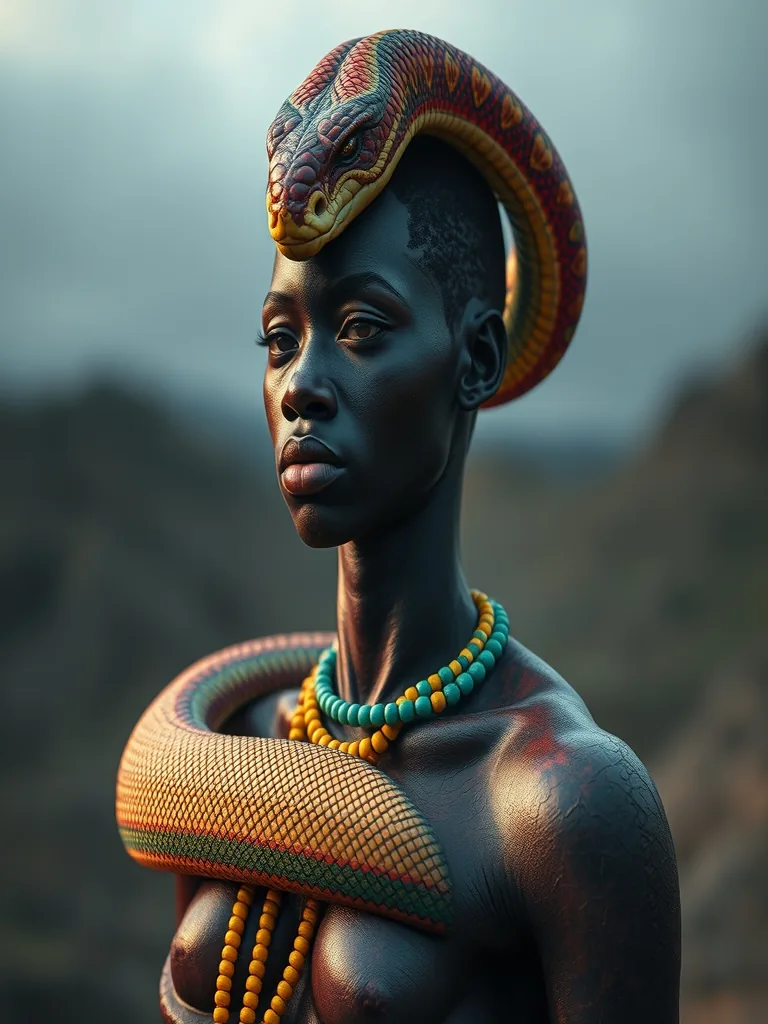
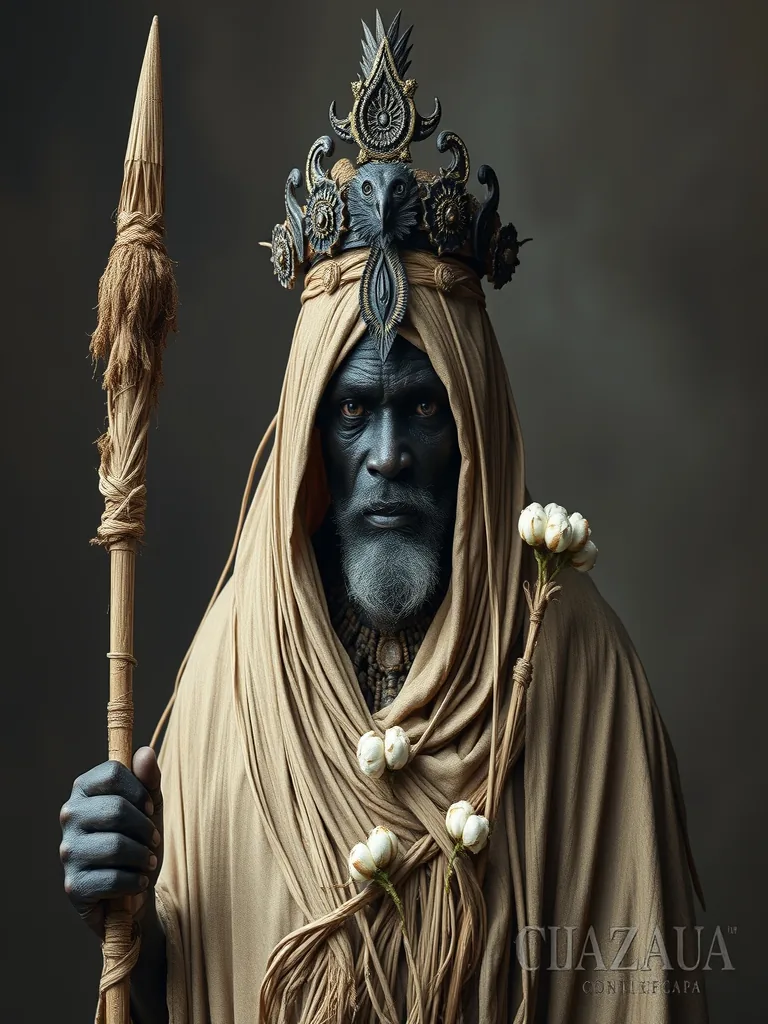
Portrait of Oxumaré, Yoruba deity
Yoruba
Tap or drag
Yoruba

Oxumaré

The Rainbow Serpent

Domain
Rainbow, Rain & Renewal
Alignment
Neutral Good
Element
Water
Relics of Power
Cosmic Rainbow
Speak with Oxumaré

The full Codex

5 sections of this entry are open to everyone: the summary, the people, the symbols, the lineage and the sources. The other 9 (Name and epithets, In the ancient sources, The myths, Worship and archaeology, How the god was depicted, What scholars debate, After antiquity, Did you know?, Codex relic) are part of the full Codex: PRO opens the whole study of all 500 deities, and without a subscription you can read one full entry a day, just like in the app.

The People

People
Yoruba people
Region
West Africa & the diaspora
Period
c. 1000 AD – present

The orixás are worshipped by the Yoruba people of present-day Nigeria and Benin, with Ile-Ife as their spiritual center. Through the slave trade, their faith crossed the Atlantic and flourished in the Americas as Candomblé, Santería, and Vodou. It is today one of the most living and widespread African religious traditions in the world.

The Osun festival in Osogbo, Nigeria, draws thousands to the sacred grove of the Osun river, a UNESCO heritage site. The Ifá oracle guides decisions through the odus, and in Brazil the Candomblé terreiros honor each orixá with their own drums, dances, colors, and foods.
At a glance

Oxumarê (in the scholarly Yoruba orthography Òṣùmàrè, revered in the Jeje vodun cult under the complementary forms of Dan and Ayida-Weddo) is the dazzling orisha of the rainbow, the cosmic serpent, universal mobility, the perpetual circulation of waters and the endless cycles of cosmic renewal in traditional Yoruba religion and in the Afro-Atlantic religions of the diaspora (Candomblé Ketu, Jeje and Angola, and Cuban Santería). In traditional African metaphysics, Oxumarê performs the function of primordial connector between the earthly world (Ayé) and the celestial sphere (Ọ̀run): he is the magical serpent who absorbs the moisture of the earth's rivers and oceans, lifting it through the seven resplendent colours of the rainbow to the realms of Olorum, so that the rains return to fertilise the harvests. Sovereign representative of vital dynamism, of continuous transformation and of monetary prosperity (owó), he embodies the balanced harmony of cosmic opposites, moving with sovereign agility between the depths of the soil and the immensity of the firmament.

6 min read · Reviewed on September 29, 2026 · How we research

Sacred symbols

The serpent, the rainbow, the snake biting its tail and the varied colors

Family

Parents
Oxumaré
Genealogy according to Pierre Verger (1957, 1981); Juana Elbein dos Santos (1976); Melville J. Herskovits (1938); Roger Bastide (1960); Wande Abimbola (1975); Corpus de Ifá (Odu Òtúrá Méjì e Òwọ́nrín Méjì)

Sources and further reading

Primary sources

  • Pierre Fatumbi Verger, Notes sur le culte des orisha et vodun à Bahia, la Baie de Tous les Saints, au Brésil et à l'ancienne Côte des Esclaves en Afrique. translation: Dakar: Mémoires de l'IFAN, n. 51, 1957 (monographic section on Dan and Òṣùmàrè).
  • Melville J. Herskovits, Dahomey: An Ancient West African Kingdom. translation: New York: J. J. Augustin Publisher, 1938 (analysis of the pantheon of the serpent Dan).
  • Wande Abimbola, Sixteen Great Poems of Ifá. translation: Ibadan: UNESCO / Oxford University Press, 1975 (verses of Òtúrá Méjì).

Studies

  • Juana Elbein dos Santos, Os Nàgô e a Morte: Estudos sobre o além e os ritos de Égun. Editora Vozes, Petrópolis, 1976.
  • Roger Bastide, Les Religions africaines au Brésil. Presses Universitaires de France, Paris, 1960.
  • Robin Law, Ouidah: The Social History of a West African Slaving 'Port', 1727–1892. Ohio University Press, Athens, 2004.

Name and epithets

The theonym Òṣùmàrè arises morphologically in the Yoruba languages from the juxtaposition of the elements Òṣù (denoting crown, luminous halo, lunar crescent or sacred circle) and m̀-árè (he who travels, snakes along or…

In the ancient sources

Corpus Canônico de Ifá (Odu Òtúrá Méjì e Òwọ́nrín Méjì), Oral tradition of the Babalaôs priests of Oyó.. Documents the transfiguration of Òṣùmàrè into messenger of the rains and lord of the celestial treasures.

The myths

The Visual Restoration of the Supreme Creator and the Celestial Abode. As documented in the sacred recitations of Odu Òtúrá Méjì and collected by Pierre Verger from the Yoruba oral traditions, the Supreme Creator Olodum…

Worship and archaeology

The cult of Oxumarê flourishes with singular intensity in the Republic of Benin (where the temples of Dan in Ouidah house sacred pythons that move freely) and in the traditional Candomblé terreiros of the Jeje nation (s…

How the god was depicted

The iconographic attributes of Oxumarê express the sinuous geometry of the serpent and the refracted colours of sunlight.

What scholars debate

The Dynamics of Androgyny and the Seasonal Alternation. Anthropologists such as Roger Bastide and Juana Elbein dos Santos debate the mythical representation of the bisexuality or androgyny of Oxumarê in the Afro-Brazili…

After antiquity

Oxumarê is widely portrayed in Brazilian artistic culture as the supreme symbol of diversity, transformation and perpetual movement, inspiring sculptures in iron and wood by Carybé and Mestre Didi, as well as celebrated…

Did you know?

Oxumarê's brajá, the sacred necklace worn diagonally across the chest by Candomblé priests, takes months to make, since it requires the hand-interlacing of up to five thousand pierced cowrie shells, forming scales that…

Codex relic

Cosmic Rainbow. The rainbow that links the sky to the earth, symbol of movement, wealth, and renewal.

The rest of this scroll is sealed

The legends, the myth, the cult and relics are part of the full Codex. You can open 1 full entry for free every day; to open all 500 deities with no limits and no ads, subscribe to Codex PRO.

See Codex PROGet it on Google Play

From the same pantheon

View pantheon