5 sections of this entry are open to everyone: the summary, the people, the symbols, the lineage and the sources. The other 9 (Name and epithets, In the ancient sources, The myths, Worship and archaeology, How the god was depicted, What scholars debate, After antiquity, Did you know?, Codex relic) are part of the full Codex: PRO opens the whole study of all 500 deities, and without a subscription you can read one full entry a day, just like in the app.
The Celtic gods were worshipped by the peoples of Ireland, Britain, and Gaul, with the aid of the druids, their priestly caste. They venerated them in sacred groves, springs, and wells, without great stone temples. Many of their myths survived in the Irish and Welsh sagas, recorded by medieval monks.
The Celtic wheel of the year turned on four great fire festivals: Samhain, the origin of Halloween, opened winter and contact with the dead; Imbolc, Beltane, and Lughnasadh marked spring, summer, and the harvest. The druids led the rites in sacred groves called nemeton.
01
At a glance
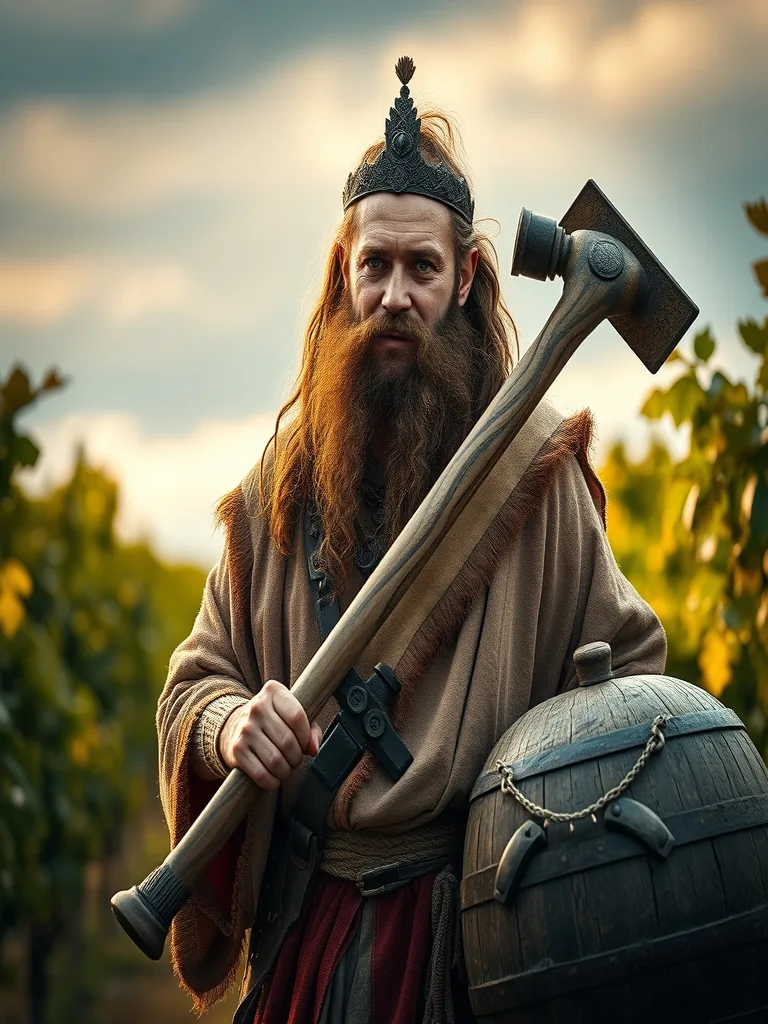
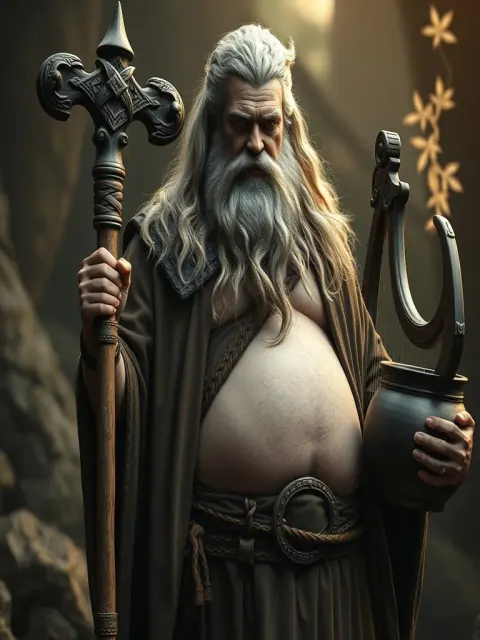
Sucellus (Gaulish: Sucellos) is one of the most prominent, revered, and widely documented divinities of Celtic and Gallo-Roman Gaul, attested across dozens of stone votive inscriptions and sculpted monuments throughout the river valleys of the Rhône, Saône, Rhine, and Upper Danube. Known linguistically as 'The Good Striker' or 'He Who Strikes Well', Sucellus brandishes as his paramount emblem a distinctive long-handled wooden mallet or hammer (olliculus), complemented by a small globular pot (olla) or libation cup, and frequently accompanied by a loyal watch-dog. On the famous monumental altar from Sarrebourg in eastern Gaul, Sucellus is paired in divine consortship with the goddess Nantosuelta, together embodying terrestrial fertility, agricultural wealth, river-valley guardianship, and domestic hearth safety. Throughout the Rhône Valley and Burgundy, the god was closely integrated into local viticulture, frequently shown beside oak wine barrels (cadi) and ripening grape clusters. In a celebrated passage of the Gallic Wars (VI, 18), Julius Caesar reported that the Gauls claimed direct descent from Dis Pater as taught by their Druids; most modern historians of Celtic religion identify this ancestral underworld sovereign with Sucellus, whose hammer functioned as a dual instrument of waking sleeping earth and granting peaceful passage between life, death, and renewal.
6 min read · Reviewed on September 30, 2026 · How we research
02
Sacred symbols
The long-handled mallet, the offering olla, the dog, the oak barrel and the bunches of grapes
Genealogy according to Corpus Inscriptionum Latinarum (CIL XIII, 4542, 5057); Júlio César, De Bello Gallico (6.18); Monumentos do Museu Arqueológico Nacional de Saint-Germain-en-Laye
04
Sources and further reading
Primary sources
Theodor Mommsen, Otto Hirschfeld et al. (epigraphic compilation), Corpus Inscriptionum Latinarum (CIL XIII: Inscriptiones Trium Galliarum et Germaniarum, CIL XIII 4542 and 5057). translation: Epigraphic edition in Berlin (digital record and transcriptions on Bifrost). read
C. Iulius Caesar, Commentarii de Bello Gallico (Book VI, ch. 18: Dis Pater as Progenitor of the Gauls). translation: Complete Latin text on The Latin Library (Liber Sextus). read
Monuments and Votive Inscriptions of Roman Gaul, Sculptural Relief of Sarrebourg (CIL XIII, 4542) and Statuettes of Sucellus. translation: Collection of the National Archaeological Museum and Historical Catalogue (Wikipedia / Museum Records). read
Cabinet of Medals and Antiquities of France, Catalogue of Ancient Gaulish Bronzes (Statuette of Sucellus with Mallet and the Olla of Vienne). translation: Bibliothèque nationale de France (record in The Religion of the Ancient Celts). read
Studies
John Arnott MacCulloch, The Religion of the Ancient Celts (Chapter III: The Gods of Gaul and the Continental Celts - Sucellos). T. & T. Clark, Edinburgh, 1911. open
Charles Squire, Celtic Myth and Legend, Poetry and Romance (The Continental Gods and the Gaulish Tradition). Gresham Publishing Company, Londres, 1905. open
Proinsias Mac Cana, Celtic Mythology (The Gaulish Gods and the Continental Archaeological Evidence). Hamlyn, Londres, 1970. open
Salomon Reinach & John Rhys (comparative Gallo-Roman studies), Cultes, Mythes et Religions (Chapter on the God of the Mallet and Continental Mythology). Ernest Leroux, Paris, 1906. open
Name and epithets
The Gaulish theonym Sucellus (also appearing as Sucellos and Latin dative Sucello) is a transparent morphological compound of the Proto-Celtic prefix su- ('good', 'well', 'benevolent', cognate with Sanskrit su- and Gree…
In the ancient sources
Corpus Inscriptionum Latinarum (CIL XIII: Inscriptiones Trium Galliarum), 1st–3rd centuries CE epigraphic records..
The myths
The Awakening of Earth with the Mallet and the Pot of Plenty. Within the agrarian communities of central and eastern Gaul, Sucellus embodied the cyclical renewal of seasonal vegetation and the fecund warmth emerging fro…
Worship and archaeology
The veneration of Sucellus was intensely popular across rural hamlets, winegrowing estates, and urban artisan guilds alike.
How the god was depicted
In Gallo-Roman statuary, Sucellus possesses a consistent, recognizable appearance: he is portrayed as a bearded, mature man with curly hair and a calm expression, dressed in native Gallic attire consisting of a short tu…
What scholars debate
Chthonic Sovereign vs Pastoral Agricultural Divinity. Scholars of Gaulish religion (including Miranda Aldhouse-Green and Bernhard Maier) discuss the multifaceted character of Sucellus.
After antiquity
Since the 19th-century antiquarian excavations in eastern France, Sucellus has stood as a primary emblem of authentic Gaulish religion alongside Cernunnos and Epona.
Did you know?
The donor named in the Sarrebourg inscription, Resus son of Torogillos, bears pure Celtic names showing the survival of native patronymics well into Roman imperial times.
Codex relic
Mallet and Olla. A long-handled mallet and a small globular offering pot, the insignia with which Gaulish statuary portrays him.
The rest of this scroll is sealed
The legends, the myth, the cult and relics are part of the full Codex. You can open 1 full entry for free every day; to open all 500 deities with no limits and no ads, subscribe to Codex PRO.