5 sections of this entry are open to everyone: the summary, the people, the symbols, the lineage and the sources. The other 9 (Name and epithets, In the ancient sources, The myths, Worship and archaeology, How the god was depicted, What scholars debate, After antiquity, Did you know?, Codex relic) are part of the full Codex: PRO opens the whole study of all 500 deities, and without a subscription you can read one full entry a day, just like in the app.
The orixás are worshipped by the Yoruba people of present-day Nigeria and Benin, with Ile-Ife as their spiritual center. Through the slave trade, their faith crossed the Atlantic and flourished in the Americas as Candomblé, Santería, and Vodou. It is today one of the most living and widespread African religious traditions in the world.
The Osun festival in Osogbo, Nigeria, draws thousands to the sacred grove of the Osun river, a UNESCO heritage site. The Ifá oracle guides decisions through the odus, and in Brazil the Candomblé terreiros honor each orixá with their own drums, dances, colors, and foods.
01
At a glance
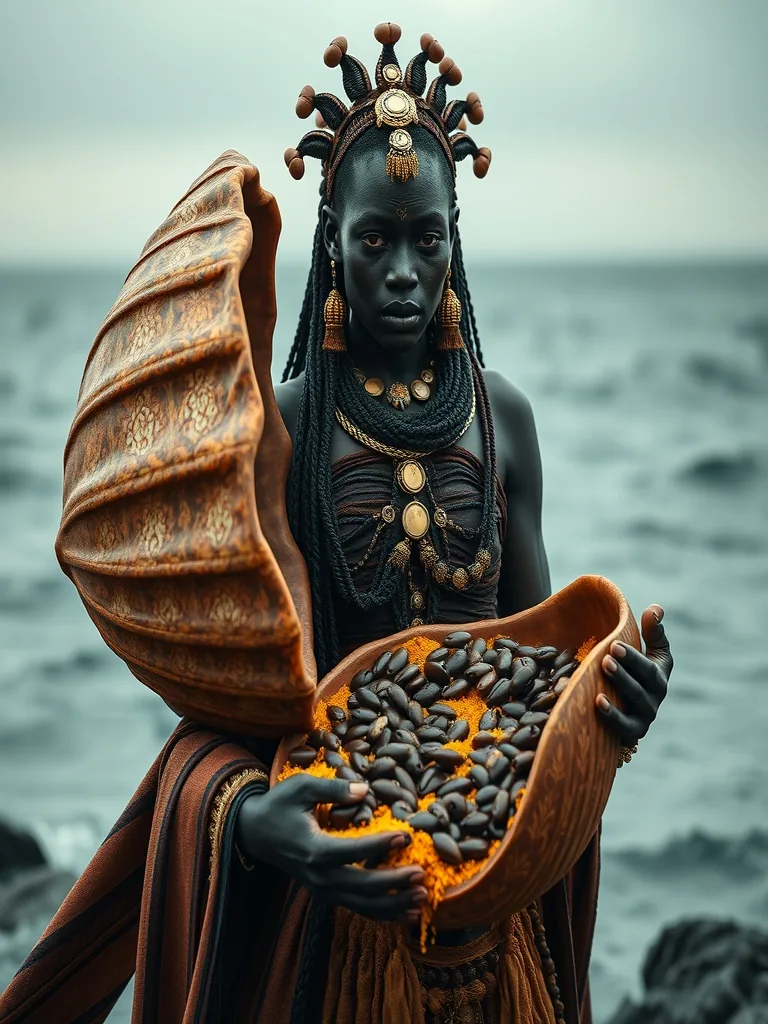
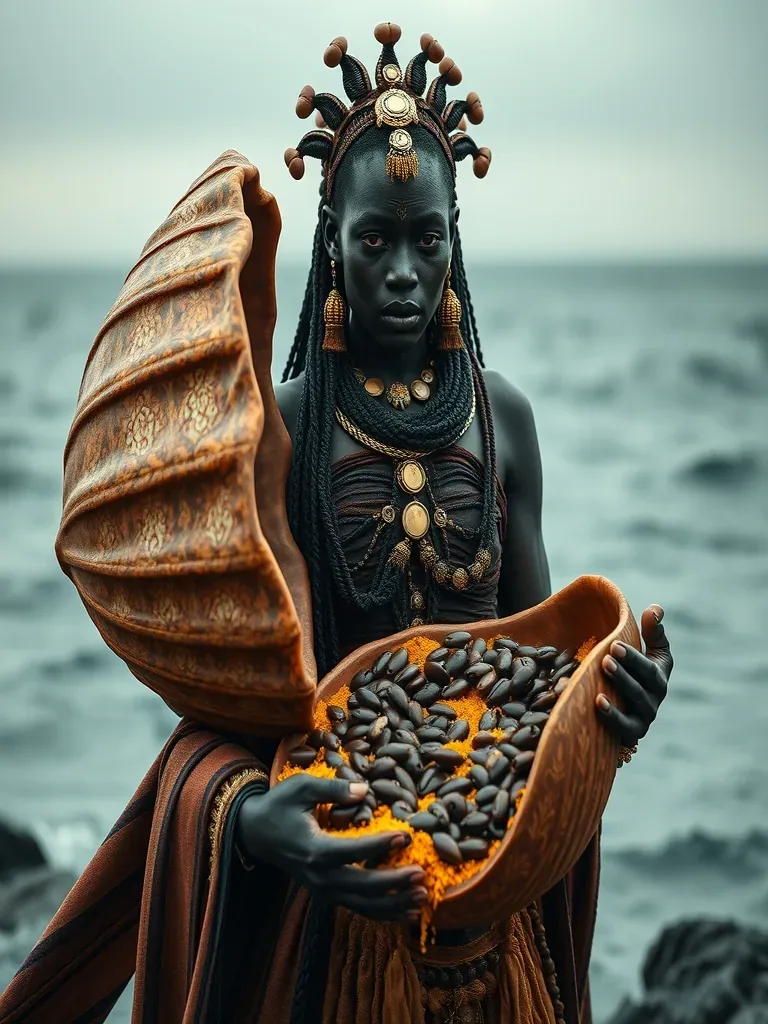
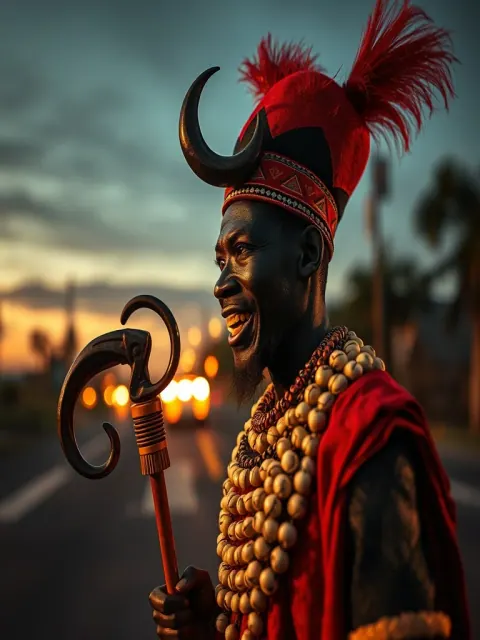
Ajé Ṣàlúgà (often written in ethnographic records as Aje Saluga, Ajé Shalunga, or in Brazil as Ajé Xalugá) is the Yoruba deity responsible for material fortune, financial abundance, success in commercial transactions, and the fluid circulation of money in human society. Conceived as a direct emanation from the ocean depths of Olokun, where the natural banks of the cowrie shell (Cypraea moneta, called owó ẹyọ in Yoruba) lie, the currency that structured the pre-colonial economy of West Africa, Ajé Ṣàlúgà is revered as the supreme patroness of the traditional market squares (ọjà), the guilds of women traders, and the money-changers. In the oracular chants preserved in the corpus of Ifá compiled by Professor Wande Abimbola, Ajé embodies a sacred force that is proud, capricious, and sovereign, which grants lasting prosperity to those who practice moral integrity (ìwà pẹ̀lẹ́), financial prudence, and hospitality toward the destitute, while scorning miserly hoarders and dishonest merchants. In Candomblé Ketu and in Caribbean Santería she is praised in close harmony with Oxum and Olokun, receiving discreet worship over large mother-of-pearl cowries, silver coins, and polished sea-green beads.
7 min read · Reviewed on September 29, 2026 · How we research
02
Sacred symbols
The cowrie, the coins, the giant snail and the jewels
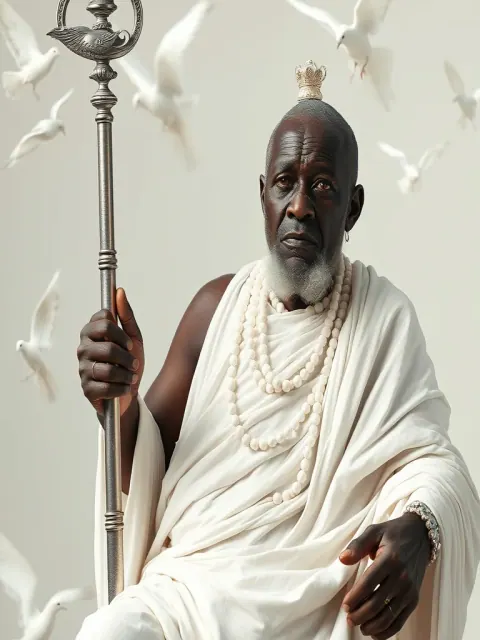
Yemoja (divinity of marine and estuarine waters, elder primordial sibling)
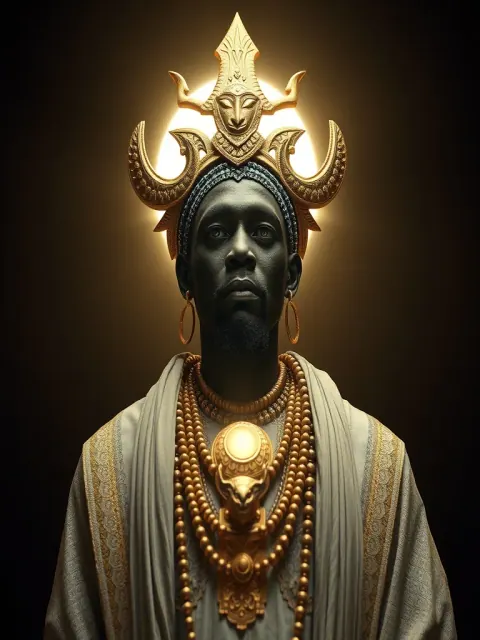
Aje Shaluga
Genealogy according to Corpus Canônico de Ifá (Odu Ògúndá Méjì, Òsá Méjì e Òṣé Méjì); Wande Abimbola (1975, 1976); Pierre Fatumbi Verger (1957, 1995); Samuel Johnson (1921); Marion Johnson (1970); Rowland Abiodun (2014); Reginaldo Prandi (2001)
04
Sources and further reading
Primary sources
Wande Abimbola, Sixteen Great Poems of Ifá. translation: Ibadan: Oxford University Press / UNESCO (1975), oracular chants and the ethics of wealth (owó).
Pierre Fatumbi Verger, Ewé: O Uso das Plantas na Sociedade Iorubá. translation: São Paulo: Companhia das Letras (1995), liturgy and formulas of Ajé Ṣàlúgà.
Samuel Johnson, The History of the Yorubas. translation: CMS edition (1921), traditional counting of cowries and royal markets.
Studies
Marion Johnson, The Cowrie Currencies of West Africa. The Journal of African History, vol. 11, n. 1 (1970), pp. 17-49, 1970.
Rowland Abiodun, Yoruba Art and Language: Seeking the African in African Art. Cambridge: Cambridge University Press (2014), aesthetics of Ajé and the symbolism of the cowrie, 2014.
Toyin Falola, The Political Economy of a Pre-colonial African State: Ibadan, 1830-1900. Ile-Ife: University of Ife Press (1984), traditional trade and market guilds, 1984.
Alberto da Costa e Silva, A Enxada e a Lança: A África antes dos Portugueses. Rio de Janeiro: Nova Fronteira (1992), trade routes and the cowrie currency, 2001.
Name and epithets
The theonym Ajé Ṣàlúgà is made up of the fundamental noun ajé, which in the Yoruba language denotes ‘wealth’, ‘currency’, ‘mercantile profit’, and ‘tangible prosperity’, joined to the qualifying title ṣàlúgà (or ṣè-lú-ọ…
In the ancient sources
Canonical Corpus of Ifá (Odu Ògúndá Méjì, Òsá Méjì, and Òṣé Méjì), Liturgical oral tradition of the Babalawos of West Africa..
The myths
Ajé’s Emergence from the Ocean and the Institution of the Cowrie as Universal Currency. As preserved in the Odu Ògúndá Méjì of the Ifá corpus, in the earliest days of humankind people carried out direct and confused exc…
Worship and archaeology
The traditional worship of Ajé Ṣàlúgà is preserved with exceptional vigor by the women’s trading guilds in Nigeria and the Republic of Benin, under the leadership of the market matriarchs (Iyál’ọjà).
How the god was depicted
The liturgical imagery of Ajé Ṣàlúgà is marked by the ubiquitous presence of the cowrie shell (Cypraea moneta), the archetypal symbol of wealth, female fecundity, and oracular communication.
What scholars debate
The Archaeoeconomy of the Cowries and the Sacralization of Money. Historians of African economy such as Marion Johnson and Toyin Falola analyze the continental and intercontinental circulation of cowrie shells, originat…
After antiquity
Ajé Ṣàlúgà is widely celebrated in contemporary popular music from Nigeria, especially in the songs of the jùjú and fújì genres performed by stars such as King Sunny Adé and Chief Commander Ebenezer Obey, who invoke Ajé…
Did you know?
In ancient Yoruba tradition, cowries were grouped into precise units of calculation: forty shells formed a string (ogóji), fifty strings formed a bag of two thousand shells (ẹgbàá), and ten bags constituted the greater…
Codex relic
Cowrie of Prosperity. The cowrie shell that once served as currency, symbol of all wealth, trade, and material abundance.
The rest of this scroll is sealed
The legends, the myth, the cult and relics are part of the full Codex. You can open 1 full entry for free every day; to open all 500 deities with no limits and no ads, subscribe to Codex PRO.