Skip to content
CodexMythologia
Back to the Codex
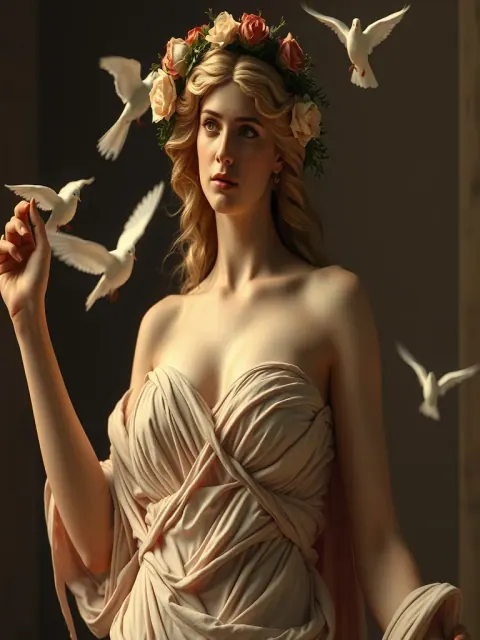
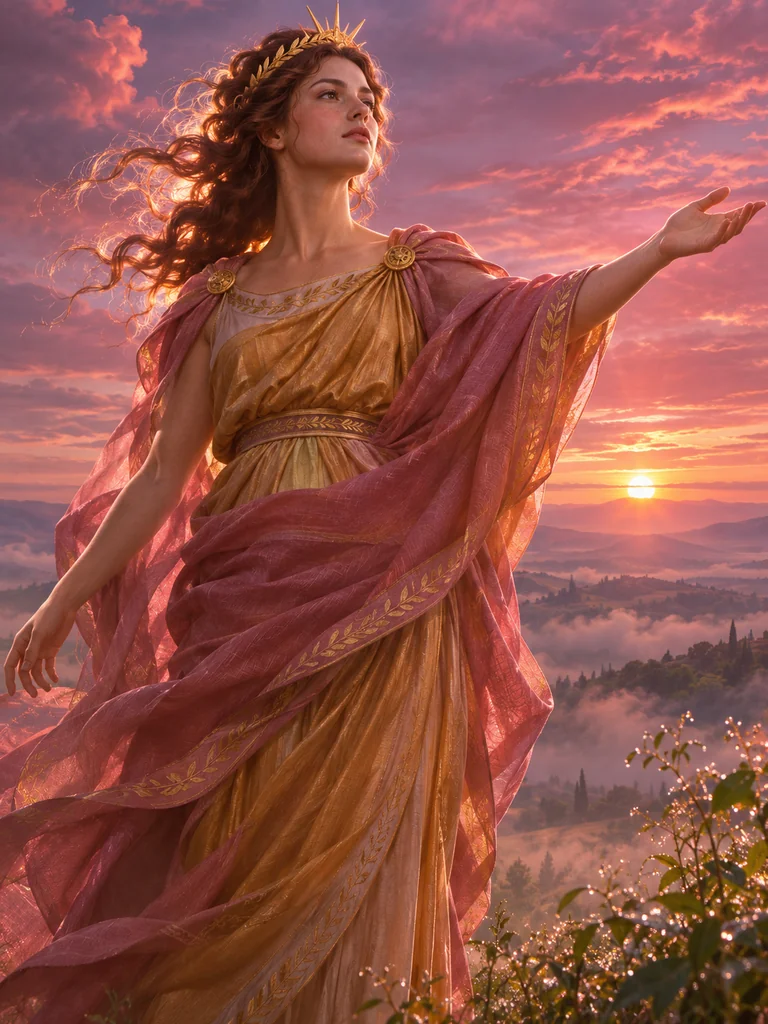
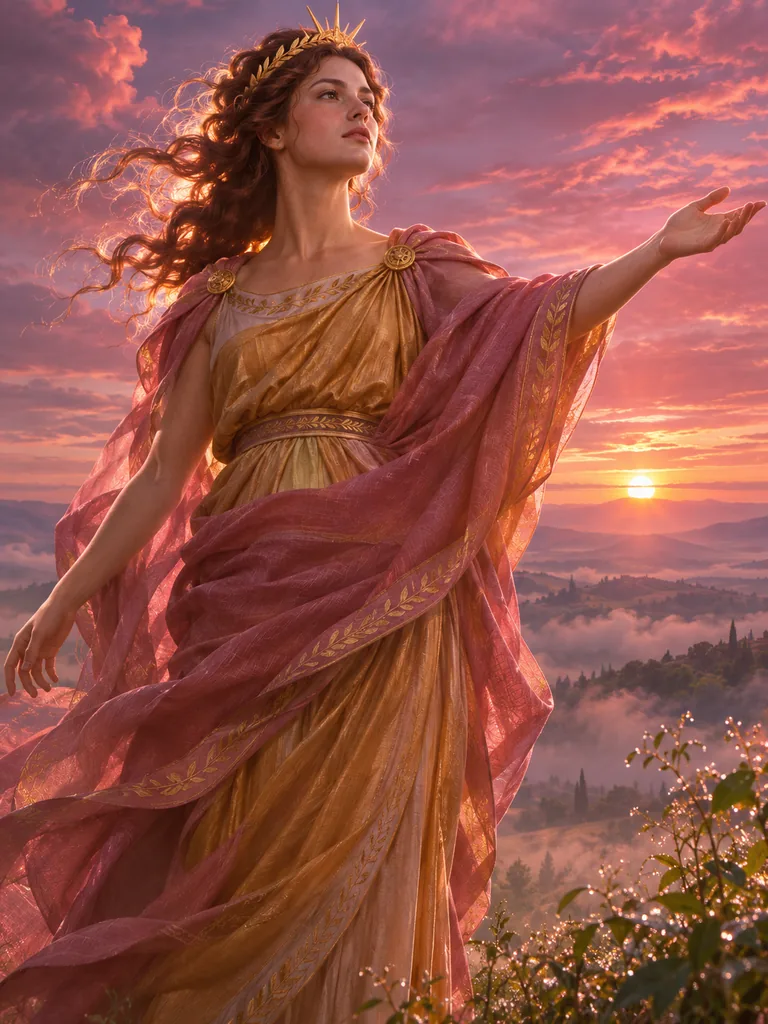
Portrait of Aurora, Roman deity
Roman
Tap or drag
Roman

Aurora

The Goddess of Daybreak

Domain
Daybreak, Dew & New Light
Alignment
Neutral Good
Element
Light
Relics of Power
Rosy Chariot of Daybreak
Speak with Aurora

The full Codex

5 sections of this entry are open to everyone: the summary, the people, the symbols, the lineage and the sources. The other 9 (Name and epithets, In the ancient sources, The myths, Worship and archaeology, How the god was depicted, What scholars debate, After antiquity, Did you know?, Codex relic) are part of the full Codex: PRO opens the whole study of all 500 deities, and without a subscription you can read one full entry a day, just like in the app.

The People

People
Romans
Region
Rome & the Roman Empire
Period
8th c. BC – 4th c. AD

The Romans worshipped their gods as guardians of the state, the home, and war, identifying many of them with Greek deities. The official cult was led by colleges of priests and by the emperor himself, with temples in the heart of Rome. Their religion followed the Empire's expansion across Europe, North Africa, and the Middle East.

The December Saturnalia reversed social roles in days of feasting and gifts, and the Lupercalia purified the city in February. The Vestal Virgins guarded Vesta's sacred fire, and victorious generals paraded in triumph to the temple of Jupiter Capitolinus.
At a glance

Aurora is the Latin name of the goddess of daybreak, the Greek Eos. Roman poets received her myths already formed and set her to open the gates of day: every morning she leaves the saffron bed of Tithonus (Virgil, Aeneid IV.584–585) and crosses the sky in a rosy four-horse chariot (VI.535). Her longest myth is that of Memnon, king of the Ethiopians, her son by Tithonus, killed before Troy by Achilles. In Ovid, Aurora kneels before Jupiter to ask an honor for her dead son and says of herself that her temples are the rarest in the whole world (Metamorphoses XIII.576–622). The phrase guides this study: Aurora is a constant presence in Latin poetry, but the sources consulted record no public cult of her in Rome. The evidence is abundant for the myths and scarce for ritual.

10 min read · Reviewed on November 6, 2026 · How we research

Sacred symbols

The rosy chariot, the saffron robe, the dew and the bed of Tithonus

Family

Parents
Hyperion and Theia, Titans of light (Hesiod); in Ovid, daughter of Pallas
Aurora
Unions
Tithonus (Trojan prince for whom she asked immortality)Astraeus (Titan of the stars, father of the winds)
Children
Memnon and Emathion (by Tithonus)Zephyrus, Boreas and Notus, the winds, and Eosphorus, the morning star (by Astraeus)Phaethon (by Cephalus, according to Hesiod)
Genealogy according to Hesíodo (Teogonia 371–382, 984–991); Hino Homérico V a Afrodita (218–238); Ovídio (Metamorfoses VII.700–713, IX.421, XIII.576–622; Fastos IV.373, VI.473–482); Virgílio (Eneida IV.584–585, VI.535); Cícero (Sobre a natureza dos deuses III.48); Pausânias (I.3.1, I.42.3); West (2007)

Sources and further reading

Primary sources

  • Hesiod, Theogony. translation: H. G. Evelyn-White, Loeb Classical Library, 1914. read
  • Anonymous, Homeric Hymns. translation: H. G. Evelyn-White, Loeb Classical Library, 1914. read
  • Homer, Iliad. translation: A. T. Murray, Loeb Classical Library, 1924. read
  • Ovid (Publius Ovidius Naso), Metamorphoses (VII, IX, XIII). translation: Latin text (The Latin Library). read
  • Ovid (Publius Ovidius Naso), Fasti. translation: Latin text (The Latin Library). read
  • Virgil (Publius Vergilius Maro), Aeneid. read
  • Cicero (Marcus Tullius Cicero), De Natura Deorum. read
  • Pausanias, Description of Greece. translation: W. H. S. Jones, Loeb Classical Library, 1918. read

Studies

  • West, Martin L., Indo-European Poetry and Myth. Oxford University Press, 2007.
  • Gantz, Timothy, Early Greek Myth: A Guide to Literary and Artistic Sources. Johns Hopkins University Press, 1993.
  • Hornblower, S.; Spawforth, A.; Eidinow, E. (eds.), The Oxford Classical Dictionary, 4th ed. (entries “Eos” and “Mater Matuta”). Oxford University Press, 2012.
  • Gronewald, Michael; Daniel, Robert W., Ein neuer Sappho-Papyrus (P. Köln 21351 and 21376). Zeitschrift für Papyrologie und Epigraphik 147, 2004.
  • Galilei, Galileo; Guiducci, Mario, Discorso delle Comete. Pietro Cecconcelli, Florença, 1619.

Name and epithets

The Latin noun aurōra, “daybreak, morning light,” names the phenomenon and the goddess at once. Scholars connect it with Greek ēṓs (Aeolic aúōs) and Vedic Uṣás, forms that go back to a single Indo-European word for dawn…

In the ancient sources

Theogony, c. 700 BCE. Descent of Eos from Hyperion and Theia, and her children by Astraeus (winds and stars), by Tithonus (Memnon and Emathion) and by Cephalus (Phaethon).

The myths

Tithonus: the request for immortality without youth. According to the Homeric Hymn to Aphrodite (218–238), Eos abducted the Trojan Tithonus, of the line of Anchises (the hymn is Aphrodite's speech to Anchises), and went…

Worship and archaeology

The sources consulted record no public cult of Aurora in Rome, and the goddess herself confirms it in Ovid's mouth when she says her temples are the rarest in the whole world (Metamorphoses XIII.587–588).

How the god was depicted

In Greek art, Eos appears winged, sometimes driving a four-horse chariot, and often carrying a youth: Tithonus or Cephalus on Attic red-figure vases, or the body of Memnon.

What scholars debate

Roman goddess or Latin name of Eos?. All the myths of Aurora in Latin poetry are myths of Eos: Tithonus, Memnon, Cephalus, the winds, the four-horse chariot.

After antiquity

Latin aurora passed into the Romance languages as the common noun for daybreak, and Galileo applied it to the lights of the polar sky.

Did you know?

Ovid's Memnonides repeat a battle of birds every year. They are born from the ashes of Memnon, fly three times around the pyre and, when the sun has completed the twelve signs, fight again in two hosts as a funeral offe…

Codex relic

Rosy Chariot of Daybreak. The four-horse chariot in which she crosses the sky each morning, leaving dew upon the world.

The rest of this scroll is sealed

The legends, the myth, the cult and relics are part of the full Codex. You can open 1 full entry for free every day; to open all 500 deities with no limits and no ads, subscribe to Codex PRO.

See Codex PROGet it on Google Play

From the same pantheon

View pantheon