Skip to content
CodexMythologia
Back to the Codex
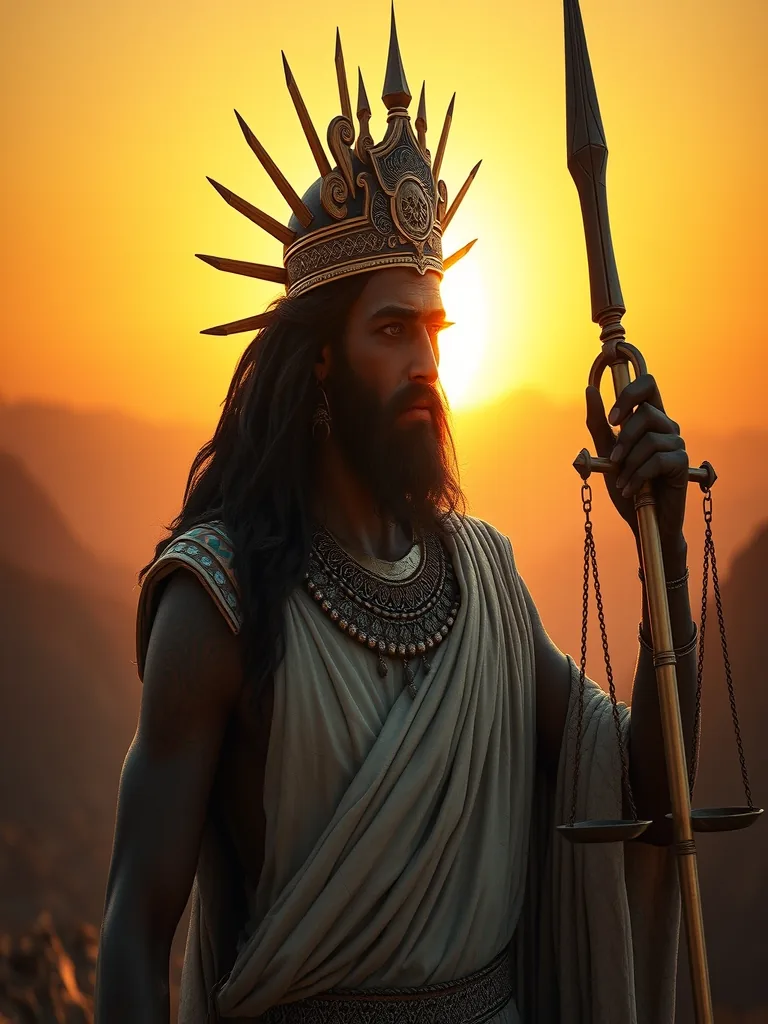
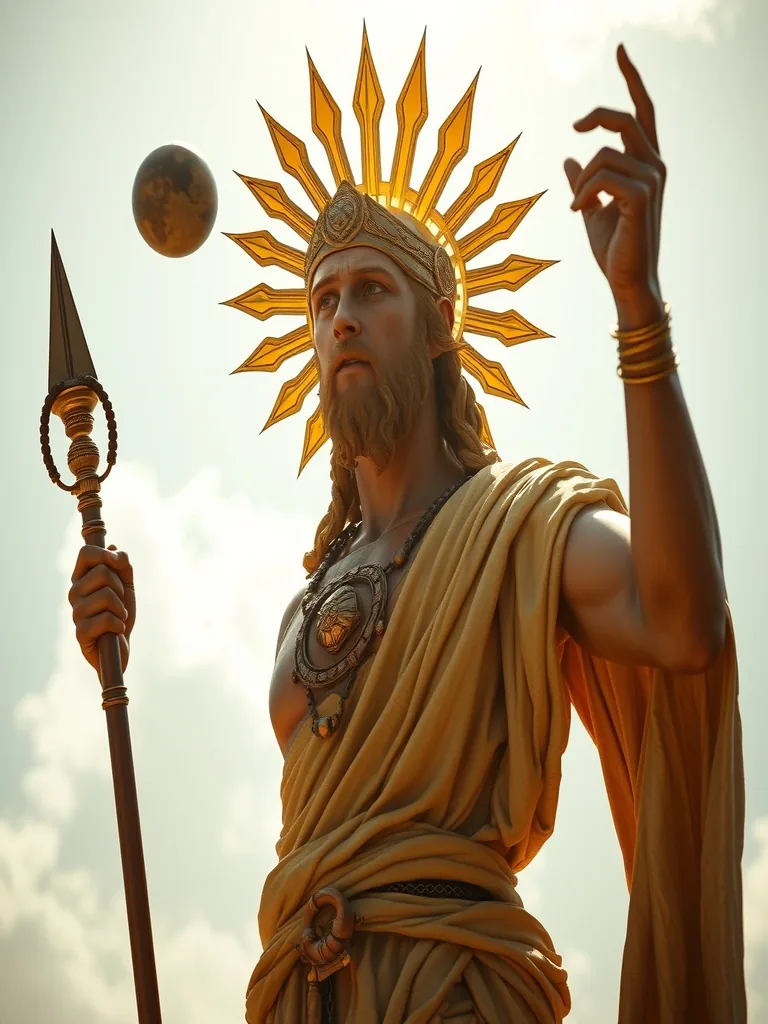
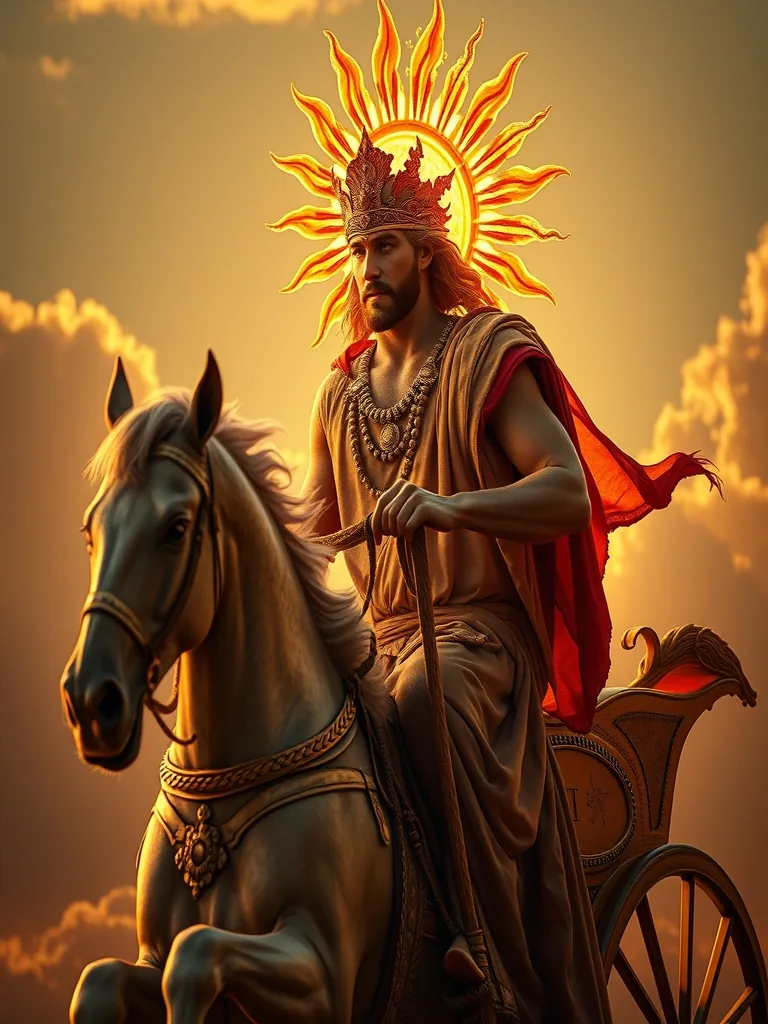
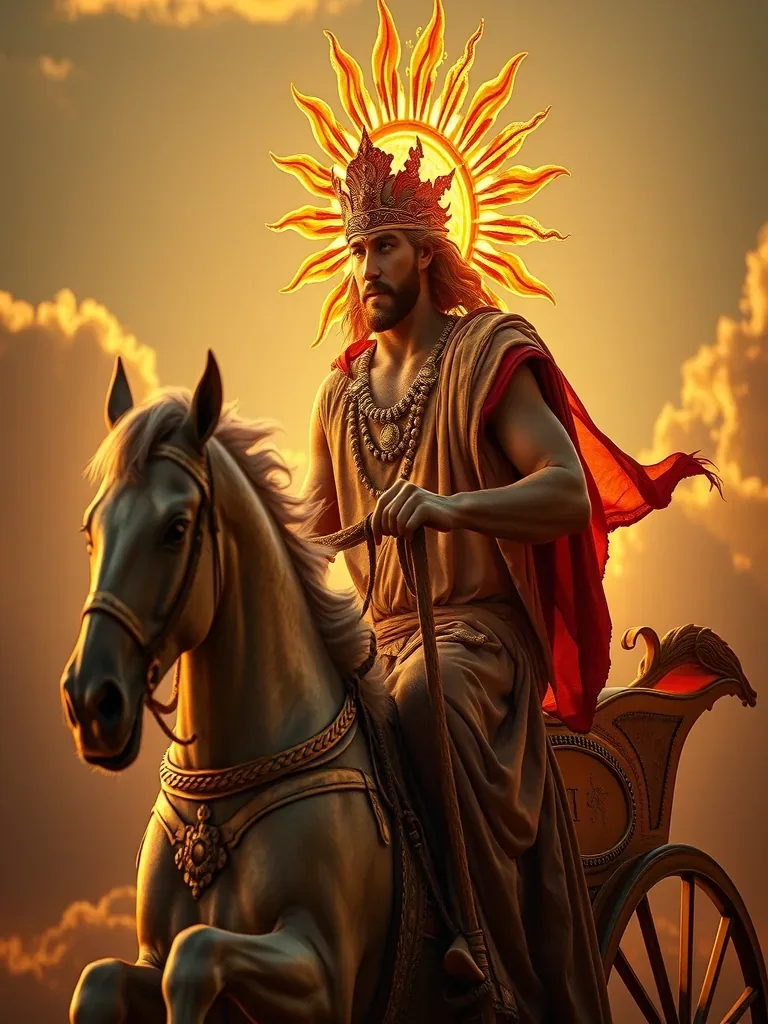
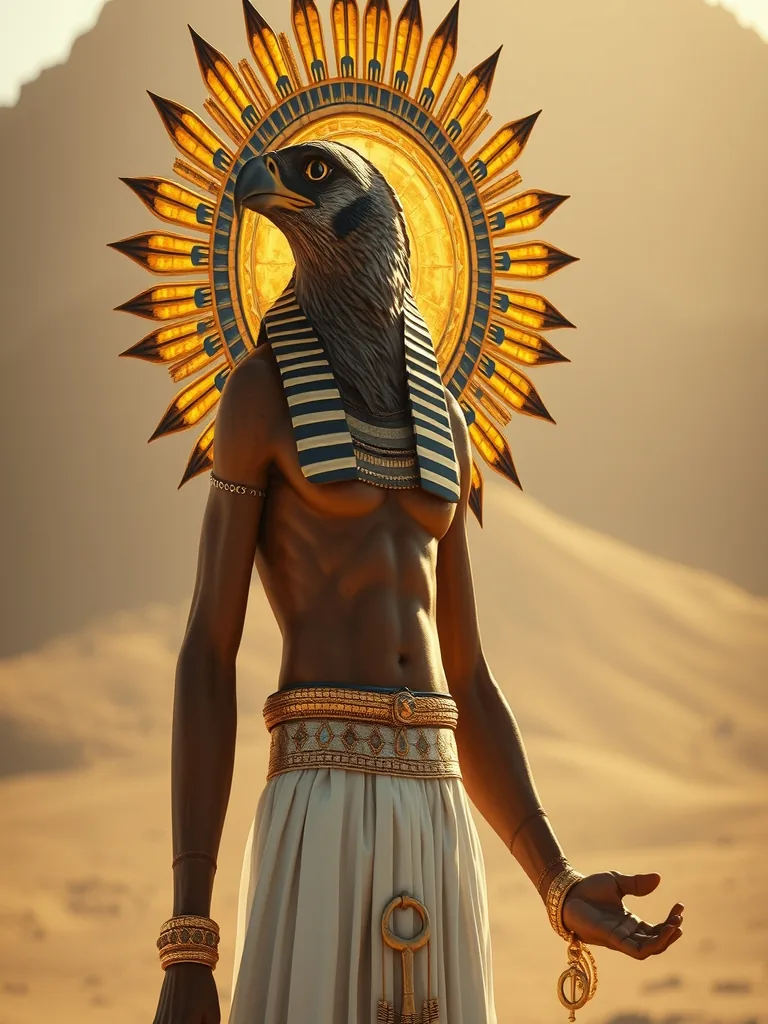
Portrait of Helios, Greek deity
Greek
Tap or drag
Greek

Helios

The Charioteer of the Sun

Domain
Sun & All-Seeing Sight
Alignment
Neutral Good
Element
Light
Relics of Power
Flaming Chariot
Speak with Helios

The full Codex

5 sections of this entry are open to everyone: the summary, the people, the symbols, the lineage and the sources. The other 9 (Name and epithets, In the ancient sources, The myths, Worship and archaeology, How the god was depicted, What scholars debate, After antiquity, Did you know?, Codex relic) are part of the full Codex: PRO opens the whole study of all 500 deities, and without a subscription you can read one full entry a day, just like in the app.

The People

People
Ancient Greeks
Region
Greece & the Mediterranean
Period
8th c. BC – 4th c. AD

The Olympian gods were worshipped by the city-states of ancient Greece, from Athens to Sparta, which raised them temples such as the Parthenon. Reigning atop Mount Olympus, they presided over every aspect of life and were celebrated in festivals like the Olympic Games. Homer and Hesiod fixed their myths, which shaped all of Western culture.

The Olympic Games were held every four years in honor of Zeus, and the Panathenaea celebrated Athena in Athens. The Eleusinian Mysteries initiated the faithful into the secrets of Demeter and Persephone, while crowds consulted Apollo's oracle at Delphi.
At a glance

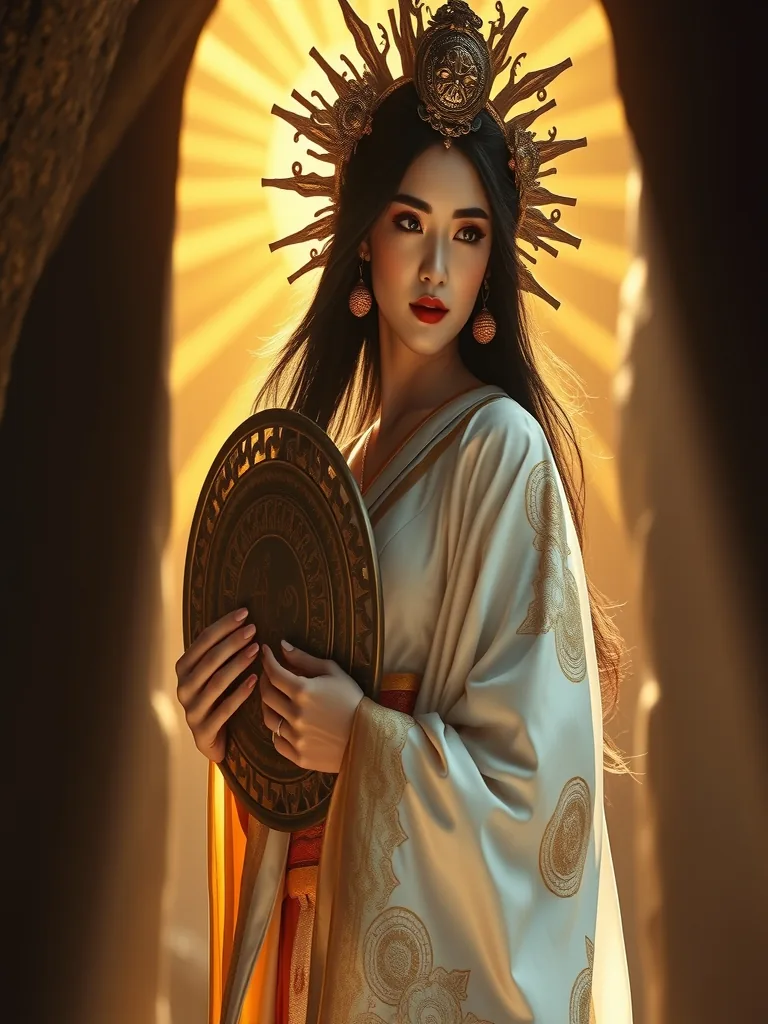
Helios (Ancient Greek Ἥλιος) is the primordial divine personification of the physical sun in archaic and classical Greek religion, born of the Titan lineage of Hyperion and Theia, and brother to Selene (the Moon) and Eos (the rosy-fingered Dawn). Crowned with an incandescent radiant nimbus of twelve piercing beams, Helios traverses the sky daily in a blazing quadriga drawn by four fire-breathing celestial stallions — Pyrois, Eous, Aethon, and Phlegon —, ascending from the Eastern horizon at dawn and plunging into the far western waters of the encircling river Oceanus at dusk. During the cosmic night, he journeys back to the East while sleeping inside a magnificent winged golden cup forged by the master divine artisan Hephaestus. Because his lofty vantage gazes upon the entire terrestrial expanse, Helios was worshipped by the Greeks as Panoptes (the All-Seeing), invoked alongside Zeus and Gaia as an inviolable divine witness to treaties, oaths, and civic covenants. His presence is pivotal across ancient myth: he alone revealed the abduction of Persephone to mourning Demeter and exposed the clandestine adultery of Ares and Aphrodite to Hephaestus. On his sacred island of Thrinacia, his immortal herds of three hundred and fifty cattle and sheep grazed undisturbed, the sacrilegious slaughter of which by Odysseus's starving crew brought catastrophic shipwreck and drowning upon the entire expedition. His greatest state cult flourished on the island of Rhodes, where he was revered as island founder and supreme civic patron, honored by the pan-Hellenic Haleia games and commemorated by the monumental Colossus of Rhodes.

8 min read · Reviewed on September 30, 2026 · How we research

Sacred symbols

Radiant crown, chariot, fiery steeds and the solar orb

Family

Parents
Hyperion (Titan of celestial light and solar observation)Theia (Titaness of celestial radiance, precious metals, and clear sight)
Siblings
Selene (Titaness of the full moon) and Eos (rosy-fingered Titaness of the dawn)
Helios
Unions
Perseis (Oceanid mother of Circe and Aeetes), Rhodos (sovereign nymph of Rhodes), and Clymene (mother of Phaethon)
Children
Phaethon, Circe (the sorceress of Aeaea), Aeetes (king of Colchis), Pasiphae (queen of Crete), the Heliades, and Phaethusa and Lampetia (herdsmaids of Thrinacia)
Genealogy according to Hesíodo, Teogonia (vv. 371–374, 956–962); Homero, Ilíada (Livro III, v. 277) e Odisseia (Livro XII, vv. 127–141 e 260–402); Hino Homérico a Hélio (Hymn XXXI); Hino Homérico a Deméter (vv. 62–90); Píndaro, Olímpicas (Olímpica VII, vv. 54–73); Ovídio, Metamorfoses (Livros I, vv. 750–779 e II, vv. 1–366); Pausânias, Descrição da Grécia (Livros II, caps. 1.6, 4.5 e III, cap. 20.4); Estrabão, Geografia (Livro XIV, cap. 2.5); Walter Burkert, Greek Religion (1985); Martin L. West, The East Face of Helicon (1997)

Sources and further reading

Primary sources

  • Archaic Homeric poet, Hymn XXXI to Helios (Homeric Hymns). translation: Poetic translation and notes by Wilson Alves Ribeiro Jr., Edições Hipocampo.
  • Homer, Odyssey (Book Twelve: the sacred cattle of the sun in Thrinacia). translation: Verse translation into Portuguese by Frederico Lourenço, Companhia das Letras.
  • Pindar, Olympian Odes (Olympian VII for Diagoras). translation: Annotated poetic version by Trajano Vieira, Editora 34.
  • Publius Ovidius Naso, Metamorphoses (Book II, the tragedy of Phaethon). translation: Poetic translation by Bocage with critical apparatus by Antônio da Silveira.

Studies

  • Martin Litchfield West, The East Face of Helicon: West Asiatic Elements in Early Poetry and Myth. Clarendon Press / Oxford University Press, 1997.
  • Fritz Graf, Apollo: Gods and Heroes of the Ancient World. Routledge, 2009.
  • H. A. Shapiro, Personifications in Greek Art: The Representation of Abstract Concepts 600-400 B.C.. Akanthus, 1993.
  • Douglas Cairns, The Eye of the Sun: Divine Vision in Archaic and Classical Greece. Oxford University Press, 2019.

Name and epithets

The theonym Helios (Ἥλιος in Attic-Ionic, Ἅλιος / Halios in Doric, and Ἠέλιος / Eelios in Homeric epic) derives from the Proto-Indo-European root *sóh₂wl̥ ('the sun'), oblique *sh₂wénm̥.

In the ancient sources

Homeric Hymn to Helios (Hymn XXXI), C. 7th–6th century BCE. Celebrates the golden helmet, blazing stallions, and radiant celestial journey of Helios across the sky. Odyssey (Homer), C. 8th century BCE.

The myths

The Fall of Phaethon and the Cosmic Conflagration of the Earth. As recounted in Ovid's Metamorphoses, there dwelt in Egypt a mortal prince named Phaethon, born to Helios and the Oceanid nymph Clymene.

Worship and archaeology

Unlike deities such as Apollo or Poseidon, whose temples dotted every city of mainland Greece, state-sponsored civic cults of Helios were concentrated in key maritime centers, with their undisputed monumental center on…

How the god was depicted

In Attic vase painting and classical sculpture, Helios is consistently depicted as a vigorous, beardless youth of dazzling beauty, with flowing curly hair and wide piercing eyes, crowned by a radiant nimbus of twelve sh…

What scholars debate

Rhodian Civic Centrality versus Mainland Cultic Marginality. Religious historians such as Walter Burkert and Martin Nilsson analyze why, despite the universal Greek reverence for Helios as an inviolable witness to oaths…

After antiquity

Helios left an enduring mark on global culture: the Colossus of Rhodes served as the direct conceptual and visual inspiration for Frédéric-Auguste Bartholdi when sculpting the Statue of Liberty in New York; the solar ch…

Did you know?

In Plato's Symposium, the philosopher Socrates is depicted standing motionless at dawn after an all-night philosophical gathering, offering a quiet prayer of reverence (proskynesis) to the rising sun before walking home…

Codex relic

Flaming Chariot. A chariot of fire drawn by four blazing steeds that crosses the sky from dawn to dusk.

The rest of this scroll is sealed

The legends, the myth, the cult and relics are part of the full Codex. You can open 1 full entry for free every day; to open all 500 deities with no limits and no ads, subscribe to Codex PRO.

See Codex PROGet it on Google Play

Divine Equivalents

From the same pantheon

View pantheon