Skip to content
CodexMythologia
Back to the Codex
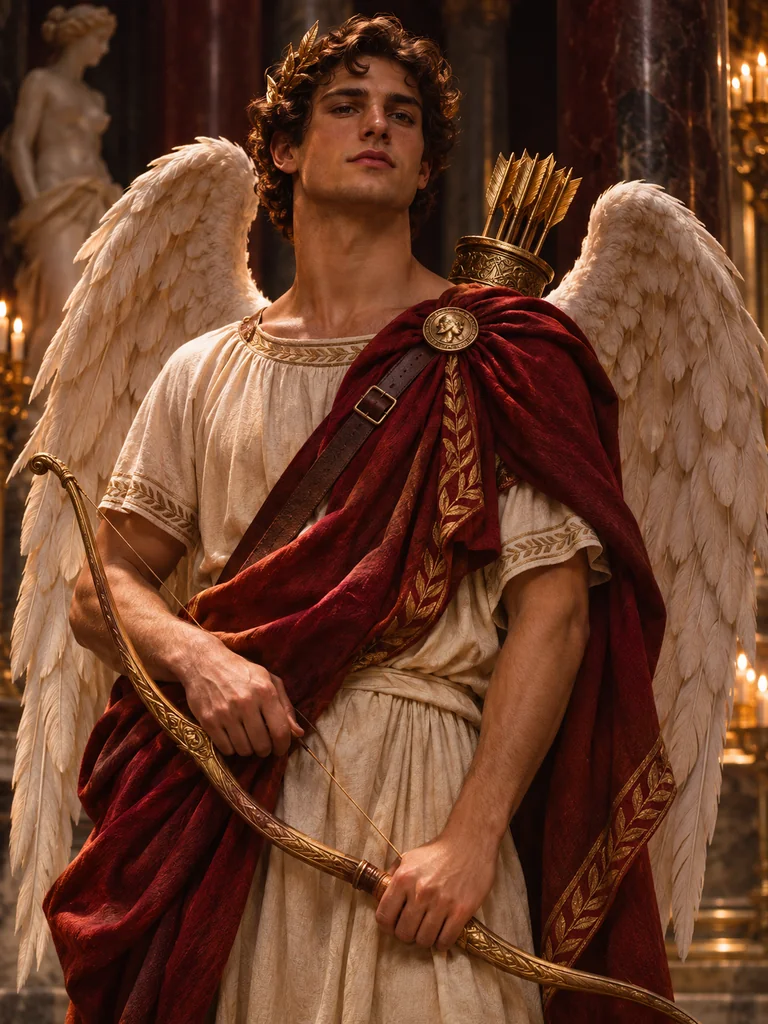
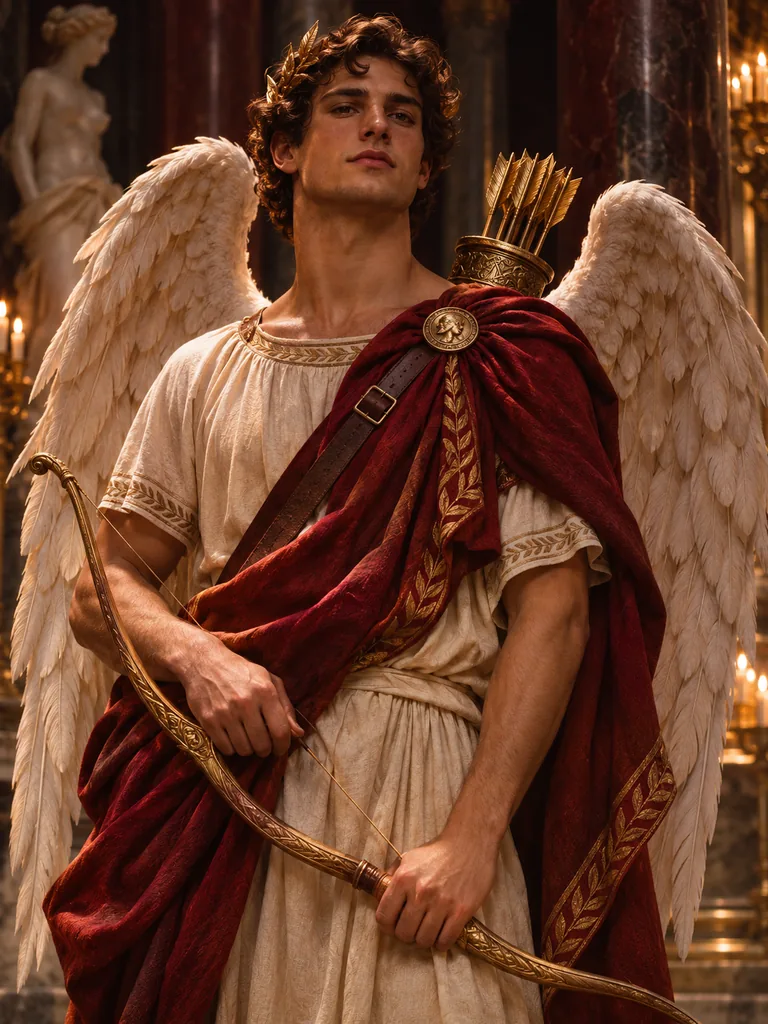
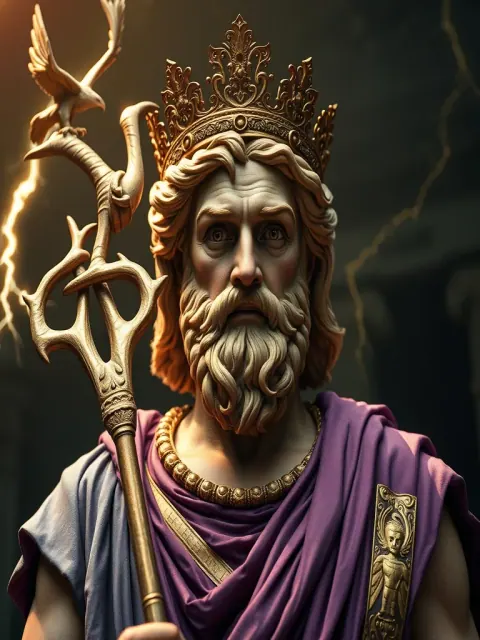
Portrait of Cupid, Roman deity
Roman
Tap or drag
Roman

Cupid

The God of Desire

Domain
Desire, Love & Passion
Alignment
Chaotic Neutral
Element
Air
Relics of Power
Bow and Arrows of Gold and Lead
Speak with Cupid

The full Codex

5 sections of this entry are open to everyone: the summary, the people, the symbols, the lineage and the sources. The other 9 (Name and epithets, In the ancient sources, The myths, Worship and archaeology, How the god was depicted, What scholars debate, After antiquity, Did you know?, Codex relic) are part of the full Codex: PRO opens the whole study of all 500 deities, and without a subscription you can read one full entry a day, just like in the app.

The People

People
Romans
Region
Rome & the Roman Empire
Period
8th c. BC – 4th c. AD

The Romans worshipped their gods as guardians of the state, the home, and war, identifying many of them with Greek deities. The official cult was led by colleges of priests and by the emperor himself, with temples in the heart of Rome. Their religion followed the Empire's expansion across Europe, North Africa, and the Middle East.

The December Saturnalia reversed social roles in days of feasting and gifts, and the Lupercalia purified the city in February. The Vestal Virgins guarded Vesta's sacred fire, and victorious generals paraded in triumph to the temple of Jupiter Capitolinus.
At a glance

Cupid (Latin Cupido, "desire") is the Roman god of erotic longing, son of Venus, shown as a winged boy with bow, arrows and torch. The name is the Latin noun for intense wanting, and Roman poetry uses it for a divine character from the age of Augustus onward. Ovid gives him two arrows, one with a golden tip that kindles love and one of lead that repels it. Virgil seats him at Dido's banquet disguised as Ascanius. Apuleius gives him the longest plot that Latin literature preserves about a god of love, the tale of Cupid and Psyche. Cupid is the Roman counterpart of the Greek Eros, but the two do not coincide entirely: Hesiod's Eros is a primordial force of the cosmos (Theogony 116–122), while the Latin Cupid is almost always a son of Venus, mischievous and armed. The organized cult of Cupid in Rome is poorly documented. What survives in abundance are poems, statues, house paintings and sarcophagus reliefs. This study separates what the sources say from what later tradition added, such as the blindfold.

8 min read · Reviewed on November 6, 2026 · How we research

Sacred symbols

The bow, the quiver, the arrows of gold and lead, the torch and the wings

Family

Parents
VenusFather varies across the sources: Mars, Mercury or Vulcan (Seneca, Octavia 560); Apuleius does not name him
Siblings
Anteros, Cicero's third Cupid, son of Mars and Venus (De Natura Deorum III.60)
Cupid
Unions
Psyche (mortal raised to immortality in Apuleius, Metamorphoses VI.22–24)
Children
Voluptas, Pleasure, daughter of Cupid and Psyche (Apuleius, Metamorphoses VI.24)
Genealogy according to Virgílio (Eneida I.657–722; Bucólicas X.69); Ovídio (Metamorfoses I.452–567, V.363–384; Fastos II.457–474); Apuleio (Metamorfoses IV.28–VI.24); Cícero (De Natura Deorum III.59–60); Sêneca (Otávia 560); Panofsky (1939); Kenney (1990)

Sources and further reading

Primary sources

  • , .
  • , .
  • , .
  • , .
  • , .
  • , .
  • , .

Studies

  • , .
  • , .
  • , .
  • , .
  • , .
  • , .
  • , .

Name and epithets

Cupido comes from the Latin verb cupere, "to desire", and is first of all a common noun: cupido means "desire" or "greed", and can refer to erotic passion as well as to the craving for money or power.

In the ancient sources

Metamorphoses, I, c. 8 CE. Ovid tells how Apollo, after killing the serpent Python, mocks Cupid's bow and is struck by a golden arrow, while Daphne receives the leaden one. Metamorphoses, V, c. 8 CE.

The myths

Cupid and Psyche. According to Apuleius (Metamorphoses IV.28–VI.24), the mortal Psyche, a king's daughter, is so beautiful that men begin to worship her in place of Venus.

Worship and archaeology

Rome had no state cult of Cupid comparable to that of Venus, Mars or Jupiter. The literary sources always treat him as Venus's companion, and what survives in volume is his presence in objects and images, not a calendar…

How the god was depicted

The classical image of Cupid is that of a naked boy or youth with wings on his back, bow, quiver and torch. In Hellenistic art the god grows younger and multiplies into bands of boys, and this formula passes into Roman…

What scholars debate

. The first debate is one of identity. Is Cupid the same god as Eros? The Romans said yes, but Cicero (De Natura Deorum III.59–60) already separates several Cupids with different fathers, and other sources give the god…

After antiquity

After Antiquity, Cupid survives mainly through Ovid and Apuleius. In the Middle Ages, Fulgentius and the mythographers fold him into moral allegory.

Did you know?

In Shakespeare's "A Midsummer Night's Dream" (I.1.234–239), Helena says that love looks not with the eyes but with the mind, and that therefore winged Cupid is painted blind.

Codex relic

Bow and Arrows of Gold and Lead. Two arrows, one of gold that kindles desire and one of lead that repels it, according to Ovid.

The rest of this scroll is sealed

The legends, the myth, the cult and relics are part of the full Codex. You can open 1 full entry for free every day; to open all 500 deities with no limits and no ads, subscribe to Codex PRO.

See Codex PROGet it on Google Play

From the same pantheon

View pantheon