Skip to content
CodexMythologia
Back to the Codex
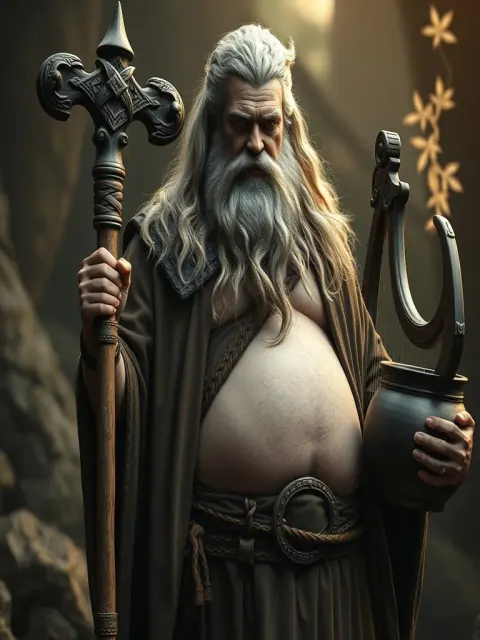
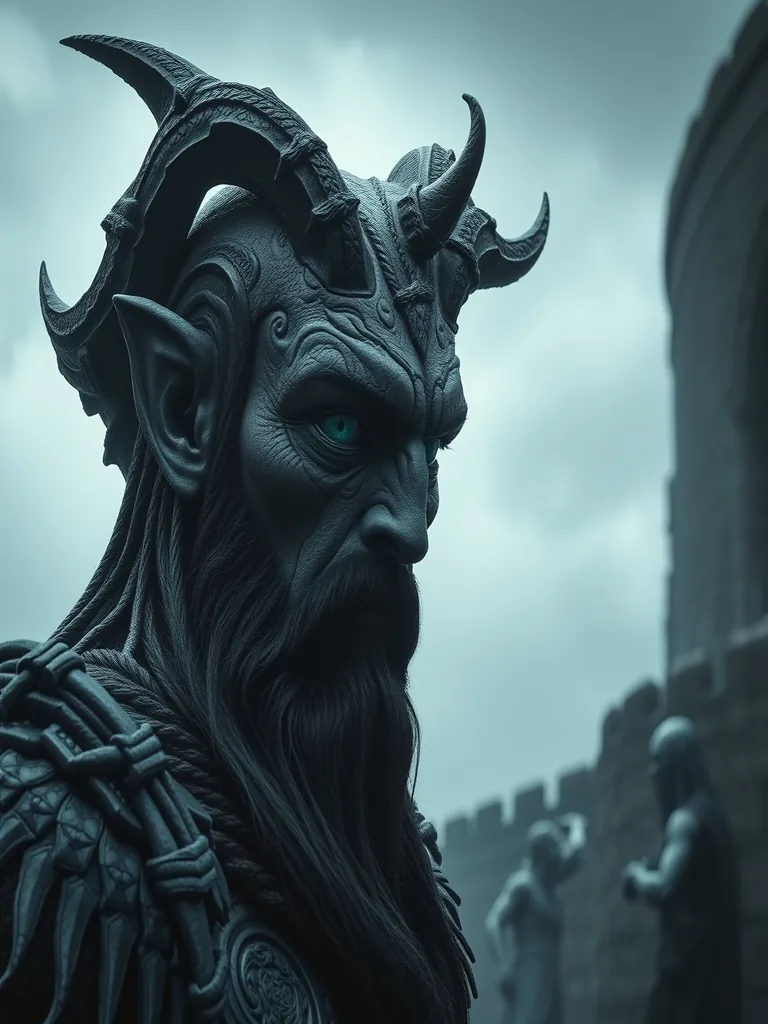
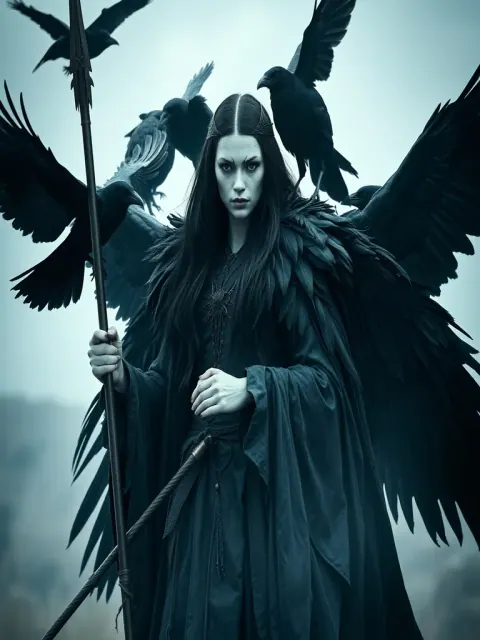
Portrait of Balor, Celtic deity
Celtic
Tap or drag
Celtic

Balor

The Giant of the Evil Eye

Domain
Destruction, Drought & Chaos
Alignment
Chaotic Evil
Element
Darkness
Relics of Power
Destroying Eye
Speak with Balor

The full Codex

5 sections of this entry are open to everyone: the summary, the people, the symbols, the lineage and the sources. The other 9 (Name and epithets, In the ancient sources, The myths, Worship and archaeology, How the god was depicted, What scholars debate, After antiquity, Did you know?, Codex relic) are part of the full Codex: PRO opens the whole study of all 500 deities, and without a subscription you can read one full entry a day, just like in the app.

The People

People
Celtic peoples
Region
Ireland, Britain & Gaul
Period
c. 500 BC – 500 AD

The Celtic gods were worshipped by the peoples of Ireland, Britain, and Gaul, with the aid of the druids, their priestly caste. They venerated them in sacred groves, springs, and wells, without great stone temples. Many of their myths survived in the Irish and Welsh sagas, recorded by medieval monks.

The Celtic wheel of the year turned on four great fire festivals: Samhain, the origin of Halloween, opened winter and contact with the dead; Imbolc, Beltane, and Lughnasadh marked spring, summer, and the harvest. The druids led the rites in sacred groves called nemeton.
At a glance

Balor (regularly distinguished by the archaic Old Irish epithets Béimneach, 'The Smiter', and Bíobur-shúileach, 'Of the Evil or Piercing Eye') is the formidable sovereign king of the Fomorians (Fomóire), the primordial race of monstrous, chthonic giants who embody barrenness, winter storms, cosmic chaos, and marine piracy in early Irish mythological literature. Dwelling in his coastal stronghold on the precipitous crags of Tory Island (Toraigh) off the coast of County Donegal, Balor is celebrated across medieval saga codices for possessing a single colossal eye endowed with catastrophic lethal power. According to the foundational text Cath Maige Tuired (The Second Battle of Mag Tuired), the heavy eyelid of this venomous organ remained shuttered during peace and required four warriors equipped with polished wooden or iron hooks to hoist it open in battle; once exposed, its poisonous gaze incinerated armies and felled any warrior who met its sight. Forewarned by druidic prophecy that he would be slain by his own grandson, Balor imprisoned his daughter Ethniu atop an inaccessible tower on Tory Island; nevertheless, noble Cian of the Tuatha Dé Danann gained access to her chamber and fathered the polytechnic sun-god Lugh Samildánach. In the apocalyptic clash of Mag Tuired, Balor struck down the high king Nuada Airgetlám and the war goddess Nemain, but was slain by Lugh, who drove a sling-stone (lía tailm) through the destructive eye, driving the venom backward into the Fomorian ranks.

7 min read · Reviewed on September 29, 2026 · How we research

Sacred symbols

The giant eye, the eyelid raised by hooks and destruction

Family

Parents
Dot mac Néit (ancestral king of the Fomorians)
Balor
Unions
Cethlenn (the Fomorian prophetess of the crooked tooth)
Children
Ethniu / Eithne (divine mother of the hero Lugh)
Genealogy according to Cath Maige Tuired; Lebor Gabála Érenn; Oidheadh Chloinne Tuireann; Tradições folclóricas de Tory Island

Sources and further reading

Primary sources

  • Elizabeth A. Gray (ed. and trans.), Cath Maige Tuired: The Second Battle of Mag Tuired (Episode of Balor's Eye). translation: Irish Texts Society, volume LII, Naas, 1982. read
  • Gaelic Mythological Tradition / R. A. S. Macalister (ed.), Lebor Gabála Érenn (The Book of the Conquest of Ireland: Kings of Tory). translation: Irish Texts Society, Dublin, 1941. read
  • Standish Hayes O'Grady (ed. e trad.), Silva Gadelica (The Death of the Children of Tuireann and the Legends of Balor on Tory Island). translation: Williams and Norgate, London, 1892. read
  • John O'Donovan (ed. e trad.), Annals of the Kingdom of Ireland by the Four Masters (Notes on Balor and Tory Island). translation: Hodges and Smith, Dublin, 1851.

Studies

  • John Arnott MacCulloch, The Religion of the Ancient Celts (Chapter V: The War of the Fomorians and Balor). T. & T. Clark, Edinburgh, 1911. open
  • Proinsias Mac Cana, Celtic Mythology (The Myth of Balor and the Second Battle of Mag Tuired). Hamlyn, London, 1970. open
  • Dáithí Ó hÓgáin, Myth, Legend and Romance: An Encyclopaedia of the Irish Folk Tradition (Balor entry). Prentice Hall Press, New York, 1991. open
  • Charles Squire, Celtic Myth and Legend (The Fomorian Kingdom and the Fall of Balor). Gresham Publishing, London, 1905. open

Name and epithets

The Old Irish name Balor (reconstructed in Proto-Celtic as *Balaros) descends from Proto-Celtic *bal- ('to shine', 'to gleam with blazing light', from PIE *bhel-), cognate with Greek phaliós ('white', 'gleaming'), parad…

In the ancient sources

Cath Maige Tuired (The Trial of Balor and the Battle of Mag Tuired), 9th–12th centuries CE.. Epic account recording the caustic vapors that corrupted Balor's glance and his duel with Lugh.

The myths

The Poisonous Fumes and the Origin of the Piercing Eye. As recorded in the core text of Cath Maige Tuired (§ 133), Balor's eye was not originally venomous at birth, but became corrupted through a magical accident during…

Worship and archaeology

Unlike the benevolent deities of light and the land, Balor received no sacrificial shrines or temples in historical Celtic religion, functioning instead as the mythological embodiment of alien oppression, maritime plund…

How the god was depicted

In Irish saga poetry and modern fantasy art, Balor is depicted with titanic proportions and the terrifying demeanor of a brutal sea-chieftain.

What scholars debate

Chthonic Sea Demon Versus Blinding Solar Heat. Comparative mythologists (such as Proinsias Mac Cana and Dáithí Ó hÓgáin) analyze whether Balor represents an oceanic monster or an ancient scorching sun-god.

After antiquity

Balor of the Evil Eye has exerted an enduring influence on Western fantasy literature and gaming culture. The narrative of his duel with Lugh served as a core foundational myth for writers of the Irish Literary Revival.…

Did you know?

In the tabletop RPG Dungeons & Dragons, the highest-ranking winged demons of the Abyss were named 'Balors' in homage to the Irish mythological giant.

Codex relic

Destroying Eye. A gigantic eye that, when opened, blasts and devastates entire armies with its gaze.

The rest of this scroll is sealed

The legends, the myth, the cult and relics are part of the full Codex. You can open 1 full entry for free every day; to open all 500 deities with no limits and no ads, subscribe to Codex PRO.

See Codex PROGet it on Google Play

From the same pantheon

View pantheon