Skip to content
CodexMythologia
Back to the Codex
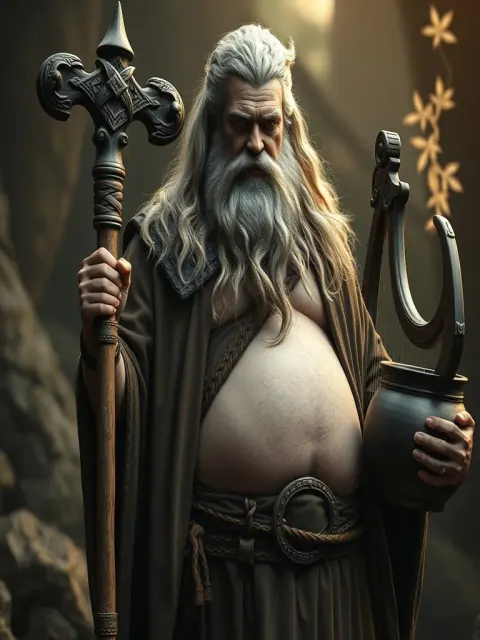
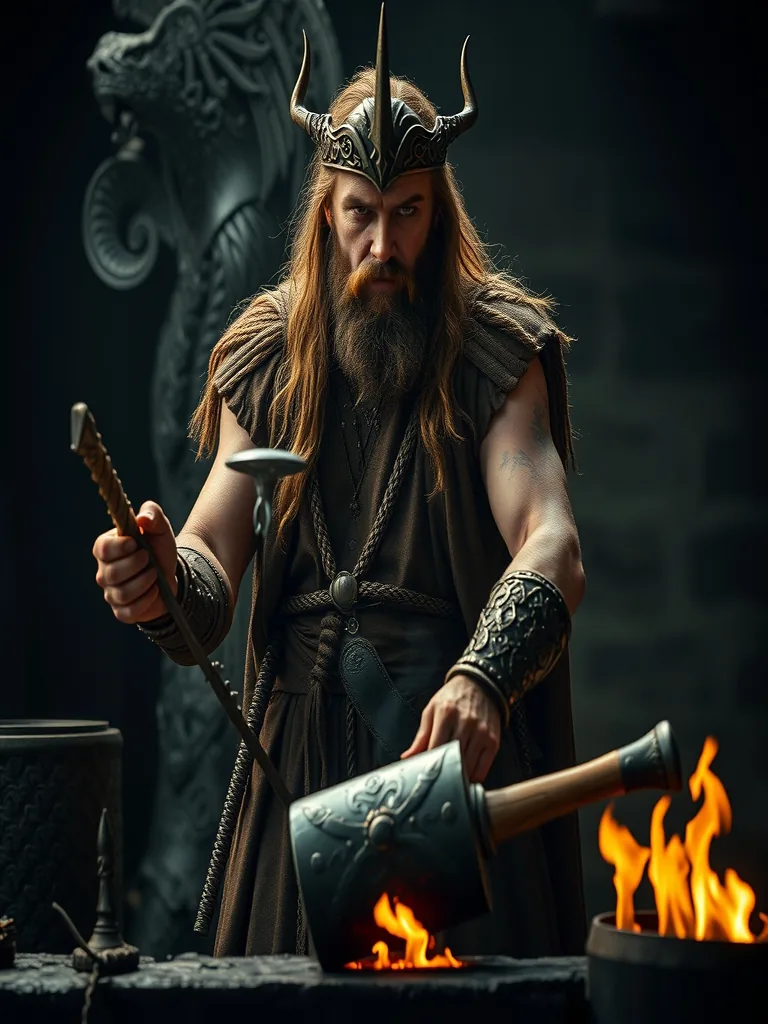
Portrait of Goibniu, Celtic deity
Celtic
Tap or drag
Celtic

Goibniu

The Smith of the Gods

Domain
Forge, Weapons & Hospitality
Alignment
Lawful Good
Element
Fire
Relics of Power
Hammer and Anvil
Speak with Goibniu

The full Codex

5 sections of this entry are open to everyone: the summary, the people, the symbols, the lineage and the sources. The other 9 (Name and epithets, In the ancient sources, The myths, Worship and archaeology, How the god was depicted, What scholars debate, After antiquity, Did you know?, Codex relic) are part of the full Codex: PRO opens the whole study of all 500 deities, and without a subscription you can read one full entry a day, just like in the app.

The People

People
Celtic peoples
Region
Ireland, Britain & Gaul
Period
c. 500 BC – 500 AD

The Celtic gods were worshipped by the peoples of Ireland, Britain, and Gaul, with the aid of the druids, their priestly caste. They venerated them in sacred groves, springs, and wells, without great stone temples. Many of their myths survived in the Irish and Welsh sagas, recorded by medieval monks.

The Celtic wheel of the year turned on four great fire festivals: Samhain, the origin of Halloween, opened winter and contact with the dead; Imbolc, Beltane, and Lughnasadh marked spring, summer, and the harvest. The druids led the rites in sacred groves called nemeton.
At a glance

Goibniu is the primordial master smith, supreme armorer, and divine patron of sacred hospitality belonging to the Tuatha Dé Danann in Celtic Irish mythology. A preeminent member of the sacred triad of technical artisans known as the Trí Dé Dána ('The Three Gods of Craft' or Creative Arts), alongside the divine carpenter Luchtaine and the master metalcaster Credne Cerd, Goibniu embodies the transformative alchemy of fire, total technical dominion over metals, and the armory of the divine race. In the foundational epic Cath Maige Tuired (The Second Battle of Mag Tuired), Goibniu operated the battlefield armory against the invading Fomorians: drawing glowing bars of iron from the hearth with his tongs, he struck exactly three heavy hammer blows upon his anvil, instantly completing spearheads and sword blades of peerless balance that never missed their target nor left a struck adversary alive. When the Fomorian spy Ruadán treacherously stabbed him through the chest with a fresh spear, Goibniu calmly wrenched the burning weapon from his entrails and hurled it back, slaying the traitor on the spot, before plunging into the enchanted waters of the Well of Sláine to emerge wholly restored. Beyond his martial prowess, Goibniu presided over the legendary Fled Goibnenn ('Goibniu's Feast'), providing an enchanted ale of his own brewing that banished aging, disease, and physical decay from all divine guests who partook of it, securing the perpetual youth of the Tuatha Dé Danann within the Otherworldly fairy mounds (Sídhe). Beyond Ireland, his worship is echoed in Wales as the smith god Gofannon fab Dôn and in Roman Gaul through epigraphic dedications to Deus Cobannus or Gobannus, demonstrating the pan-Celtic antiquity of the divine craftsman.

8 min read · Reviewed on September 29, 2026 · How we research

Sacred symbols

The hammer, the tongs, the anvil, the leather apron and the bronze-bound mug of ale

Family

Parents
Esarg mac Neit (genealogical father in the Tuatha Dé Danann tradition)
Siblings
Luchtaine (the divine wright and carpenter of the gods)Credne Cerd (the divine metalworker and brazier)
Goibniu
Genealogy according to Cath Maige Tuired; Acallam na Senórach; Sanas Cormaic; Lebor Gabála Érenn; Inscrição de Deus Cobannos (AE 1980, 643 / Getty Museum)

Sources and further reading

Primary sources

  • Elizabeth A. Gray (critical edition of Harleian manuscript 5280), The Second Battle of Mag Tuired: The Smith Goibniu and the Sacred Arsenal. translation: Irish Texts Society, volume LII, Naas, 1982. read
  • Whitley Stokes & Standish H. O'Grady (ed. and trans.), Acallam na Senórach: The Colloquy of the Ancients (The Feast of Goibnenn and the Beer of Immortality). translation: Williams and Norgate, London, 1892 (digital edition CELT / UCC).
  • Whitley Stokes (ed. and trans.), Sanas Cormaic: Cormac's Glossary (Entries on Néit, Nescoit and the Trí Dé Dána). translation: Calcutta, 1868 (digital edition Internet Archive).
  • Revue Archéologique de l'Est / L'Année Épigraphique, Stone inscription to the god Cobannus at Fontenay-près-Vézelay (AE 1980, 643). translation: Éditions de la Sorbonne / OpenEdition Journals. read

Studies

  • John Arnott MacCulloch (research on the Welsh and Irish pantheon), The Religion of the Ancient Celts (Chapter on Goibniu, the Smiths and the Divine Feast). T. & T. Clark, Edinburgh, 1911. open
  • Proinsias Mac Cana, Celtic Mythology (The Triad of Craftsmen and the Sacred Forge of the Gods). Hamlyn, London, 1970. open
  • Dáithí Ó hÓgáin (biographical dictionary of heroes and gods), The Lore of Ireland: An Encyclopaedia of Myth, Legend and Romance (Entry on Goibniu, the Supernatural Smith). Boydell Press, Woodbridge / Collins Press, Wilton, 2006. open
  • Charles Squire, Celtic Myth and Legend: Poetry and Romance (The Magic Forge of the Tuatha Dé Danann). Gresham Publishing, London, 1905. open

Name and epithets

The Old Irish name Goibniu derives directly from Proto-Celtic *goban- or *gobenn- ('blacksmith', 'craftsman of iron'), originating from an ancient Indo-European verbal root designating working with hammer and anvil.

In the ancient sources

Cath Maige Tuired: The Second Battle of Mag Tuired, 9th–12th centuries CE.. Chronicles the three-blow weapon forge alongside Luchtaine and Credne, the assault by Ruadán, and Goibniu's regeneration in the Well of Sláine.…

The myths

The Miraculous Three-Blow Forge and Battlefield Supply at Mag Tuired. As the fierce host of the Tuatha Dé Danann locked in desperate warfare against the Fomorian invaders on the plains of Moytura, Goibniu provided unmat…

Worship and archaeology

The veneration of Goibniu in archaic Celtic society was centered upon metallurgical guilds, aristocratic weapon sodalities, and sacred forge sanctuaries.

How the god was depicted

In Irish saga descriptions and Celtic material culture, Goibniu is envisioned as a powerfully built, broad-shouldered man in the prime of life, with a thick beard flecked with forge embers and muscular arms capable of w…

What scholars debate

The Technical Triad of the Trí Dé Dána and Societal Function. Scholars of Celtic religion and Indo-European myth (such as Georges Dumézil and Proinsias Mac Cana) analyze the Trí Dé Dána (Goibniu, Luchtaine, and Credne)…

After antiquity

The figure of Goibniu and his Welsh counterpart Gofannon persisted in British folklore as the archetypal Wayland-like magical smith and within the fraternal rituals of early modern metalworking guilds.

Did you know?

The phrase 'The Feast of Goibniu' was so famous in medieval Ireland that individuals exhibiting exceptional health and vigor were proverbially described as having drank from Goibniu's cup.

Codex relic

Hammer and Anvil. With three strikes for each glowing bar of iron, he forged spearheads and blades that never missed their mark.

The rest of this scroll is sealed

The legends, the myth, the cult and relics are part of the full Codex. You can open 1 full entry for free every day; to open all 500 deities with no limits and no ads, subscribe to Codex PRO.

See Codex PROGet it on Google Play

From the same pantheon

View pantheon