5 sections of this entry are open to everyone: the summary, the people, the symbols, the lineage and the sources. The other 9 (Name and epithets, In the ancient sources, The myths, Worship and archaeology, How the god was depicted, What scholars debate, After antiquity, Did you know?, Codex relic) are part of the full Codex: PRO opens the whole study of all 500 deities, and without a subscription you can read one full entry a day, just like in the app.
The Celtic gods were worshipped by the peoples of Ireland, Britain, and Gaul, with the aid of the druids, their priestly caste. They venerated them in sacred groves, springs, and wells, without great stone temples. Many of their myths survived in the Irish and Welsh sagas, recorded by medieval monks.
The Celtic wheel of the year turned on four great fire festivals: Samhain, the origin of Halloween, opened winter and contact with the dead; Imbolc, Beltane, and Lughnasadh marked spring, summer, and the harvest. The druids led the rites in sacred groves called nemeton.
01
At a glance
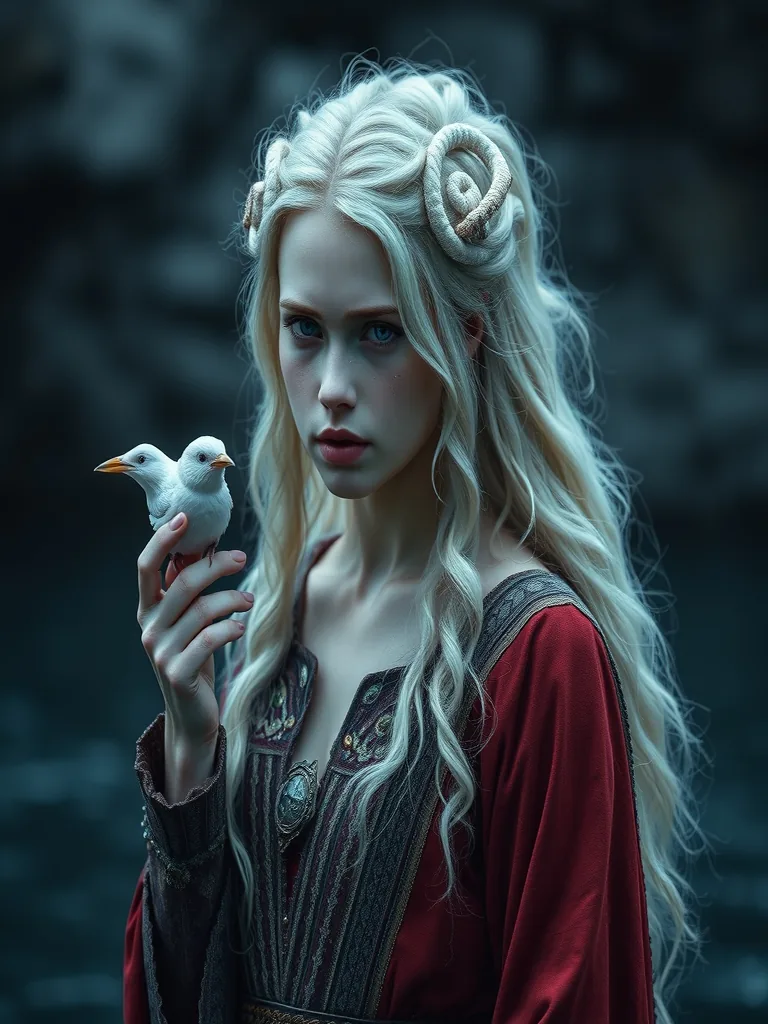
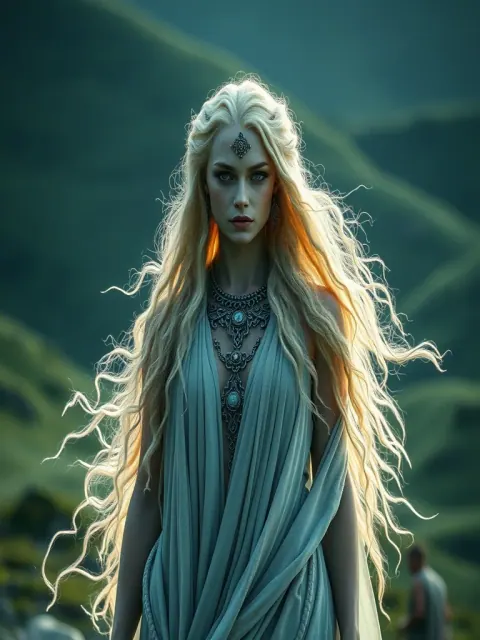
Branwen ferch Llŷr is the deeply moving Brittonic mythological sovereign of noble love, diplomatic reconciliation, and tragic compassion, serving as the central protagonist of the Second Branch of the Mabinogi (Branwen ferch Llŷr). Celebrated in the Welsh Triads as one of the Three Paramount Sovereign Matrons of Britain, Branwen was offered in dynastic marriage to King Matholwch of Ireland to establish an enduring peace between the two island realms. However, her malicious maternal half-brother Efnisien, enraged at not being consulted in the marital negotiations, brutally mutilated the Irish delegation's horses in the royal stables. To atone for the horrific insult, the giant sovereign Brân the Blessed (Bendigeidfran) compensated Matholwch with the magical Cauldron of Rebirth (Pair Dadeni). Upon arriving in Ireland, Branwen bore a royal son named Gwern; yet simmering resentment over the horse outrage erupted among the Irish chieftains, who compelled Matholwch to banish his queen from the royal chamber and condemn her to the palace kitchen, where she was forced to bake bread and endured a daily blow to the ears from the court butcher. In her sorrowful captivity, Branwen reared a starling in the kneading trough, taught it to speak, and bound to its wing a letter detailing her plight, sending the bird across the Irish Sea to her brother Brân. The subsequent rescue expedition led to a catastrophic war between both nations; following the horrific murder of young Gwern, who was seized and thrown into the hall fire by Efnisien, both realms were left utterly devastated. Rescued by the seven surviving British warriors, Branwen landed at Aber Alaw in Anglesey, looked back across the waters toward Ireland and Britain, and broke her heart in pure grief that two fair islands had been destroyed on her account, dying upon the riverbank.
8 min read · Reviewed on September 29, 2026 · How we research
02
Sacred symbols
The tame starling with the message tied to its wing, the four-sided stone burial cist (bedd pedryfal) and the broken heart
03
Family
Parents
Llŷr Llediaith (primordial Brittonic sea divinity)Penarddun (Brittonic queen mother and daughter of Beli Mawr)
Siblings
BBran the BlessedManawydan fab Llŷr (wise brother, master of patience and craftsman)Nisien (benevolent maternal half-brother and court peacemaker)Efnisien (spiteful maternal half-brother whose malice sparked war)
Branwen
Unions
Matholwch (king of Ireland who wedded her at Aberffraw banquet)
Children
Gwern fab Matholwch (heir to both realms, tragically slain in the fire)
Genealogy according to Pedeir Keinc y Mabinogi (Branwen ferch Llŷr); Trioedd Ynys Prydein (Tríades 53 e 80); Escavações de Bedd Branwen (Frances Lynch 1971)
04
Sources and further reading
Primary sources
Lady Charlotte Guest (translation of the medieval manuscripts), The Mabinogi: Branwen the Daughter of Llyr (The Marriage at Aberffraw and the Tragedy of the River Alaw). translation: Complete edition of the Second Branch of the Mabinogion (Internet Sacred Text Archive). read
Lady Charlotte Guest (historical and topographical notes), The Mabinogion: Notes to Branwen the Daughter of Llyr (Bedd Branwen and the Cauldron). translation: Bernard Quaritch, London, 1877 (digital edition Sacred-Texts). read
Frances Lynch (archaeological excavation report), Report on the Re-Excavation of Two Bronze Age Cairns in Anglesey: Bedd Branwen and Treiorwerth. translation: Archaeologia Cambrensis, vol. 120, 1971 (digital record Megalithic Portal NPRN 302327). read
Rachel Bromwich (critical edition of bardic sources), Trioedd Ynys Prydein: The Welsh Triads (Triads 53 and 80 on Branwen ferch Llŷr). translation: University of Wales Press, Cardiff, 1961 (Internet Archive). read
Studies
John Arnott MacCulloch (study of the Celtic pantheon), The Religion of the Ancient Celts (Chapter on the Gods of Llŷr and the Cult of Branwen). T. & T. Clark, Edinburgh, 1911. open
Miranda Aldhouse-Green, Celtic Goddesses: Warriors, Virgins and Mothers (Branwen and Tragic Sovereignty in Britain). British Museum Press, London, 1995. open
Charles Squire, Celtic Myth and Legend, Poetry and Romance (The Royal Court and Branwen's Cauldron). Gresham Publishing Company, London, 1905. open
Proinsias Mac Cana (literary analysis of the Mabinogi), Celtic Mythology (The Tragedy of the Second Branch and the Archetype of Reconciliation). Hamlyn, London, 1970. open
Name and epithets
The Middle Welsh name Branwen is a linguistic compound consisting of the noun bran ('raven', from Proto-Celtic *branos) and the lenited feminine adjective wen (feminine of gwyn, meaning 'white', 'fair', 'pure', 'blessed…
In the ancient sources
Pedeir Keinc y Mabinogi: Branwen ferch Llŷr, 11th–12th centuries CE manuscript compilation.. Primary saga recounting the courtship of Matholwch, the kitchen captivity, the starling messenger, and the death at Aber Alaw.…
The myths
The Nuptials at Aberffraw and the Cruel Insult of Efnisien. The Second Branch of the Mabinogi opens upon the high cliffs of Harlech in Ardudwy, where King Bendigeidfran sat looking out to sea surrounded by his royal nob…
Worship and archaeology
The veneration of Branwen expressed archaic Celtic ideals of maternal sovereignty, aristocratic peace-weaving (freothowebbe), and compassionate self-sacrifice.
How the god was depicted
In Welsh art and literature, Branwen is portrayed as a majestic queen of tragic elegance, with long dark or chestnut hair framing an immaculate white complexion.
What scholars debate
Branwen as 'Peace-Weaver' and the Dilemma of Dynastic Marriage. Scholars of medieval Celtic and Germanic literature (such as Proinsias Mac Cana and Patrick K.
After antiquity
The tragedy of Branwen became a cornerstone of Welsh national literature and cultural identity. 19th-century poets of the Welsh Revival composed poignant elegies celebrating her sorrowful dignity.
Did you know?
In 1813, local farmers digging near the River Alaw discovered a Bronze Age collared urn containing cremated human remains, exactly where medieval tradition had situated Bedd Branwen.
Codex relic
The Messenger Starling. The tame starling she taught to speak, which carried to her brother Brân a message tied to its wing telling of her sorrows.
The rest of this scroll is sealed
The legends, the myth, the cult and relics are part of the full Codex. You can open 1 full entry for free every day; to open all 500 deities with no limits and no ads, subscribe to Codex PRO.