5 sections of this entry are open to everyone: the summary, the people, the symbols, the lineage and the sources. The other 9 (Name and epithets, In the ancient sources, The myths, Worship and archaeology, How the god was depicted, What scholars debate, After antiquity, Did you know?, Codex relic) are part of the full Codex: PRO opens the whole study of all 500 deities, and without a subscription you can read one full entry a day, just like in the app.
The Celtic gods were worshipped by the peoples of Ireland, Britain, and Gaul, with the aid of the druids, their priestly caste. They venerated them in sacred groves, springs, and wells, without great stone temples. Many of their myths survived in the Irish and Welsh sagas, recorded by medieval monks.
The Celtic wheel of the year turned on four great fire festivals: Samhain, the origin of Halloween, opened winter and contact with the dead; Imbolc, Beltane, and Lughnasadh marked spring, summer, and the harvest. The druids led the rites in sacred groves called nemeton.
01
At a glance
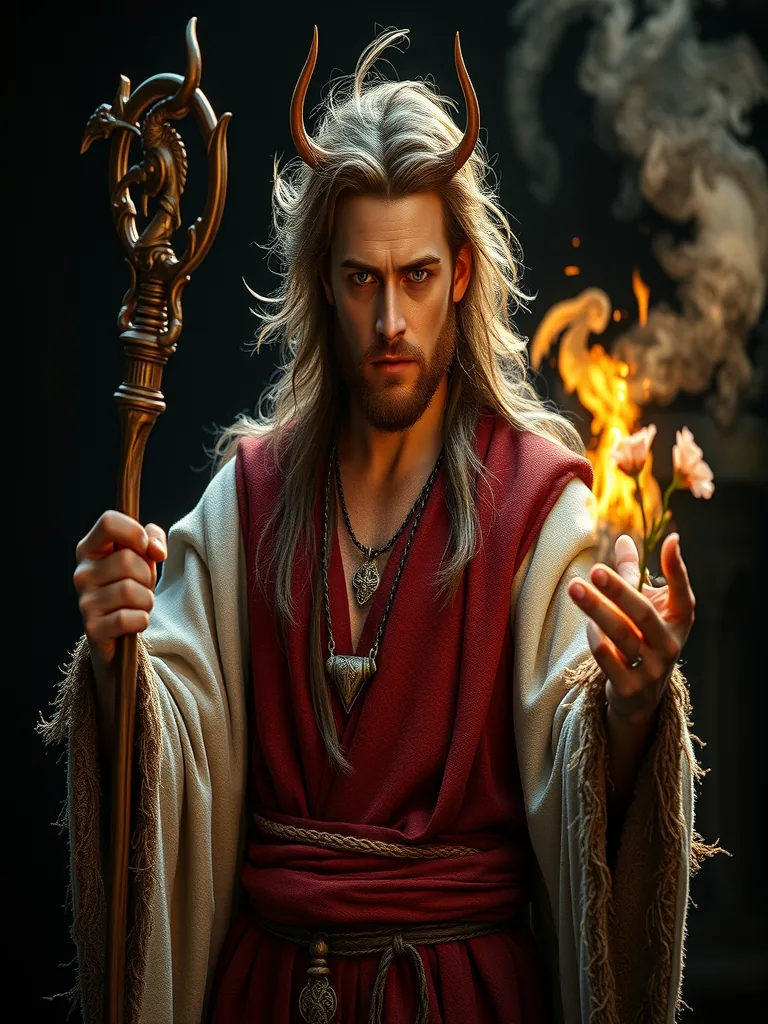
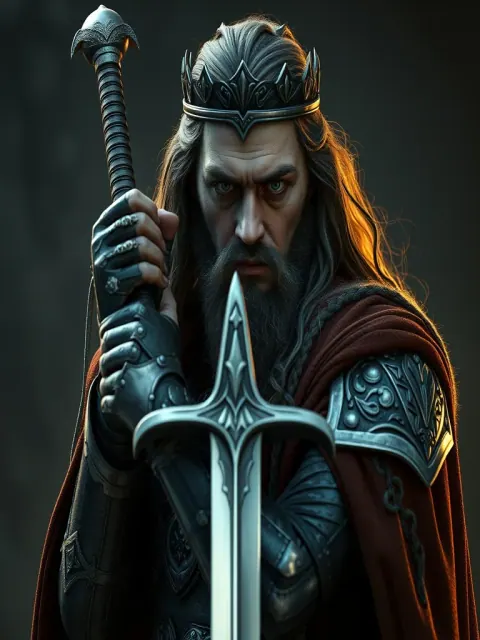
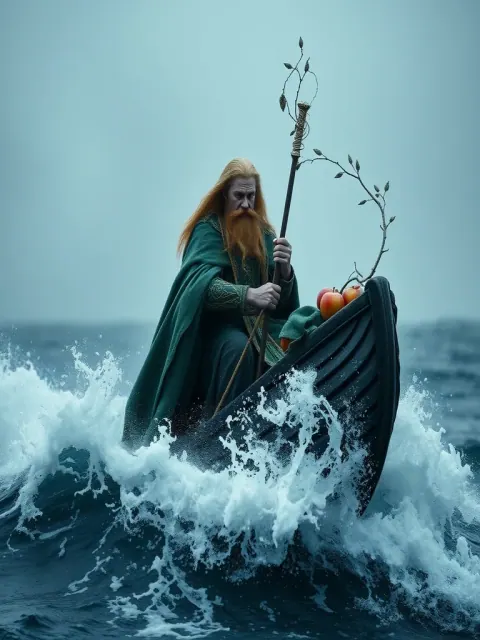
Gwydion fab Dôn is the most complex, formidable, and resourceful magician of medieval Welsh mythology, celebrated throughout the Fourth Branch of the Mabinogi (Math fab Mathonwy) as a master of shapeshifting, bardic verse, cosmic illusion (lledrith), and battlefield sorcery. Nephew and foremost student of the royal enchanter Math fab Mathonwy, Gwydion embodies the transformative vitality of Brittonic magical traditions. Driven by his brother Gilfaethwy's forbidden obsession with Goewin, Gwydion orchestrated an audacious scheme: traveling to Dyfed, he deceived Prince Pryderi by fashioning golden shields, hounds, and horses out of toadstools and forest leaves that dissolved after twenty-four hours, trading them for the coveted otherworldly swine of Annwn. This theft ignited a catastrophic war between Gwynedd and southern Wales, culminating in single combat at Maen Tyriawg, where Gwydion slew Pryderi with superior sorcery. Punished by King Math with three consecutive years of compulsory animal metamorphoses (as stag, wild sow, and wolf), Gwydion returned to human shape to serve as the divine foster-father and protector of young Lleu Llaw Gyffes. Through brilliant shapeshifting disguises, he systematically broke the three binding destinies (tynghedau) placed on the boy by his sister Arianrhod, tricking her into naming and arming the youth, and ultimately co-crafting Blodeuwedd from wild blossoms. In the legendary poem Cad Goddeu (The Battle of the Trees) from the Book of Taliesin, Gwydion deployed botanical incantations to animate entire forests into marching soldiers, securing victory by discovering his foe's secret name.
7 min read · Reviewed on September 29, 2026 · How we research
02
Sacred symbols
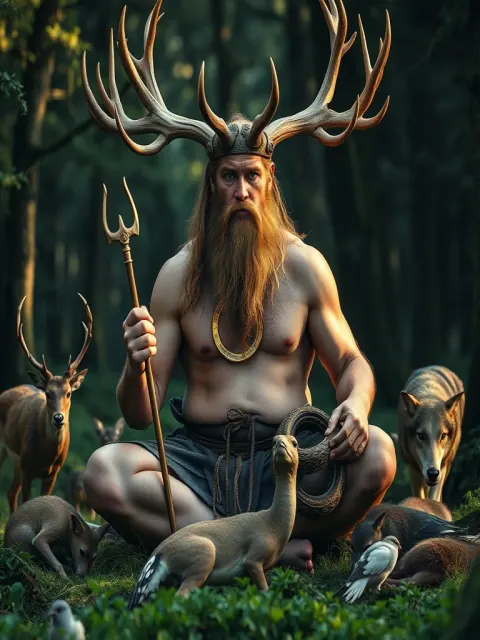
The wand of oak or ash, the pouch of hazelnuts, the stag, the boar, the wolf and the marching trees
03
Family
Parents
Dôn (great primordial matriarch and ancestral goddess of Gwynedd)Beli Mawr (supreme ancestral sovereign in bardic genealogies)
Siblings
AArianrhodGilfaethwy (brother and accomplice in the plot against Goewin)Amaethon (brother and master of magical agriculture)Gofannon (brother and patron of smiths and craftsmen)
Gwydion
Unions
Arianrhod (sister and mythic consort in the conception of Lleu and Dylan)Gilfaethwy (partner during the punitive bestial transformations of Math)
Children
Lleu Llaw Gyffes (foster son and solar hero of northern Wales)Dylan eil Ton (marine son who plunged into the ocean depths)Hyddwn (offspring born of the stag transformation)Hychddwn (offspring born of the wild swine transformation)Bleiddwn (offspring born of the wolf transformation)
Genealogy according to Pedeir Keinc y Mabinogi (Math fab Mathonwy); Llyfr Taliesin (Cad Goddeu); Trioedd Ynys Prydein (Tríades 28 e 85)
04
Sources and further reading
Primary sources
Mythological compilation by Padraic Colum & Lady Charlotte Guest, The Mabinogi: Math the Son of Mathonwy (Narrative of the Magic Deeds of Gwydion). translation: Anthology chapter published in Orpheus: Myths of the World (Sacred-Texts). read
Lady Charlotte Guest (critical apparatus and traditional notes), The Mabinogion: Notes to Math the Son of Mathonwy (Gwydion the Son of Don). translation: Printed edition, London, by Bernard Quaritch (Sacred-Texts record). read
William Forbes Skene (poetic translation of the codices), The Four Ancient Books of Wales (The Song of Cad Goddeu from the Book of Taliesin). translation: Historical volume published by Edmonston and Douglas (Internet Archive). read
William John Gruffydd (monographic study and medieval Welsh text), Critical Monograph on Math vab Mathonwy and the Fourth Branch of the Mabinogi. translation: Academic monograph of the University of Wales, Cardiff (Internet Archive). read
Studies
John Rhys (classic study of Celtic religion), Lectures on the Origin and Growth of Religion as Illustrated by Celtic Heathendom. Williams and Norgate, London, 1888. open
John Arnott MacCulloch, The Religion of the Ancient Celts (Treatise on the British Pantheon and the Children of Dôn). T. & T. Clark, Edinburgh, 1911. open
Charles Squire, Celtic Myth and Legend, Poetry and Romance (The War of Enchantments and the House of Dôn). Gresham Publishing Company, London, 1905. open
Proinsias Mac Cana (studies of British mythology), Celtic Mythology (The Tradition of Gwydion and the Magical Creation of Blodeuwedd). Hamlyn, London, 1970. open
Name and epithets
The Middle Welsh name Gwydion (sometimes written Gwyddien in early poetry) possesses rich linguistic associations with wisdom, visionary knowledge, and seeing.
In the ancient sources
Pedeir Keinc y Mabinogi: Math fab Mathonwy, 11th–12th centuries CE compilation of earlier Brittonic saga tradition..
The myths
The Swine of Annwn and the Fatal Duel with Pryderi. The Fourth Branch of the Mabinogi recounts that Gwydion's younger brother Gilfaethwy conceived a burning, unrequited passion for Goewin, the maiden virgin whose lap su…
Worship and archaeology
Gwydion was revered not through bloody sacrificial altars but as the divine patron archetype of bards, inspired visionary poets (awenyddion), druidic scholars, and tactical warlords of Britain.
How the god was depicted
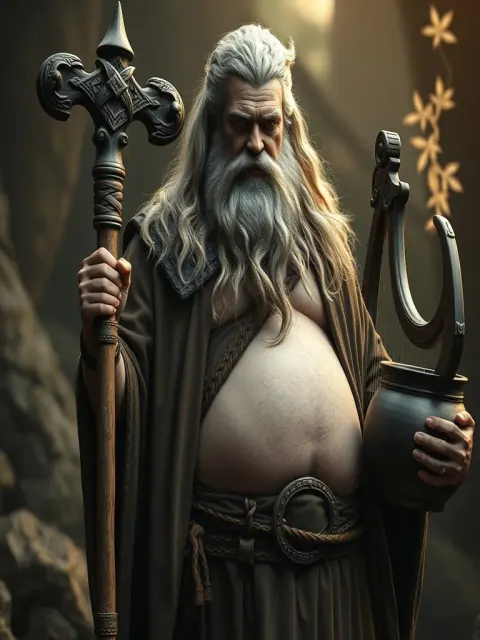
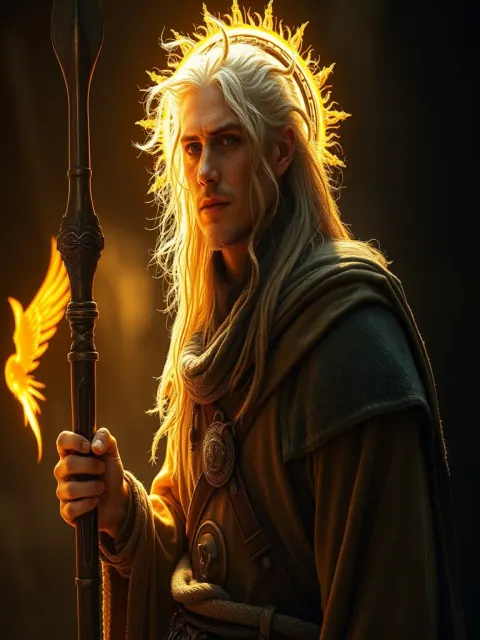
In Welsh bardic imagery, Gwydion is envisioned as a middle-aged sorcerer with piercing hazel eyes and an aura of crackling intellect, wearing the flowing hooded mantle of the master bards.
What scholars debate
Gwydion as Celtic Hermes or Odin: The Shamanic Trickster. Comparative mythologists (such as John Rhys, Georges Dumézil, and Proinsias Mac Cana) note striking parallels between Gwydion, the Irish Lug, and the Norse Odin.…
After antiquity
Gwydion achieved profound resonance during the 19th-century Welsh Cultural Revival and modern world fantasy literature. Welsh-language poets celebrated his mastery of Cad Goddeu as a metaphor for cultural survival.
Did you know?
The Milky Way galaxy was known in the folk astronomy of North Wales as 'Caer Gwydion' (The Fortress of Gwydion), visualized as a path of sparkling stardust traced by the magician across heaven.
Codex relic
Oak Wand. The slender wand of oak or ash that iconography gives him, master of illusions and enchantments.
The rest of this scroll is sealed
The legends, the myth, the cult and relics are part of the full Codex. You can open 1 full entry for free every day; to open all 500 deities with no limits and no ads, subscribe to Codex PRO.