Skip to content
CodexMythologia
Back to the Codex
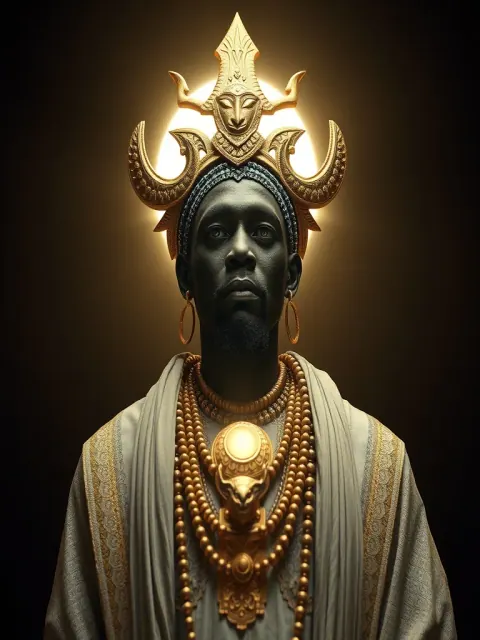
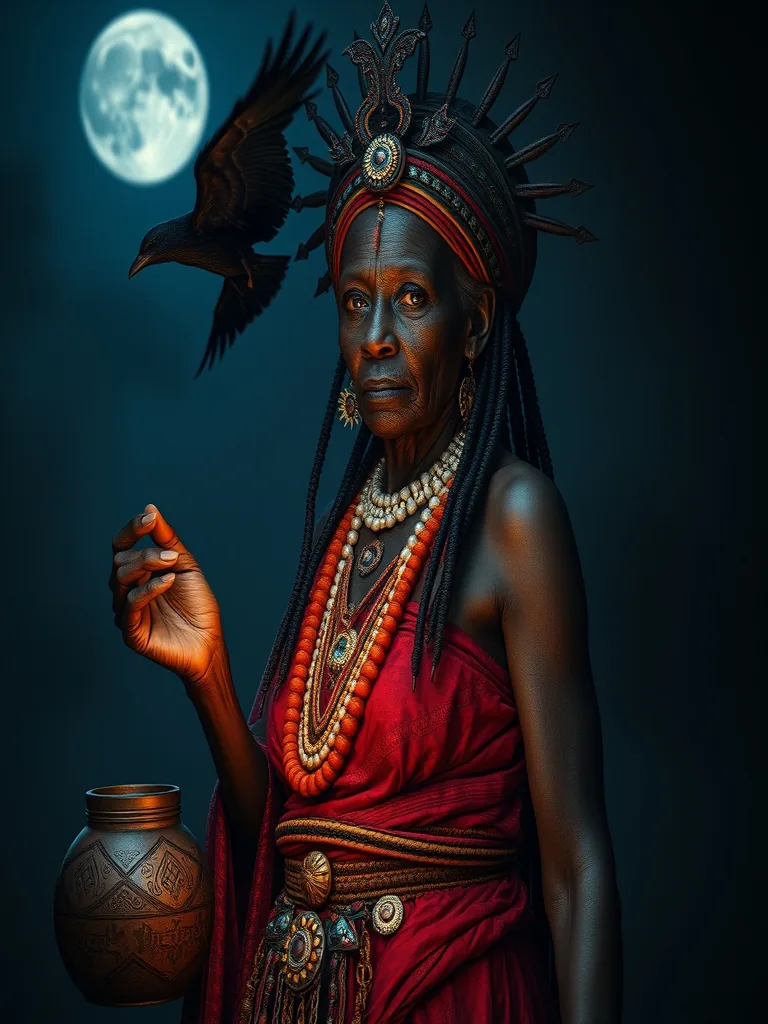
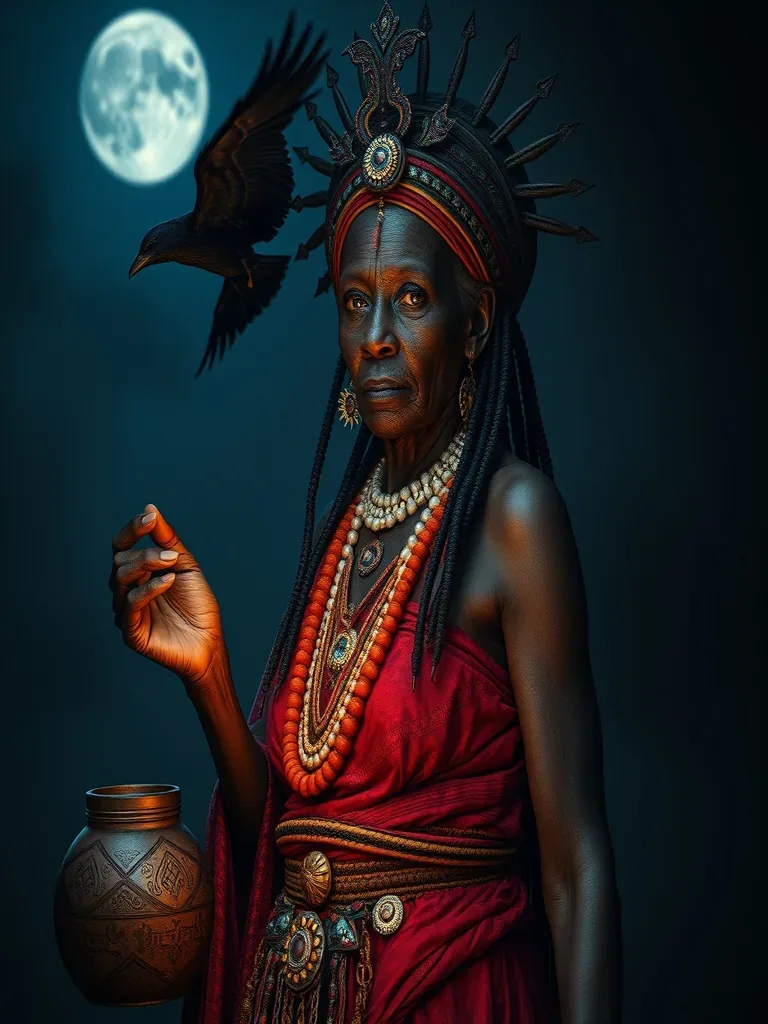
Portrait of Iyami Oshoronga, Yoruba deity
Yoruba
Tap or drag
Yoruba

Iyami Oshoronga

The Ancestral Mother of Female Power

Domain
Female Power, Mystery & Ancestry
Alignment
True Neutral
Element
Darkness
Relics of Power
Gourd of the Birds
Speak with Iyami Oshoronga

The full Codex

5 sections of this entry are open to everyone: the summary, the people, the symbols, the lineage and the sources. The other 9 (Name and epithets, In the ancient sources, The myths, Worship and archaeology, How the god was depicted, What scholars debate, After antiquity, Did you know?, Codex relic) are part of the full Codex: PRO opens the whole study of all 500 deities, and without a subscription you can read one full entry a day, just like in the app.

The People

People
Yoruba people
Region
West Africa & the diaspora
Period
c. 1000 AD – present

The orixás are worshipped by the Yoruba people of present-day Nigeria and Benin, with Ile-Ife as their spiritual center. Through the slave trade, their faith crossed the Atlantic and flourished in the Americas as Candomblé, Santería, and Vodou. It is today one of the most living and widespread African religious traditions in the world.

The Osun festival in Osogbo, Nigeria, draws thousands to the sacred grove of the Osun river, a UNESCO heritage site. The Ifá oracle guides decisions through the odus, and in Brazil the Candomblé terreiros honor each orixá with their own drums, dances, colors, and foods.

At a glance

Iyami Oxorongá (in the scholarly tonal spelling Ìyámi Òṣòròngà, also revered under the euphemistic titles Ìyá Nlá, “The Great Mother”, Àwọn Ìyá Wa, “Our Mothers”, or Ẹlẹ́yẹ, “The Owners of the Birds”) is the collective and transcendent personification of ancestral feminine power, of the fertility of gestational blood, and of infallible cosmic justice in Yoruba metaphysics. Far from being a conventional deity subject to trance or spirit mediumship in the terreiros, Iyami embodies the primordial matrix of biological and spiritual creation, without whose consent no harvest flourishes, no male orisha manifests his àṣẹ, and no human lineage manages to perpetuate itself. In the foundational narrative of the Odu Òsá Méjì recorded by Professor Wande Abimbola and by Pierre Verger, when the orishas came down to earth and tried to organize society by excluding female leadership, Iyami withdrew fertility from the world, drying up springs, rendering wombs barren and rotting seeds, until the gods acknowledged her irrevocable sovereignty. In West Africa and in Ketu and Jeje Candomblé in Brazil, the cult of Iyami is surrounded by the deepest dread and sacred respect, and she is appeased through discreet nocturnal rites such as the propitiatory ìpèsè banquet and the solemn Gèlèdé mask festivals.

7 min read · Reviewed on September 30, 2026 · How we research

Sacred symbols

The night bird, the gourd, the menstrual blood and the night

Family

Parents
Olodumare (Olorun, the Supreme Creator who bestowed upon the Mothers the bird of mystic power and the primordial calabash)
Iyami Oshoronga
Children
The sacred nocturnal birds (Eleye) and humanity brought forth through the matricial power of the womb
Genealogy according to Corpus Canônico de Ifá (Odu Òsá Méjì e Òdí Méjì); Pierre Fatumbi Verger (1965, 1995); Juana Elbein dos Santos (1976); Henry John Drewal & Margaret Thompson Drewal (1983); Babatunde Lawal (1996); Wande Abimbola (1976)

Sources and further reading

Primary sources

  • Pierre Fatumbi Verger, Grandeur et Décadence du Culte de Ìyámi Òṣòròngà. translation: Journal de la Société des Africanistes, vol. 35, no. 1 (1965), pp. 141–243.
  • Wande Abimbola, An Exposition of Ifá Literary Corpus. translation: Ibadan: Oxford University Press (1976), chapters on Òsá Méjì and myths of the Mothers.
  • Pierre Fatumbi Verger, Ewé: O Uso das Plantas na Sociedade Iorubá. translation: São Paulo: Companhia das Letras (1995), liturgy and botanical formulas for the Ẹlẹ́yẹ.

Studies

  • Juana Elbein dos Santos, Os Nàgô e a Morte: Pàdà, Àṣẹ e Èjè no Candomblé. Petrópolis: Editora Vozes (1976), the feminine principle and the blood of Iyami, 1976.
  • Henry John Drewal, Gelede: Art and Female Power among the Yoruba. Bloomington: Indiana University Press (1983), study of art and pacifying masks, 1983.
  • Babatunde Lawal, The Gèlèdé Spectacle: Art, Gender, and Social Harmony in an African Culture. Seattle: University of Washington Press (1996), analysis of society and festivals, 1996.
  • Reginaldo Prandi, Mitologia dos Orixás: Contos Canônicos. São Paulo: Companhia das Letras (2001), itans of Iyami Oxorongá, 2001.

Name and epithets

The sacred theonym is composed of the filial invocation Ìyá mi (“My Mother” or “Our Mothers”) joined to the archaic onomatopoeic name Òṣòròngà, which reproduces in the oral tradition the harsh, shrill echo of the cry of…

In the ancient sources

Canonical Corpus of Ifá (Odu Òsá Méjì, Òdí Méjì and Òṣé Òtúrá), Oral tradition of the Babaláwos of West Africa..

The myths

The Granting of the Sacred Gourd Igbá Àjẹ́ and the Descent to Earth. As preserved in the Odu Òsá Méjì, when Olodumare determined the settlement of the earthly world, he summoned the deities to entrust them with the tool…

Worship and archaeology

The cult of Iyami Oxorongá is characterized by the absence of possession in trance and of head-making (feitura de cabeça), since her colossal axé would destroy the psychophysical balance of any mortal individual.

How the god was depicted

Iyami’s sacred visuality is shaped in the famous wooden masks of the Gèlèdé festival and in the spherical containers of gourd or ceramic.

What scholars debate

Maternal Power versus Patriarchal Interpretations of Witchcraft. Anthropologists such as Babatunde Lawal and Margaret Drewal criticize the reductive translation of the term àjẹ́ as “witch” or “sorceress” in colonial Chr…

After antiquity

The symbolism of Iyami Oxorongá and the aesthetics of the Gèlèdé masks were inscribed by UNESCO on the List of the Intangible Cultural Heritage of Humanity, celebrated worldwide as a monument to the art and dignity of A…

Did you know?

Yoruba tradition stipulates that the name of Iyami must never be uttered carelessly or aloud during the day; upon hearing allusions to her power, those present usually touch the ground with the tips of their fingers and…

Codex relic

Gourd of the Birds. The sacred gourd that holds the bird of ancestral power, source of the mystery and strength of the mothers.

The rest of this scroll is sealed

The legends, the myth, the cult and relics are part of the full Codex. You can open 1 full entry for free every day; to open all 500 deities with no limits and no ads, subscribe to Codex PRO.

See Codex PROGet it on Google Play

From the same pantheon

View pantheon