Skip to content
CodexMythologia
Back to the Codex
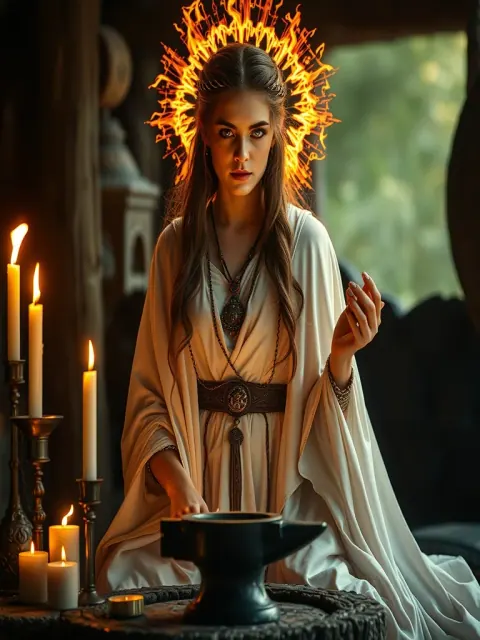
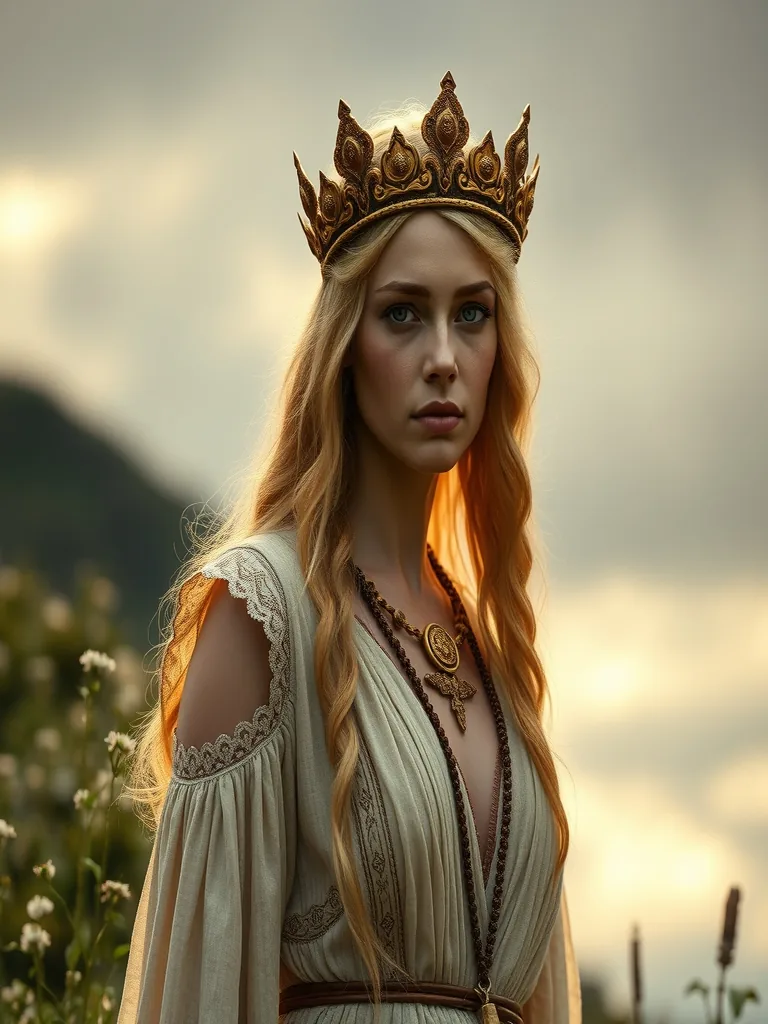
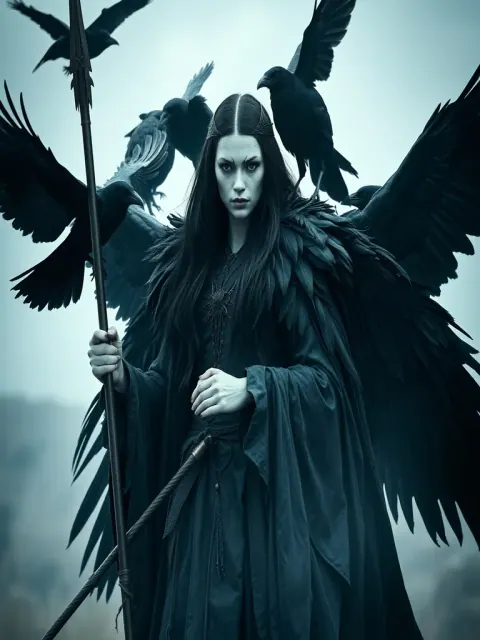
Portrait of Áine, Celtic deity
Celtic
Tap or drag
Celtic

Áine

Lady of Cnoc Áine

Domain
Summer Sun, Fertility & Sovereignty
Alignment
True Neutral
Element
Light
Relics of Power
Hay Torch (Cliar)
Speak with Áine

The full Codex

5 sections of this entry are open to everyone: the summary, the people, the symbols, the lineage and the sources. The other 9 (Name and epithets, In the ancient sources, The myths, Worship and archaeology, How the god was depicted, What scholars debate, After antiquity, Did you know?, Codex relic) are part of the full Codex: PRO opens the whole study of all 500 deities, and without a subscription you can read one full entry a day, just like in the app.

The People

People
Celtic peoples
Region
Ireland, Britain & Gaul
Period
c. 500 BC – 500 AD

The Celtic gods were worshipped by the peoples of Ireland, Britain, and Gaul, with the aid of the druids, their priestly caste. They venerated them in sacred groves, springs, and wells, without great stone temples. Many of their myths survived in the Irish and Welsh sagas, recorded by medieval monks.

The Celtic wheel of the year turned on four great fire festivals: Samhain, the origin of Halloween, opened winter and contact with the dead; Imbolc, Beltane, and Lughnasadh marked spring, summer, and the harvest. The druids led the rites in sacred groves called nemeton.
At a glance

Áine is a divine and Otherworld figure associated with Cnoc Áine and the region of Munster. The episode in Cath Maige Mucrama (§§3–4) links her with Ailill Aulom and Eogabul’s síd; in its final section she accuses the king of assault and of killing her father, while the wound to his ear explains the name Ailill Ó-lomm (UCC, §§3–4). David Fitzgerald records local traditions about Áine in Revue Celtique IV (1880, pp. 189–190). His account describes the community custom of St John’s Night: Quinlan arranged people in ranks, carrying burning bundles of straw and hay (cliar) around the summit, through planted fields, and among livestock. People associated the practice with good fortune for crops and animals. Fitzgerald says visitors noted the moon’s position to find their way back in the dark. He also tells of a night of mourning when a procession appeared without fires lit by living people, with Áine leading it. In another story, she gives a ring to several young women, who use it to see the invisible crowd gathered on the hill.

8 min read · Reviewed on September 29, 2026 · How we research

Sacred symbols

The hay torch, ears of wheat, the hill of Cnoc Áine and the red mare

Family

Parents
Eogabal (Otherworld king of the Síd of Cnoc Áine and son of Durgabal)
Siblings
Fer Fí (brother of Áine, renowned harper and magical craftsman of the Síd)Aillén (brother of Áine associated with the heights of Munster)
Áine
Unions
Ailill Aulom (king of Munster who assaulted her and had his ear severed)Gerald FitzGerald, 3rd Earl of Desmond (legendary mortal lover in Lough Gur folklore)
Children
Gearóid Iarla (the legendary Enchanted Earl who rides across the lake every seven years)
Genealogy according to Cath Maige Mucrama; The Metrical Dindshenchas; Annals of the Four Masters; Revue Celtique 4 (David Fitzgerald); Gods and Fighting Men (Lady Gregory)

Sources and further reading

Primary sources

  • Máirín O'Daly (ed. and trans.), Cath Maige Mucrama: The Battle of Mag Mucrama (The Duel of Áine and Ailill Aulom). translation: Irish Texts Society, volume L, Dublin, 1975 (Irish Sagas Online / UCC). read
  • Edward Gwynn (revision and critical translation of the topographical verses), The Metrical Dindshenchas: The Sanctuary of Cnoc Áine and the Sovereignty of Munster. translation: Dublin Institute for Advanced Studies, Dublin, 1906 (digital edition CELT / UCC). read
  • David Fitzgerald, Popular Tales of Ireland: Áine and the Hill of Knockainey (Revue Celtique, vol. 4). translation: F. Vieweg, Paris, Revue Celtique IV, 1879–1880, pp. 189–190 (digital facsimile).. read
  • Lady Augusta Gregory, Gods and Fighting Men (The Fairy Legacy of Áine and the Gods of Munster). translation: John Murray, London, 1904 (digital edition Sacred-Texts). read

Studies

  • John Arnott MacCulloch (research on the Celtic pantheon), The Religion of the Ancient Celts (Chapter on Local Goddesses, Áine and the Solstice Rites). T. & T. Clark, Edinburgh, 1911. open
  • Miranda Aldhouse-Green, Celtic Goddesses: Warriors, Virgins and Mothers (Áine and Female Sovereignty in Ireland). British Museum Press, London, 1995. open
  • Proinsias Mac Cana, Celtic Mythology (Solar Cults and the Goddesses of Munster). Hamlyn, London, 1970. open
  • Dáithí Ó hÓgáin (mythological encyclopedia), Myths and Legends of the Irish Tradition (Detailed Entry on Áine of Knockainey). Prentice Hall Press, New York, 1991. open

Name and epithets

The Old Irish name Áine derives directly from the archaic noun áine, signifying 'radiance', 'brightness', 'solar splendor', 'delight', or 'renown' (rooted in Proto-Celtic *ān- and Proto-Indo-European *h₂eh₁n-, relating…

In the ancient sources

Cath Maige Mucrama (The Battle of the Plain of Mucrama), 11th–12th centuries CE compilation of 8th-century saga material..

The myths

Áine's Retribution and the Fall of King Ailill Aulom. Cath Maige Mucrama says Ailill Aulom went to pasture his horses at Áne Chlíach on Samhain night.

Worship and archaeology

David Fitzgerald records processions of cliar torches at Cnoc Áine on St John’s Night, passing around the hill and through fields and livestock.

How the god was depicted

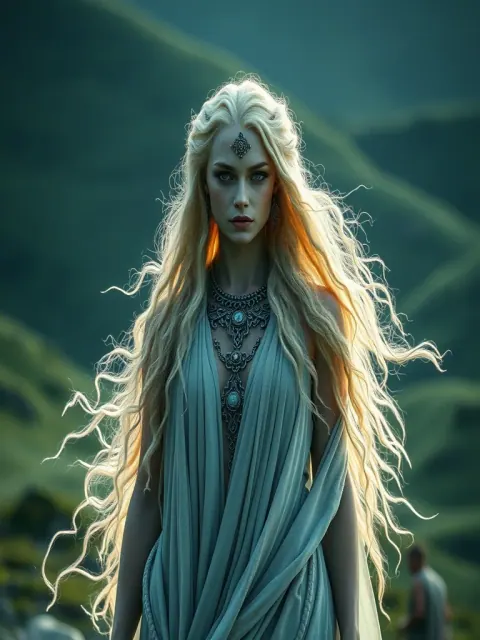
In Irish folklore and local iconography, Áine is envisioned as a radiant maiden of sunlit beauty, with long flowing hair the color of ripe corn and eyes bright as midsummer skies.

What scholars debate

Inviolable Sovereignty and Royal Blemish in Cath Maige Mucrama. Celtic scholars (such as Máirín O'Daly and Kim McCone) interpret Áine's biting off of King Ailill Aulom's ear as an allegorical legal assertion of sovereig…

After antiquity

Áine was a potent symbol of Gaelic independence in 17th- and 18th-century Munster poetry, invoked by bards such as Egan O'Rahilly as an allegory of Ireland's sovereign soul awaiting liberation.

Did you know?

The custom of lighting cliar hay torches atop Cnoc Áine on St. John's Eve and running them through the fields survived until 1879, when folklorist David Fitzgerald documented the ceremony directly from elderly participa…

Codex relic

Hay Torch (Cliar). The lit hay torches (cliar) carried through the fields on the night of the summer solstice, in the rite recorded at Cnoc Áine.

The rest of this scroll is sealed

The legends, the myth, the cult and relics are part of the full Codex. You can open 1 full entry for free every day; to open all 500 deities with no limits and no ads, subscribe to Codex PRO.

See Codex PROGet it on Google Play

From the same pantheon

View pantheon