Skip to content
CodexMythologia
Back to the Codex
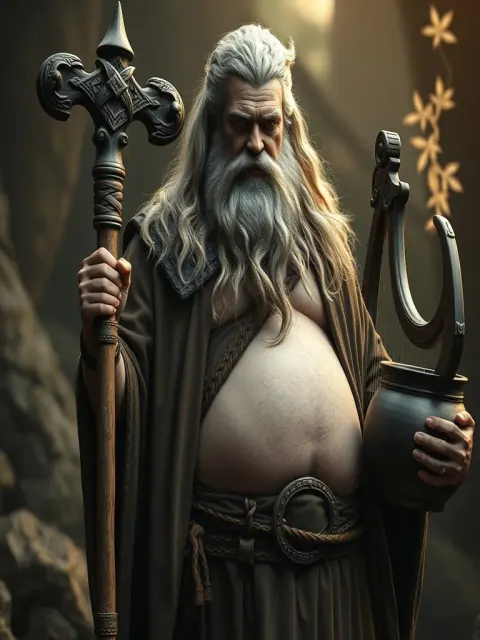
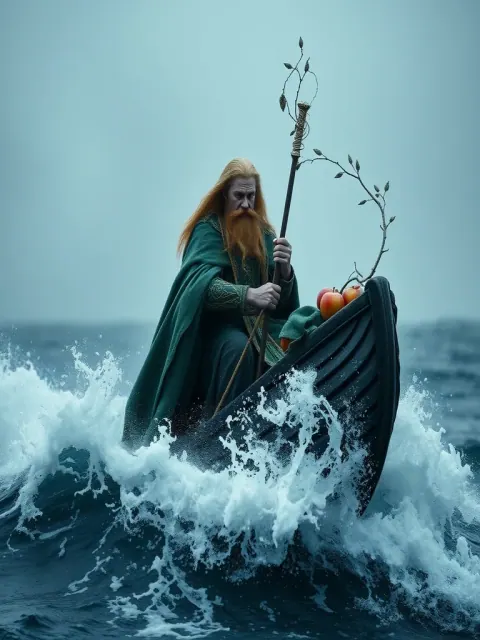
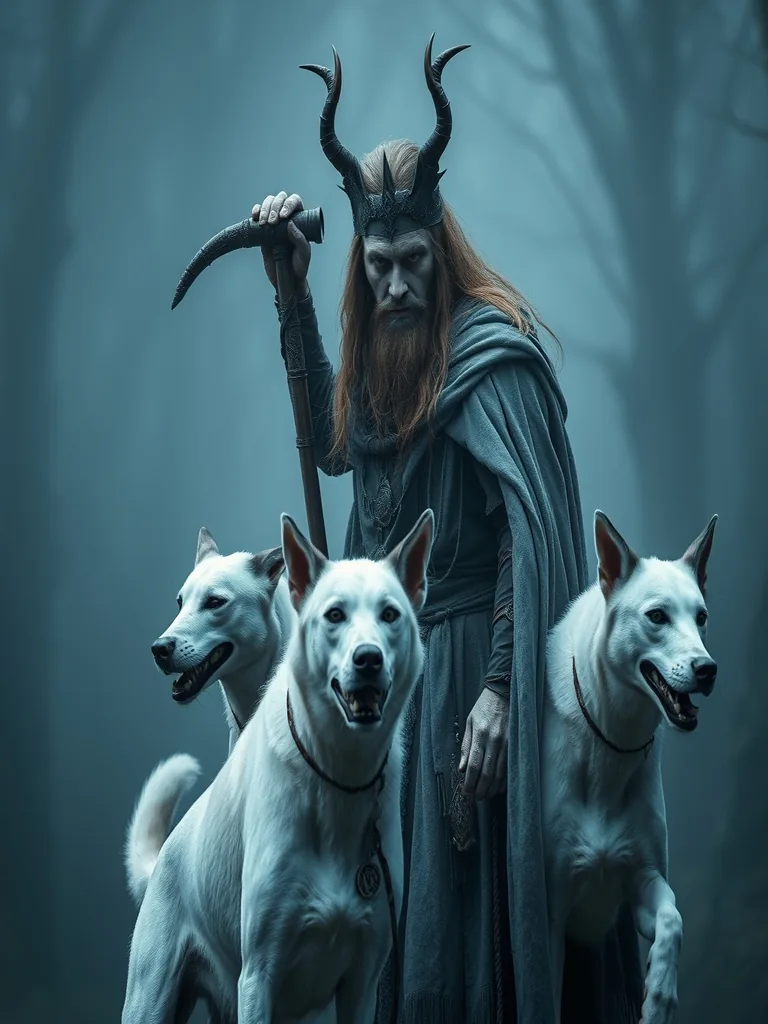
Portrait of Arawn, Celtic deity
Celtic
Tap or drag
Celtic

Arawn

King of Annwn

Domain
The Otherworld, the Hunt & the Given Word
Alignment
True Neutral
Element
Darkness
Relics of Power
Cŵn Annwn (Hounds of Annwn)
Speak with Arawn

The full Codex

5 sections of this entry are open to everyone: the summary, the people, the symbols, the lineage and the sources. The other 9 (Name and epithets, In the ancient sources, The myths, Worship and archaeology, How the god was depicted, What scholars debate, After antiquity, Did you know?, Codex relic) are part of the full Codex: PRO opens the whole study of all 500 deities, and without a subscription you can read one full entry a day, just like in the app.

The People

People
Celtic peoples
Region
Ireland, Britain & Gaul
Period
c. 500 BC – 500 AD

The Celtic gods were worshipped by the peoples of Ireland, Britain, and Gaul, with the aid of the druids, their priestly caste. They venerated them in sacred groves, springs, and wells, without great stone temples. Many of their myths survived in the Irish and Welsh sagas, recorded by medieval monks.

The Celtic wheel of the year turned on four great fire festivals: Samhain, the origin of Halloween, opened winter and contact with the dead; Imbolc, Beltane, and Lughnasadh marked spring, summer, and the harvest. The druids led the rites in sacred groves called nemeton.
At a glance

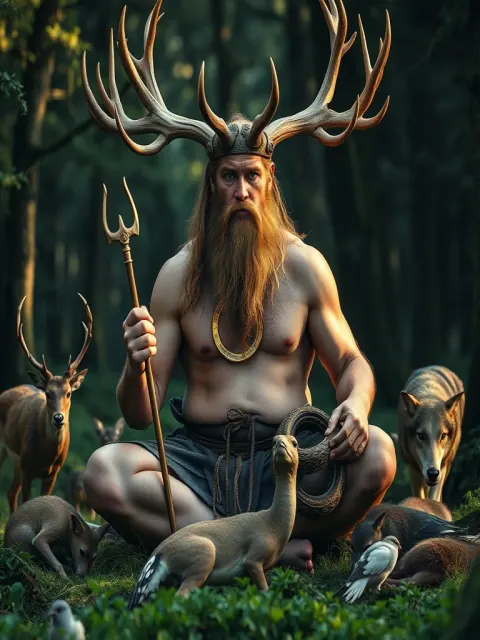
Arawn is the noble and equitable king of Annwn (the Otherworld in Welsh mythology and Brittonic Celtic tradition), prominently featured in the First Branch of the Mabinogi (Pwyll Pendeuic Dyuet). Far from being a Christianized realm of infernal torment, Annwn was envisioned as an enchanting Otherworldly paradise of perpetual feasts, radiant halls, magical wisdom, and boundless abundance. While hunting through the dense glades of Glyn Cuch, Arawn encountered Prince Pwyll of Dyfed, whose hounds had chased off Arawn's supernatural pack as they felled a royal stag. Rebuking the mortal lord for his discourtesy and breach of etiquette (ansyberwyt), Arawn offered an honorable covenant of friendship and reparation: the two sovereigns would exchange appearances, bodies, and realms for a year and a day. During this period, Pwyll would rule Annwn and champion Arawn's cause in single combat at the ford against his rival king Hafgan, slaying him with a single stroke; in turn, Arawn governed the seven cantrefs of Dyfed with peerless justice. At the year's end, Arawn discovered that Pwyll had maintained absolute chastity in the matrimonial bed shared with the Otherworld queen, forging an unbreakable bond of sacred fellowship. Arawn also appears in the archaic Welsh poem Cad Goddeu (The Battle of the Trees) in the Book of Taliesin, defending the enchanted creatures of Annwn against the children of Dôn.

7 min read · Reviewed on September 29, 2026 · How we research

Sacred symbols

The Cŵn Annwn pack, the hunting horn, the grey horse and the cup of mead

Family

Parents
Unrecorded in the branches of the Mabinogi (primordial sovereign of Annwn)
Arawn
Unions
The Queen of Annwn (Otherworld queen of Wales and consort of Arawn)
Genealogy according to Pedeir Keinc y Mabinogi (Pwyll Pendeuic Dyuet); Llyfr Taliesin (Cad Goddeu); Trioedd Ynys Prydein; Sanas Cormaic

Sources and further reading

Primary sources

  • Lady Charlotte Guest & Padraic Colum (anthology of mythological narratives), The Mabinogi: Pwyll, Prince of Dyfed and His Visit to Annwfn (The Encounter at Glyn Cuch). translation: Anthological edition in Orpheus: Myths of the World, New York (Sacred-Texts). read
  • Lady Charlotte Guest (annotated version of the Welsh manuscript), The Mabinogion: Notes to Pwyll Prince of Dyved (Arawn, King of Annwvyn e Cŵn Annwn). translation: Bernard Quaritch, London, 1877 (digital edition Sacred-Texts). read
  • William Forbes Skene (ed. and trans.), The Four Ancient Books of Wales (Cad Goddeu / The Battle of the Trees in the Book of Taliesin). translation: Edmonston and Douglas, Edinburgh, 1868 (Internet Archive). read
  • Wirt Sikes, British Goblins: Welsh Folk-lore, Fairy Mythology, Legends and Traditions (Cŵn Annwn). translation: Sampson Low, Marston, Searle & Rivington, London, 1880 (Internet Archive). read

Studies

  • John Rhys (study of folklore and myth), Studies in the Arthurian Legend (Chapter on Annwn, Arawn and the Underground Realms). Clarendon Press, Oxford, 1891. open
  • John Arnott MacCulloch, The Religion of the Ancient Celts (Chapter on the Gods of the Britons, Annwn and Hades). T. & T. Clark, Edinburgh, 1911. open
  • Charles Squire, Celtic Myth and Legend, Poetry and Romance (British Mythology and the Realm of Annwn). Gresham Publishing Company, London, 1905. open
  • Proinsias Mac Cana (thematic analysis), Celtic Mythology (The First Branch of the Mabinogi and the Annwn Traditions). Hamlyn, London, 1970. open

Name and epithets

The Middle Welsh theonym Arawn presents notable linguistic depth. Early scholars such as John Rhys speculated upon connections with biblical or Continental Celtic figures (*Aron), while modern Celtic linguists including…

In the ancient sources

Pedeir Keinc y Mabinogi: Pwyll Pendeuic Dyuet, 11th–12th centuries CE (recording earlier Brittonic oral traditions)..

The myths

The Hunt in Glyn Cuch and the Covenant of Exchanged Realms. In the opening of Pwyll Pendeuic Dyuet, Prince Pwyll of Dyfed was riding through the forested valley of Glyn Cuch.

Worship and archaeology

Rather than demanding blood sacrifices or stone temples, Arawn's mythic cult was centered on the sacred boundaries between the mortal world and the supernatural realms.

How the god was depicted

Arawn is portrayed as an imposing, dignified monarch clothed in grey woollen hunting robes or flowing mantle of deep forest green bordered with gold thread.

What scholars debate

Annwn: Original Paradise versus Christian Hell. Scholars of medieval Welsh literature (such as Ifor Williams, Patrick K.

After antiquity

The myth of Arawn has exerted a lasting influence on Welsh folklore and world fantasy literature. Welsh folklorist Wirt Sikes recorded in 1880 that peasants throughout Dyfed still spoke in hushed tones of the Cŵn Annwn…

Did you know?

According to Welsh folklore, the baying of the Hounds of Annwn (Cŵn Annwn) sounded loudest when the spectral pack was furthest away, dropping to an eerie, quiet murmur as they drew near.

Codex relic

Cŵn Annwn (Hounds of Annwn). The pack of white, red-eared hounds of the Otherworld, whose meeting with Pwyll's hounds began the pact between the two kings.

The rest of this scroll is sealed

The legends, the myth, the cult and relics are part of the full Codex. You can open 1 full entry for free every day; to open all 500 deities with no limits and no ads, subscribe to Codex PRO.

See Codex PROGet it on Google Play

From the same pantheon

View pantheon