Skip to content
CodexMythologia
Back to the Codex
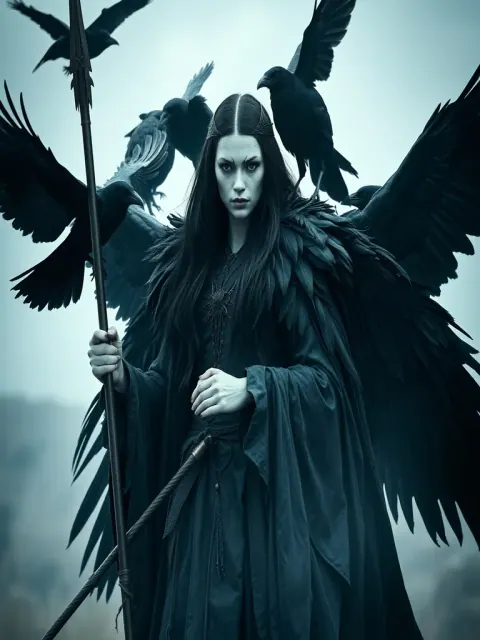
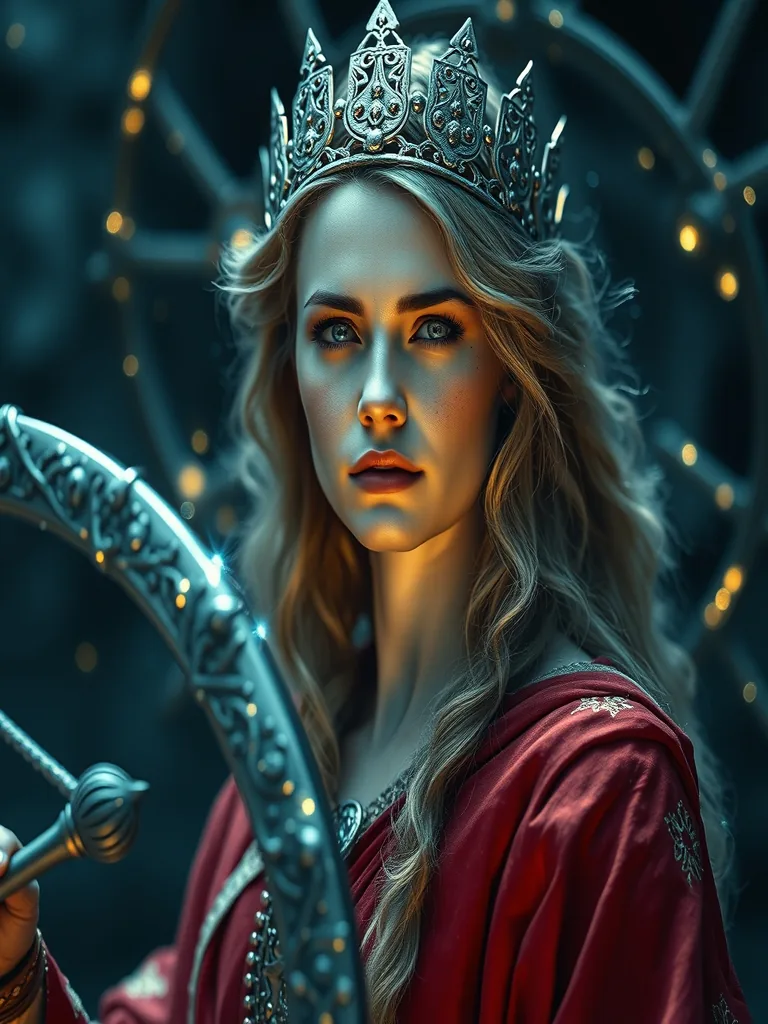
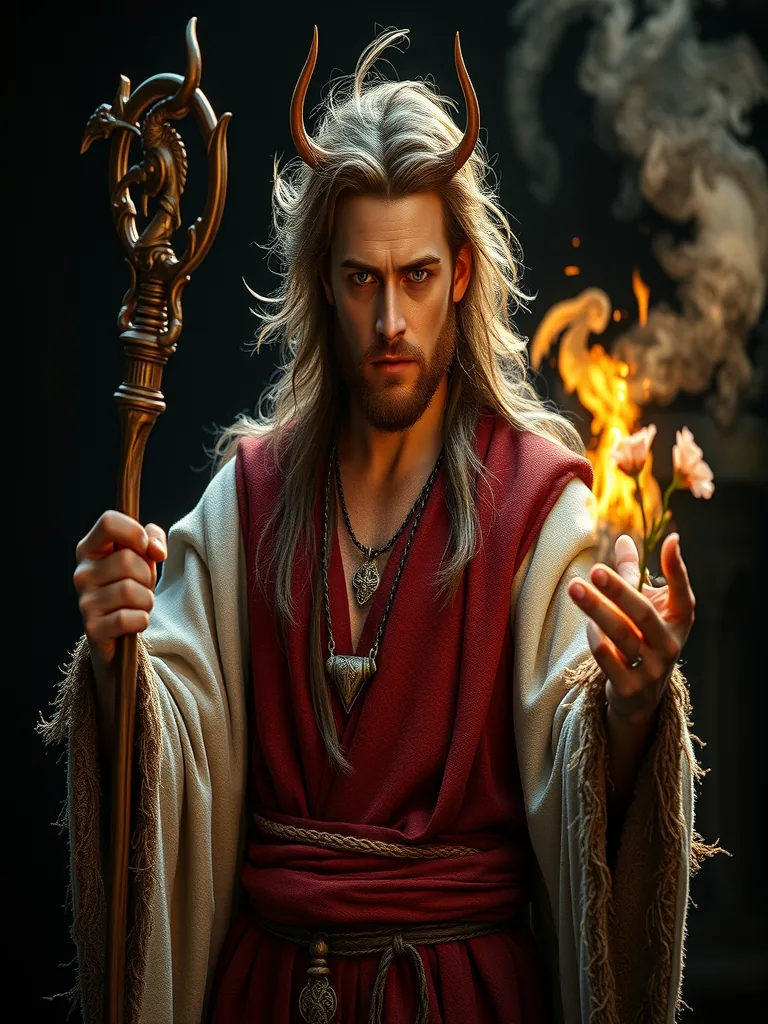
Portrait of Arianrhod, Celtic deity
Celtic
Tap or drag
Celtic

Arianrhod

Lady of the Silver Wheel

Domain
Stars, Fate & Time
Alignment
True Neutral
Element
Air
Relics of Power
Silver Wheel
Speak with Arianrhod

The full Codex

5 sections of this entry are open to everyone: the summary, the people, the symbols, the lineage and the sources. The other 9 (Name and epithets, In the ancient sources, The myths, Worship and archaeology, How the god was depicted, What scholars debate, After antiquity, Did you know?, Codex relic) are part of the full Codex: PRO opens the whole study of all 500 deities, and without a subscription you can read one full entry a day, just like in the app.

The People

People
Celtic peoples
Region
Ireland, Britain & Gaul
Period
c. 500 BC – 500 AD

The Celtic gods were worshipped by the peoples of Ireland, Britain, and Gaul, with the aid of the druids, their priestly caste. They venerated them in sacred groves, springs, and wells, without great stone temples. Many of their myths survived in the Irish and Welsh sagas, recorded by medieval monks.

The Celtic wheel of the year turned on four great fire festivals: Samhain, the origin of Halloween, opened winter and contact with the dead; Imbolc, Beltane, and Lughnasadh marked spring, summer, and the harvest. The druids led the rites in sacred groves called nemeton.
At a glance

Arianrhod is one of the most prominent and enigmatic goddesses of medieval Welsh mythology, renowned as the Lady of the Silver Wheel, of stellar sovereignty, of cosmic time, and of the binding power of maternal destiny in the Fourth Branch of the Mabinogi (Math fab Mathonwy). Daughter of the primeval mother-goddess Dôn and sister of the master magician Gwydion, Arianrhod dwelled in her isolated ocean fortress of Caer Arianrhod along the storm-swept shores of Gwynedd. In the saga narrative, King Math fab Mathonwy was constrained by magical taboo to rest his feet in the lap of a maiden virgin in times of peace to sustain his royal vigor; following the violation of Goewin, Gwydion recommended Arianrhod for this vital court office. Subjected to the test of Math's magical wand to verify her virginity before the assembled nobility, Arianrhod instantly gave birth to a vigorous, yellow-haired boy who dashed directly into the sea, becoming the marine deity Dylan eil Ton ('Dylan Son of the Wave'). Fleeing in shame toward the door, she dropped a tiny biological clot, which Gwydion secretly retrieved and incubated in a wooden chest at the foot of his bed until it matured into a miraculous youth. Infuriated by the public exposure and the loss of her personal autonomy, Arianrhod laid three irrevocable curses of destiny (tynghedau) upon the child: he should never receive a name, bear warrior arms, or take a mortal human wife unless she herself granted them. Through cunning shapeshifting disguises and master illusions conceived with Math, Gwydion tricked Arianrhod into naming the youth Lleu Llaw Gyffes and girding him in battle armor, ultimately outwitting her third taboo through the magical creation of Blodeuwedd, fashioned from forest blossoms.

8 min read · Reviewed on September 29, 2026 · How we research

Sacred symbols

The silver wheel, the spindle, the stars, the white owl and the seabirds

Family

Parents
Dôn (primordial mother-goddess of the Brittonic divine lineage)Beli Mawr (ancestral sovereign in Welsh genealogical lore)
Siblings
GwydionGilfaethwy (brother whose abduction of Goewin sparked war in Gwynedd)Amaethon (brother associated with magical agriculture and Cad Goddeu)Gofannon (brother and divine smith of the Brittonic pantheon)
Arianrhod
Unions
Gwydion (presumed mythic consort in the conception of the supernatural twins)
Children
Dylan eil Ton ('Dylan Son of the Wave', who plunged into the sea at birth)Lleu Llaw Gyffes ('The Fair One with the Deft Hand', solar hero and lord)
Genealogy according to Pedeir Keinc y Mabinogi (Math fab Mathonwy); Trioedd Ynys Prydein (Tríade 35); Llyfr Taliesin; W. J. Gruffydd (Math Vab Mathonwy, 1928)

Sources and further reading

Primary sources

  • Padraic Colum & Lady Charlotte Guest (anthology of Mabinogi traditions), The Mabinogi: Math the Son of Mathonwy (The Test of the Wand and the Three Tynghedau). translation: Digital reprint of the Fourth Branch tale in Orpheus (Sacred-Texts). read
  • Lady Charlotte Guest (philological comments and notes on the Fourth Branch), The Mabinogion: Notes to Math the Son of Mathonwy (Caer Arianrhod and Dylan eil Ton). translation: London facsimile publication of 1877 (online version Sacred-Texts). read
  • W. J. Gruffydd (ed., Welsh text and translation), Math Vab Mathonwy: An Inquiry into the Origins and Development of the Fourth Branch. translation: University of Wales Press, Cardiff, 1928 (Internet Archive). read
  • John Rhys, Celtic Folklore, Welsh and Manx (Traditions of Caer Arianrhod and the Sea Flood). translation: Clarendon Press, Oxford, 1901 (Internet Archive). read

Studies

  • John Arnott MacCulloch (research on the British pantheon), The Religion of the Ancient Celts (Chapter on the Children of Dôn and the Silver Wheel). T. & T. Clark, Edinburgh, 1911. open
  • Miranda Aldhouse-Green, Celtic Goddesses: Warriors, Virgins and Mothers (Arianrhod and Maternal Sovereignty in the Mabinogi). British Museum Press, London, 1995. open
  • Proinsias Mac Cana (studies of the British pantheon), Celtic Mythology (The Family of Dôn and the Mythological Traditions of Gwynedd). Hamlyn, London, 1970. open
  • Charles Squire, Celtic Myth and Legend, Poetry and Romance (The House of Dôn and the Fate of Lleu). Gresham Publishing Company, London, 1905. open

Name and epithets

The Middle Welsh theonym Arianrhod is a morphological compound of arian ('silver', derived from Proto-Celtic *arganto- and PIE *h₂erǵ-, meaning white or radiant) and the feminine noun rhod ('wheel', 'circle', 'disc', fr…

In the ancient sources

Pedeir Keinc y Mabinogi: Math fab Mathonwy, 11th–12th centuries CE manuscript compilation.. Primary saga detailing the virginity test, the miraculous births of Dylan and Lleu, and Arianrhod's three binding destinies (ty…

The myths

The Wand Test of King Math and the Miraculous Twin Births. According to the Fourth Branch of the Mabinogi (Math fab Mathonwy), King Math of Gwynedd was bound by a magical necessity: he could only remain alive in peaceti…

Worship and archaeology

The veneration of Arianrhod was closely bound to the celestial cycles of the northern stars and the sacred maritime landscape of northern Wales.

How the god was depicted

Arianrhod is envisioned as an austere, regal queen with shimmering silver-pale hair adorned with star-shaped silver pins and sea pearls.

What scholars debate

Maternal Tynged as Sovereignty: The Hero's Initiation. Scholars of Celtic myth (such as W. J. Gruffydd, Patrick K.

After antiquity

Arianrhod occupied a cherished place in medieval Welsh bardic poetry and 19th-century Romantic literature. Welsh Revival writers frequently invoked Caer Arianrhod as an emblem of Wales's submerged yet immortal ancestral…

Did you know?

The constellation Corona Borealis was known to Welsh mariners and farmers as Caer Arianrhod well into the modern era.

Codex relic

Silver Wheel. The silver wheel and star-spindle that tradition links to her title Lady of the Silver Wheel and to the turning of the constellations.

The rest of this scroll is sealed

The legends, the myth, the cult and relics are part of the full Codex. You can open 1 full entry for free every day; to open all 500 deities with no limits and no ads, subscribe to Codex PRO.

See Codex PROGet it on Google Play

From the same pantheon

View pantheon