CMCodex
Back to the Codex
3D relief portrait of Badb
Celtic
Tap or drag
Celtic

Badb

The Battle Crow

Domain
War, Prophecy & Death
Alignment
Chaotic Neutral
Element
Darkness
Relics of Power
Cloak of Black Feathers
Speak with Badb

The People

People
Celtic peoples
Region
Ireland, Britain & Gaul
Period
c. 500 BC – 500 AD

The Celtic gods were worshipped by the peoples of Ireland, Britain, and Gaul, with the aid of the druids, their priestly caste. They venerated them in sacred groves, springs, and wells, without great stone temples. Many of their myths survived in the Irish and Welsh sagas, recorded by medieval monks.

The Celtic wheel of the year turned on four great fire festivals: Samhain, the origin of Halloween, opened winter and contact with the dead; Imbolc, Beltane, and Lughnasadh marked spring, summer, and the harvest. The druids led the rites in sacred groves called nemeton.

The Sacred Scrolls

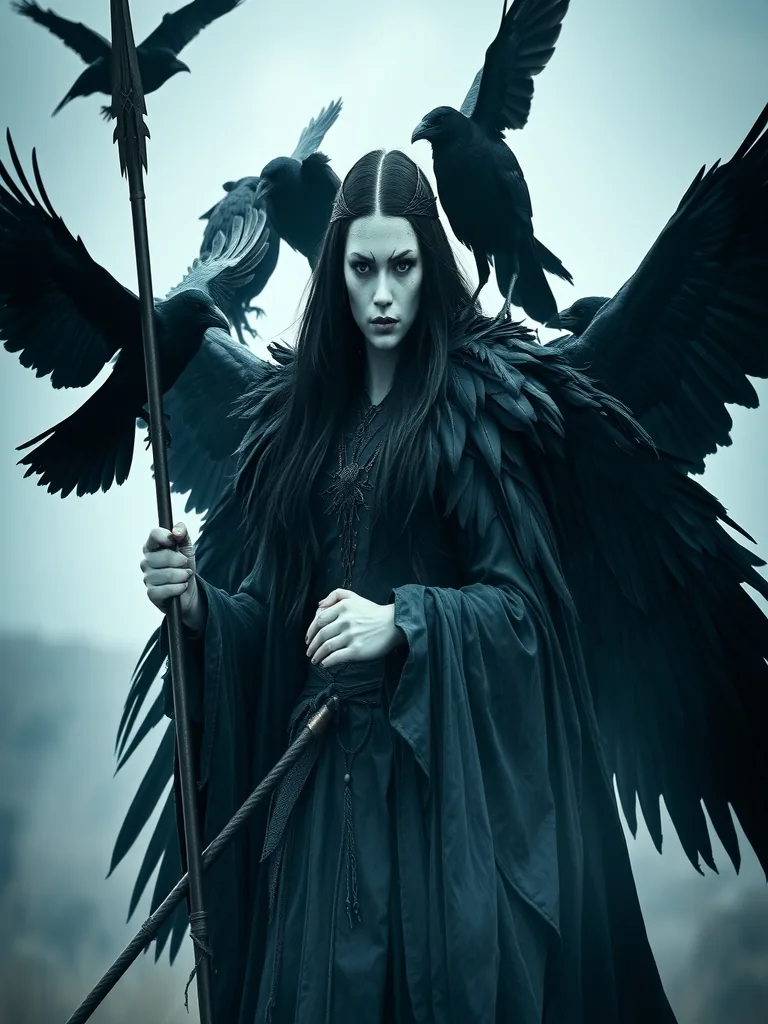
Goddess of war and inevitable death, Badb is one of the three formidable sisters who make up the trinity of the Morrígan, appearing on battlefields in the dreadful form of a hooded crow. Her divine essence lies in martial terror, feeding on the fear and confusion that permeate mortal combat. Her visual aspect is now that of a sinister bird of prey with blood-red eyes, now an imposing warrior covered in soot and sword wounds. She does not participate directly by fighting with spears, but her cosmic function is to decide the fate of troops through magical demoralization and fateful omens. She is revered for her mystical ability to prophesy the rise and fall of kings, whispering doom into the ears of generals. Badb embodies the prophetic and macabre face of carnage, where the victory of one means the slaughter of thousands. Her status among the gods is one of deep respect and fear, for not even other deities escape her visions.

Sacred Symbols

The dark hooded crow, the battlefield, the war cry, impaled skulls, and spilled blood.

Divine Lineage

One of the three faces and incarnations of the Morrígan, eternally alongside her dark sisters Macha and Nemain (or Anu).

The Legendary Myth

In the great cataclysmic battle of Mag Tuired, Badb and her sisters launched themselves furiously upon the horde of the Fomorians, the ancient lords of chaos. Instead of raising bronze weapons, Badb conjured thick clouds of darkness and rains of scalding blood, spreading extreme confusion and creeping terror among enemy lines. Her freezing cry echoed through the mountains, causing the Fomorian champions to lose their strength and sanity amidst the clash. She flew above the Tuatha Dé Danann warriors, guiding their blades through the red mists of relentless carnage. It is said that at the end of the bloody combat, when the gods stood triumphant over the piles of bodies, it was Badb who climbed to the highest point of Mag Tuired to proclaim victory. There, she sang a dark prophecy, foreseeing both the prosperous years of magical glory and the inevitable decline and end of the world, an omen no one dared ignore. Her words cursed the very land with the reminder that all peace is temporary.

Legends & Deeds

A secondary saga that cements Badb's terror occurred during the dawn of the epic Táin Bó Cúailnge dispute, before armies even marched. She appeared terrifyingly before Queen Medb and her invading legions as a haunting washerwoman at the edge of an icy river ford. There, she wielded no weapons, but scrubbed the armor and tunics of the Connacht warriors, which dripped waters dyed with thick, fresh blood. When the champions questioned her, she harshly declared that she was washing the shrouds of those fated to fall in the ensuing war. Queen Medb tried to drive her away with brave words, but Badb merely let out a mocking squawk, transforming into a crow and vanishing into the night air. This heroic and fatal episode shattered the morale of the armies before the first sword was even unsheathed, precipitating the slaughter of Connacht at the hands of Cú Chulainn. It is a tale proving that fighting against the goddess of death is a battle lost at its origin.

Cult & Worship

The cult of Badb lacked majestic adorned temples, being practiced with severity in military camps and places stained by historical bloodshed. Her priests were often martial bards or old warriors who performed prayers for protection and mental obfuscation prior to major hostilities. On nights of the waning moon, solemn ceremonies involved the offering of captured enemy weapons or pieces of shattered armor, which were left at riverbanks for the goddess to claim. It was believed that battlefields where many men perished served as open-air sanctuaries blessed by her terrifying energy. Archaeologists have noted the frequent use of the crow emblem and war inscriptions among Celtic peoples pointing to her domain. Today, the archetype of the 'washer at the ford' is remembered in rich modern Celtic folklore, although the sacrifices and rites of martial appeasement died out during Christianization.

Relics of Power

The crow's cloak with which she flies over the battlefields, casting a cold shadow and sowing panic among doomed armies. Its feathers are woven from pure ancestral terror, and a mere rustle of its texture foreshadows bloodshed. Those enveloped by its darkness are immediately struck with visions of their own impending doom.

Did You Know?

The name Badb literally means 'crow' or 'bird of ill omen' in ancient Celtic languages, showing her intimate connection to fields strewn with corpses. In Irish folk tradition, the tragic figure of the 'bean sídhe' (banshee), the fairy woman who wails at impending death, has its roots in Badb's spectral mythology. The fear she instilled on the battlefield coined poetic expressions of martial fury and madness referred to as the 'flame of Badb'. In contemporary dark fantasy literature, her image inspires countless war witches and death seers.

From the same pantheon

View pantheon