5 sections of this entry are open to everyone: the summary, the people, the symbols, the lineage and the sources. The other 9 (Name and epithets, In the ancient sources, The myths, Worship and archaeology, How the god was depicted, What scholars debate, After antiquity, Did you know?, Codex relic) are part of the full Codex: PRO opens the whole study of all 500 deities, and without a subscription you can read one full entry a day, just like in the app.
The Celtic gods were worshipped by the peoples of Ireland, Britain, and Gaul, with the aid of the druids, their priestly caste. They venerated them in sacred groves, springs, and wells, without great stone temples. Many of their myths survived in the Irish and Welsh sagas, recorded by medieval monks.
The Celtic wheel of the year turned on four great fire festivals: Samhain, the origin of Halloween, opened winter and contact with the dead; Imbolc, Beltane, and Lughnasadh marked spring, summer, and the harvest. The druids led the rites in sacred groves called nemeton.
01
At a glance
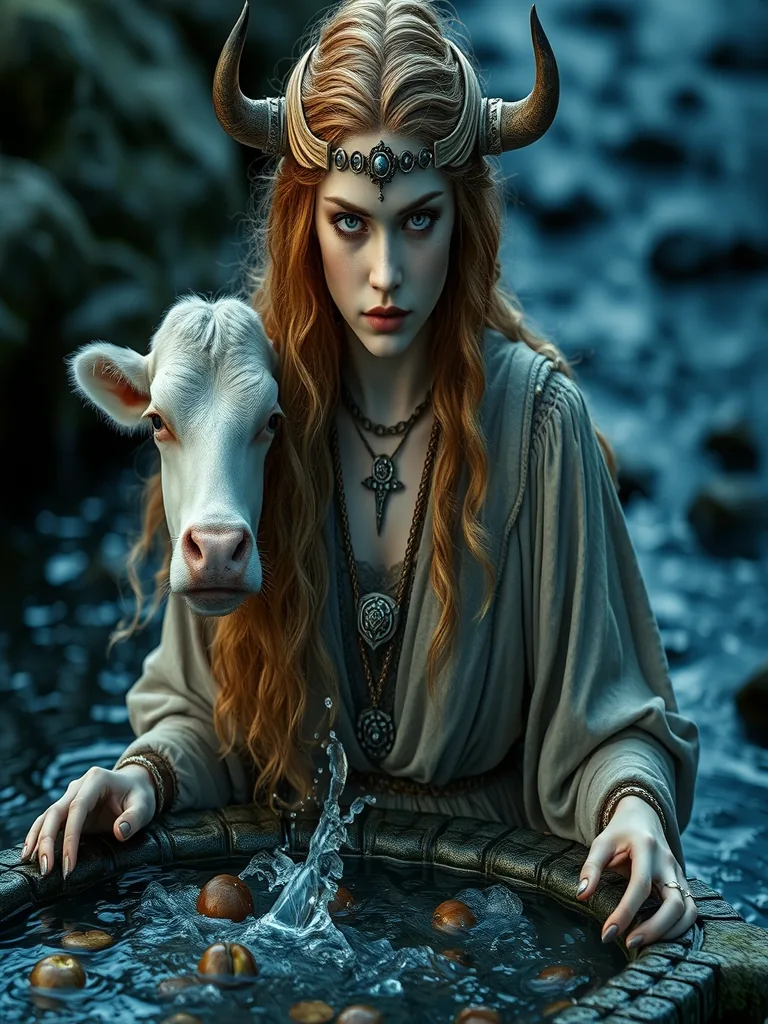
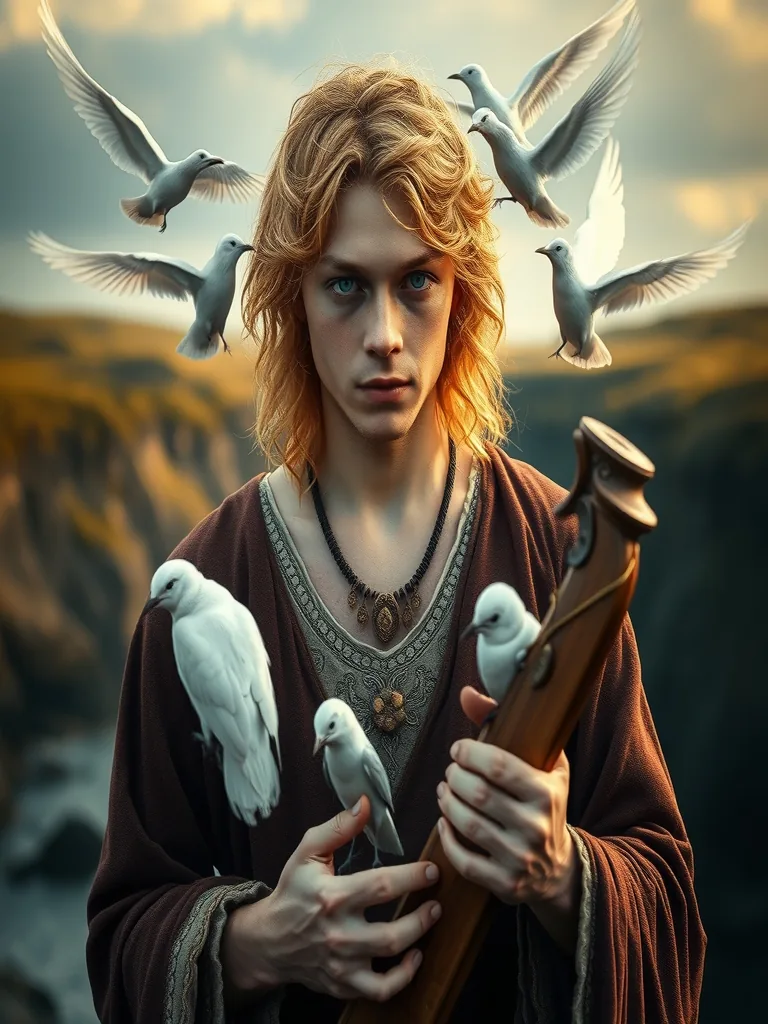
Boann (in Old Irish Bóand, Bóann, or Bófind) is the revered river goddess of the River Boyne, of flowing water fertility, of oracular inspiration, and of sacred wisdom in Celtic Irish mythology. Intimately bound to bovine abundance and the life-giving essence of primal milk, her divine name translates etymologically as 'The White Cow' or 'She of the White Cattle' (from Proto-Celtic *Bōu-vindā). Within the sacred topography of County Meath, Boann dwelled in the monumental passage-grave of Síd in Broga (Newgrange) along the Boyne valley, wedded alternatively to the chieftain Elcmar or to Nechtan mac Labrada. In the celebrated mythological tale preserved in Tochmarc Étaíne, the supreme Dagda conceived an overwhelming passion for Boann; to consummate their love without discovery by her jealous husband, the Dagda dispatched Elcmar on a distant journey and placed a magical enchantment upon the heavens, halting the sun motionless in the sky for nine continuous months so that Boann conceived, gestated, and gave birth to the radiant youth god Óengus Mac ind Óic within what appeared to mortal reckoning as a single day. The central etiologic saga of her riverine creation, preserved in the Metrical Dindshenchas, recounts that Boann boldly challenged the sacred prohibition governing the Well of Segais (Tobar Segais), an Otherworldly spring shaded by the nine hazels of wisdom whose purple nuts dropped into the water to feed the salmon of knowledge. Walking three times widdershins (tuathbel, counter-clockwise) around the forbidden rim, Boann provoked the wrath of the enchanted water, which rose in three boiling surges that tore away an eye, a hand, and a thigh; fleeing towards the Irish Sea, the pursuing torrent carried her body to the coast, carving the winding bed of the River Boyne.
8 min read · Reviewed on September 29, 2026 · How we research
02
Sacred symbols
The white cow, the Well of Segais, the hazels of wisdom and the River Boyne
03
Family
Parents
Delbáeth (ancestral patriarch in the genealogies of the Tuatha Dé Danann)
Siblings
Bébind (sister of Boann and mother of the hero Fráech)
Boann
Unions
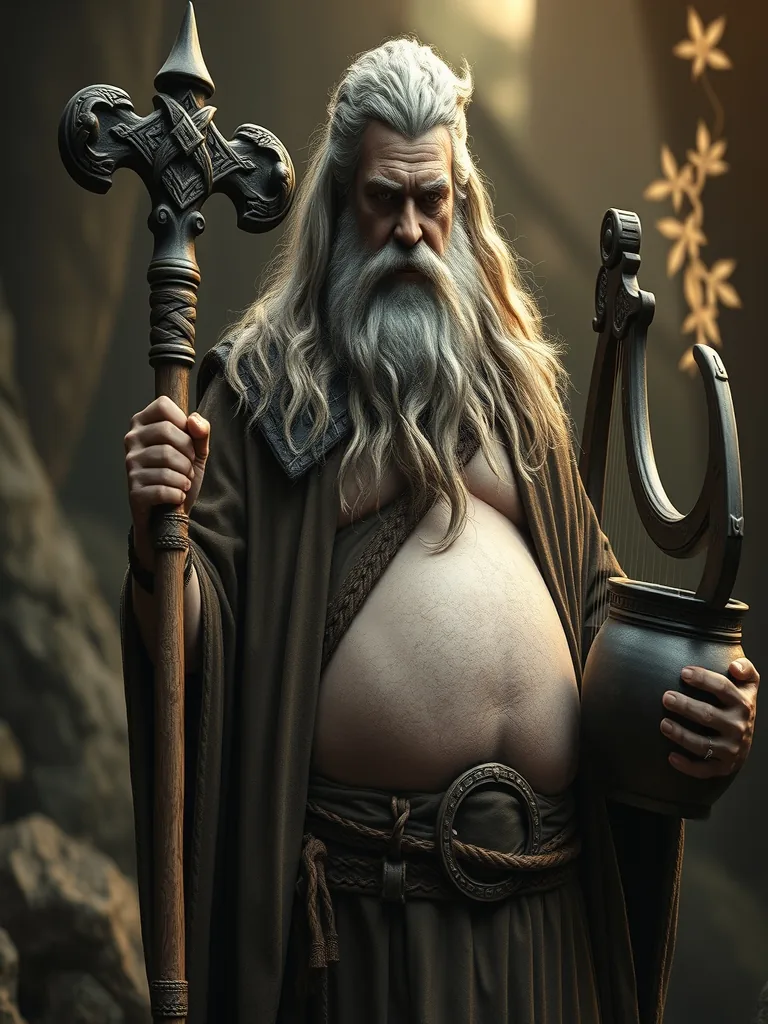
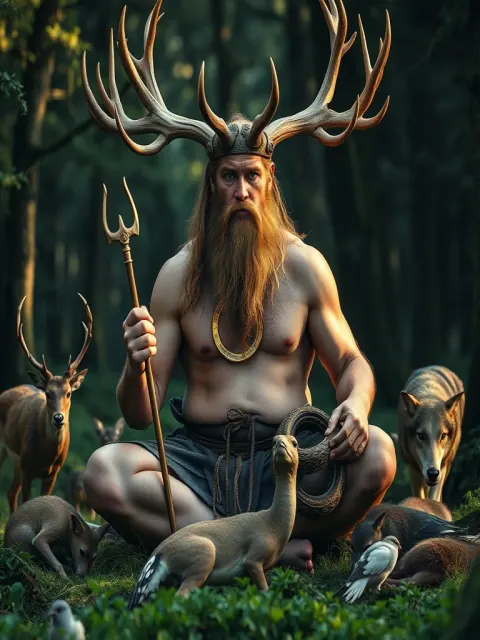
Nechtan (mythic husband and guardian of the sacred well of Segais)Elcmar (lord of Síd in Broga in parallel saga traditions)TThe Dagda
Genealogy according to The Metrical Dindshenchas (Poemas Boand I e II); Tochmarc Étaíne; Táin Bó Fraích; Lebor Gabála Érenn
04
Sources and further reading
Primary sources
Edward Gwynn (ed. and trans.), The Metrical Dindshenchas (Poems 2 and 3: Boand I and Boand II / The Origin of the River Boyne). translation: Dublin Institute for Advanced Studies, Dublin, 1906 (digital edition CELT / UCC). read
Osborn Bergin & R. I. Best (ed. and trans.), Tochmarc Étaíne: The Wooing of Étaín (The Union of Boann and the Dagda and the Birth of Óengus). translation: Dublin Institute for Advanced Studies, Dublin, 1938 (digital edition CELT / UCC). read
Ptolemy (Claudius Ptolemaeus), Geographia: De Hibernia Insula (Book II, Chapter 2: The Estuary of Bououinda). translation: Ex officina Caroli Tauchnitii, Leipzig, 1843 (Internet Archive). read
R. A. Stewart Macalister (ed. and trans.), Lebor Gabála Érenn (Part IV: The Lineages of Síd in Broga and the Tuatha Dé Danann). translation: Irish Texts Society, Dublin, 1941. read
Studies
John Arnott MacCulloch (mythological research), The Religion of the Ancient Celts (Chapter on River Gods, Boann and Newgrange). T. & T. Clark, Edinburgh, 1911. open
Miranda Aldhouse-Green, Celtic Goddesses: Warriors, Virgins and Mothers (River Deities and Female Sovereignty). British Museum Press, London, 1995. open
Proinsias Mac Cana, Celtic Mythology (The Sacredness of the River Boyne and the Traditions of Segais). Hamlyn, London, 1970. open
Dáithí Ó hÓgáin (thematic folklore work), The Sacred Folklore of Ireland (Encyclopedic study on the goddess Boann). Prentice Hall Press, New York, 1991. open
Name and epithets
The Old Irish theonym Boann derives directly from Proto-Celtic *Bōu-vindā, a compound consisting of *bōu- ('cow', 'cattle', from Proto-Indo-European *gʷou-) and the adjective *windos ('white', 'fair', 'bright', 'sacred'…
In the ancient sources
The Metrical Dindshenchas: Boand I and Boand II, 12th century CE (preserving 8th–9th century verse lore).. Topographical verse sagas detailing the violation of the Well of Segais, the mutilation of the goddess, and the…
The myths
The Violation of the Well of Segais and the Genesis of the Boyne. In the verses of the Metrical Dindshenchas (Boand I and II), the Well of Segais (Tobar Segais) was revered as the primeval fountain of all inspiration, p…
Worship and archaeology
The veneration of Boann was rooted in the sacred hydrological role of the River Boyne and its proximity to the monumental Neolithic passage mounds of Brú na Bóinne (Newgrange, Knowth, and Dowth).
How the god was depicted
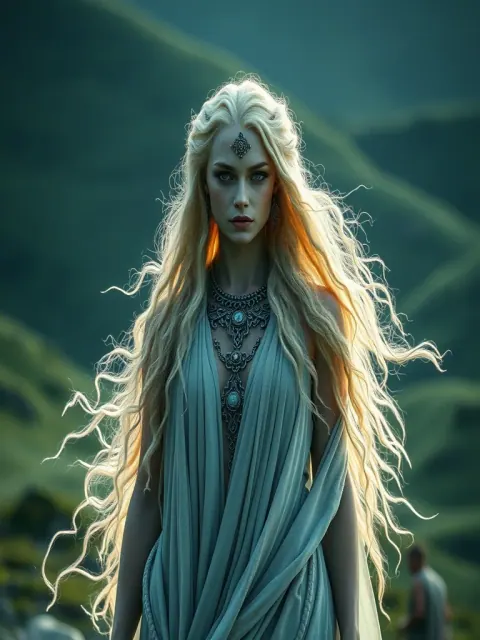
In Irish saga lore and modern Celtic art, Boann is envisioned as a graceful, stately goddess with silver or golden hair flowing like the ripples of a crystal river.
What scholars debate
The Meaning of Segais: Transgression versus Liberation of Wisdom. Scholars of Celtic myth (such as Marie-Louise Sjoestedt and Proinsias Mac Cana) analyze the saga of the Well of Segais as a complex study of cosmological…
After antiquity
Boann has endured as an iconic symbol of creative inspiration and environmental stewardship in Ireland. Literary figures of the Gaelic Revival, including W. B.
Did you know?
The River Boyne is one of the few European geographical names recorded with phonetic fidelity since antiquity, appearing as Bououinda on Ptolemy's 2nd-century CE map.
Codex relic
Well of Segais. The Well of Segais, a spring ringed by nine hazels of wisdom where the salmon of knowledge swam and from whose waters the Boyne arose.
The rest of this scroll is sealed
The legends, the myth, the cult and relics are part of the full Codex. You can open 1 full entry for free every day; to open all 500 deities with no limits and no ads, subscribe to Codex PRO.