Skip to content
CodexMythologia
Back to the Codex
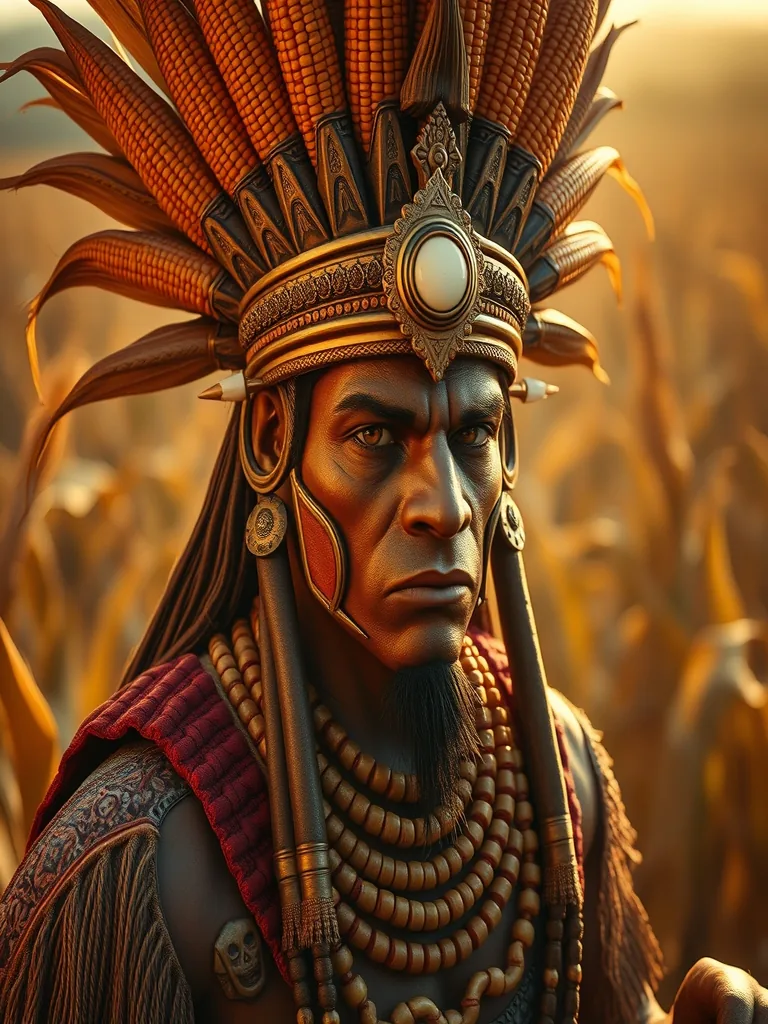
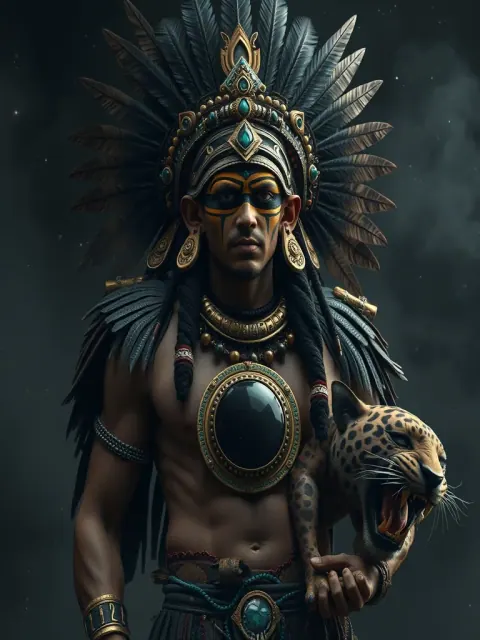
Portrait of Centeotl, Aztec deity
Aztec
Tap or drag
Aztec

Centeotl

The God of the Maize Cob

Domain
Maize & Sustenance
Alignment
True Neutral
Element
Earth
Relics of Power
Sacred Maize Cob
Speak with Centeotl

The full Codex

5 sections of this entry are open to everyone: the summary, the people, the symbols, the lineage and the sources. The other 9 (Name and epithets, In the ancient sources, The myths, Worship and archaeology, How the god was depicted, What scholars debate, After antiquity, Did you know?, Codex relic) are part of the full Codex: PRO opens the whole study of all 500 deities, and without a subscription you can read one full entry a day, just like in the app.

The People

People
Aztecs (Mexica)
Region
Central Mexico
Period
14th – 16th c.

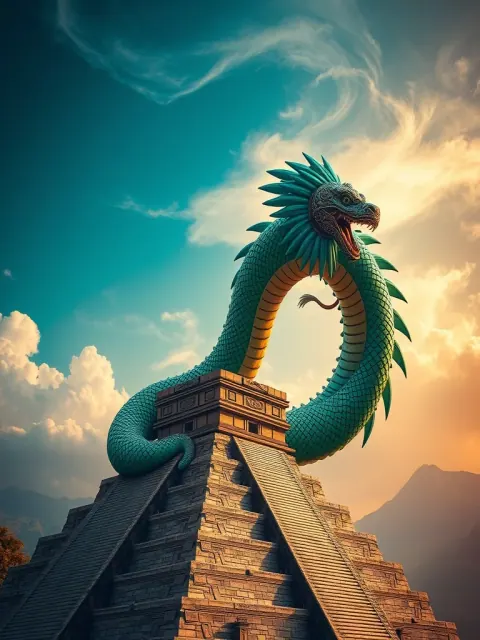
The Aztec gods were worshipped by the Mexica people from their capital, Tenochtitlan, in central Mexico. They believed the sun would only move if fed with blood, which led to the famous sacrifices atop pyramid-temples. Their world was cut short by the Spanish conquest in the 16th century.

The 18-month ritual calendar brought festivals such as Toxcatl, in which a youth lived for a year as the embodiment of Tezcatlipoca. Every 52 years, the New Fire Ceremony extinguished every flame in the empire, rekindled from a single bonfire to prevent the end of the world.
At a glance

Centeotl (in standardized Classical Nahuatl orthography Centeōtl or Cintēōtl, derived from cintli, 'dried ear of maize', and teōtl, 'deity') is the supreme Mesoamerican sacred entity of cultivated maize and the divine personification of human vegetal sustenance (tonacáyotl). Born in the celestial realm of Tamoanchan from the union of the young solar lord Piltzintecuhtli and the lovely floral goddess Xochiquetzal, Centeotl is the protagonist of one of the most crucial aetiological myths of American agriculture, preserved in chapter VI of the Histoyre du Mechique: moved by the distress of the first mortals, the young god buried his own body in the dark bosom of the earth, so that from his nails, hair, fingers and organs there sprouted the cultivated plants essential to human subsistence, beginning with maize, cotton, chia and beans. In the liturgical calendar of Tenochtitlan, Centeotl formed a dynamic theological complex with kindred deities, complementing the mature femininity of Chicomecoatl and the tender youth of Xilonen. He received fervent veneration during the seasonal festivals of Huey Tozoztli and Ochpaniztli, which celebrated the blessing of seeds and the apotheosis of the harvest in the fields. In the pictorial codices of the Altiplano, his image is unmistakable for the prominent vertical black line painted along his face, crossing the eye, and for the ceremonial adornment of golden ears of maize sprouting upright from his headdress.

8 min read · Reviewed on September 30, 2026 · How we research

Sacred symbols

Maize cob (cintli), vertical black line across the face, yellow skin, jade necklace

Family

Parents
Piltzintecuhtli (the youthful solar lord) and Xochiquetzal (the lady of flowers and fertile love)
Centeotl
Genealogy according to Histoyre du Mechique (cap. VI); Códice Telleriano-Remensis (fólios 11r, 22r); Códice Florentino (Livro 1, cap. 6; Livro 2, caps. 27 e 30); Códice Borgia (lâminas 14, 20, 52, 57)

Sources and further reading

Primary sources

  • Fray Bernardino de Sahagún (Trilingual Nahua-Spanish Translation Team), Historia General de las cosas de la Nueva España (Tepeapulco and Tlatelolco manuscripts). translation: Critical paleographic edition by A. J. O. Anderson and C. E. Dibble (Florentine Codex, University of Utah Press, Salt Lake City, 1970-1981). read
  • André Thevet (Royal Cosmographer of France) / Friar Andrés de Olmos, Histoyre du Mechique (Chapter VI: the myth of the germination of seeds). translation: Transcription and French introduction by Édouard de Jonghe (Journal de la Société des Américanistes, vol. II, Paris, 1905). read
  • Traditional Tlacuilo artists of the Mixteca-Puebla tradition, Codex Borgia (Plates 14, 20, 52 and 57: the visual liturgy of maize). translation: Iconographic commentaries and facsimile by Eduard Seler (FCE, Mexico, 1980). read
  • Indigenous painters of the Colegio de Santa Cruz, Codex Telleriano-Remensis (Folios 11r and 22r: the paradise of Tamoanchan). translation: Critical monograph and facsimile by E. Quiñones Keber (Univ. of Texas Press, Austin, 1995). read

Studies

  • Johanna Broda (Institute of Historical Research, UNAM), The Great Temple of Tenochtitlan: Center and Periphery in the Aztec World (Chapters on agrarian cults). University of California Press, Berkeley, 1987. open
  • Karl Taube (University of California, Riverside), The Classic Maya Maize God: A Reappraisal (study of the iconography and evolution of the maize god). Pre-Columbian Art Research Institute, San Francisco, 1985. open
  • Doris Heyden (Directorate of Ethnology and Social Anthropology, INAH), Mitología y simbolismo de la flora en el México prehispánico (Botanical analysis of the myths of Centeotl). Universidad Nacional Autónoma de México, México, 1983. open
  • Alfredo López Austin (eminent historian of Mesoamerican religions), Cuerpo humano e ideología: Las concepciones de los antiguos nahuas (chapter on plant physiology and tonacáyotl). Instituto de Investigaciones Históricas da UNAM, México, 1980. open

Name and epithets

The Nahuatl theonym Centeōtl (often written Cintēōtl) derives from the agglutination of the noun cintli (denoting specifically the harvested and ripe ear of maize, preserved in its husk) with the root teōtl (numinous co…

In the ancient sources

Histoyre du Mechique (French version by the cosmographer André Thevet), c. 1543–1558 CE. Documents Centeotl’s filiation to Piltzintecuhtli and Xochiquetzal and the burial of his body, from which sprouted maize, chia and…

The myths

The Voluntary Burial of Centeotl and the Birth of the Food Plants. As preserved in chapter VI of the Histoyre du Mechique, in the remote times that followed the appearance of the earth, the newly created human beings wa…

Worship and archaeology

The worship of Centeotl was one of the backbones of communal, domestic and state life in the Valley of Mexico and neighbouring regions such as Puebla and Tlaxcala.

How the god was depicted

The depiction of Centeotl in pre-Hispanic codex painting and stone sculpture is marked by diagnostic attributes that represent ripe maize.

What scholars debate

Gender Fluidity in Mesoamerican Maize Theology. Scholars of the history of religions, among them Johanna Broda and Karl Taube, have studied intensively the alternation and complementarity of gender among the Nahua maize…

After antiquity

In the identity and popular culture of contemporary Mexico, the figure of Centeotl remains one of the greatest historical symbols of food sovereignty and peasant dignity; at the famous Guelaguetza festival celebrated ev…

Did you know?

Every eight years, the ancient Mexica celebrated the sacred festival of Atamalcualiztli ('the eating of water tamales'), in which the entire population ate exclusively steamed maize cakes, with no added salt, lime or ch…

Codex relic

Sacred Maize Cob. A ripe maize cob rising from the god's headdress, emblem of human sustenance.

The rest of this scroll is sealed

The legends, the myth, the cult and relics are part of the full Codex. You can open 1 full entry for free every day; to open all 500 deities with no limits and no ads, subscribe to Codex PRO.

See Codex PROGet it on Google Play

From the same pantheon

View pantheon