Skip to content
CodexMythologia
Back to the Codex
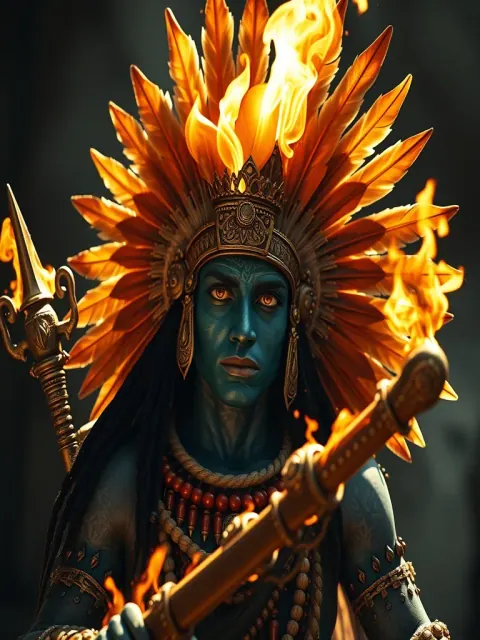
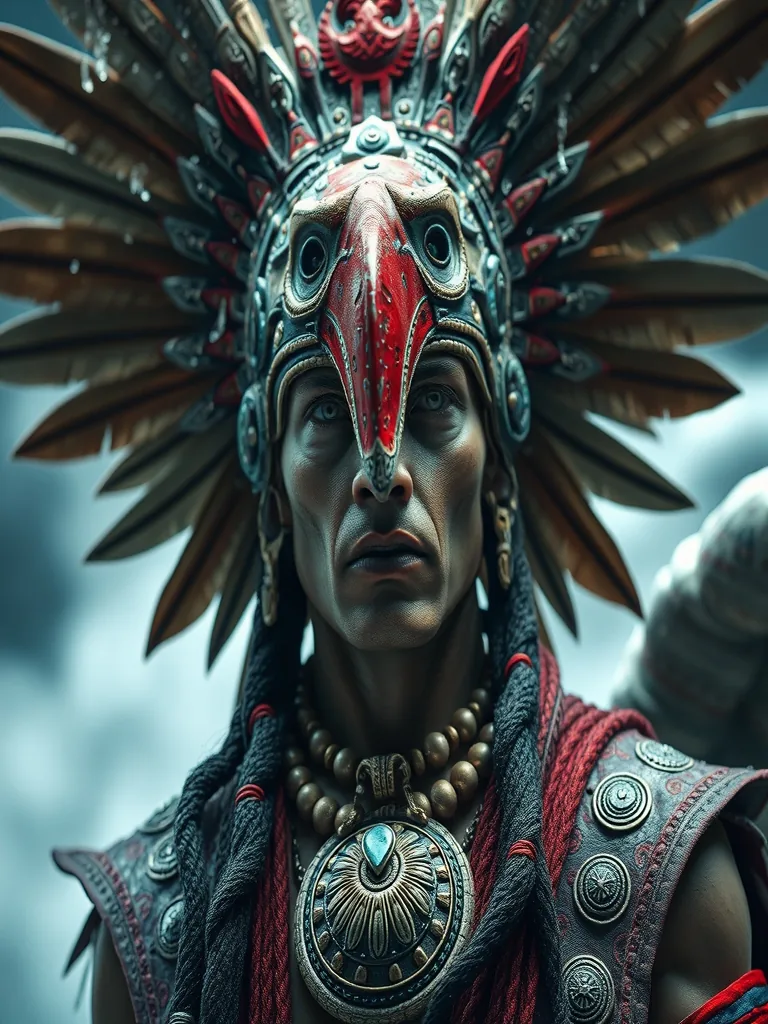
Portrait of Ehecatl, Aztec deity
Aztec
Tap or drag
Aztec

Ehecatl

The Wind, Breath of Life

Domain
Wind & Life Breath
Alignment
True Neutral
Element
Air
Relics of Power
Wind Jewel
Speak with Ehecatl

The full Codex

5 sections of this entry are open to everyone: the summary, the people, the symbols, the lineage and the sources. The other 9 (Name and epithets, In the ancient sources, The myths, Worship and archaeology, How the god was depicted, What scholars debate, After antiquity, Did you know?, Codex relic) are part of the full Codex: PRO opens the whole study of all 500 deities, and without a subscription you can read one full entry a day, just like in the app.

The People

People
Aztecs (Mexica)
Region
Central Mexico
Period
14th – 16th c.

The Aztec gods were worshipped by the Mexica people from their capital, Tenochtitlan, in central Mexico. They believed the sun would only move if fed with blood, which led to the famous sacrifices atop pyramid-temples. Their world was cut short by the Spanish conquest in the 16th century.

The 18-month ritual calendar brought festivals such as Toxcatl, in which a youth lived for a year as the embodiment of Tezcatlipoca. Every 52 years, the New Fire Ceremony extinguished every flame in the empire, rekindled from a single bonfire to prevent the end of the world.
At a glance

Ehecatl (in standardized Classical Nahuatl, Ehēcatl, meaning “Wind” or “Life-Giving Breath,” and often venerated as Ehēcatl-Quetzalcōātl) is the primordial Mesoamerican deity of the wind, of moving air, and of vivifying cosmic breath. As the indispensable herald of the fertilizing rains, Ehecatl was charged with sweeping the roads of the earth and the sky with his strong gusts to open the way for the rain deities, the Tlaloque. In the cosmogonic myth of Teotihuacan on the birth of the Fifth Sun, recorded in Book 7 of the Florentine Codex, the newborn Sun Tonatiuh and the Moon remained paralyzed in the firmament without beginning their celestial path. Ehecatl carried out the sacrifice of his divine siblings, gathered all their animating power into his lungs, and blew with infinite vigor over the eastern horizon to break the inertia of the heavenly bodies and set off the cycle of time, of the seasons, and of mortal life. Master of music and of primordial love, he carried out the mythical descent of the maiden Mayahuel from the starry realms, an event that gave rise to the sacred maguey plant. His shrines had perfectly cylindrical architecture so that the winds could turn without obstacles, as shown by the circular temples of Calixtlahuaca and Tlatelolco.

7 min read · Reviewed on September 30, 2026 · How we research

Sacred symbols

Red beak-shaped mouth mask, conical cap, spiral shell jewel, curved ear ornaments

Family

Parents
Ometecuhtli and Omecihuatl (the ancestral sovereigns of duality residing in Omeyocan)
Siblings
Quetzalcoatl (with whom he forms a unified theological identity as the creative wind)
Ehecatl
Unions
Mayahuel (celestial maiden brought down to earth by the wind in the Histoyre du Mechique)
Genealogy according to Códice Florentino (Livro 1, cap. 5; Livro 7, cap. 2); Histoyre du Mechique (cap. VI); Códice Borgia (lâminas 19, 29); Códice Telleriano-Remensis (fólio 8v)

Sources and further reading

Primary sources

  • Fray Bernardino de Sahagún (Nahua Academic Collaborators of Santa Cruz), Codex Florentinus: Books 1 and 7 (Doctrine of the winds, Teotihuacan and the course of the stars). translation: Critical edition by A. J. O. Anderson and C. E. Dibble (Monographs of the School of American Research, Santa Fe, 1970-1982). read
  • Nahua Oral Tradition / André Thevet, Histoyre du Mechique (Chapter VI: The cosmic adventures of Ehécatl and the virgin Mayahuel). translation: Edition by Édouard de Jonghe (Journal de la Société des Américanistes de Paris, new series, vol. II, 1905). read
  • Tlacuilo painters of the Central Highlands, Codex Borgia (Plates 19, 29 and 35: Ehécatl's attire and insignia). translation: Iconographic commentaries by Eduard Seler (Fondo de Cultura Económica, facsimile reissue, Mexico, 1980). read
  • Indigenous painters of the Colegio de Santa Cruz, Codex Telleriano-Remensis (Folios 8v-9r: the sign of Ehécatl and the ritual trecenas). translation: Critical study and reproduction by Eloise Quiñones Keber (University of Texas Press, Austin, 1995). read

Studies

  • Eduardo Matos Moctezuma (INAH / Templo Mayor Museum), Arquitectura para Ehécatl-Quetzalcóatl (Study of circular temples in Central Mexico). Arqueología Mexicana, special issue no. 152, Editorial Raíces, Mexico City, 2020. open
  • Alfredo López Austin (IIH-UNAM), Cuerpo humano e ideología: Las concepciones de los antiguos nahuas (analysis of the concept of ihiyotl and cosmic breath). Instituto de Investigaciones Históricas, UNAM, Mexico, 1980. open
  • Karl Taube (Specialist in Mesoamerican Iconography and Religion), Aztec and Maya Myths (The role of the breath of life in creation mythology). The British Museum Press in cooperation with University of Texas Press, 1993. open
  • H. B. Nicholson (Scholar of Mesoamerican Ethnohistory), Topiltzin Quetzalcoatl: The Once and Future Lord of the Toltecs (The wind symbolism). University Press of Colorado, Boulder, Colorado, 2001. open

Name and epithets

The Nahuatl theonym Ehēcatl translates literally as “Wind,” “Breeze,” or “Vital Breath.” In UNAM’s Grand Nahuatl Dictionary, the term is classed as a common noun for moving air and as a major theonym applied to the dyna…

In the ancient sources

Historia General de las Cosas de Nueva España (Trilingual Compilation of Sahagún), 1575–1577 CE. Shows the red conical duck-bill buccal mask, the shell mantle, and the myth in which Ehecatl moves the Sun and the Moon wi…

The myths

The Cosmic Impulse of Teotihuacan and the Motion of the Sun. According to the Nahua accounts in Book Seven of Sahagún’s work, when the primordial fire of Teotihuacan consumed the two purified deities, the luminaries of…

Worship and archaeology

The cult of Ehecatl had agricultural, ecological, and cosmic repercussions that were indispensable across the Central Mexican Plateau, in the valleys of Toluca and Cholula, and along the lakeshore of Tenochtitlan.

How the god was depicted

Ehecatl’s iconography is among the most easily recognized and visually refined in Mesoamerica. Its diagnostic feature is a prominent, bright red buccal mask in the shape of a duck’s or aquatic bird’s beak (ehecacózcatl)…

What scholars debate

The Theological Relationship between Ehecatl and Quetzalcoatl: Avatar or Autonomous God. Anthropologists and historians of Mesoamerican religions have long debated whether Ehecatl should be treated as a subordinate face…

After antiquity

In contemporary Mexican society, Ehecatl holds a prominent place in civic and everyday heritage: the small circular temple of Ehecatl preserved underground in the Pino Suárez metro station in the historic center of Mexi…

Did you know?

Temples dedicated to Ehecatl were the only Nahua religious monuments built with a perfectly cylindrical plan and conical thatched roofs, designed by priests so that gusts of wind would flow around the structure without…

Codex relic

Wind Jewel. A pectoral of spirally cut sea-snail shell (ehecacozcatl), recalling the whirlwind.

The rest of this scroll is sealed

The legends, the myth, the cult and relics are part of the full Codex. You can open 1 full entry for free every day; to open all 500 deities with no limits and no ads, subscribe to Codex PRO.

See Codex PROGet it on Google Play

From the same pantheon

View pantheon