Skip to content
CodexMythologia
Back to the Codex
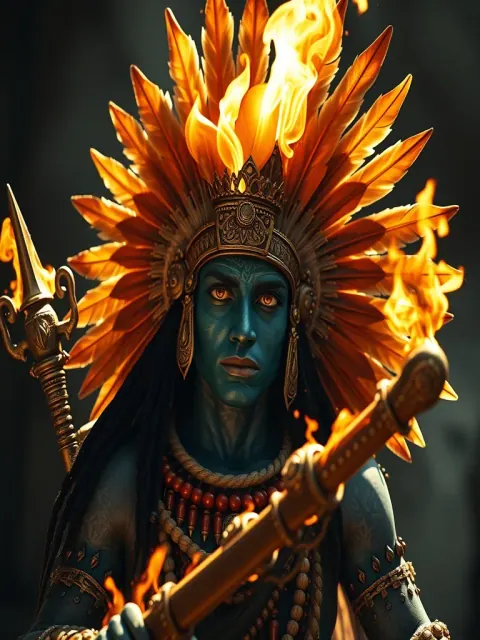
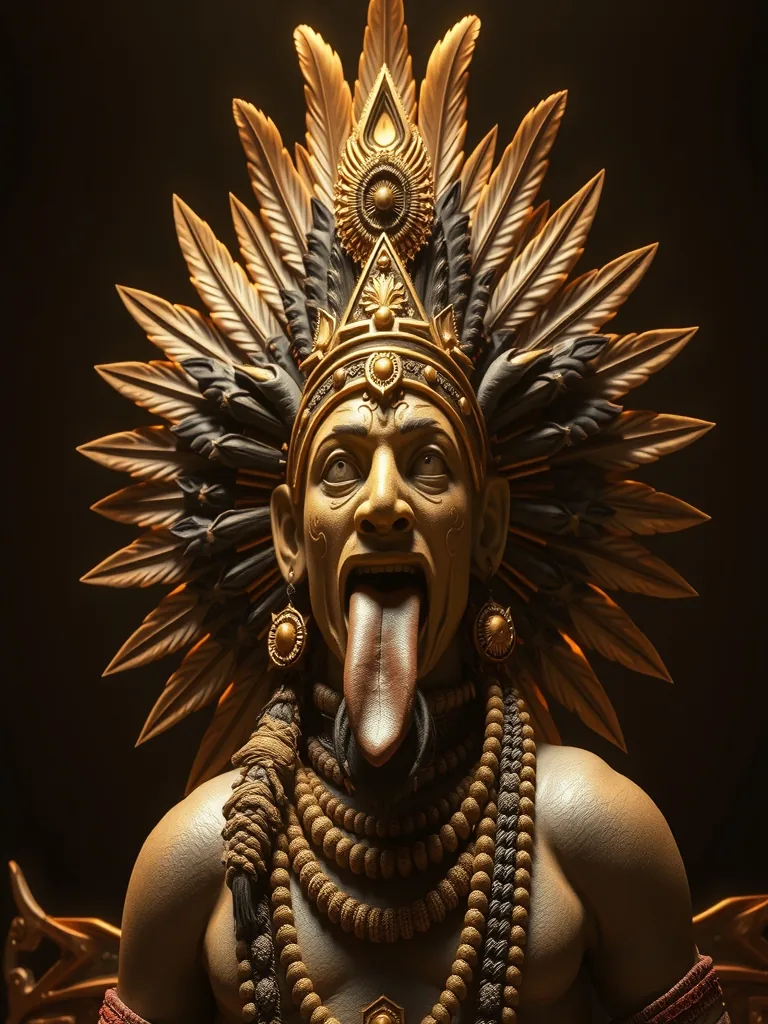
Portrait of Tonatiuh, Aztec deity
Aztec
Tap or drag
Aztec

Tonatiuh

The Sun of Movement

Domain
Sun & the Fifth Age
Alignment
True Neutral
Element
Light
Relics of Power
Sun Stone
Speak with Tonatiuh

The full Codex

4 sections of this entry are open to everyone: the summary, the people, the symbols, the lineage and the sources. The other 9 (Name and epithets, In the ancient sources, The myths, Worship and archaeology, How the god was depicted, What scholars debate, After antiquity, Did you know?, Codex relic) are part of the full Codex: PRO opens the whole study of all 500 deities, and without a subscription you can read one full entry a day, just like in the app.

The People

People
Aztecs (Mexica)
Region
Central Mexico
Period
14th – 16th c.

The Aztec gods were worshipped by the Mexica people from their capital, Tenochtitlan, in central Mexico. They believed the sun would only move if fed with blood, which led to the famous sacrifices atop pyramid-temples. Their world was cut short by the Spanish conquest in the 16th century.

The 18-month ritual calendar brought festivals such as Toxcatl, in which a youth lived for a year as the embodiment of Tezcatlipoca. Every 52 years, the New Fire Ceremony extinguished every flame in the empire, rekindled from a single bonfire to prevent the end of the world.
At a glance

Tonatiuh (Classical Nahuatl: Tōnatiuh, 'He Who Goes Radiating Light' or 'The Movement Sun') is the supreme solar deity of the Nahua peoples presiding over the current cosmic world age, celebrated throughout Mexica (Aztec) cosmology as the era of the Fifth Sun (Nahui Ollin, '4-Movement'). According to the foundational theological narrative preserved in Book VII of the Florentine Codex and the Leyenda de los Soles, following the cataclysmic ruin of the four ancestral world suns, the assembled deities convened in primeval darkness at sacred Teotihuacan to designate who among them would leap into the blazing cosmic pyre (teotexcalli) to kindle a new sun in the heavens. While the opulent, arrogant deity Tecuciztecatl hesitated four times before the terrifying heat of the flames, the humble, pock-marked divinity Nanahuatzin—afflicted by weeping sores—cast himself stoically into the raging hearth, rising on the eastern horizon transformed into the dazzling solar disk of Tonatiuh. However, upon appearing in the eastern sky, the newly formed orb remained completely stationary and scorching, demanding the vital life force and blood sacrifice of the creator deities themselves before beginning his diurnal trek across the heavens. Within imperial Aztec theology, Tonatiuh was venerated as a divine celestial warrior engaged in perpetual conflict against nocturnal darkness and the star hosts (the Centzon Mimixcoa and Centzon Huitznahua); to empower his daily transit and forestall the prophesied cosmic collapse of the Fifth Sun by earthquakes, he required the life-giving nourishment of human blood (chalchihuatl) and sacrificial hearts. His likeness forms the iconic centerpiece of the world-famous Aztec Sun Stone (Piedra del Sol), where his face emerges from the glyph Nahui Ollin with eagle talons grasping human hearts and a tongue fashioned as an obsidian sacrificial blade.

8 min read · Reviewed on September 30, 2026 · How we research

Sacred symbols

Solar disk, Nahui Ollin glyph, eagle claws, obsidian-knife tongue

Sources and further reading

Primary sources

  • Anonymous Nahua (indigenous sages and historians of Central Mexico), Leyenda de los Soles (Chimalpopoca Codex: The Creation of the Fifth Sun at Teotihuacan and the Sacrifice of the Gods). translation: Critical edition and direct translation from Nahuatl by Primo Feliciano Velázquez (UNAM). read
  • Bernardino de Sahagún (Franciscan researcher), Florentine Codex (Book VII: The Heavenly Bodies, the sacrifice of Nanahuatzin and the Daytime Sun). translation: Bilingual annotated edition by Charles E. Dibble and Arthur J. O. Anderson (University of Utah Press). read
  • Anonymous Mesoamerican (pre-Hispanic scribes and religious artists), Codex Borgia (Plate 71: The Striped Solar Disc and the Throne of Tonatiuh). translation: Academic facsimile and commentaries archived by Eduard Seler (Fondo de Cultura Económica). read
  • Antonio de León y Gama (New Spanish astronomer and mathematician), Pioneering treatise of 1792 on the Stone of the Sun Monolith. translation: Historical edition of 1792 digitally archived at the Biblioteca Digital Hispánica. read

Studies

  • Eduardo Matos Moctezuma (archaeologist, coordinator of the Templo Mayor Project), . INAH, México, 2012. open
  • Alfonso Caso (anthropologist and pioneer of Mesoamerican studies), . Fondo de Cultura Económica, México, 1953. open
  • Hartley Burr Alexander (researcher of pre-Columbian mythologies), . Marshall Jones Company, Boston (Archive.org), 1920. open
  • Miguel León-Portilla (historian and emeritus scholar of Nahua philosophy), . Instituto de Investigaciones Históricas, UNAM, 1956. open

Name and epithets

The theonym Tōnatiuh derives from the Classical Nahuatl verb tona ('to shine, radiate warmth, cast solar light') combined with the purposive and continuous motion suffix -tiuh ('goes along doing'), translating literally…

In the ancient sources

Leyenda de los Soles (Nahuatl text in Codex Chimalpopoca), 1558 CE.. Primary indigenous narrative describing Nanahuatzin's leap into the sacred fire hearth.

The myths

The Sacred Pyre of Teotihuacan and the Heroic Leap of Nanahuatzin. According to the grand cosmogonic epic recorded in Book VII of the Florentine Codex, the world lay trapped in absolute night following the destruction o…

Worship and archaeology

The worship of Tonatiuh was the ideological axis of the Aztec empire and its military expansion. Throughout Tenochtitlan, commoners and nobles greeted the dawn with reverent devotions: at sunrise, citizens cast incense…

How the god was depicted

Tonatiuh's monumental iconography is world-renowned through the central relief of the Aztec Sun Stone (Piedra del Sol) in Mexico City's National Museum of Anthropology.

What scholars debate

Identity of the Central Face on the Sun Stone: Tonatiuh versus Tlaltecuhtli. A famous scholarly debate in Mesoamerican art history surrounds the central countenance of the Aztec Sun Stone.

After antiquity

Tonatiuh stands as one of the most widely recognized cultural symbols of the Americas. The solar face at the center of the Aztec Sun Stone has become a universal emblem of Mexican heritage, appearing on currency coins,…

Did you know?

During the Spanish conquest, indigenous chroniclers nicknamed conquistador Pedro de Alvarado 'Tonatiuh' because of his striking blond hair, red complexion, and fiery, violent temperament.

Codex relic

Sun Stone. The monolith in which Tonatiuh's face appears within the Nahui Ollin glyph, with eagle claws gripping hearts and a tongue shaped like an obsidian knife.

The rest of this scroll is sealed

The legends, the myth, the cult and relics are part of the full Codex. You can open 1 full entry for free every day; to open all 500 deities with no limits and no ads, subscribe to Codex PRO.

See Codex PROGet it on Google Play

From the same pantheon

View pantheon