5 sections of this entry are open to everyone: the summary, the people, the symbols, the lineage and the sources. The other 9 (Name and epithets, In the ancient sources, The myths, Worship and archaeology, How the god was depicted, What scholars debate, After antiquity, Did you know?, Codex relic) are part of the full Codex: PRO opens the whole study of all 500 deities, and without a subscription you can read one full entry a day, just like in the app.
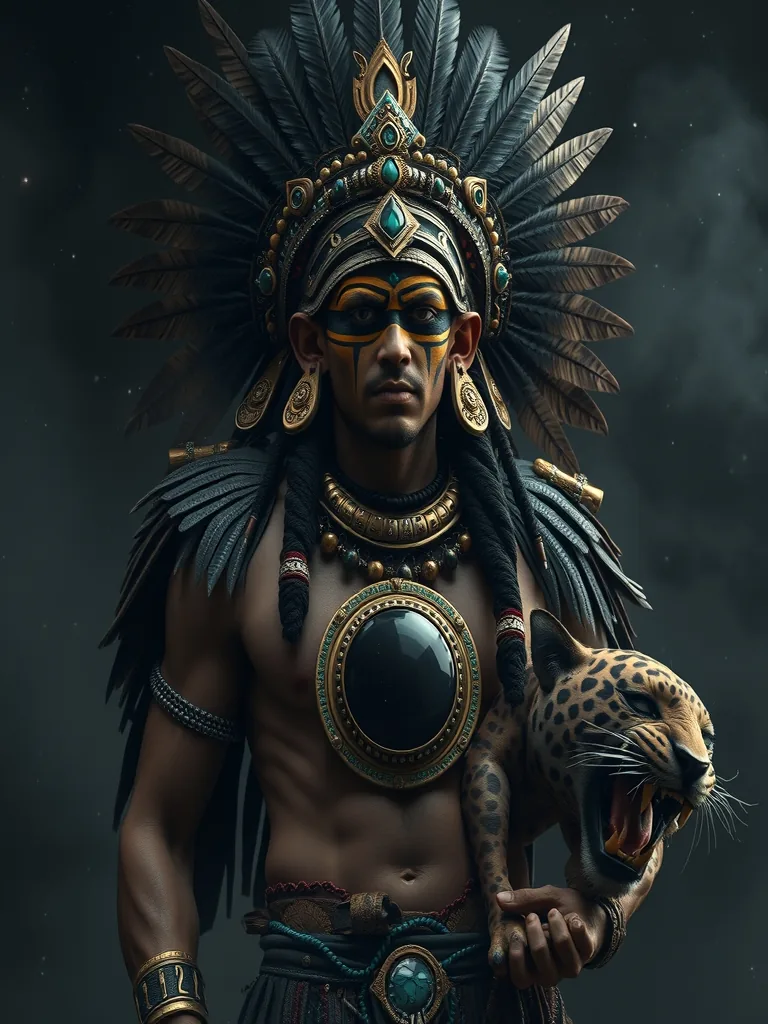
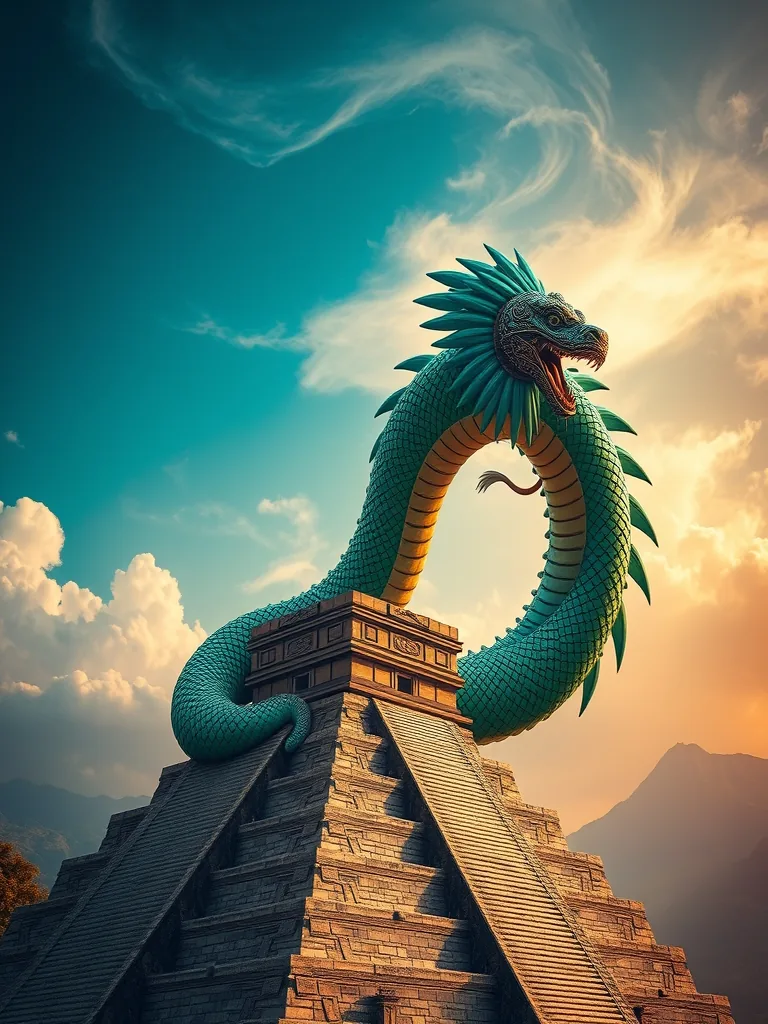
The Aztec gods were worshipped by the Mexica people from their capital, Tenochtitlan, in central Mexico. They believed the sun would only move if fed with blood, which led to the famous sacrifices atop pyramid-temples. Their world was cut short by the Spanish conquest in the 16th century.
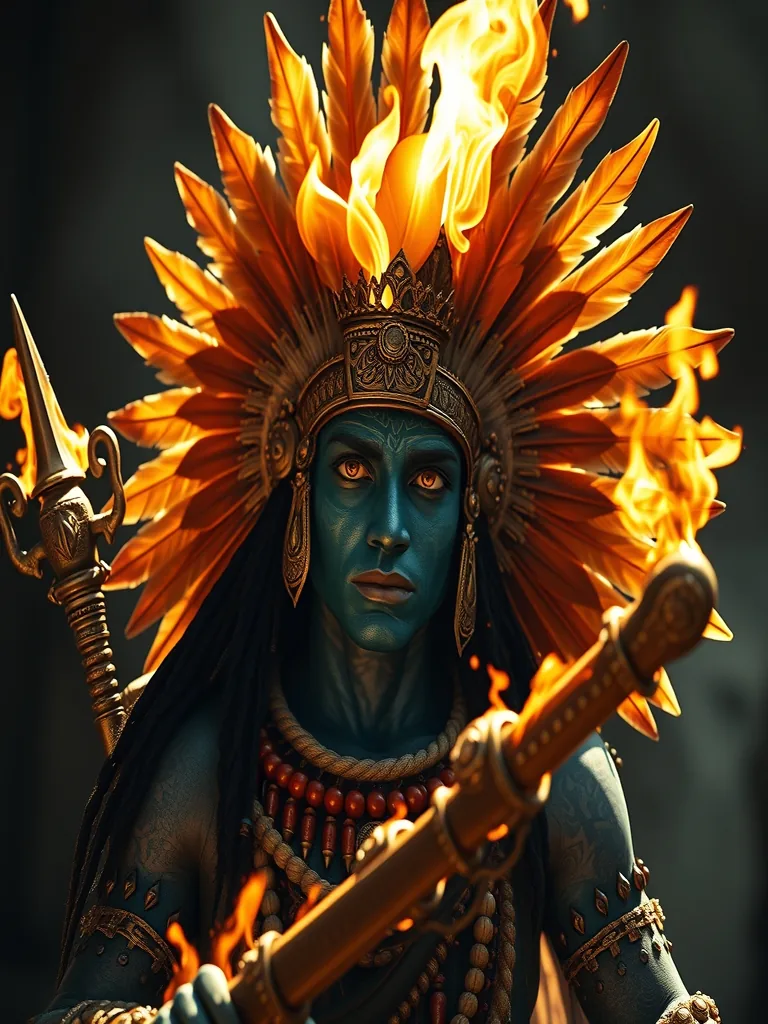
The 18-month ritual calendar brought festivals such as Toxcatl, in which a youth lived for a year as the embodiment of Tezcatlipoca. Every 52 years, the New Fire Ceremony extinguished every flame in the empire, rekindled from a single bonfire to prevent the end of the world.
01
At a glance
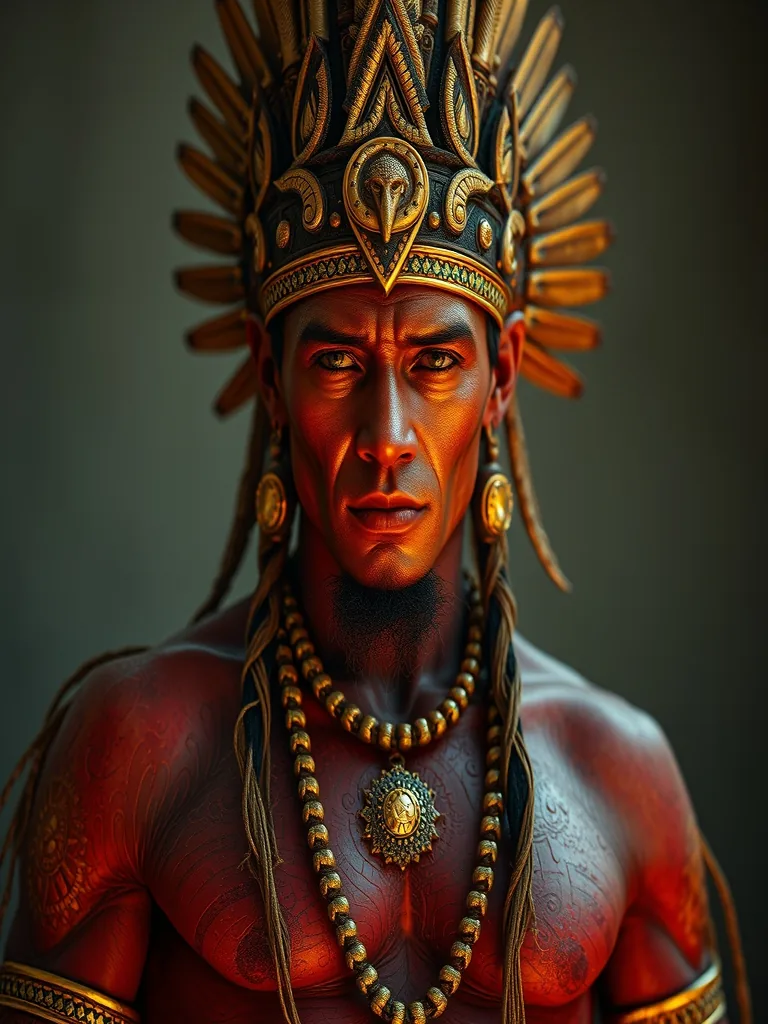
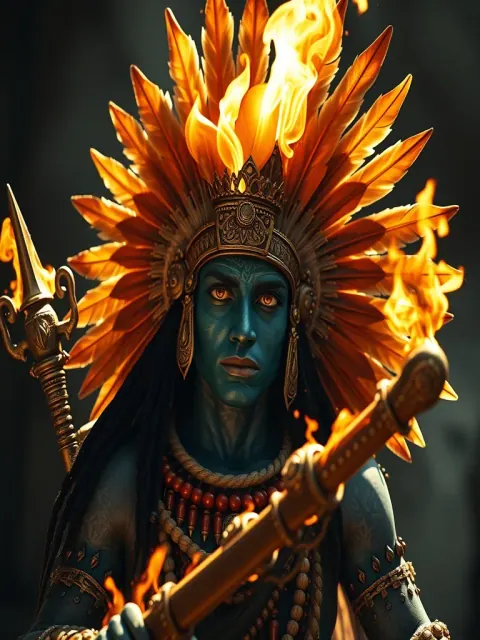
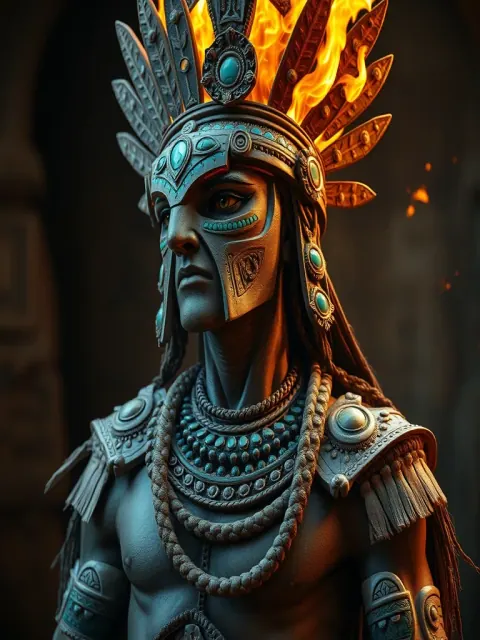
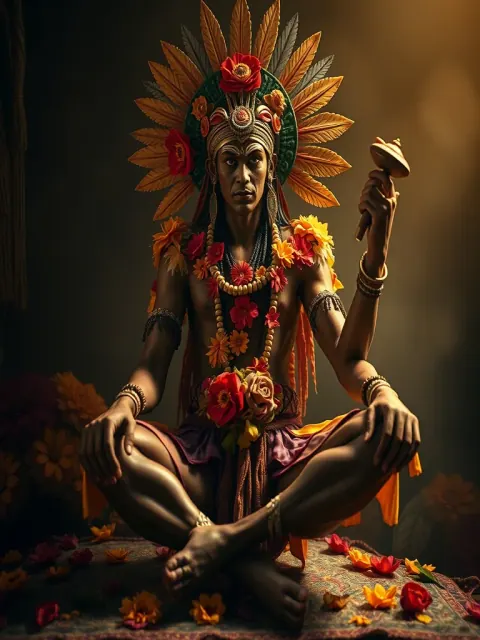
Xipe Totec (Classical Nahuatl: Xīpe Totēc, 'Our Lord the Flayed One') is the ancient and venerated Mesoamerican deity of springtime vegetation, agricultural renewal, the germination of maize kernels, bodily healing, sacred metallurgy, and martial sacrifice in the religious systems of the Mexica (Aztecs) and neighboring Central Mexican and Southern cultures. In the cosmic creation theology recorded in the Historia de los Mexicanos por sus Pinturas, he stands as the firstborn of the four sons of the primordial dual creator couple Ometeotl, identified with the supreme theological title Tlatlauhqui Tezcatlipoca ('Red Smoking Mirror') and designated as the cosmic sovereign of the eastern quadrant (Tlapcopa), the realm of dawn, solar rising, and fertilizing winds. Nahua spiritual thought perceived the visually stark practice of ritual flaying as a profound sacred metaphor drawn directly from nature: just as the dormant kernel of maize must cast off its hardened, withered outer husk before its tender green shoot can sprout into the sunlight, Xipe Totec sloughed off his own skin to drape the earth in a golden garment of abundant crops. His worship reached its apex during the second month of the solar ritual calendar (xiuhpohualli), known as Tlacaxipehualiztli ('The Flaying of Men'), celebrated around the spring equinox. During this state festival, captive warriors of renowned valor were tethered to the massive circular stone altar (temalacatl) to fight Mexica champions in stylized gladiatorial combat (tlahuahuanaliztli); following their heart sacrifice, their bodies were reverently flayed so that consecrated priests could don their yellowed skins for twenty days, traversing urban sectors and agricultural plots to bestow blessings of fertility upon the community and its soils. Beyond his agricultural patronage, Xipe Totec served as the divine patron of the guild of master goldsmiths and silversmiths (teocuitlapixque) centered in the wards of Yopico and Azcapotzalco, whose craft of casting radiant gold through the lost-wax method was understood as an earthly mirror of the god's shedding of outer matter to reveal internal brilliance.
9 min read · Reviewed on September 30, 2026 · How we research
02
Sacred symbols
Overlaid human skin, chicahuaztli staff, maize and gold
03
Family
Parents
Ometeotl (Tonacatecuhtli and Tonacacihuatl, the primordial creator couple)
Genealogy according to Historia de los Mexicanos por sus Pinturas (Codex Ramírez); Bernardino de Sahagún, Códice Florentino (Livros I e II); Códice Borgia (pranchas 25, 49 e 61); Códice Borbónico (p. 14); Diego Durán, Historia de las Indias de Nueva España
04
Sources and further reading
Primary sources
Bernardino de Sahagún (Franciscan chronicler and researcher at the Colegio de Santa Cruz), Florentine Codex: Historia General de las Cosas de Nueva España (Book I: The Gods; Book II: The Festivals and Sacrifices of Tlacaxipehualiztli). translation: Bilingual paleographic version annotated by Arthur Anderson and Charles Dibble in Salt Lake City. read
Anonymous Nahua (traditional Mesoamerican scribes and painters), Codex Borgia (Plates 25, 49 and 61: Xipe Totec with Chicahuaztli and the Flayed Garment). translation: Commentaries and facsimile archived by Eduard Seler (Fondo de Cultura Económica). read
Diego Durán (historian and Dominican missionary in New Spain), Historia de las Indias de Nueva España e Islas de la Tierra Firme (Book of Rites and Ceremonies: The Cult of Xipe Totec and the Temple of Yopico). translation: Annotated translation by Fernando Horcasitas and Doris Heyden (University of Oklahoma Press). read
Indigenous Anonymous (colonial ritual writing and paintings), Codex Borbónico (Folio 14: The Veintena of Tlacaxipehualiztli and the Dance of the Xippeme). translation: Facsimile edition by Francisco del Paso y Troncoso, digitally archived. read
Studies
Eduardo Matos Moctezuma (archaeologist and emeritus director of the Templo Mayor Project), . Thames & Hudson, Londres, 1988. open
Guilhem Olivier (research professor at the Institute of Historical Research, UNAM), . University Press of Colorado, 2003. open
Alfonso Caso (anthropologist and pioneer of Mesoamerican archaeology), . Fondo de Cultura Económica, México, 1953. open
Hartley Burr Alexander (anthropologist and historian of comparative religions), . Marshall Jones Company, Boston (Archive.org), 1920. open
Name and epithets
The Classical Nahuatl theonym Xīpe Totēc is composed of the verbal noun xīpe ('the flayed one', from the transitive verb xīpehua, meaning 'to skin, flay, peel bark or husk') joined to the reverential phrase totēc, the f…
In the ancient sources
Florentine Codex (General History of the Things of New Spain by Bernardino de Sahagún), c. 1577 CE.. Documents indigenous prayers, the donning of flayed skins, and the combat on the temalacatl.
The myths
The Shedding of Divine Flesh and the Mystery of Germinating Maize. Within the sacred theological traditions recorded in the Nahuatl hymns of the Florentine Codex, Xipe Totec's flaying was not conceived as macabre cruelt…
Worship and archaeology
The religious system centered on Xipe Totec constituted a cornerstone of Aztec imperial pageantry and peasant agriculture across Central Mexico.
How the god was depicted
The iconography of Xipe Totec is among the most striking and immediately recognizable in Mesoamerican art. His most defining attribute is the second human skin (ehuatl) tailored over his entire body: this outer layer di…
What scholars debate
Non-Nahua Origins and Diffusion from the Southern Pacific Coast. Mesoamerican scholars—including Eduard Seler, Alfonso Caso, and Guilhem Olivier—have analyzed the geographic and ethnic origins of Xipe Totec's cult.
After antiquity
Xipe Totec commands a prominent place in the contemporary historiography and artistic appreciation of pre-Columbian civilization.
Did you know?
The hollow rattle-staff (chicahuaztli) wielded by Xipe Totec was designed to mimic the sound of falling raindrops, struck against the earth to awaken dormant maize seeds beneath the soil.
Codex relic
Chicahuaztli. Xipe Totec's ceremonial rattle staff, whose sound imitated rain and was struck on the ground in the dances to awaken the maize seeds.
The rest of this scroll is sealed
The legends, the myth, the cult and relics are part of the full Codex. You can open 1 full entry for free every day; to open all 500 deities with no limits and no ads, subscribe to Codex PRO.