Skip to content
CodexMythologia
Back to the Codex
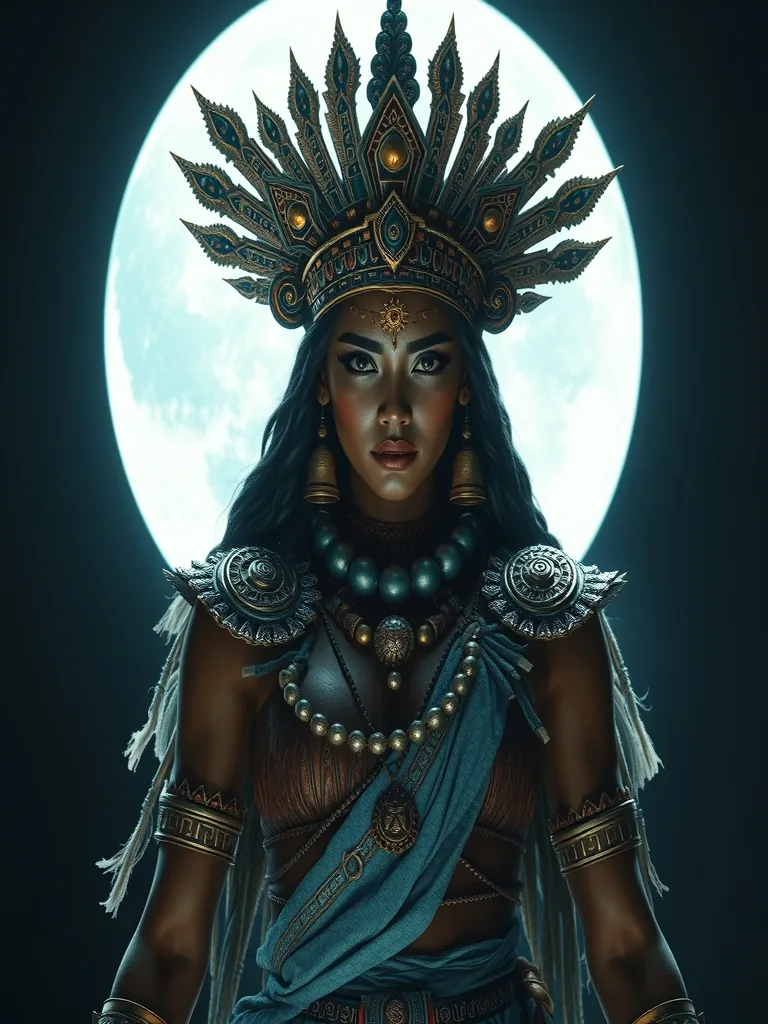
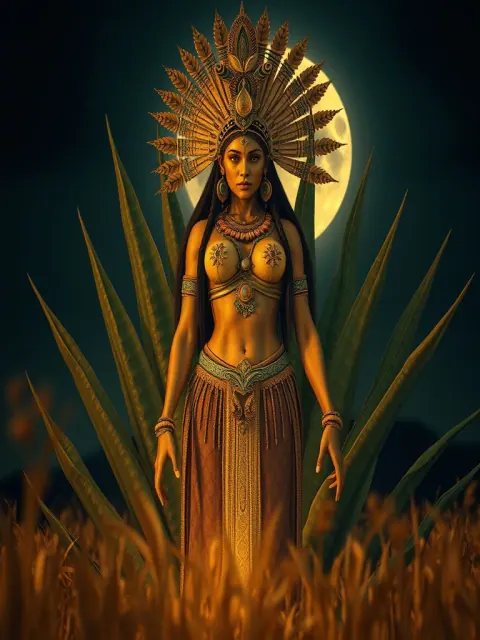
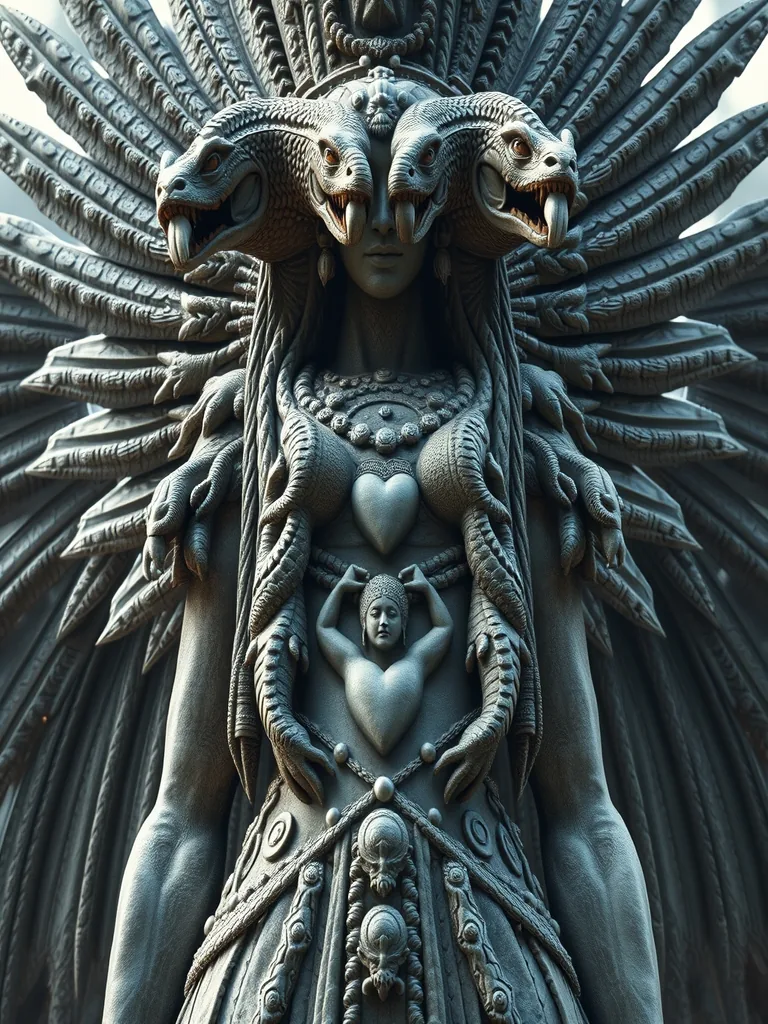
Portrait of Coatlicue, Aztec deity
Aztec
Tap or drag
Aztec

Coatlicue

She of the Serpent Skirt

Domain
Earth & Motherhood
Alignment
True Neutral
Element
Earth
Relics of Power
Serpent Skirt
Speak with Coatlicue

The full Codex

5 sections of this entry are open to everyone: the summary, the people, the symbols, the lineage and the sources. The other 9 (Name and epithets, In the ancient sources, The myths, Worship and archaeology, How the god was depicted, What scholars debate, After antiquity, Did you know?, Codex relic) are part of the full Codex: PRO opens the whole study of all 500 deities, and without a subscription you can read one full entry a day, just like in the app.

The People

People
Aztecs (Mexica)
Region
Central Mexico
Period
14th – 16th c.

The Aztec gods were worshipped by the Mexica people from their capital, Tenochtitlan, in central Mexico. They believed the sun would only move if fed with blood, which led to the famous sacrifices atop pyramid-temples. Their world was cut short by the Spanish conquest in the 16th century.

The 18-month ritual calendar brought festivals such as Toxcatl, in which a youth lived for a year as the embodiment of Tezcatlipoca. Every 52 years, the New Fire Ceremony extinguished every flame in the empire, rekindled from a single bonfire to prevent the end of the world.
At a glance

Coatlicue (Classical Nahuatl: Cōātlīcue, 'She of the Serpent Skirt') is the primordial, awesome mother goddess of earth, agricultural fertility, heroic childbirth, and the profound cosmic mystery of life and death in Mexica (Aztec) religion. Honored through high liturgical titles such as Teteo Innan ('Mother of the Gods') and Toci ('Our Grandmother'), she personifies telluric matter itself: the nourishing womb that yields botanical sustenance for all living beings, and simultaneously the universal tomb that claims and digests mortal remains to fuel perpetual renewal. Her central foundational myth, recorded in Book III of the Florentine Codex, recounts her ascetic devotion on the windswept summit of sacred Mount Coatepec ('Snake Mountain'), where she spent her days in pious contemplation, sweeping the temple grounds; upon discovering a floating downy ball of celestial hummingbird feathers and tucking it into her waistband, she miraculously conceived the imperial solar patron Huitzilopochtli. When her eldest daughter Coyolxauhqui (the moon goddess) and her four hundred stellar sons (the Centzon Huitznahua) resolved to decapitate her to wipe away what they perceived as a dishonorable pregnancy, Huitzilopochtli was born in a blaze of fire at the moment of assault, brandishing the Xiuhcoatl fire-serpent to strike down the invaders and protect the divine mother. In world art and archaeology, Coatlicue is immortalized by the monumental Coatlicue statue—a colossal 2.52-meter andesite masterpiece weighing twelve metric tons unearthed in 1790 in Mexico City's Plaza Mayor—combining two confronting rattlesnake heads surging from a severed neck, an intricate pectoral collar of severed hands and human hearts, and a dense skirt of intertwined vipers.

9 min read · Reviewed on September 30, 2026 · How we research

Sacred symbols

Serpent skirt, two serpent heads in place of a head, necklace of hands and hearts with a skull

Family

Parents
Ometeotl (Tonacatecuhtli and Tonacacihuatl, primordial dual divinity of creation)
Coatlicue
Unions
Children
HuitzilopochtliCoyolxauhquiCentzon Huitznahua (the four hundred southern stellar warrior deities)
Genealogy according to Bernardino de Sahagún, Códice Florentino (Livro III, Cap. 1); Códice Ramírez; Códice Borbónico; Diego Durán, Historia de las Indias de Nueva España; Anales de Cuauhtitlan

Sources and further reading

Primary sources

  • Bernardino de Sahagún (mentor of the Colegio de Santa Cruz de Tlatelolco), Florentine Codex (Book III: The prodigious conception and the battle of Coatepec). translation: Facsimile edition and translation under the supervision of Charles E. Dibble and Arthur J. O. Anderson. read
  • Diego Durán (Dominican chronicler in colonial Mexico), Historia de las Indias (Chapters on the expedition to Aztlan and the maternal figure of Coatlicue). translation: Translation by Fernando Horcasitas and Doris Heyden (University of Oklahoma Press). read
  • Antonio de León y Gama (New Spanish scholar of the 18th century), Description of the two stones discovered in the Main Square of Mexico in 1790 (Study of Coatlicue). translation: Historical edition of 1792 digitally archived in the repository of the National Library of Mexico. read
  • Anonymous Nahua (scribes and painters of Central Mexico), Codex Borbonicus (Pages of the Veintena of Ochpaniztli and Rites of the Sacred Broom). translation: Edition by Francisco del Paso y Troncoso archived in the Mesoamerican digital library. read

Studies

  • Eduardo Matos Moctezuma (archaeologist and researcher of the Templo Mayor), . Fondo de Cultura Económica, México, 2010. open
  • Justino Fernández (philosopher and historian of Mexican art), . Instituto de Investigaciones Estéticas, UNAM, 1954. open
  • Hartley Burr Alexander (anthropologist of Native American religions), . Marshall Jones Company, Boston (Archive.org), 1920. open
  • Leonardo López Luján (senior researcher at the Templo Mayor Museum), . University of New Mexico Press, 2005. open

Name and epithets

The Classical Nahuatl theonym Cōātlīcue is a descriptive compound formed by the noun cōātl ('serpent, snake'), the internal possessive prefix -ī-, and cuēitl ('skirt, women's traditional garment').

In the ancient sources

Sahaguntine Nahua records (Florentine Codex, Book III: the birth of Huitzilopochtli at Coatepec), c. 1577 CE.. The canonical ethnohistorical text documenting the miraculous conception and battle with Coyolxauhqui.

The myths

The Mysterious Conception of the Down Feather and the Battle of Coatepec. According to the Classical Nahuatl narrative recorded in Book III of the Florentine Codex, Coatlicue dwelled in ascetic seclusion upon the rugged…

Worship and archaeology

The worship of Coatlicue and her related manifestations (Toci and Teteo Innan) was deeply rooted in both popular agrarian life and Aztec state ceremonialism, reaching its apex during the veintena of Ochpaniztli ('The Sw…

How the god was depicted

Coatlicue's monumental iconography is world-renowned through the colossal andesite sculpture preserved at the National Museum of Anthropology in Mexico City.

What scholars debate

Anatomical Interpretation: Decapitation versus Divine Blood Fountains. Art historians and archaeologists have debated the visual meaning of Coatlicue's twin serpent heads.

After antiquity

Coatlicue stands as one of the most iconic and revered works of ancient American art in the global consciousness.

Did you know?

The underside of the 12-ton Coatlicue statue features a detailed relief of the earth god Tlaltecuhtli carved in the squatting posture of giving birth; it was meant to remain permanently invisible, resting directly again…

Codex relic

Serpent Skirt. A thick skirt of interwoven serpents girding the goddess's waist in her monumental statue.

The rest of this scroll is sealed

The legends, the myth, the cult and relics are part of the full Codex. You can open 1 full entry for free every day; to open all 500 deities with no limits and no ads, subscribe to Codex PRO.

See Codex PROGet it on Google Play

From the same pantheon

View pantheon