5 sections of this entry are open to everyone: the summary, the people, the symbols, the lineage and the sources. The other 9 (Name and epithets, In the ancient sources, The myths, Worship and archaeology, How the god was depicted, What scholars debate, After antiquity, Did you know?, Codex relic) are part of the full Codex: PRO opens the whole study of all 500 deities, and without a subscription you can read one full entry a day, just like in the app.
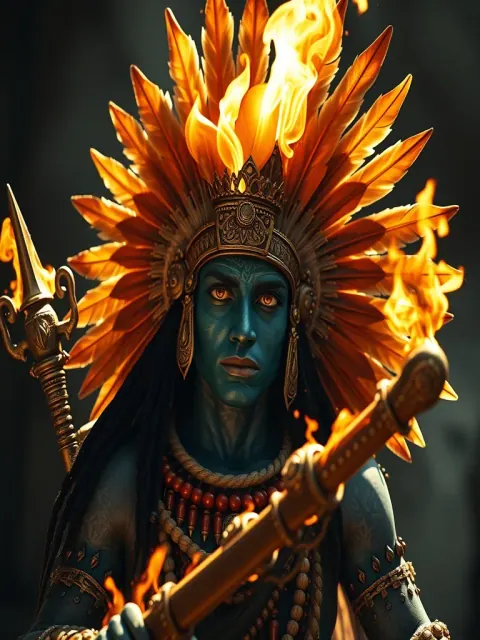
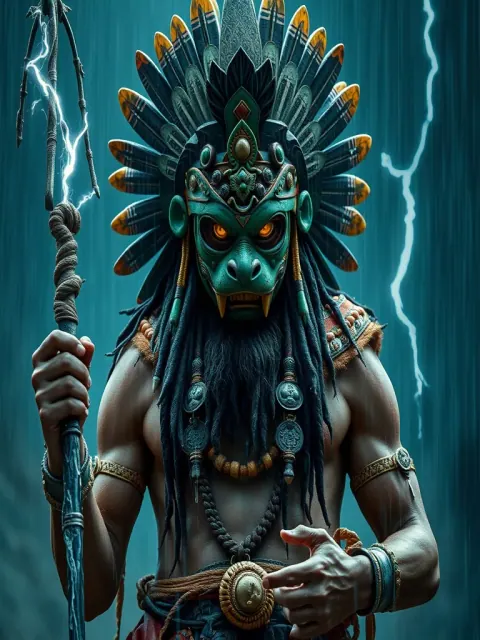
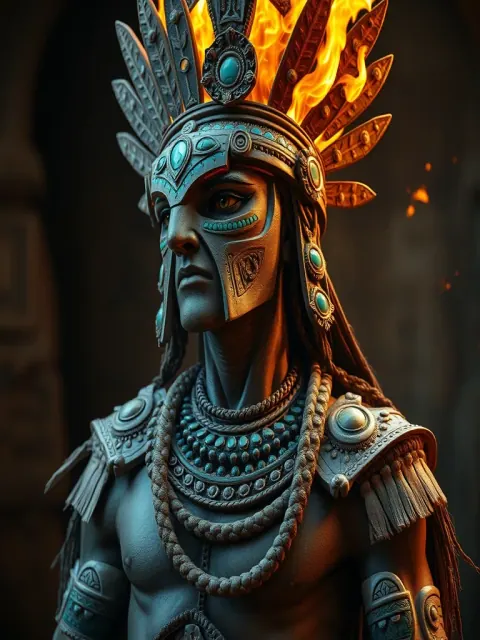
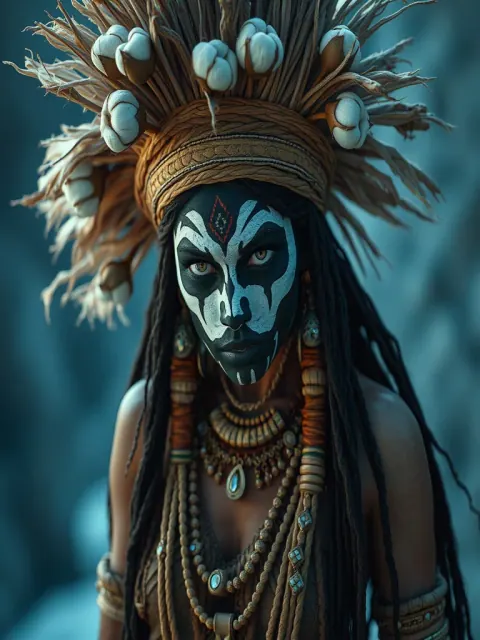
The Aztec gods were worshipped by the Mexica people from their capital, Tenochtitlan, in central Mexico. They believed the sun would only move if fed with blood, which led to the famous sacrifices atop pyramid-temples. Their world was cut short by the Spanish conquest in the 16th century.
The 18-month ritual calendar brought festivals such as Toxcatl, in which a youth lived for a year as the embodiment of Tezcatlipoca. Every 52 years, the New Fire Ceremony extinguished every flame in the empire, rekindled from a single bonfire to prevent the end of the world.
01
At a glance
Mictlantecuhtli (Classical Nahuatl: Mictlāntēuctli, 'Lord of the Land of the Dead') is the formidable, majestic sovereign deity of the underworld (Mictlan), the northern cosmic realm of darkness, bodily dissolution, and the guardian of the sacred skeletal relics of previous world eras in the Mexica (Aztecs) and broader Nahua pantheons of Central Mexico. Alongside his divine consort Mictecacihuatl, he held absolute sway over Chicunauhmictlan, the ninth and deepest stratum of the subterranean cosmos. As recorded in the appendix to Book III of the Florentine Codex, to his shadowy halls journeyed the souls of all mortals who succumbed to ordinary physical illnesses, natural decline, or old age—distinct from those granted radiant celestial afterlives through battlefield martyrdom (joining the solar retinue of Tonatiuh), childbirth death (Cihuateteo), or aquatic demise (entering Tlalocan). Far from acting as a sadistic punisher equivalent to the demonic tormentors of European theology, Mictlantecuhtli personified the peaceful permanence of the earth reclaiming transient flesh: his subterranean dominion was completely void of moral retribution, functioning as a neutral sanctuary of eternal rest attained only after an arduous four-year spiritual passage across nine underworld trials. The god's pivotal role in cosmic anthropogeny is immortalized in the Leyenda de los Soles: following the apocalyptic destruction of the Fourth Sun, Quetzalcoatl ventured into Mictlan to retrieve the ancestral human bones; Mictlantecuhtli tested him with an unperforated conch trumpet and dug a trap pit that shattered the precious relics into uneven fragments, which, when fertilized with penitential divine blood at Tamoanchan, brought forth the diverse races and statures of Fifth Sun humanity. In 1994, archaeologists of the Templo Mayor Project excavated two life-sized ceramic statues of Mictlantecuhtli (standing ~1.76 m tall) at the House of the Eagles, whose terracotta crania bore indisputable chemical residues of human blood consecrated during imperial accession rituals.
9 min read · Reviewed on September 30, 2026 · How we research
02
Sacred symbols
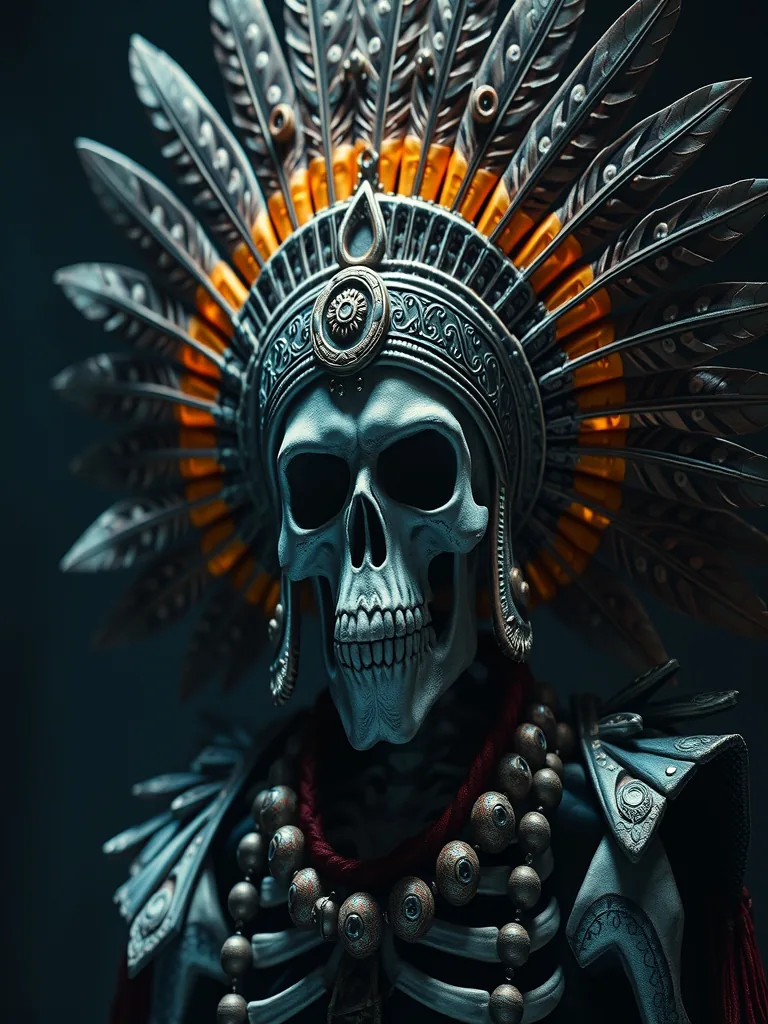
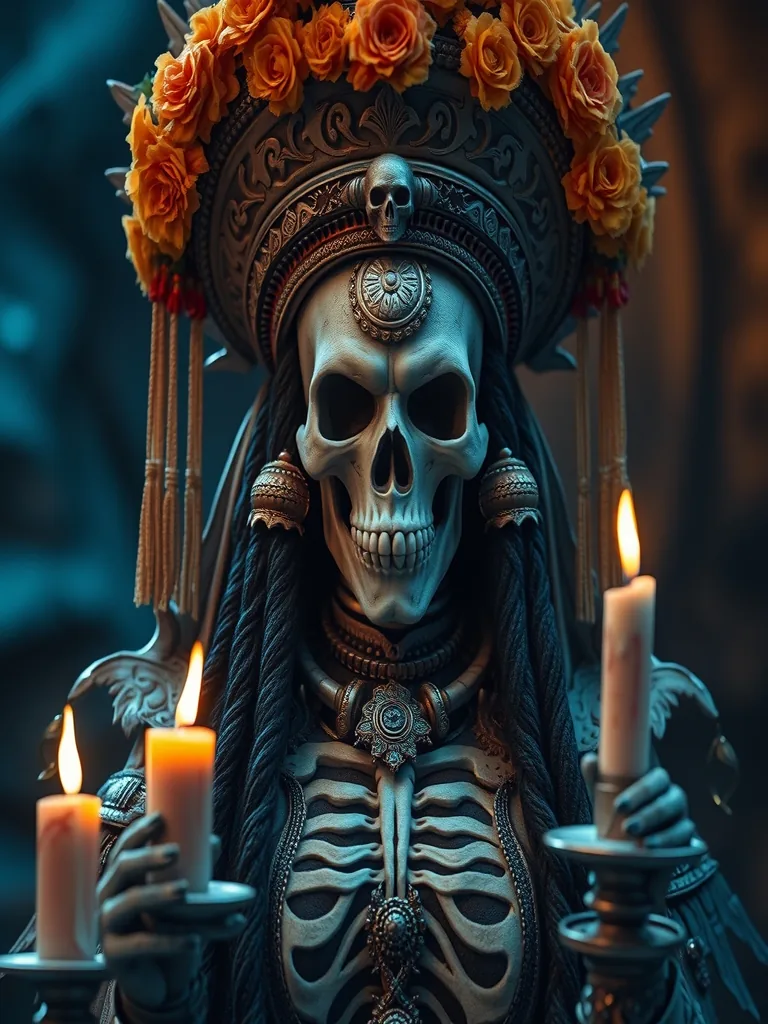
Skeleton, skull with pointed teeth, hanging liver and owl
Genealogy according to Códice Chimalpopoca (Leyenda de los Soles); Histoyre du Mechique; Bernardino de Sahagún, Códice Florentino (Livros I, II e III); Códice Borgia (pranchas 13 e 56); Códice Fejérváry-Mayer (prancha 37); Códice Vaticano B; Diego Durán, Historia de las Indias de Nueva España
04
Sources and further reading
Primary sources
Nahua Anonymous (indigenous sages and scribes of the Central Highlands), Leyenda de los Soles (Chimalpopoca Codex: The Recovery of the Bones in Mictlan and the Creation of the Fifth Sun). translation: Critical edition and Nahuatl-Spanish translation by Primo Feliciano Velázquez (UNAM). read
Bernardino de Sahagún (Franciscan researcher and Nahua informants of Tlatelolco), Florentine Codex: Historia General de las Cosas de Nueva España (Book III, Appendix: The Journey through the Nine Levels of Mictlan). translation: Complete academic translation of the Nahuatl text into English under the joint direction of Dibble and Anderson. read
Mesoamerican Anonymous (scribes and painters of the Borgia group), Codex Borgia (Plate 56: Mictlantecuhtli and Quetzalcoatl Joined at the Back). translation: Academic facsimile and commentary by Eduard Seler, archived digitally. read
André Thevet and colonial chroniclers (sixteenth-century ethnohistorical compilation), Histoyre du Mechique (The Descent of Quetzalcoatl and the Secrets of the Underworld). translation: Palaeographic edition by Édouard de Jonghe (Journal de la Société des Américanistes). read
Studies
Leonardo López Luján (archaeologist and director of the Templo Mayor Project), . INAH / Fondo de Cultura Económica, México, 2006. open
Alfredo López Austin (historian and specialist in Mesoamerican cosmovision), . Instituto de Investigaciones Antropológicas, UNAM, 1980. open
Eduardo Matos Moctezuma (archaeologist who coordinated the excavations at Tenochtitlan), . Fondo de Cultura Económica, México, 1986. open
Hartley Burr Alexander (anthropologist and historian of American mythologies), . Marshall Jones Company, Boston (Archive.org), 1920. open
Name and epithets
The theonym Mictlāntēuctli is an agglutinative Classical Nahuatl compound derived from the locative noun Mictlān ('the place of the dead', from the verb miqui, 'to die', combined with the locative suffix of abundance -t…
In the ancient sources
Leyenda de los Soles (Nahuatl text preserved in Codex Chimalpopoca), 1558 CE.. Documents the mythic encounter between Quetzalcoatl and Mictlantecuhtli over the ancestral bones.
The myths
Quetzalcoatl's Descent into Mictlan and the Retrieval of Ancestral Bones. In the foundational cosmic account preserved in the Leyenda de los Soles, the earth lay desolate after the apocalyptic destruction of the Fourth…
Worship and archaeology
The religious system dedicated to Mictlantecuhtli operated at intimate domestic altars and grand imperial state sanctuaries alike.
How the god was depicted
The iconography of Mictlantecuhtli is among the most dramatic and instantly recognizable in global antiquities. He is depicted as an animated skeleton or an emaciated male figure with bare facial bones, sharp feline tee…
What scholars debate
Eschatological Retribution versus Impartial Cosmic Rest. Historians of Mesoamerican religions have extensively analyzed the ethical nature of Mictlan in contrast to European concepts of hell and purgatory.
After antiquity
Mictlantecuhtli remains one of the most celebrated and culturally resonant figures from pre-Columbian antiquity.
Did you know?
The protruding liver visible beneath Mictlantecuhtli's ribs in the Templo Mayor statues represented the corporeal vessel of the ihiyotl, one of three Nahua vital soul entities, which resided in the liver and governed no…
Codex relic
Suspended Liver (Elli). The liver hanging below the open ribcage in the Templo Mayor sculptures, seat of the ihiyotl, the vital essence that survived bound to the underworld.
The rest of this scroll is sealed
The legends, the myth, the cult and relics are part of the full Codex. You can open 1 full entry for free every day; to open all 500 deities with no limits and no ads, subscribe to Codex PRO.