5 sections of this entry are open to everyone: the summary, the people, the symbols, the lineage and the sources. The other 9 (Name and epithets, In the ancient sources, The myths, Worship and archaeology, How the god was depicted, What scholars debate, After antiquity, Did you know?, Codex relic) are part of the full Codex: PRO opens the whole study of all 500 deities, and without a subscription you can read one full entry a day, just like in the app.
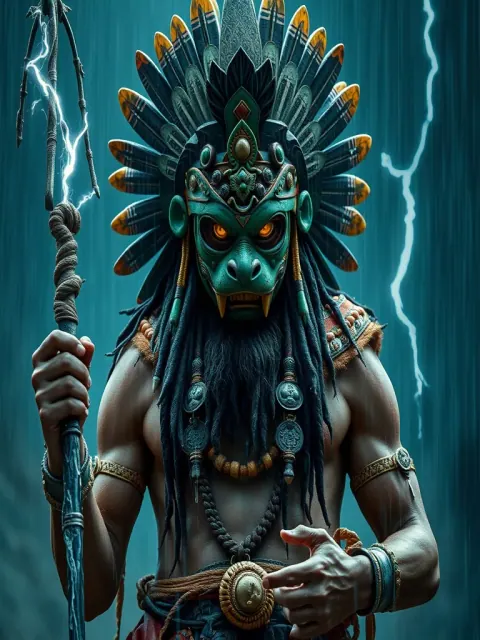
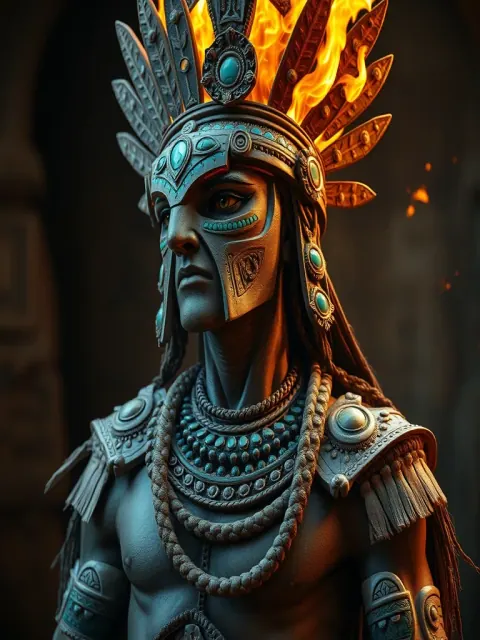
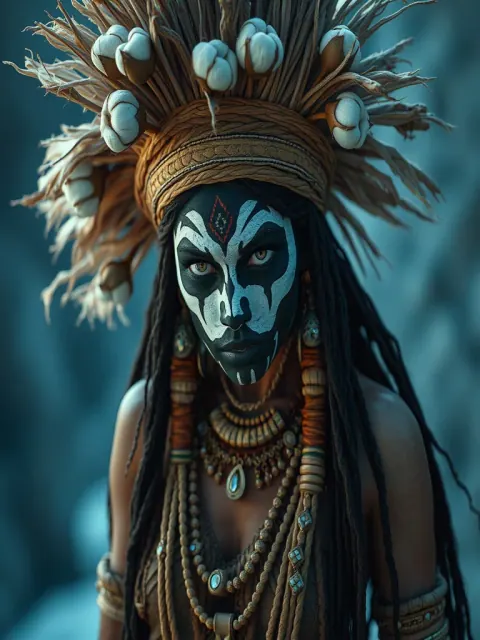
The Aztec gods were worshipped by the Mexica people from their capital, Tenochtitlan, in central Mexico. They believed the sun would only move if fed with blood, which led to the famous sacrifices atop pyramid-temples. Their world was cut short by the Spanish conquest in the 16th century.
The 18-month ritual calendar brought festivals such as Toxcatl, in which a youth lived for a year as the embodiment of Tezcatlipoca. Every 52 years, the New Fire Ceremony extinguished every flame in the empire, rekindled from a single bonfire to prevent the end of the world.
01
At a glance
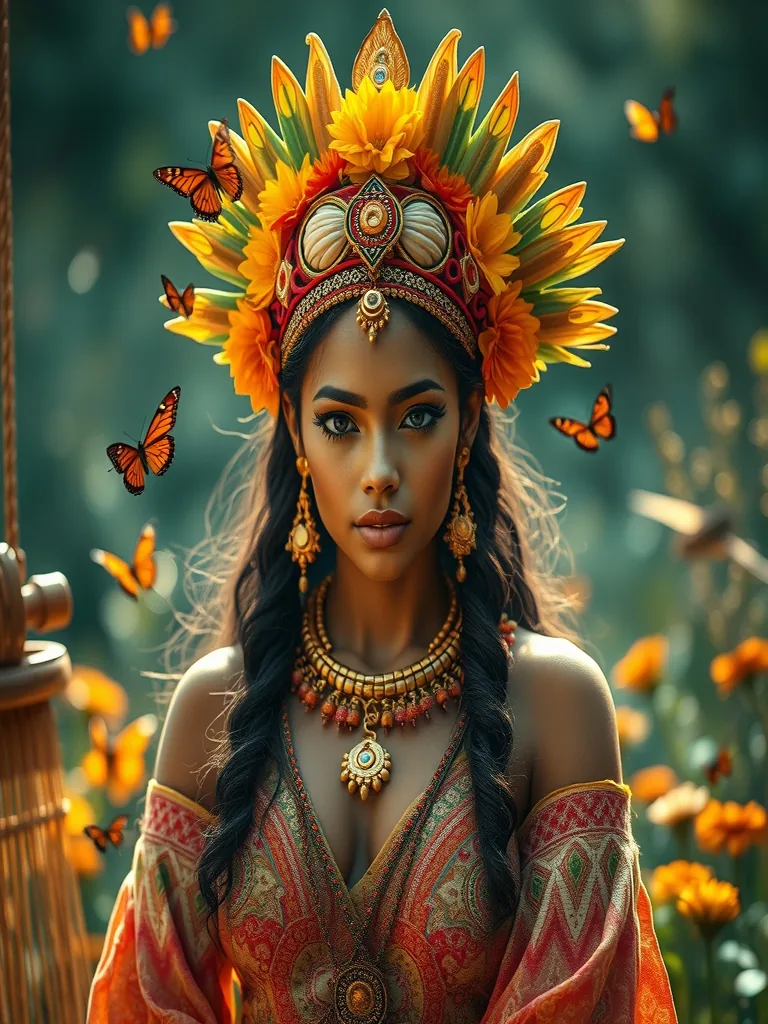
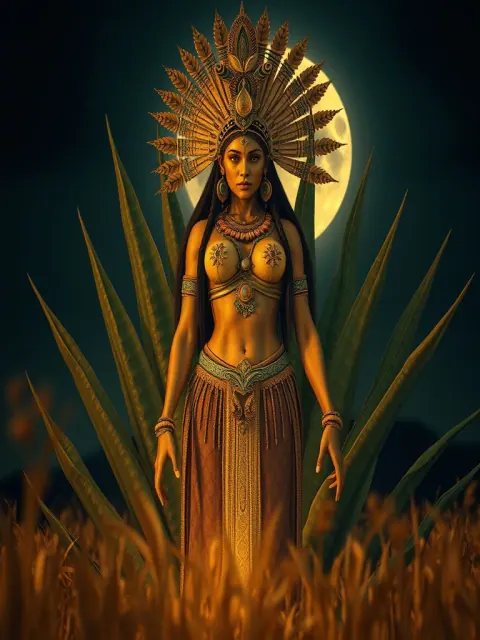
Xochiquetzal (Classical Nahuatl: Xōchiquetzal, 'Precious Feather Flower' or 'Flowering Quetzal Feather') is the radiant, venerated Mesoamerican goddess of floral fertility, youthful feminine beauty, romantic love, sacred eroticism, pregnancy, backstrap-loom weaving, and refined artistic crafts in the Mexica (Aztec) pantheon and neighboring civilizations of Central Mexico. Originating from the celestial garden of Tamoanchan—the mythic paradise of flowering trees and the primordial womb where the human race was fashioned—she stands as the central protagonist of the sacred myth of the forbidden tree: by plucking an aromatic blossom from its virgin boughs, she caused the cosmic trunk to fracture and bleed, precipitating the fall of the deities into mortal terrestrial existence. Revered initially as the consort of the storm and rain god Tlaloc within his aquatic paradises, her peerless beauty incited the desire of Tezcatlipoca, the Smoking Mirror, who abducted her to the ninth heaven and crowned her sovereign of the nocturnal firmament. In complementary creation lore preserved in the Histoyre du Mechique, she united with the youthful solar god Piltzintecuhtli to bring forth Centeotl, the divine maize whose buried flesh sprouted into the primary cultivated food plants of mankind. In human civilization, Xochiquetzal stood as the supreme patroness of weavers, embroiderers, manuscript painters (tlacuiloque), silversmiths, sculptors, and sacred courtesans (ahuianime). Her liturgical calendar featured the movable feast of Chicomexochitl ('7 Flower') and the solemn month of Quecholli, during which dancers crowned with aromatic garlands and quetzal feathers offered woven textiles and spinning whorls to honor the aesthetic joy and cyclical renewal of nature.
7 min read · Reviewed on September 30, 2026 · How we research
02
Sacred symbols
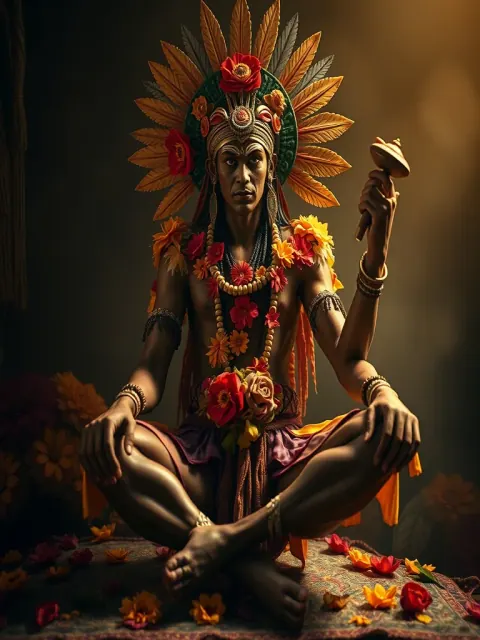
Two green quetzal feathers on the headdress, flowers, butterfly and spindle
03
Family
Parents
Ometeotl (Tonacatecuhtli and Tonacacihuatl, dual primordial creator deities)
Genealogy according to Bernardino de Sahagún, Códice Florentino (Livros I, II e VI); Códice Borgia (pranchas 9, 59 e 63); Códice Telleriano-Remensis; Códice Vaticano A (3738); Histoyre du Mechique (compilação de André Thevet)
04
Sources and further reading
Primary sources
Bernardino de Sahagún (Franciscan researcher at the Colegio de Santa Cruz), Florentine Codex (Book I: The Gods; Book VI: Rhetoric and Prayers of the Weavers). translation: Bilingual Nahuatl-English critical edition by Charles E. Dibble and Arthur J. O. Anderson. read
Anonymous Nahua (pre-Hispanic scribes and religious artists), Codex Borgia (Plates 9, 59 and 63: Xochiquetzal, the Flowering Tree and the Butterflies). translation: Academic facsimile with commentaries by Eduard Seler. read
Indigenous Painters and Colonial Glossators, Codex Telleriano-Remensis (Folio 22v: The Mythic Rupture of the Tree of Tamoanchan). translation: Facsimile edition with commentary by Eloise Quiñones Keber (University of Texas Press). read
Diego Durán (religious figure and historian of New Spain), Historia de las Indias de Nueva España (Chapter on the Rites of the Weavers and Courtesans). translation: Translation by Doris Heyden and Fernando Horcasitas. read
Studies
Thelma D. Sullivan (ethno-historian and specialist in the Nahuatl language), . Dumbarton Oaks, Washington D.C., 1982. open
Alfredo López Austin (emeritus researcher of Nahua worldview), . Fondo de Cultura Económica, México, 1994. open
Hartley Burr Alexander (anthropologist of the native cultures of the New World), . Marshall Jones Company, Boston (Archive.org), 1920. open
Alfonso Caso (Mexican archaeologist), . Fondo de Cultura Económica, México, 1953. open
Name and epithets
The Classical Nahuatl theonym Xōchiquetzal is a lyrical descriptive compound composed of the nouns xōchitl ('flower, floral blossom') and quetzalli ('the iridescent green tail feather of the quetzal bird', employed in N…
In the ancient sources
Ethnographic manuscripts of Bernardino de Sahagún (Florentine Codex), c. 1577 CE.. Provides liturgical accounts of the artisan guilds, cotton spinning offerings, and moral codes.
The myths
The Plucking of the Forbidden Flower and the Fall from Tamoanchan. According to the ancient Nahua cosmogonic tradition recorded in the Codex Telleriano-Remensis and Codex Vaticanus A, Xochiquetzal dwelled originally in…
Worship and archaeology
The religious veneration of Xochiquetzal touched both imperial state ritual and intimate domestic industry across Central Mexico.
How the god was depicted
Xochiquetzal's iconography represents the pinnacle of aesthetic refinement in Mesoamerican art. In pre-Columbian manuscripts (such as the Codex Borgia and Codex Fejérváry-Mayer), she appears as an aristocratic young Nah…
What scholars debate
Sacred Eroticism versus Colonial Moral Misunderstandings. Historians of religion analyze the profound gap between indigenous concepts of sacred sensuality and Spanish colonial censure.
After antiquity
Xochiquetzal occupies an enduring place in Mexican cultural consciousness and international art history. In modern visual arts and literature, she is celebrated as the primordial muse of indigenous poetry and textile de…
Did you know?
Aztec weavers buried clay spindle whorls (malacatl) and polished bone needles beneath their daughters' cradles to invoke Xochiquetzal's blessing for nimble fingers and weaving mastery.
Codex relic
Backstrap Loom. The loom of Aztec weavers, with spindles and bone needles invoked in the goddess's name to give daughters nimble hands.
The rest of this scroll is sealed
The legends, the myth, the cult and relics are part of the full Codex. You can open 1 full entry for free every day; to open all 500 deities with no limits and no ads, subscribe to Codex PRO.